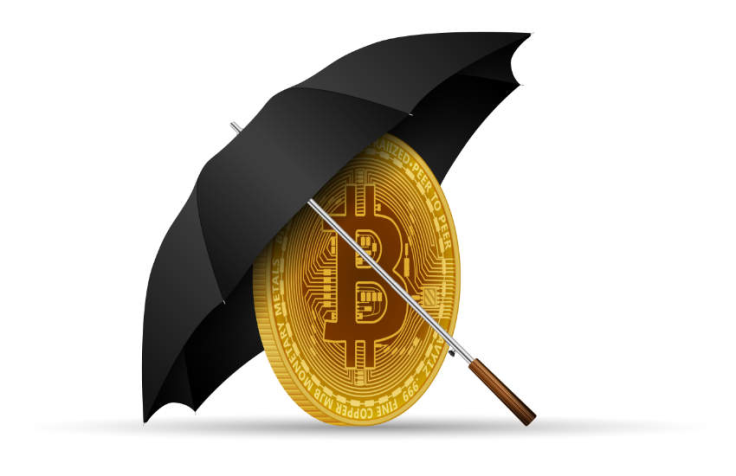
When people outside the industry talk about crypto risk, they usually mean price swings. For anyone who actually uses decentralized finance, that is only the surface. The deeper risk is structural: smart contracts break, bridges get drained, governance goes sideways, and centralized platforms fail in ways that leave users with no realistic path to recovery.
Those structural failures are not rare edge cases. Chainalysis estimates that hackers stole about 2.2 billion dollars in crypto in 2024 alone, a 21 percent increase over the previous year, and notes that this was the fourth year in a row that hacking losses stayed above 1 billion dollars. A growing share of that comes from complex DeFi protocols and cross chain infrastructure rather than simple wallet mistakes.
If crypto is ever going to graduate from a speculative trade to a durable piece of financial infrastructure, that is the risk problem that has to be solved.
Three layers of risk most users never fully see
For a typical user or business, the risk stack has at least three layers.
The first is technical risk. A single smart contract bug, misconfigured upgrade, or compromised key can wipe out funds in minutes. The now classic audit reports from security firms are full of examples of re-entrancy, broken access control, and unsafe oracle use. The BIS, in its work on DeFi, has highlighted how heavily these systems rely on complex code paths and how fragile they can be under stress.
The second is economic design risk. A protocol can be perfectly coded and still fail because its incentives are fragile. Algorithmic stablecoins that collapse when market conditions change, yield strategies that depend on circular leverage, or liquidity mining programs that evaporate once subsidies stop are all examples of designs that work until they do not.
The third is human and governance risk. Admin keys, small multisigs, opaque off chain control, and token voting that can be captured all create central points of failure inside systems that market themselves as decentralized. We have already seen cases where teams or large holders made decisions that wiped out ordinary users long before any regulator could react.
Together, these three layers create a very different risk profile from a volatile stock or commodity. You can be "right" on the asset and still lose everything because the rails themselves fail.
Why traditional protections do not map cleanly
In traditional finance, people are wrapped in layers of protection. There is deposit insurance for banks, investor protection schemes for brokerages, strict capital and conduct rules for intermediaries, and a legal system that can sometimes claw back assets or impose restitution.
Crypto does not fit easily into that framework. Many projects operate across borders with unclear jurisdiction. Users connect directly to contracts or platforms without any regulated intermediary in between. Losses often happen at machine speed and funds move across multiple chains before anyone has even understood what went wrong.
Traditional insurers have experimented with blockchain, but mostly at the edges: parametric products for weather, pilot projects in supply chains, or limited coverage for custodial crypto storage. A Geneva Association report on DeFi and blockchain in insurance notes that while the technology could make insurance more efficient and inclusive, real world deployments remain narrow, experimental, and face serious scalability and regulatory challenges.
For DeFi specific risk, industry analysis finds that most on chain insurance schemes are still small and constrained.
The coverage gap
One of the most striking facts in this space is the coverage gap. DeFi holds tens of billions in assets. Yet the portion that is formally insured, either by decentralized mutuals or traditional carriers, is a couple hundred million dollars' worth.
Academic work by Bekemeier in Digital Finance describes how early DeFi insurance protocols mostly rely on mutual style pools with fixed or slowly updated premiums. Those models struggle to price fast changing, highly correlated risks and often run into scalability problems. In other words, even where insurance exists, it is often not designed for the way DeFi risk really behaves.
The result is a paradox. Retail users are told to "do your own research," even though very few people can realistically evaluate protocol risk. Institutions see the innovation and potential yield but cannot reconcile that with risk frameworks that assume some baseline of protection and recourse.
What a better risk layer looks like
A healthier crypto ecosystem needs a risk layer that looks less like an afterthought and more like core infrastructure. At a minimum, that means:
- Transparency about what is actually covered and under what conditions
- Programmatic hooks so coverage can plug directly into wallets, protocols, and treasuries instead of living in separate paperwork
- Pricing that responds to real conditions, not just numbers set once and left to drift
The BIS has described DeFi as having a "decentralization illusion" where governance and risk are in fact concentrated and has pointed out that many current designs lack proper mechanisms to absorb shocks. Industry bodies like the Geneva Association, and researchers like Bekemeier, all converge on a similar point: static pooled capital is not enough by itself. There has to be a way to share and price risk more dynamically.
Where new solutions fit
This is the context in which new on chain risk platforms are emerging. One example is DEIN, which is building decentralized insurance infrastructure around stablecoin backed pools, utilization driven pricing, and fully on chain claims. Underwriters deposit capital into risk pools and earn yields that scale with how much of the pool is in use. Policyholders buy protection, and if something goes wrong, an on-chain voting process uses objective data about the incident to determine the loss amount, up to the policy maximum. In the narrow cases where loss is mechanical, such as a stablecoin depegging, payouts can follow simple preset rules.
The point is not that any single project will solve crypto's risk problem on its own. It is that the industry is slowly building the tools to turn protocol risk from an opaque fear into a measurable, shareable, and eventually hedge-able quantity.
Volatility is the risk that shows up on a price chart and grabs headlines. Structural failures are the risks that quietly erase the balance even when you picked the right asset. For crypto to move from speculation to infrastructure, the second category needs as much attention as the first. Solutions that make risk visible, priced, and explicitly managed are a necessity that DEIN is bringing to the market.
About Mike Miglio
Mike Miglio is CEO and founder of DEIN, the decentralized marketplace for risk and insurance. A seasoned entrepreneur with six years of experience, he previously served as founding partner of two of the world's first cryptocurrency law firms, ICO Law Group and Wolfe Miglio (2017), guiding dozens of projects and exchanges through the uncertain legal landscape of the ICO era. In 2020, he launched his first protocol, Bridge Mutual. Over the years, Mike has built and deployed protocols and projects with a combined market cap of $1 billion USD and has invested in or advised more than 50 other DeFi protocols across the crypto space. Most recently, DEIN earned 1st place in the Amazon Prime TV series Crypto Knights for its innovation and ingenuity.
About DEIN
DEIN, short for Decentralized Insurance Network, is a groundbreaking platform that offers permissionless, decentralized, and DAO-managed discretionary risk coverage. It is specifically designed to provide insurance for smart contracts, stablecoins, centralized exchanges, and other vital services within the DeFi ecosystem. The platform allows users to purchase coverage for their funds, enabling them to safeguard their assets against potential losses caused by hacks, rug-pulls, or other exploits leading to permanent loss of funds. Additionally, DEIN empowers individuals to actively participate in the insurance process by allowing them to provide coverage and liquidity for various smart contracts, exchanges, or listed services in exchange for yield.