The nation is facing a crucial moment in the drive to achieve an 80% reduction in person-to-person contacts to defang the new coronavirus outbreak.
A government panel of experts tasked with guiding the nation's fight against the coronavirus announced a package of recommendations Wednesday that further pressed the public to refrain from nonessential outings leading up to and during the upcoming Golden Week holidays. The package also called for workplaces to adopt more measures such as promoting teleworking, given the possibility that the outbreak could grip Japan for a prolonged period.
The state of emergency declared earlier this month will remain in effect until May 6. The government will carefully watch how the situation unfolds over the coming days before deciding whether to extend the state of emergency.
"Looking at the data gathered so far, I can't say that the nation is achieving the target of cutting person-to-person contacts by 80%," Shigeru Omi, vice chair of the panel and a former World Health Organization regional director for the Western Pacific, said at a press conference Wednesday. "I urge people to try a little harder and take more steps."
The government has been calling on the public to reduce direct interactions with others by 80%, but this figure has not been reached. An analysis based on smartphone location data and other information revealed that the number of people around major stations in Tokyo during the day on weekdays was down by 60% to 70% in some cases. The expert panel believes this figure indicates not enough companies are promoting teleworking and implementing staggered commuting times. How to handle the crowds of people visiting parks and supermarkets on weekends also has become a pressing problem.
At the press conference, Hokkaido University Prof. Hiroshi Nishiura, an expert on theoretical epidemiology, said the increase in new infections in Tokyo "is slowing down, but we need to closely watch whether this number will start to decrease."
Nishiura suggested daily life could be very different for some time. "For the time being, people won't be able to live the same daily life they had been living. We must deal with this virus being common in Japan for the next year or so."
Because there currently is no medicine available for treating the new coronavirus, the key to stopping its spread lies in reducing close interactions among people and cutting the number of new infections. The panel thinks many members of the public have yet to fully grasp what actions they should take in this situation.
The panel compiled a package of 10 main actions it recommended people could take to cut their person-to-person contacts by 80%. This also was aimed at showing the public an appropriate way to spend the Golden Week holidays in late April and early May, when many people go on holidays or visit relatives in their hometown. It would not be strange if the increase in human interactions during this period caused a spike in coronavirus infections.
The panel recommended "online family reunions" by using video calls, rather than actually returning to hometowns because these trips could require people to travel long distances and easily put them in contact with elderly people, who have a high risk of getting very sick from the coronavirus.
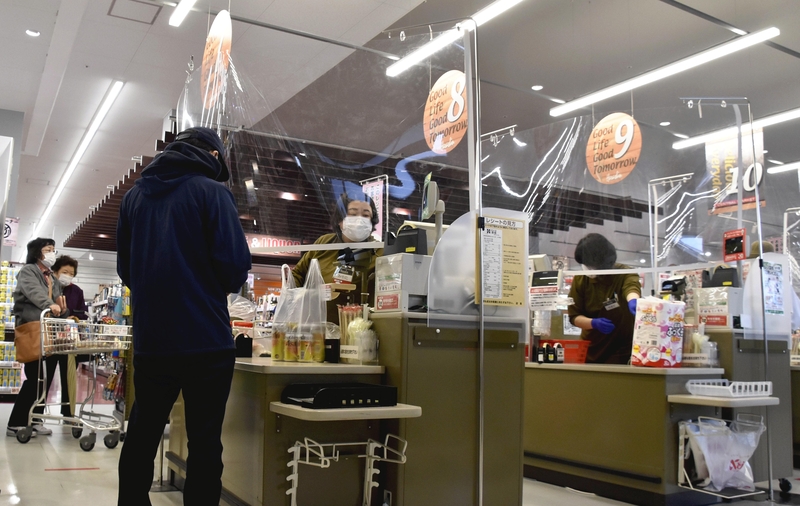
The panel also urged that people go shopping at supermarkets "alone or in small groups" and "at times when the store is not busy." In a nod to concerns that people will get fed up with requests to stay inside all the time, the recommendations included suggestions that people can take a mental break by "jogging in small groups" or "visiting an open space at the park when it is not crowded."
The panel also emphasized the necessity of equipping workspaces to cope with a potentially long battle against the coronavirus. It called on reducing the number of workers commuting to their company by at least 70%, such as by doing as much office work as possible at home and setting a rotation for employees who have no option but to work at the office. After the panel met, one member said, "It's vital that people change their lifestyles."
The leadership exercised by governors also will be crucial. To help resolve problems in the medical care system, the panel called for the swift establishment across the nation of "priority medical institutions" that can intensively accept people who have serious or moderate cases of coronavirus. Presently, such institutions are located only in areas such as Tokyo, Kanagawa Prefecture and Osaka.
To ramp up the PCR testing system for checking coronavirus infections, the panel called for a governor-led council formed of relevant entities such as medical organizations that can accurately gauge and coordinate the number of tests conducted. This would include setting up regional outpatient and testing centers that work closely with local medical associations.
Read more from The Japan News at https://japannews.yomiuri.co.jp/