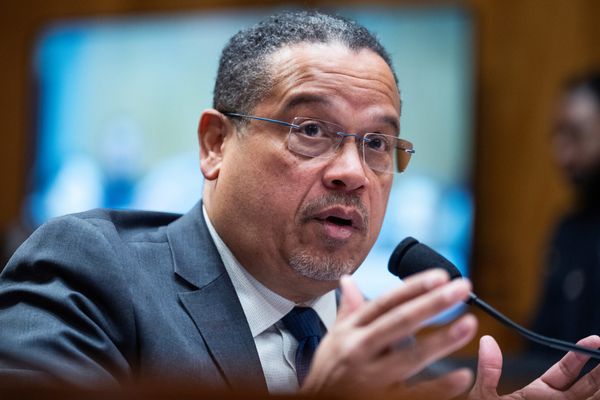
Representing the City and East constituency, John Biggs has a particular responsibility towards some of London's least affluent citizens. His various Assembly duties include chairing the Budget and Performance Committee and needling Mayor Johnson at question time.
The economic situation is creating great uncertainty for us in London. While there has rightly been much written about financial services job cuts, I suspect the bigger impact will be on those that support the financial sector, wider business support and the leisure and tourism industries. Another very visible casualty will undoubtedly be the construction sector, with house builders closing down building sites across the city as the market for buyers seizes up and prices slip.
It would be easy to view the downturn as primarily affecting the middle classes. But this is by no means the whole picture. As an elected representative for some of London's poorest citizens, I am acutely aware that those at the bottom will be squeezed the hardest - whether it is those in low paid service economy jobs, or construction, or those who are looking for a decent home but are unable to compete in the market place.
So what should we do? It is early days yet but not too early to think about the future. Although London has been written-off by many as a manufacturing location, the reality is that the sector has been so battered for decades that what remains, provided there is demand for its products, is quite strong and battle-hardened. If financial services are struggling, sectors like manufacturing may take some of the strain. As regards construction I would argue that this is just the right time for public investment to meet needs and to stimulate activity in the construction industry and the market place - so a major programme of house building and infrastructure projects would be a very good idea.We need also, and we should never tire of this, to emphasise that in an open economy like London/the UK, investment in skills and infrastructure are vital if we are to hold our own against growing competition. So I would renew the emphasis on skills training, and lobby hard for investment in projects like Crossrail and the Olympic legacy, and housing. These are uncertain and difficult times but we should not be deterred from investing in London's future.
So what does this mean for our Mayor, Boris Johnson? In tough times politicians like to bury their differences but, conversely, their differences become all the more important. Boris has made some of the right noises, especially on the need deliver Crossrail. But on housing, for example, he seems to be stuck in an ideological cul de sac. The next few months will be a big test for the Mayor. We will soon see just how much of London he understands and just how committed he is to its needs.
The previous contributors to this series are Jo Valentine of London First, Lib Dem Mike Tuffrey, Ken Livingstone and the Greens' Jenny Jones.