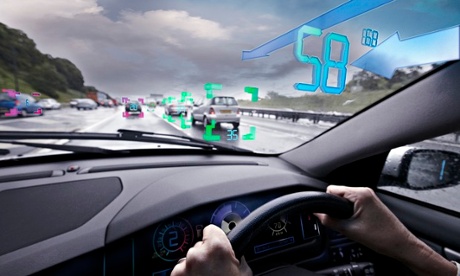
From the outside, your family car may not appear to have changed much in the past 20 years or so. But underneath the bonnet, there’s been a quiet revolution going on, with cars becoming safer and more reliable than ever, thanks to anti-lock brakes, airbags and run-flat tyres.
By 2025, however, you can expect your runaround to have become almost unrecognisable.
With issues of space and range ironed out, electric vehicles will likely have become the norm. Range has been an issue – after all, who wants to run out of juice on a family trip to the grandparents? Audi and Volvo, among others, have been working hard to solve this, with Tesla perhaps setting the bar with its latest Model S car that seats seven and is capable of driving 310 miles on a single charge.
More luggage room
The space taken up by large hybrid batteries has also been problematic for families in need of boot space. However, manufacturers have been busy trying to solve this, too. Audi and Volvo, for example, have both been working on car bodies that can store energy, battery-style, freeing up space for all that inevitable children’s paraphernalia.
Yet it is the arrival of driverless vehicles that is likely to transform the family car journey the most. In its recent review on driverless vehicles, the UK government predicted that drivers will be able to turn their seats around 180 degrees to face other passengers in the back. It could mean an end to trying to find ways of keeping the kids entertained from the rear-view mirror, as you help them with their homework or watch a movie with them instead.
Connected driving
The dawn of this strange world isn’t as far off as you may think. In February, the Department for Transport gave UK trials of driverless vehicles the green light, while computer giant Intel is already developing a system that will connect cars to the world around them. It will be able to detect nearby vehicles and display their location on a screen.
Responsibility for driving will be taken on more and more by smart systems that navigate for us, and monitor the surrounding area for other road users far more thoroughly and, it is thought, safely than a human driver ever could.
A variety of energy sources
As for fuel, electric hybrids have competitors. Soon motorists may be topping up their tanks with liquid hydrogen for hydrogen-fuel cell cars, instead of petrol.
Perhaps the most promising possibility, though, is being investigated by the Transport Research Laboratory. It’s developing wireless-charging technology that can be embedded into the road surface, allowing cars to charge as they drive over the road.
In the future, you may never need to visit a service station
again. What more could a busy family want?
Always consult a financial adviser before taking advice. Opinions expressed here do not necessarily reflect the views of Sainsbury’s Bank.
Sainsbury’s Bank provides a range of services, including banking products, car insurance, home insurance, life insurance, pet insurance, travel insurance, travel money and savings.
We combine the shopping experience and banking by offering customers great products at fair prices, while consistently rewarding them with extra Nectar card points for choosing Sainsbury’s for their finance and shopping needs. Nectar points can be used towards travel, treats, family days out and shopping.