Working full-time in a CBD office, the thought of living 55 kilometres away hadn't crossed Aaron Truong's mind before the pandemic.
"It wouldn't have been feasible to consider it," the 26-year-old said.
But COVID-19 has changed all that. Mr Truong, a town planner, is among the millions of white-collar staff who began working from home.
Last year, Mr Truong moved out of a sharehouse in North Melbourne and into his partner's four-bedroom property in Clyde North, a growing suburb in the city's outer edge.
Living in a place like Clyde North comes with a trade-off.
Mr Truong has a bigger home, a better work-life balance, and working from home even allows the opportunity for a lunchtime stroll through local wetlands.
However, what was once a five-minute bike ride to the office is now a 75-minute commute, when he drives to the local station and takes the train in.
As restrictions ease and offices re-open, the question facing people like Mr Truong and their employers, is what happens next?
"I think I'll probably come in [to the office] two days a week. Work's been really flexible with arrangements," Mr Truong said.
Overcrowded roads, trains will return
Mr Truong isn't alone. By 2036, about a third of the state's office staff will adopt a hybrid working model — spending two or three weekdays at home — according to new modelling from advisory body Infrastructure Victoria.
The "new normal" will have major implications for Melbourne's inner, middle and outer rings, as well as regional centres like Geelong and Bendigo.
By 2036, Infrastructure Victoria's "medium" scenario predicts the inner Melbourne population will be 3.6 per cent lower than what it would have been without the pandemic. But outer Melbourne and "new growth areas" will increase a combined 3.7 per cent.
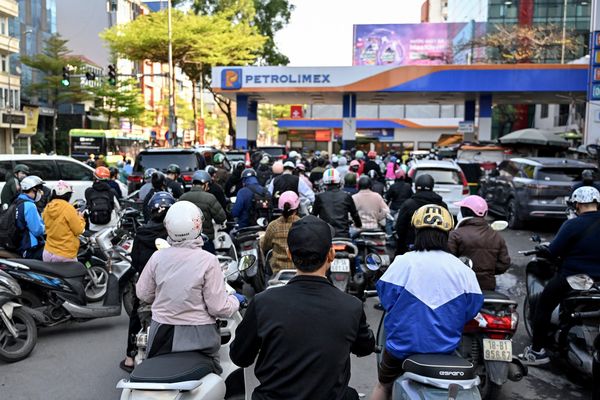
Dr Spear's research team believes there will be fewer overall car trips — however when people do drive in, they will be travelling further, clogging up city-bound outer-suburban roads and freeways.
On public transport, trips from outer suburbs and new growth areas could be up to 8 per cent higher than previously estimated.
To a lesser extent, similar trends are predicted to play out in regional areas for people who no longer want to live near the centre of town.
"When people can work from home some days each week, they are willing to tolerate longer commutes on their fewer days in the office," Dr Spear said.
CBD still an attraction despite WFH revolution
The current lull in Melbourne's CBD will long be forgotten by 2036, Infrastructure Victoria predicts.
Dr Spear's research team believes the long-term hybrid working trend will actually increase the attractiveness of city offices, even if staff do not spend entire weeks on-site.
And with population growth, the number of daily trips into the CBD is tipped to be a third higher than before the pandemic.
"For employers, they want to be able to access the largest catchment of workers available."
The pandemic has accelerated the need for more homes, better roads and public transport, hospitals, recreational facilities and other services on the peri-urban fringe, the researchers say. Their recommendations also include the introduction of congestion taxes on new freeways and more appealing off-peak public transport fares.
On Monday, the Victorian government released plans for its "big build" of summer construction, which will see works on 10 rail lines, the West Gate Bridge, West Gate Freeway, Monash Freeway and M80 Ring Road. Work is continuing on the Metro Tunnel, and construction on the eastern end of Suburban Rail Loop will begin in 2022.
Mr Truong said so far he had no regrets about leaving inner Melbourne for the urban fringe. But, he conceded, there were some growing pains in the area.
"The phone signal isn't great at all. You see some families out on their front porch taking calls," he said.
"If it's raining and I have to take a phone call, I go and get my umbrella."