On new year's eve, a discreet announcement from the British Horseracing Authority quietly unveiled a series of relatively minor but significant changes to the way in which Flat races are started.
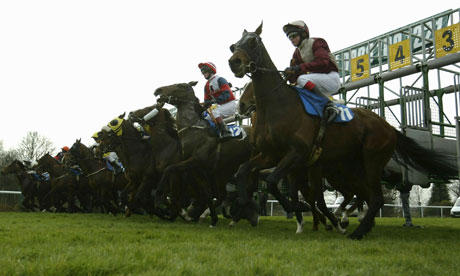
Most of them revolve around a general implementation of common sense. One is a trial whereby a stall will be left empty next to stall one to try and prevent bunching on the inside straight after the start, which can often have a dramatic effect upon results, not to mention being obviously dangerous.
Another is the previously publicised proposal to renumber starting stalls on right-hand tracks, apparently increasing international harmonisation from the start of the turf season (which starts, this year, at Catterick on March 30. No, really. What a thrilling curtain-raiser that promises to be.)
For some, the BHA can do nothing right, and the critics have certainly come out firing. Predictably foremost among them are those who produce and/or heavily use data on draw advantage as part of their profitable punting.
The slightly haphazard nature of the trial of leaving the inside stall empty is an important and well-aimed criticism. Should the scheme be transferred to all meetings on turf, clear-cut guidelines will need to be published quickly as to which tracks can implement its introduction under which circumstances and those that cannot.
Upon my request, the BHA clarified that a stall will not be left empty in races where the field safety limit would have to be changed as a result. As I understand it this could mean, as a random theoretical example, that with the extra room on the inside stall one could be a good draw in a 13-runner race, but a poor one where the maximum field of 14 is achieved. Little wonder therefore that the stats boffins are fuming. It could take years to build up sufficient evidence to support any such hypothesis.
Furthermore, given that raceday stewards are still regularly unable to perform the simple task of preventing race clashes by liaising with other tracks when races are delayed, adding extra weight to their sometimes-feeble shoulders by giving them the power to announce a horse as withdrawn post-race seems to be opening an unnecessary new can of worms.
However, the overall intent of the changes is positive and their introduction understandable. Why shouldn't a horse be allowed to load riderless and then be mounted in the stalls, if it is going to cause less of a delay to the start?
Leaving an empty stall on the inside will surely, as intended, create less potential for dangerous bunching from the start. And if there is evidence – even anecdotal – to suggest that foreign punters are being bamboozled by the numbering of stalls, then why not change things around? When the Tote is sold off and co-mingling of international pools becomes even bigger business, racing might just be even more dependent than ever on foreign income for the sport through Tote take-outs.
The notion that a high number now means a wide draw in every race surely isn't that difficult to comprehend. Yes, those who like a bet will have to be on their mettle for a few months, but until there is any proper degree of representation for punters within racing's higher echelons, it is more a question of understanding and adapting, rather than imagining that we might expect any greater degree of consultation.