
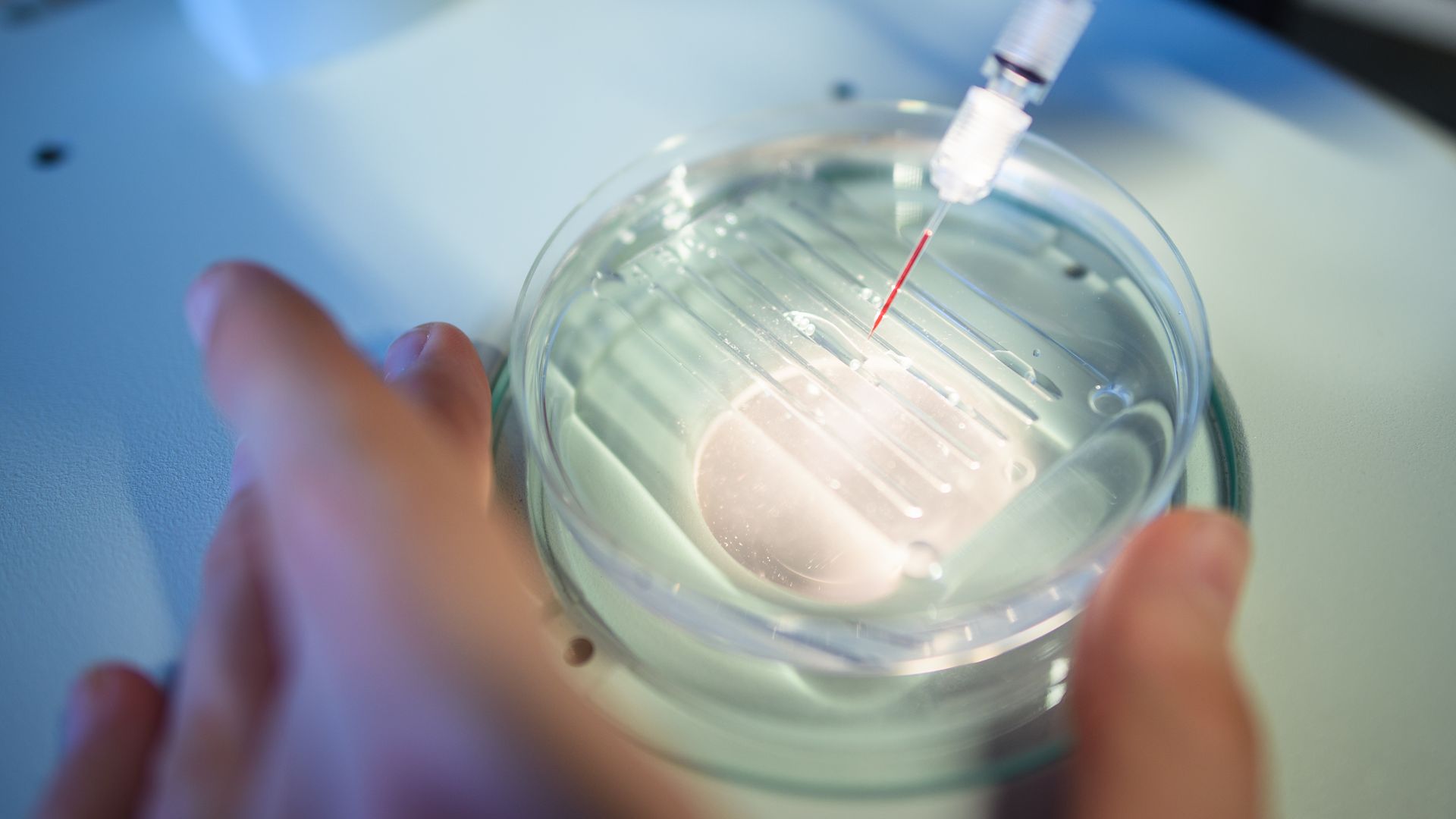
Doctors are using CRISPR to treat a woman with sickle cell disease, the first U.S. patient with a genetic disorder to receive such treatment, NPR reports.
The big picture: Advances in gene editing technology have given new hope to people with diseases that not long ago seemed untreatable.
- But these new therapies are still experimental, and the technologies also carry the potential to be dangerously misused.
Details: The woman received infusions of genetically modified bone marrow cells, which will hopefully give her healthy red blood cells.
- The companies sponsoring the study said earlier this year that they'd used CRISPR to treat a similar blood disorder in Germany, and there's been some evidence that the treatment may be working.
- Doctors are also experimenting with treating cancer patients with CRISPR.
Go deeper: Genetic technology's double-edged sword