Teachers and lecturers have descended on parliament this morning to lobby MPs about pension changes. What's got seven teaching unions united in anger is the government's plan to raise the state pension age for teachers in England and Wales to 68 from 65, and to increase their pension contributions by half from 2014.
Head of the ASCL, Brian Lightman (@brianlightman) tweets from the scene:
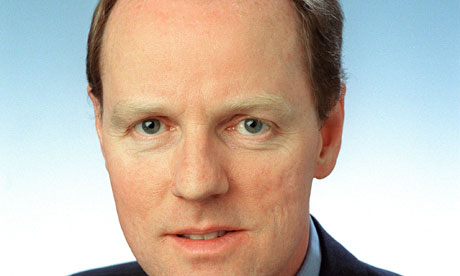
"Schools minister Nick Gibb received more than 154,000 signatures on pensions campaign in front of cameras and reporters."
@DarlingGenghis tweets:
"What do we want? Govt to honour agreements &make decisions based on research. When do we want it? A manageable timescale #pensions."
The unions also object to changes in the way their pensions are calculated. Ministers want public sector pensions to be tied to the consumer prices index, which historically has risen by a smaller amount each year than the retail prices index. A group of public sector unions, including teaching unions, are going to the high court to challenge this proposal.
Kevin Courtney, the NUT's deputy general secretary, says today's lobby will give the government an opportunity to "see sense":
"I see some real fear in the eyes of officials when we have our meetings about pensions. They know that the unions are voicing the views of teachers.
Teachers don't believe that they can take a full class of 30 14-year-olds or seven-year-olds at the age of 68. They are really angry. The idea of our pension contributions increasing by an extra 3.2 percentage points to 9.6% is an aggravating factor."
If you're a teacher, find out how much you stand to lose on the NUT's pension loss calculator. (Thanks for link, @NUTonline.)
More education news from the Guardian
• A Guardian editorial today comments on the effect of government budget cuts on student numbers and school resources, and points out that the days of "education, education, education," seem a very long time ago:
"David Cameron never promised to exempt education from the pain, as he did with health, and so there will of course be a squeeze. It will not, however, be equally shared but concentrated on the first and final stages.
Forget all the research evidence and the political cant about the "crucial early years": infants' services are in for a hammering. Forget, too, the planned increase in the participation age from 16 to 18, since it seems to have slipped the minds of ministers when they imposed deep cuts on this group. If all youths really are to be kept learning for longer, it will have to be learning on the cheap."
• Alastair Stewart, on the other hand, is chuffed to bits with the 12% drop in university applications reported by Ucas this week. Instead of seeing university as an automatic next step after school, young people "are now embarking upon a more astute examination of their objectives - you don't just sign up to nearly £30,000 of debt on a whim". He tells us what his own children have decided to do with their lives:
"For my eldest son, who studied English at Oxford, reflection came late and he is now a content police officer. My daughter turned down a place to read music at Bristol and switched to education and English at Winchester University. She is now a content teacher.
I also have a son who is a show-jumping pupil at an Olympian's academy and my youngest son, still at school, wants to be a tree surgeon. The message is beginning to filter down, slowly but surely."
• The number of pupils caught cheating in exams has fallen sharply as schools increasingly turn to technology to monitor students - watch out for a story from Jessica Shepherd.
Education news from around the web
• There's a very interesting blog posted this morning by Melissa Benn (@melissa_benn), asking whether it's time to set up a movement to save state schools:
"In the past few weeks, in a series of discussions around the country about what is happening to our education system, a lot of people have asked me if there is scope for a kind of Save our Schools movement – similar to the one in the US.
(Note that the twitter account of Diane Ravitch ( @dianeravitch), the formidable opponent of corporate educational reform and excessive emphasis on choice and testing,is now permanently emblazoned with a yellow SOS sign.)"
• Suffolk headteacher Geoff Barton (@realgeoffbarton) has written a fascinating account of a trip he took along with 35 students and staff to visit their partner school in Shanghai. Barton writes:
"It's important to know that our partner school is an 'experimental school'. This means it is one of a small number of schools in Shanghai deliberately designed for innovation. One of the most striking - and flattering - features for me, four years on from the initial visit, was to see how ideas from our school in Suffolk have been embedded at the school in Shanghai.
Some of these are relatively cosmetic - the school environment has been transformed from a brutalist, concrete mix of classrooms and corridors to a place containing plants and with walls covered with the kind of images of student achievement that we have at the heart of our ethos. Their dining room has been completely refurbished to create a better version of ours - music playing, TV screens showing motivational videos, a stage for live performance.
More significant is the way the school has embraced the leadership culture that is central to our values. Shanghai students now participate in extra-curricular clubs and activities and are developing the kinds of skills in leading their peers and younger students that we take for granted."
• Growing numbers of university students are staying on after their bachelors' degrees to complete postgraduate masters and doctorate courses, according to an LSE study quoted in the Telegraph. Employers are demanding highly qualified applicants and rewards them with better pay, it says.
• The Telegraph reports on a story in the Times, saying the Pope has ordered an "unprecedented" inquiry into years of sexual abuse at a Catholic school in Ealing, west London.
"The top-level inquiry was ordered following investigations by the Times newspaper, exposing four decades of sex abuse by monks and lay teachers" at St Benedict's independent school."
• A cross-party committee of peers in the House of Lords is to investigate how the European Union can help higher education across the continent to boost jobs, growth and innovation, the THE reports.
On the Guardian Teacher Network
• Tackling homophobia in schools: How teachers can make their schools LGBT-friendly by teacher Elly Barnes, who has just been voted number one on the Pink List.
http://www.guardian.co.uk/teacher-network/2011/oct/24/homophobia-schools-lgbt
• And Doug Belshaw on how to use mobile devices in the classroom http://www.guardian.co.uk/teacher-network/2011/oct/26/mobile-devices-classroom.
Innovation in Education conference
How can we keep creativity alive in schools in an age of austerity and traditionalism? At this one-day event for school leaders and policy-makers, to be chaired by Judy Friedberg, we'll discuss the implications of cuts and curriculum changes with speakers including Russell Hobby, Jim Knight, Graham Stuart, Mick Waters and David Puttnam. Latest info on the Innovation in Education page - and @InnovateEducate on Twitter.
Education seminars from Guardian Professional
The Guardian Teacher Network runs training sessions for teachers throughout the year in Yorkshire and London. Upcoming courses include:
Is your school thinking of becoming an academy?
This seminar will provide an independent view of the advantages and disadvantages of converting to academy status. It will look at the process of conversion, the implications of academy status, and the support and funding available. November 30, in London. February 21, 2012 in Yorkshire
Protecting young people in a digital age
Led by school digital safety experts, this one-day course will provide safeguarding policy and Ofsted criteria updates, as well as looking at social media and offering practical advice to help your school develop its digital safety policies. February 1, 2012 in London. February 8, 2012 in Yorkshire.
For a full list visit the Guardian Teacher Network
Teachers seminar from the Guardian Education Centre
Insight into digital journalism
Spend a day at the Guardian and find out how an international news media organisation works. The seminar will focus on aspects of digital journalism including writing and editing for a news website, the relationship between print and web journalism, live blogging, the use of social media, podcasting and video production.
2 November, Kings Place, London
Find us on the Guardian website
All today's EducationGuardian stories
Follow us on Twitter and Facebook
Guardian Teacher Network on Twitter
Guardian Education Centre on Twitter
EducationGuardian resources
The Guardian University Guide 2011
The Guardian Postgraduate Guide 2011
The world's top 100 universities
Updating table of university fee announcements for 2012
From Guardian Professional
The Higher Education Network for university professionals
Free online classroom resources on the Teacher Network
More about Cribsheet
Sign up to get Cribsheet as a daily email
To advertise in the Cribsheet email, contact Sunita Gordon on 0203 353 2447 or email sunita.gordon@guardian.co.uk
Subscribe to get Cribsheet as an RSS feed
Interested in social policy too? Sign up for Society Daily