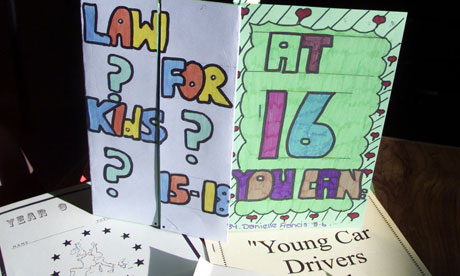
The one thing we've learned from the recent urban unrest is that disaffected young people want society to hear their voices. That being the case, writes Emma Jones (@emmamonicajones), a former teacher who lives in Tottenham, why are citizenship lessons under threat? They're the one opportunity teachers have to discuss politics with their students.
The subject's removal from the syllabus, she says, "would once again leave Britain as the only developed country in the world that fails to teach its young people about the workings of its political system".
"Most adults didn't study any form of citizenship themselves, and there is a general feeling that 'if I didn't do it at school, it can't be important'. Yet too many British adults struggle to understand this country's politics, and far fewer know how to contribute to it or make their voice heard. Voter turnout is low, dislike for those who dedicate their lives to politics is high, while people who are members of political parties or trade unions are an oddity."
In comments, Francis Gilbert (@wonderfrancis) backs her call and links to his own piece written earlier in the year on the efficacy of citizenship. But a lot of posters say the subject is poorly taught. Here's weetabixdude:
"I'm an A-level student and have sat through many years of citizenship/PSHE/call it what you will. I can honestly say that we learn very, very little from this subject - mostly we learned 'how to put on a condom & STIs' and when our teacher just couldn't be bothered, we watched films. We did nothing related to current affairs or voting - I remember doing these things in sociology, not citizenship.
My point is that if you believe citizenship is the answer, it needs to be taught properly first."
The education world is still buzzing with talk of the riots. This week's SecEd canvasses a range of teachers and educators about their views of David Cameron's call for tougher discipline.
And Martin Allen and Patrick Ainley begin their latest blogpost on radicaled thus:
"There is more than one 'lost generation'. We have seen at least two in the past months as young people have taken to the streets. Students have protested against fee rises and now a hard core urban youth have taken the stage. On both occasions, the media have focussed on the violent scenes - clashes with police and attacks on property, claiming student protesters were infiltrated by anarchists and that rioters were 'classless', but these two groups would seem to represent very different constituencies."
More education news from the Guardian
• On the eve of A-level results day, we've put up our clearing advice blog. Students can start posting questions now, we'll have experts in tomorrow to help them decide what to do once they've found out their results, and talk them through the process of clearing should they need to use it. A-levellers should also take a look at these guidelines - and get ready to hit the phones.
Remember too that the Exam Results Helpline, organised by Ucas, opens at 8am tomorrow - you can phone its careers advisers on 0808 100 8000.
Schools and sixth-form colleges please note: We'd like you to respond to a few questions about their A-level results tomorrow. Please go to guardian.co.uk/a-level-results from 8am so that we can put your pupils' results on our map. You will not need a login.
• A poll of employers has revealed a surprising degree of scepticism about the value of a degree. The finding may encourage students who miss the A-level grades they need for university on Thursday to abandon the idea of re-applying next year. The majority of the more than 400 UK firms surveyed said they would hire a school-leaver with two years' work experience over a graduate.
• Melissa Benn tackles the age-old subject of Britain's great educational divide today, contrasting Wellington College - with its golf course and lessons in happiness - with under-resourced comprehensives in disadvantaged areas. She pleads:
"Let's have less panic, and hyperbolic talk of punishment. Let the courts do their jobs, while we in civil society recommit ourselves to a fairer school system, the creation of strong, mixed schools in every community."
On the Guardian higher education network
• On campus in August: one tutor's summer diary. Lindy Blair, senior professional training tutor at the University of Surrey, is making the most of summer by catching up on some student feedback and staff recruitment
• Leadership lessons from Tina Fey: women in higher education admin. Associate professor Janine Utell was recently elected chair of her department and is exploring what it means to be a GenX woman taking on a leadership role in academia
Education news from around the web
• Most UK students are happy with the quality of their university course, according to the National Student Survey. Of 265,000 final-year students, it found 83% were satisfied, up from 82% in 2010, the BBC reports. The findings were based on answers from students studying at 154 universities and 99 further education colleges across the UK. There was a response rate of 65% - the highest rate in the seven years that the NSS has been running. The Telegraph headlines its NSS story: "One in 10 dissatisfied with degree".
• The Evening Standard reports on a college that tried to lure would-be business students with pictures of Big Ben, the Houses of Parliament and St Paul's cathedral. The website for the Commonwealth College of Business Management London claimed applicants could "study in one of the most incredible places in the world - the City of London". In fact, the college is based 18 miles from Westminster. The Advertising Standards Authority has upheld complaints that college chiefs misleadingly implied that it was located in, or near, central London.
• Facebook, Twitter and other social media websites pose a devastating threat to schools and are a "bigger fear than Ofsted", the National Association of Head Teachers' gen sec tells the Telegraph. Russell Hobby says:
"Increasingly, social media are being used to fuel campaigns against schools and teachers. Twenty per cent of our members have received threats or abuse online - parents or ex-pupils being the most common source. The results can be devastating".
• Fleet street fox (@fleetstreetfox) has done an awfully clever comparison of Michael Gove's financial doings and those of a young woman sentenced as a "rioter". It's entitled "43 and never been spanked".
• The Creative Education blog (@creativeedu) features a guest article on whether giving lots of rewards to students actually lowers motivation. Here's an example:
"A father asks his son if he would take the rubbish out for him, as the son knows it will help his dad he does so without any fuss. A second father asks his son to take the rubbish out, but this time offers £5 for doing so. Despite the money, the boy refuses and asks: why are you offering to pay me for this, is it because you know it is a bad job and you don't want to do it?"
• The Scottish government has announced ambitious plans to teach all primary pupils at least two modern languages, trumpets the Herald. (Thanks to @schoolduggery for spotting this.)
Education seminars from Guardian Professional
This seminar will provide independent advice and information on framing a research proposal, the process and pitfalls of a research degree and career prospects.
9 September, London.
Making the most of media opportunities to enhance your school's profile
Whether it's sharing good news or handling a crisis, headteachers and school management teams need to be able to handle the media in all of its forms. This one-day seminar in association with the NAHT is essential for new and aspiring heads as well as established school leaders who wish to update their knowledge. It includes a session on social media.
20 September, London.
Using social media to enhance the student experience
As tuition fees rise, so too do student expectations. Social media is an effective, low-cost way to manage this challenge. This seminar will explore newly conceived best practice, techniques and strategy for all higher education staff: academic, communications, recruitment, marketing and strategy.
22 September, London.
Whether it's getting published, convincing an employer that you have transferable skills, or securing an academic post, you need to be fully prepared to achieve your goals. This course will help you identify career opportunities for those with research skills and specialist knowledge.
28 September, London.
Find us on the Guardian website
All today's EducationGuardian stories
Follow us on Twitter and Facebook
Guardian Teacher Network on Twitter
EducationGuardian resources
The Guardian University Guide 2011
The Guardian Postgraduate Guide 2011
The world's top 100 universities
Updating table of university fee announcements for 2012
From Guardian Professional
The Higher Education Network for university professionals
Free online classroom resources on the Teacher Network
More about Cribsheet
Sign up to get Cribsheet as a daily email
To advertise in the Cribsheet email, contact Sunita Gordon on 0203 353 2447 or email sunita.gordon@guardian.co.uk
Subscribe to get Cribsheet as an RSS feed
Interested in social policy too? Sign up for Society Daily