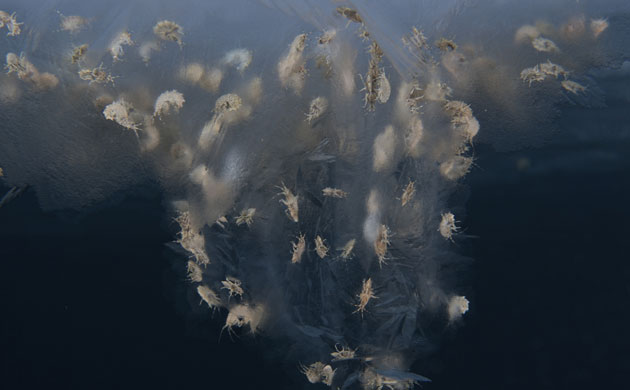
Scientists conducted a series of expeditions during International Polar Year 2007-08 to collect data that they will contribute to the Marine Life Census, the most comprehensive study of life in the oceans ever conducted. By comparing notes, scientists studying both poles found 235 species living in both polar regions despite being 6,800 miles (11,000km) apart. Marine life that both poles share includes these shelled pteropods, Limacina heliciniaPhotograph: Russ Hopcroft, University of Alaska Fairbanks/Census of Marine LifeScientists say the discovery opens a host of future research questions over where they originated and how they ended up at opposite ends of the earth. The ghost-like sea-angel Platybrachium antarcticum, flies through the deep Antarctic waters hunting the shelled pteropods (another type of snail) on which it feeds. This 3cm long slug was photographed during a 2008 expedition aboard the Umitaka Maru to the AntarcticPhotograph: Russ Hopcroft, University of Alaska Fairbanks/Census of Marine LifeSand fleas (amphipod crustaceans) under nearshore ice in the Beaufort Sea. Ice-associated amphipods are a major food source for Arctic cod, in turn the main prey for ice sealsPhotograph: Shawn Harper, University of Alaska Fairbanks/Census of Marine Life
The nemertean Pelagonemertes rollestoni hunts for zooplankton prey that it will harpoon with a dart attached to the tongue coiled within it. Its yellow stomach reaches out to feed all parts of the body. About 3cm long, it was photographed during an Antarctic expedition in 2008Photograph: Russ Hopcroft, University of Alaska Fairbanks/Census of Marine LifeArctic krill, Thysanoessa raschii, is found in high densities under sea ice in the Arctic and its marginal seas, where it feeds seasonally on algae associated with the sea icePhotograph: Russ Hopcroft, University of Alaska Fairbanks/Census of Marine LifeCalycopsis borchgrevinki, is one of the more common hydromedusae encountered in Antarctic watersPhotograph: Russ Hopcroft, University of Alaska Fairbanks/Census of Marine LifeChionodraco hamatus, one of the Antartic's ice fish, can withstand temperatures that freeze the blood of all other types of fishPhotograph: Census of Marine Life/Russ Hopcroft, University of Alaska FairbanksSand-fleas such as Hyperoche capucinus, are common predators swimming in polar waters. This specimen - about the width of a finger - was photographed during an Antarctic expeditionPhotograph: Russ Hopcroft, University of Alaska Fairbanks/Census of Marine Life
Sign up to read this article
Read news from 100’s of titles, curated specifically for you.









.png?w=600)