
Good morning. AI is reshaping jobs faster than workers can retrain for them.
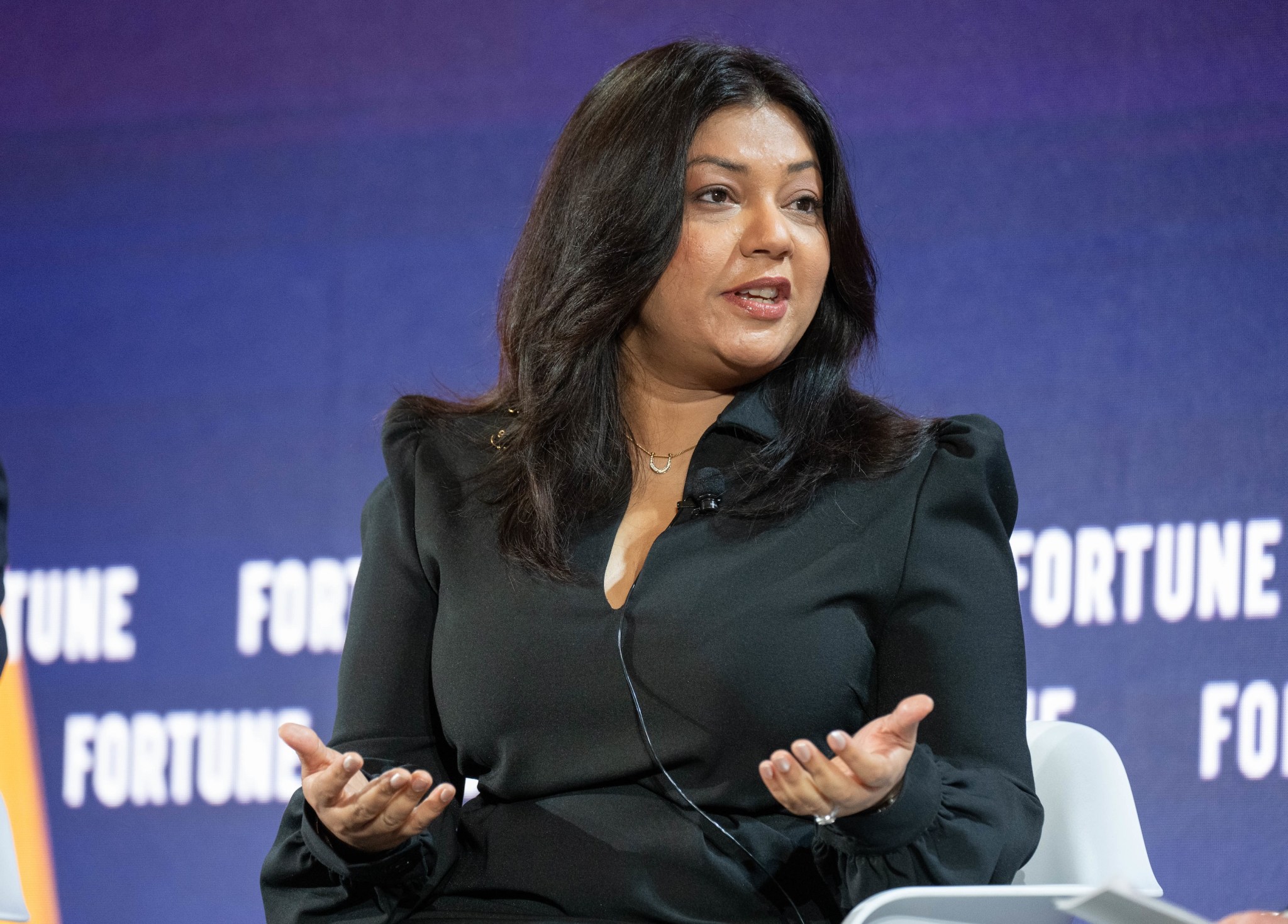
“The skills we need in the AI age are fundamentally different from before,” said Charu Mahajan, senior partner and VP of IBM Consulting APAC, during a panel session moderated by Fortune’s Jeremy Kahn at the Fortune Innovation Forum in Kuala Lumpur, Malaysia, on Tuesday.
“There’s a greater emphasis on data literacy,” Mahajan said. “And it’s not just about being an advanced data professional.” It now entails working with machines and understanding what human collaboration with them looks like, she said. Being data fluent—and knowing how to work with agents and robotics—is becoming essential.
‘Thinking outside the box’
For employers, it’s not just technical skills that are most sought after. According to Mahajan, IBM’s CEO research reveals that “the emphasis and premium on creativity, thinking outside the box, and being able to be innovative have become really important.”
There remains an emphasis on hiring younger people, but increasingly those who come from fields or areas that may be diametrically opposed to what a business traditionally focuses on, Mahajan said. “There is a greater emphasis on: How do you bring in creative people?” she said. “Because fundamentally, with AI, you will need people to truly be innovative.”
This marks a dramatic shift from the previous decade, when coding and STEM credentials were seen as essential for a competitive career. As Mahajan points out, technology is becoming a commodity.
“You don’t find yourself hard-pressed for technology, because you have models and technology agents available to you,” she said. The real differentiator now is having people who know how to use these tools and work with them—skills like prompt engineering and the human intervention needed to leverage technology, she explained. Using technology creatively is where the value now lies, she said.
A startup mindset for the AI age
Achmad Zaky, a founding partner of Init 6, an investor fostering startups in Indonesia, said that success in the AI era also relies on an “experimental spirit.” Speaking during the panel session, he credited the most effective founders with always being curious about the future, trying new things, and learning from failure. The main characteristic of successful founders, he said, is the willingness to try, fail, and try again—each time pushing harder.
Major corporations are slowly adapting, but many still struggle to adopt the startup mentality that rewards experimentation over perfection. AI has made businesses rethink the kinds of skills—and the “spirit of failure”—they need to keep experimenting, Mahajan said. Many companies are stuck in “pilot purgatory,” constantly trying to innovate with AI but going nowhere, she said. What’s happening is that while many are beginning to experiment with these technologies, they don’t yet have the skills to adapt, she added.
Mahajan argues that success requires breaking down traditional corporate silos: Technology is present across all functions—it’s no longer just the remit of the CIO or CTO, she said.
You can watch the complete panel session here.
Sheryl Estrada
sheryl.estrada@fortune.com