
From competing against thousands of students in Iran's National Olympiad to building systems that handle millions of requests per day at Cursor, Navid Pour has always been drawn to hard, impactful problems. His approach has stayed consistent: find something that matters, stay with it until it's solved, and build something people actually use.
Today, he's applying that mindset to online fashion. As cofounder and head of engineering at Fetchr, he's working to fix an industry stuck with a 40% return rate and an experience that hasn't fundamentally changed in decades.
His Early Years
From an early age, Navid was drawn to solving hard problems. He took his first programming class at thirteen, discovering a way to channel that curiosity into creating things. He would stay up late building small tools — some so useful that his teachers began using them to grade papers and schedule classes. That early glimpse of how software could make life easier left a lasting impression.
In high school, Navid trained for Iran's Math and Informatics Olympiads, joining more than 10,000 other competitors. The training involved solving thousands of problems, some in minutes, others in hours, and the hardest over several days. That persistence paid off when he earned a silver medal at Iran's National Olympiad for Informatics, an experience that deepened his love for problem-solving and set the foundation for everything that followed.
Moving Abroad and Becoming a Software Engineer
After high school, Navid moved to Canada to pursue a degree in computer engineering at the University of Toronto. During his studies, he helped solve impactful problems at many major companies.
His professional career began at Amazon, where he built internal tools that saved millions in payroll processing costs every month. But he soon realized he wanted to work on bigger, harder problems where he could own more of the solution end-to-end.
He later became the first engineer at Softdrive, a remote desktop startup where he'd be responsible for building the foundation of the company's product from scratch. He wrote a meaningful portion of the company's codebase and built applications that tens of thousands of employees at major AEC companies (including Autodesk, Arcadis, PCL, and Gilbane) relied on daily.
These experiences taught him to build complete products that solved real problems for real users. The challenges kept getting bigger and more tangible, and with each project, he was learning to apply the same persistence that served him in competitions to work that directly impacted people.
Building Tools Used By Millions of Developers
Navid's interest in solving hard, interesting problems led him to become one of the first engineers at Cursor. Founded by four MIT graduates, Cursor is an AI-powered coding tool that helps programmers write software faster.
At Cursor, Navid built products that reached massive scale and impact. He was part of the original team that developed Cursor Tab, the company's core autocomplete feature now serving over 400 million requests per day and transforming how developers write code. He also helped integrate Cursor's AI with the browser, enabling it to search for and solve developers' coding problems in real-time.
After seeing firsthand how challenging it was to build a robust web-crawling agent, Navid turned his attention to the next big problem: helping AIs use the browser. That led him to Stagehand, a leading web automation framework created by Browserbase. He quickly became one of the top 10 contributors to the project, working on critical parts of its core automation logic.
Today, Stagehand powers the workflows of over 400,000 developers every week, helping them automate complex browser tasks with AI.
Building AI Stylist Agent Fetchr
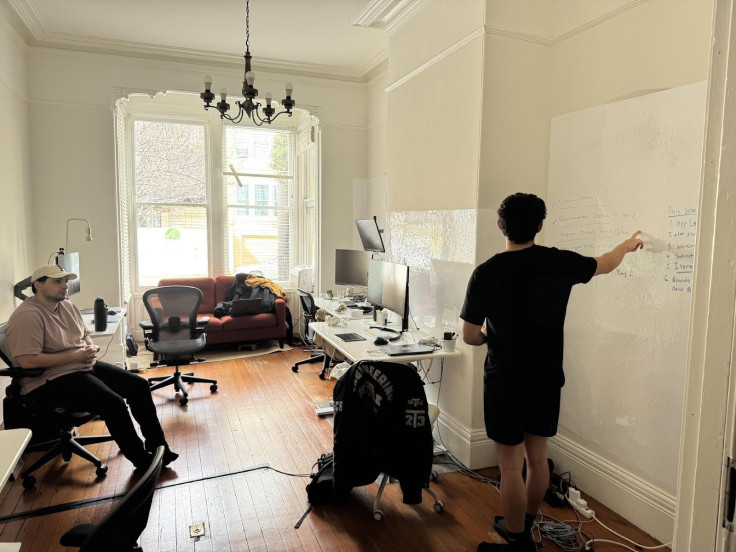
After building products used by millions, Navid became fascinated by fashion — partly because he disliked both in-person and online shopping. He teamed up with Calvin Chen, who'd previously built and sold a $9M e-commerce business, to start Fetchr. Their mission: make online shopping as effortless and reliable as having a personal stylist — ensuring that what users buy actually fits and feels right when it arrives.
As Head of Engineering, Navid built an AI stylist agent that learns each user's unique fashion preferences and body fit. The agent interacts conversationally, asking questions, showing items from across the internet, and refining its recommendations based on feedback. Over time, it learns a user's preferred styles, colors, and materials, and then proceeds to search the web to find the best-matching clothes.
Navid also developed advanced algorithms that incorporate body measurements to filter out ill-fitting items. Thanks to these systems, Fetchr customers return only 1.5 out of every 10 items, less than half the industry average — a testament to how effectively AI can personalize fashion.
This means users can shop online with the same confidence as shopping in a mall without worrying about second-guessing their size, waiting for their clothes for weeks before finding out they don't fit right, or discovering a specific piece of clothing doesn't go with their wardrobe after their received it. This can open up online clothes shopping to people who have previously avoided it, unlocking an entirely new market.
Solving Real-World Problems With AI
Looking forward, Navid plans to continue growing Fetchr and expanding its impact in the fashion industry. His team is working on making the AI stylist even smarter — capable of understanding more complex preferences and helping more people who struggle with finding clothes that truly fit and feel right.
Beyond fashion, Navid is deeply interested in education. Inspired by his experiences in the Iranian Olympiad program, he hopes to one day make curiosity-driven learning more accessible to students everywhere. He believes that learning to solve problems independently can change lives — just as it changed his. For now, that remains a future mission he's exploring as he continues solving meaningful problems in fashion.
At his core, Navid Pour is driven by one principle: use AI to tackle hard, impactful problems. It's the same mindset that has guided every step of his career — find problems that matter, stay with them until they're solved, and build things that make a real difference.