Neatly stacked in my living room stands an emotional reminder of my past – people I’ve known, experiences that shaped me and indelible memories. It’s all there in the old CDs that I rarely play anymore. Instead of owning my music, I benefit from the new business model that streaming companies like Spotify provide – I buy the service not the products.
However, my emotional attachment to the music remains as strong as ever. So my colleagues and I are left contemplating whether that recalibrated service-focused strategy can be applied to lighting.
Instead of buying new items when we tire of them or they develop a fault, can we design and use our products in a smarter way? Can we create a more meaningful and personal ecosystem in which the provision of lighting is radically developed from simply buying a bulb? Can Philips measure the relationship a customer has to lighting less in terms of units sold and more through an emotional connection that the company can nurture over decades?
It’s a philosophy partly inspired by pioneering research undertaken by Jonathan Chapman, Brighton University’s professor of sustainable design. His work is based on the premise that designing products should incorporate a lasting emotional as well as physical perspective.
Consumers must be encouraged to keep products for longer because, he says: “We produce 40 tonnes of waste to make a tonne of products, and 98% are dumped within six months. We can enhance resource efficiency and brand loyalty by designing things that people want to keep longer – building in emotionally durable design.”
This is the crux of a new, collaborative project between Philips and the University of Brighton for which we are looking for one PhD student to work on this with us. Our aim is to explore how we can construct a more emotional relationship with our lighting products that could lead to new types of business models for this industry.
Innovative design will, it is hoped, enable what we think of as a fairly mundane item to take on a life of its own, so it becomes a “living” contributor to a connected home. This research will help to engineer a deeper, more meaningful connection between user, device and provider.
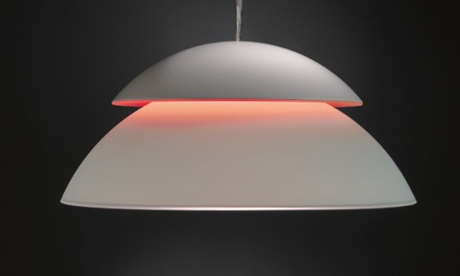
It’s an extraordinary opportunity – and a formidable challenge, too. To bring light into a different realm in an even more revolutionary way than, for instance, the personalised Philips Hue system has. It means changing the mind-sets of people and experimenting with design ideas that build upon Philips’ long history in advancing lighting products.
While the raw materials for lighting products have changed, the need for raw materials has not. We still make, buy and throw away products to replace them with new ones – and we often discard the originals because, unlike my CDs, we aren’t emotionally attached to them.
By building a more robust relationship into a functioning product, we extend its life. As a company, we will create and sustain a more meaningful bond with customers, our business model will rely less on sourcing precious raw materials which will dramatically benefit the environment just as our energy-conserving LED systems have done.
This work will also consider how else we can support Philips’ move towards a circular business model. Instead of the costly and resource-heavy cycle of owning, consuming and replacing we will, through designing deeper emotional ties, consider lighting as a service. That reflects the central principle of a new, “circular” capitalism in which, instead of wasteful one-way consumption, there is a more strategic, efficient and functional business model where companies act as service providers. I don’t buy CDs because I can stream the music. I may not need to buy new bulbs because my relationship to the lighting system will, in ways yet undetermined, be more engaged and meaningful.
This challenge proposed by Philips and the University of Brighton has been supported by the UK Arts and Humanities Research Council, which has awarded a £60,000 grant. If you are interested in applying for the PhD position please follow this link.
Content on this page is paid for and produced to a brief agreed with Philips, sponsor of the circular economy hub