As Britain experiences increasingly hot and dry summers, gardeners are rethinking traditional planting schemes, with exotic and tropical varieties emerging as a compelling alternative.
Temperatures could soar to as high as 36C this week as parts of the UK face their fifth heatwave this summer, and the Met Office is considering issuing rare amber or red extreme heat warnings.
Róisín Wilson, managing director of HSK Exotic Gardens, a leading UK importer of rare plants, notes the shift. "In general, a tropical plant is quite a statement plant," she explains.
Feedback from garden centres, nurseries, and wholesalers confirms a decline in demand for conventional cottage garden plants and bedding, with tropical species predicted to be the next big trend.
Wilson adds: "People are definitely going for that statement in their garden. We are probably in a good position to have tropical plants in our garden, or plants that are used to the heat."
This burgeoning trend is exemplified by Dave Robinson, a garden centre worker and plant enthusiast, who, with his partner Gemma Furby, has spent a decade transforming their South Wales semi-detached home's garden into a subtropical haven. What was once a blank canvas of decking and lawn now boasts a vibrant array of tree ferns, fatsias, bananas, colocasias, cordyline, schefflera, and monkey jar climbing plants, punctuated by fiery cannas, vivid crocosmias, and fragrant ginger lilies.
Robinson advises that while "around 15% of our garden probably comes in in the winter – the more tender stuff like alocasias – most of it stays out there. You’ve just got to be selective and find the right hardy cultivars."
So, what plants could give your garden an exotic feel?
1. Large palms
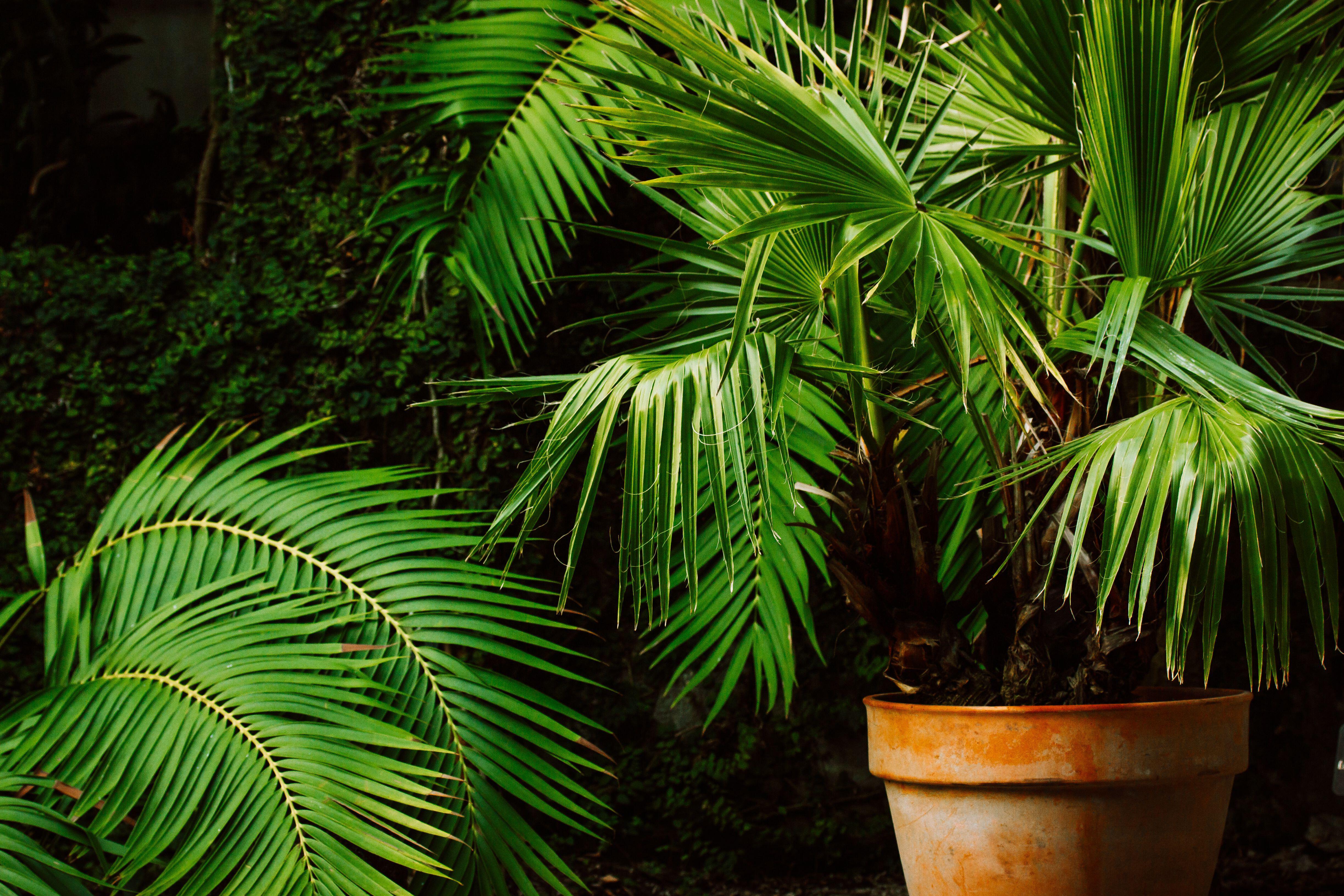
“Make sure you get your backbone in first – your evergreens, your big canopy plants like larger palms, the trachycarpus fortunei (also known as the windmill palm) and the loquat trees,” Robinson suggests.
2. Tree ferns
“They come from Australia, are found in the rainforest, so they are used to extremes to a degree – the hot weather they get in Tasmania, down to the colder weather and lots of rain,” says Wilson.
“They are well set up in this country because once you put them in shade or partial shade, they are going to do really well and are certainly a statement in your garden.”
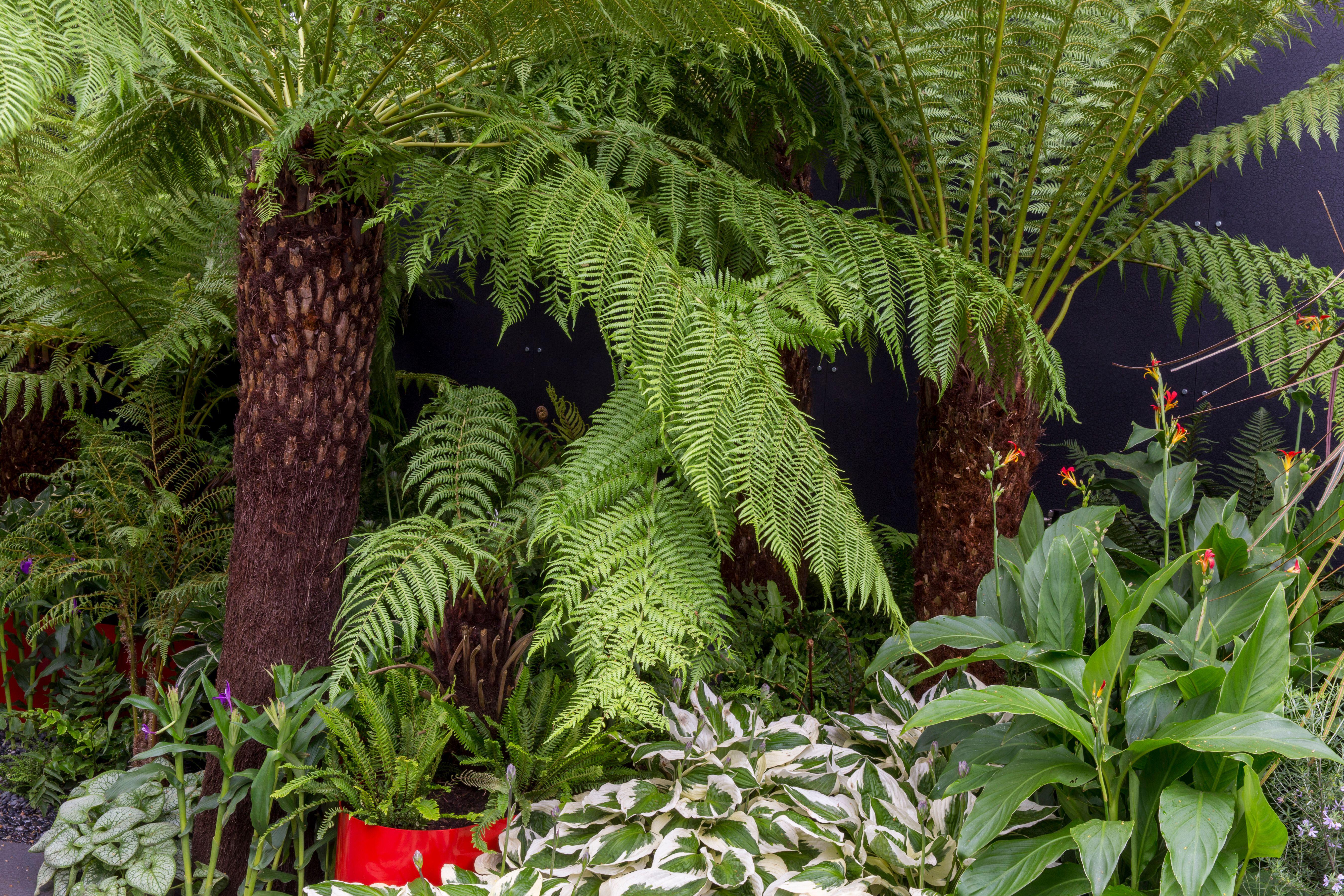
Tree ferns can be put into pots, and are ideal for people with small gardens because they grow very slowly, she explains. They like shade so may be ideal for sheltered courtyards or north-facing balconies.
“Obviously, check the weight-bearing (limitations) allowed on your balcony, but other than that pots are great for them.
“A tree fern is an investment because you’re not going to buy it for £20. People forget how long that tree has been growing. In Australia, it’s only going to grow a maximum of an inch a year. If you want a 3ft (tree fern), buy a 3ft.”
In the winter you’ll need to apply some protection such as horticultural fleece, with which you cover the crown and wrap the top third of the plant. Only water the crown, she adds, and feed into the crown from April to October. In a dry winter, you’ll need to water the plant.
If it rains a lot, replace your wet horticultural fleece with dry fleece, because if the wet fleece freezes it might kill the crown of the plant.
3. Fatsia japonica
These tropical-looking stalwarts, also known as the castor oil plant, with lush, large leaves, are widely available and look stunning in shade or semi-shade. Although full sun isn’t ideal for fatsias, they can still survive, says Robinson.
“If it’s in a full sun situation you’ll get smaller, lighter green leaves, whereas in a dark spot the leaves can get enormous and stay green and glossy. So they are adaptable.
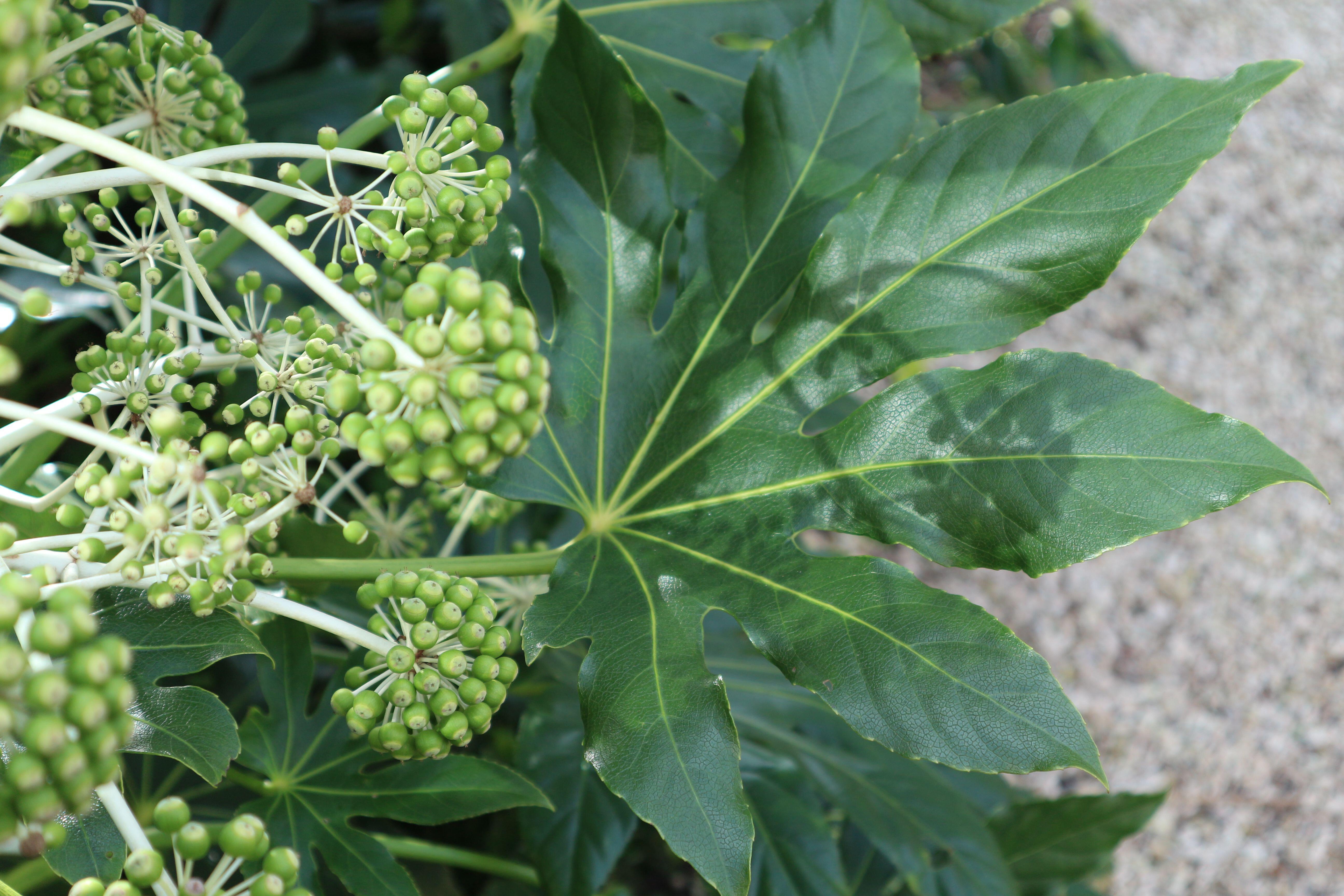
“They are even great for dry shade as well. This summer we’ve had a lot of drought and they can take it on the chin once they’ve established. But you have to get them established first.”
People who want a statement in a small garden may go for a large fatsia in a pot, he agrees.
4. Bananas
Their showstopping arching leaves up to 2m long provide a real statement in the exotic garden.
“The Musa basjoo (Japanese banana) is completely root hardy for the UK, although they do require some fleece winter protection in colder areas,” says Robinson.
“Being root hardy, even if you lose the height and the stem, they generally come back from the base reliably.”
Growing to 3m tall or more, they can live for many years. Plant them in a sunny, sheltered spot in rich, fertile, moist but well-drained compost and give the plant plenty of space, and water them regularly through spring and summer.
Less hardy varieties will need to be brought into a heated greenhouse for winter, but if you can’t move them inside, reduce their size over autumn, cutting off the leaves and leaving the stem intact, protecting them with horticultural fleece and hessian.
5. Colourful and textural additions
“We have Jurassic Statement Gardens, and have been putting things like agapanthus, salvias, fatsias and ground cover ferns in them,” Wilson explains.
“In a natural environment, the ground is covered in different types of ground fern. Things like agapanthus add a bit of colour, while fatsias add a different texture.”
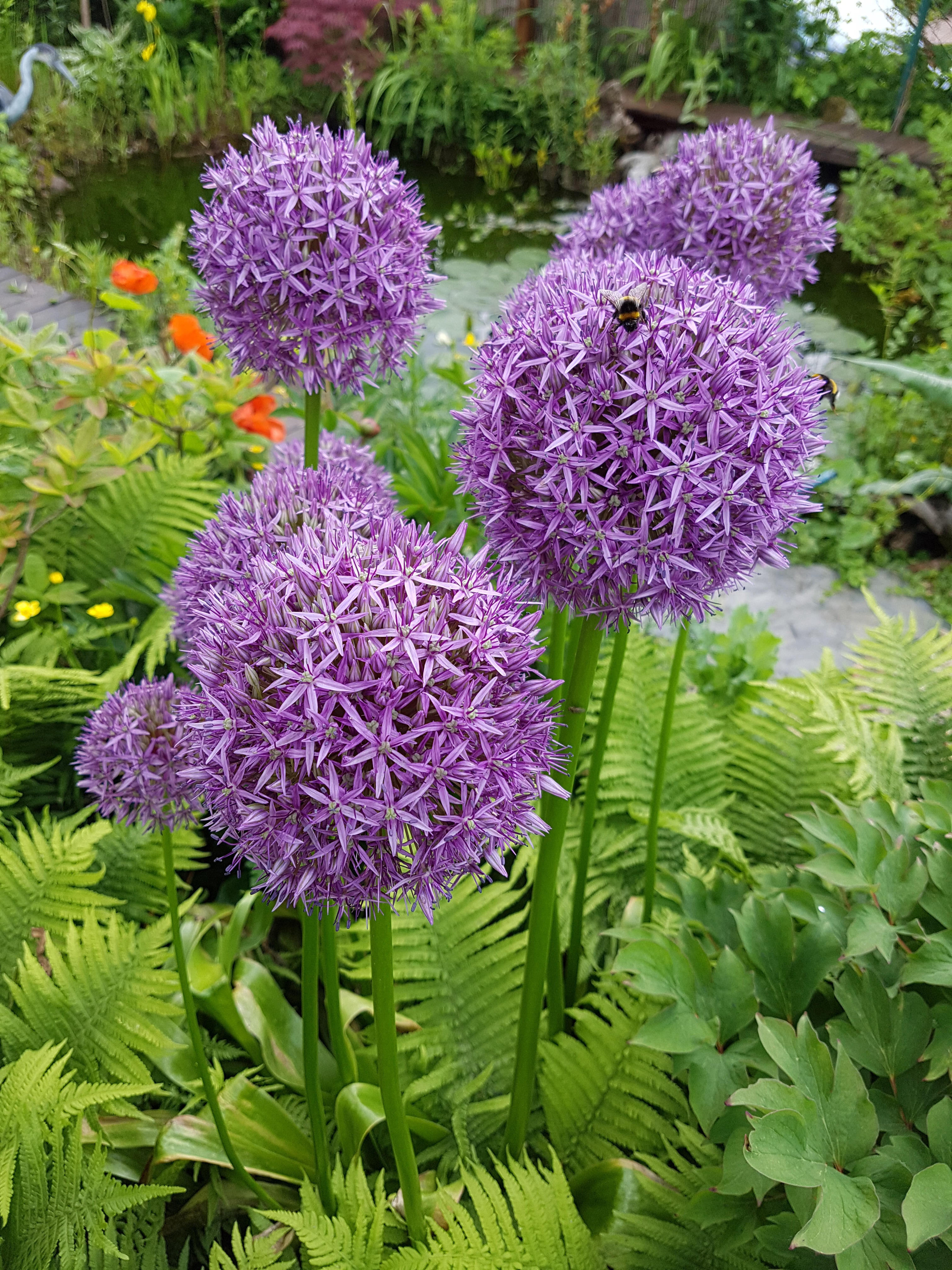
She also recommends dahlias, which come in a vast array of colours, or even large alliums such as ‘Giganteum’, which flower earlier in the summer and appear above the ground cover ferns.
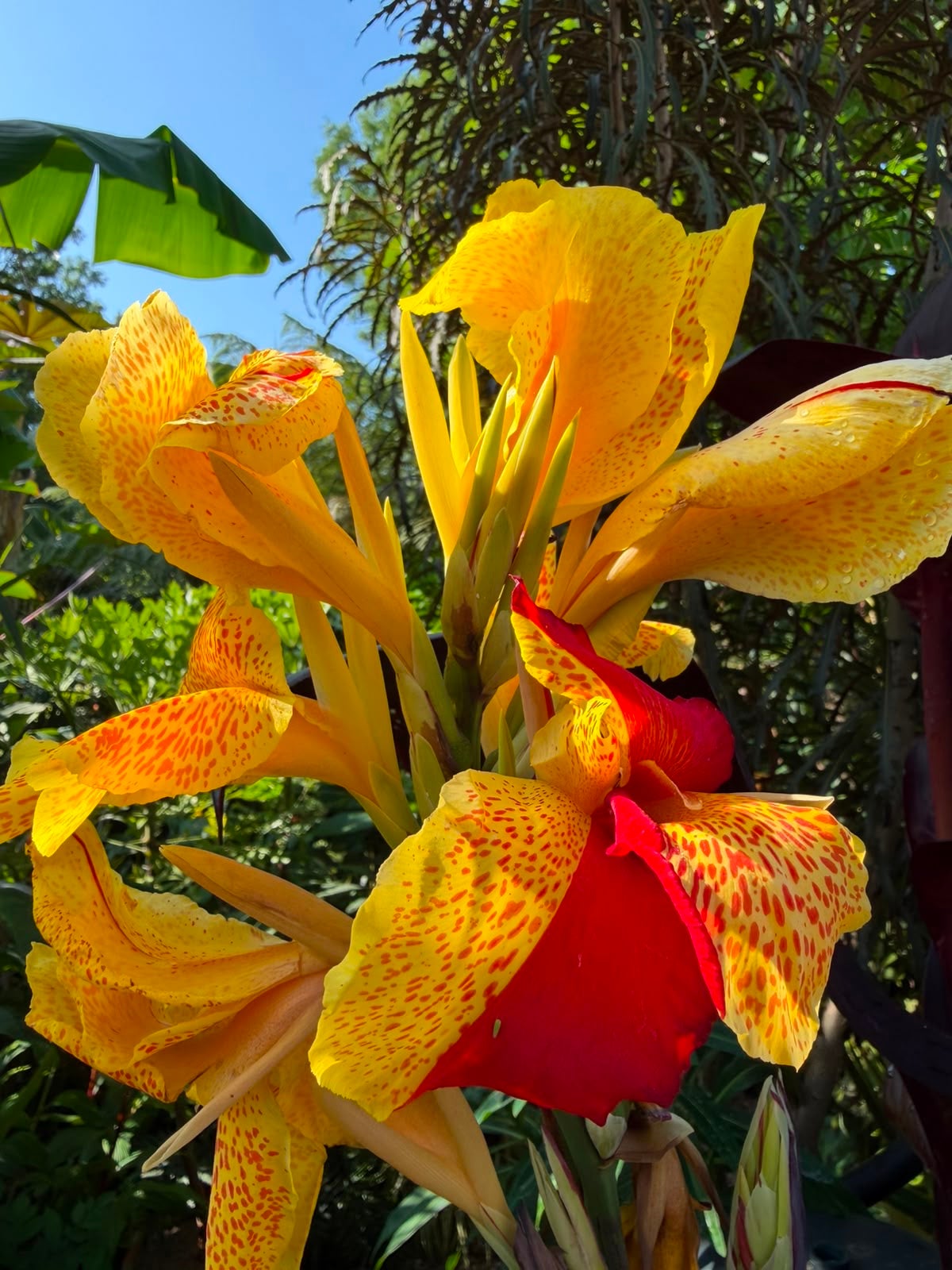
Robinson has many fiery orange and red hues in his tropical paradise, including Canna ‘Cleopatra’ and bromeliad flowers, along with speckled toad lilies and orange impatiens.
“The planting has got to be suitable for shade as well as flowers. We’ve a lot of impatiens, hardy begonias and other shade-lovers. We use Crocosmia ‘Lucifer’ to cover up the old banana trunks, so there’s not a massive gap after the bananas flower.”