Crayfish staff help Czech brewery keep its water as pure as can be
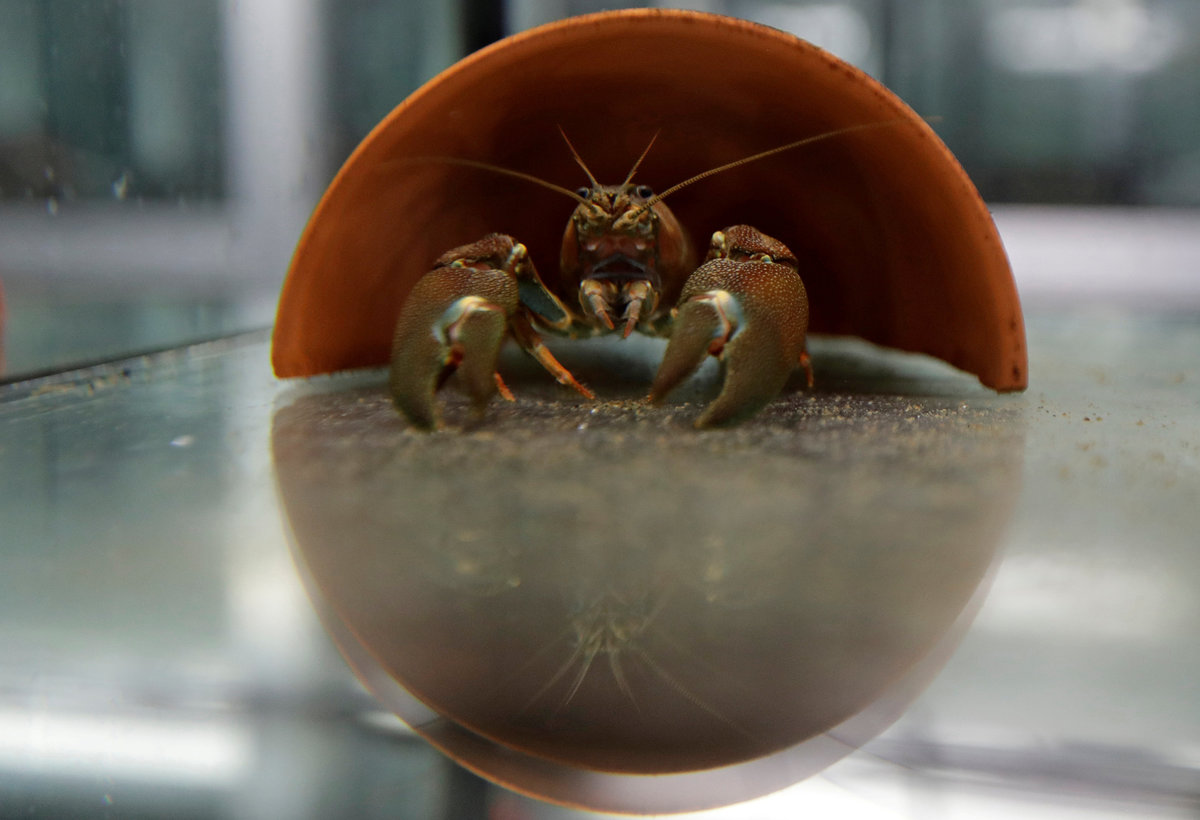
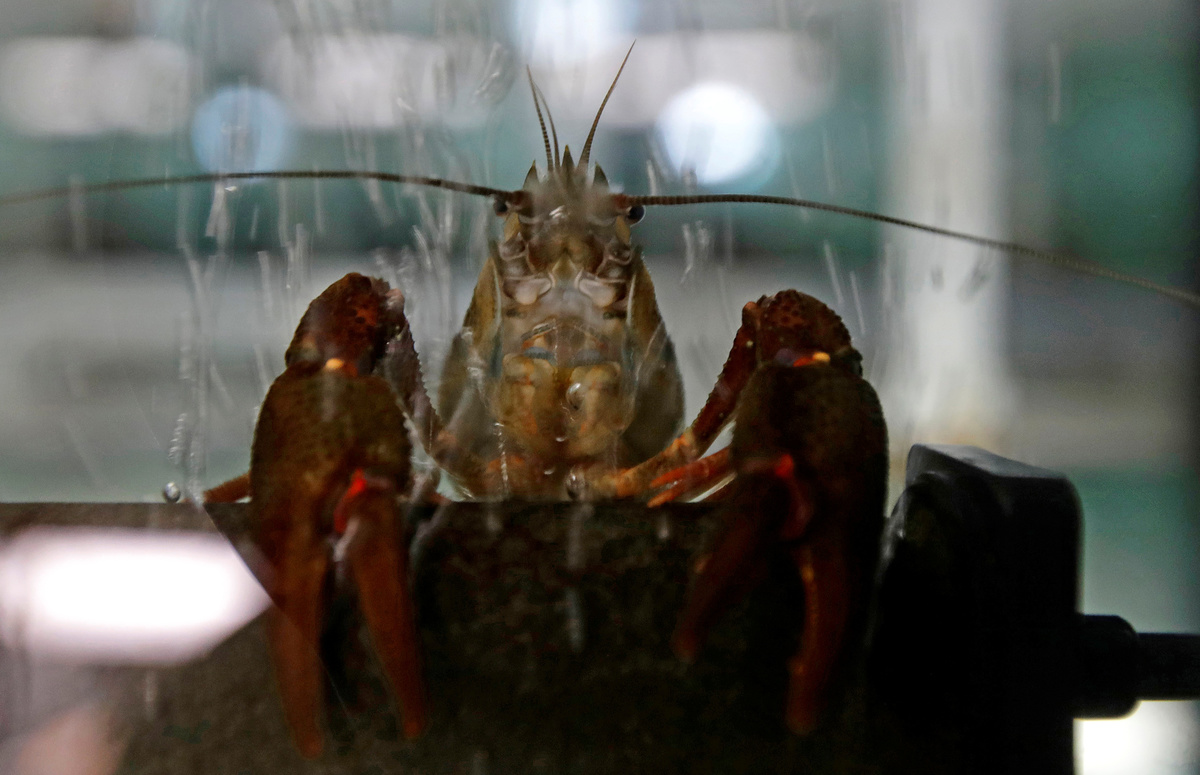
A crayfish sits inside a fish tank in a laboratory of Faculty of Fisheries and Protection of Waters in Vodnany, Czech Republic, September 26, 2017. Picture taken September 26, 2017. REUTERS/David W Cerny TPX IMAGES OF THE DAY
PROTIVIN, Czech Republic (Reuters) - Crayfish equipped with high-tech sensors have been drafted in by a Czech brewery in its quest to keep their water supply pure.
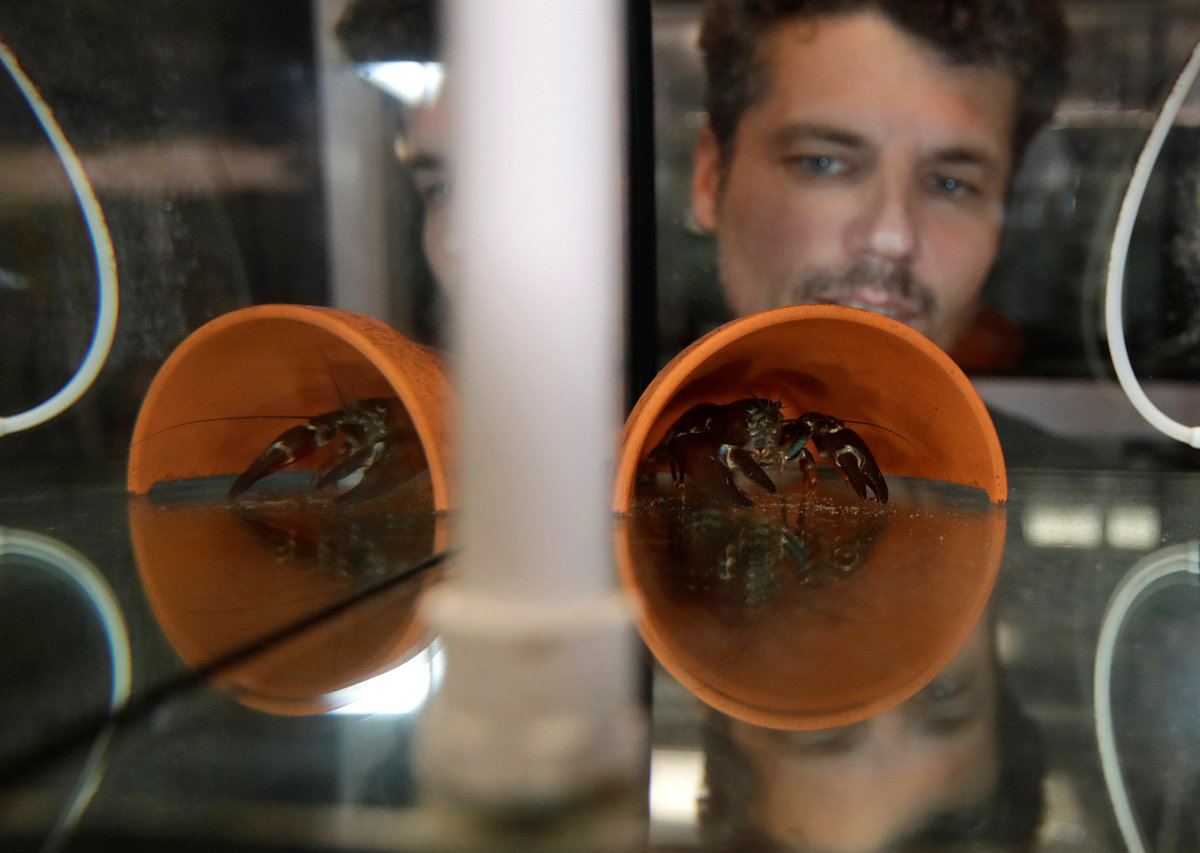
The Protivin brewery in South Bohemia has placed the creatures, which react quickly to changes in their aquatic environment, in fish tanks through which is pumped water from the same natural source that the brewery uses.
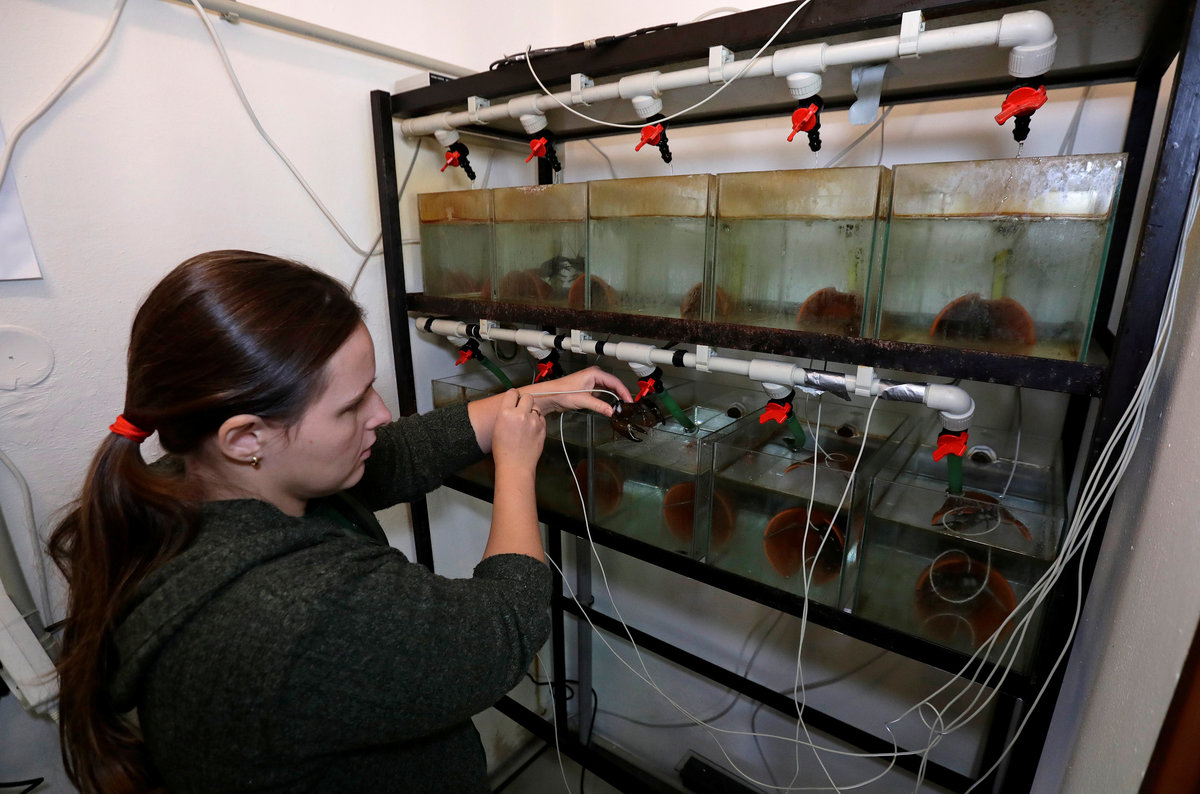
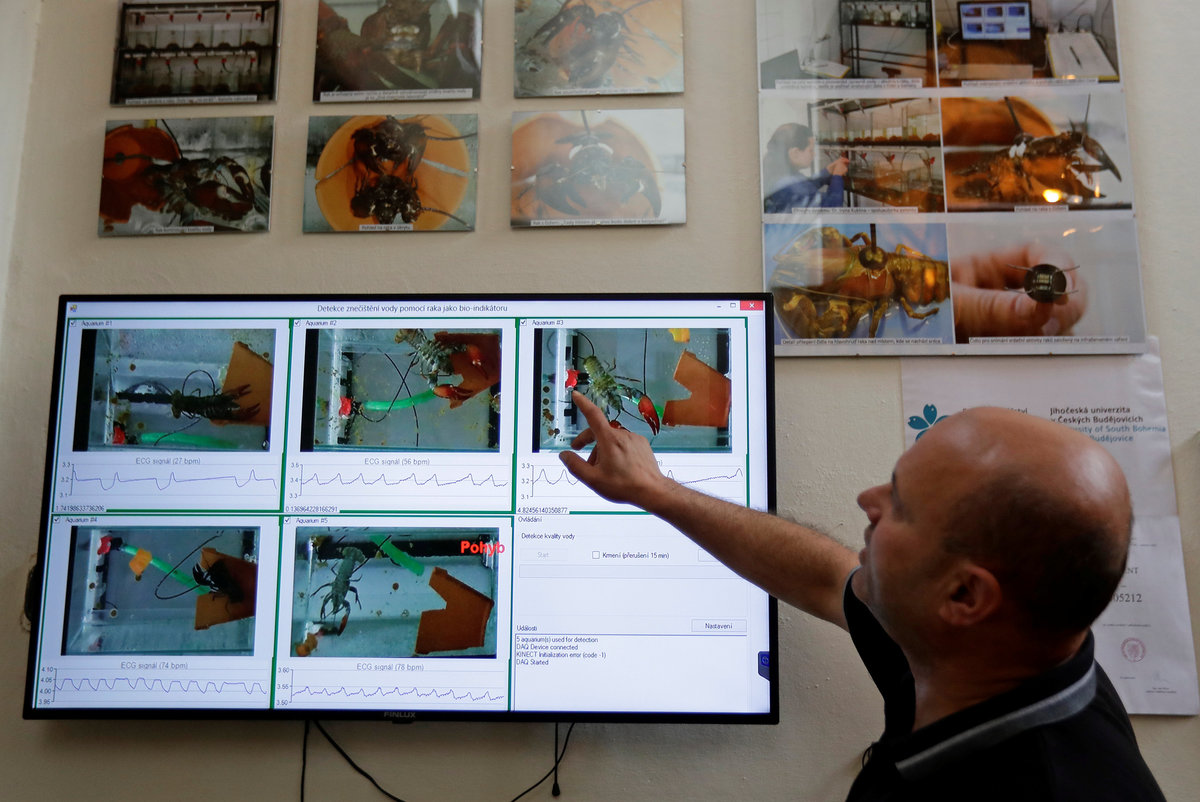
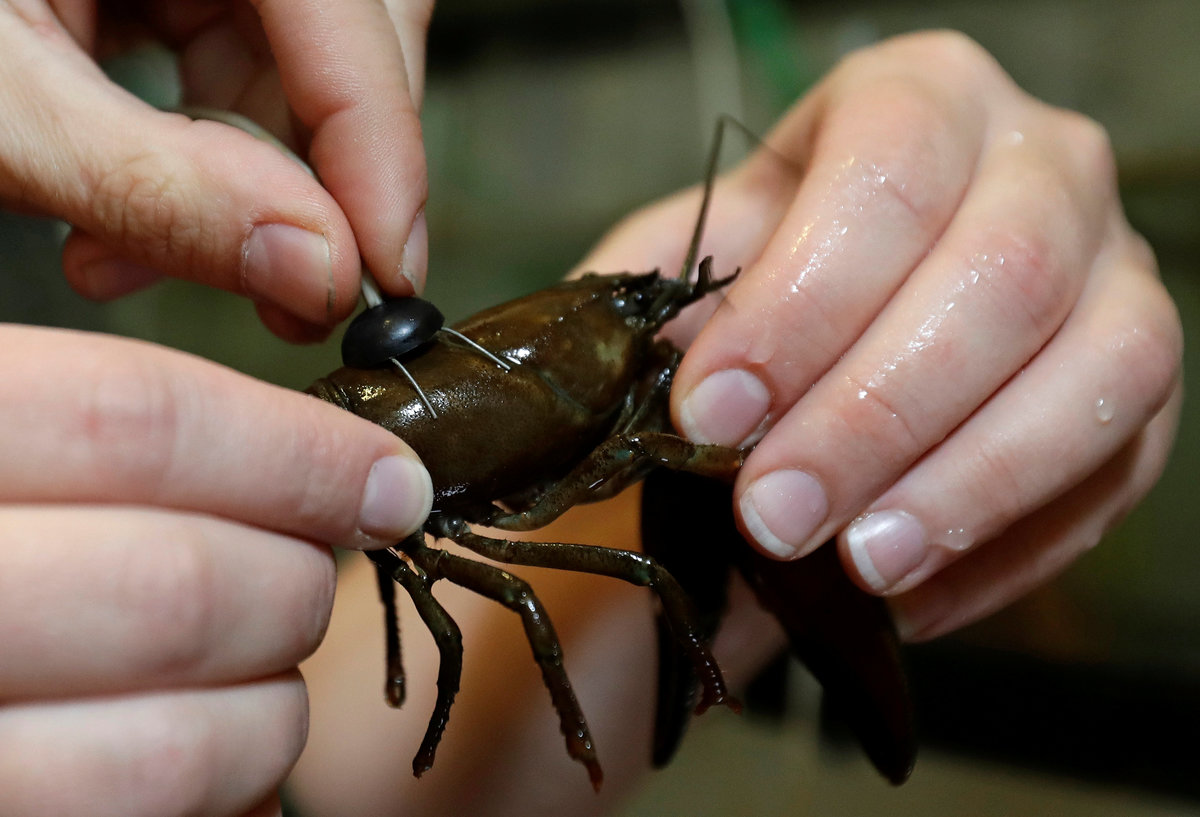
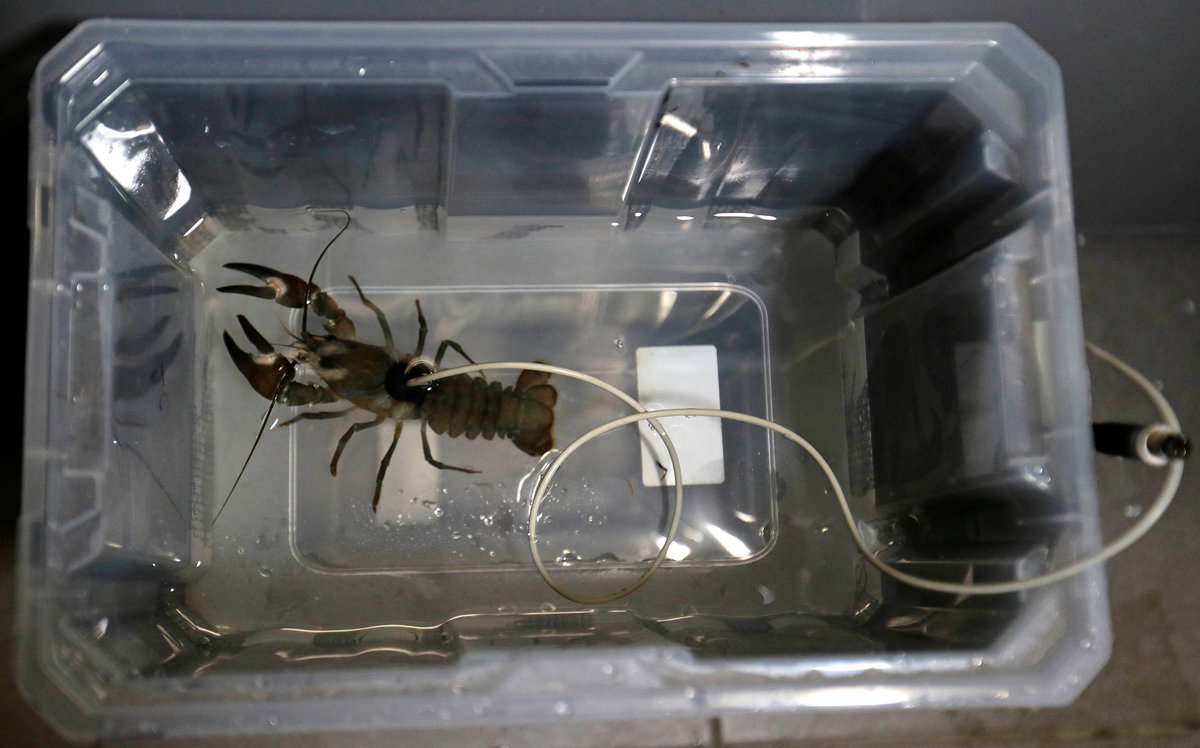
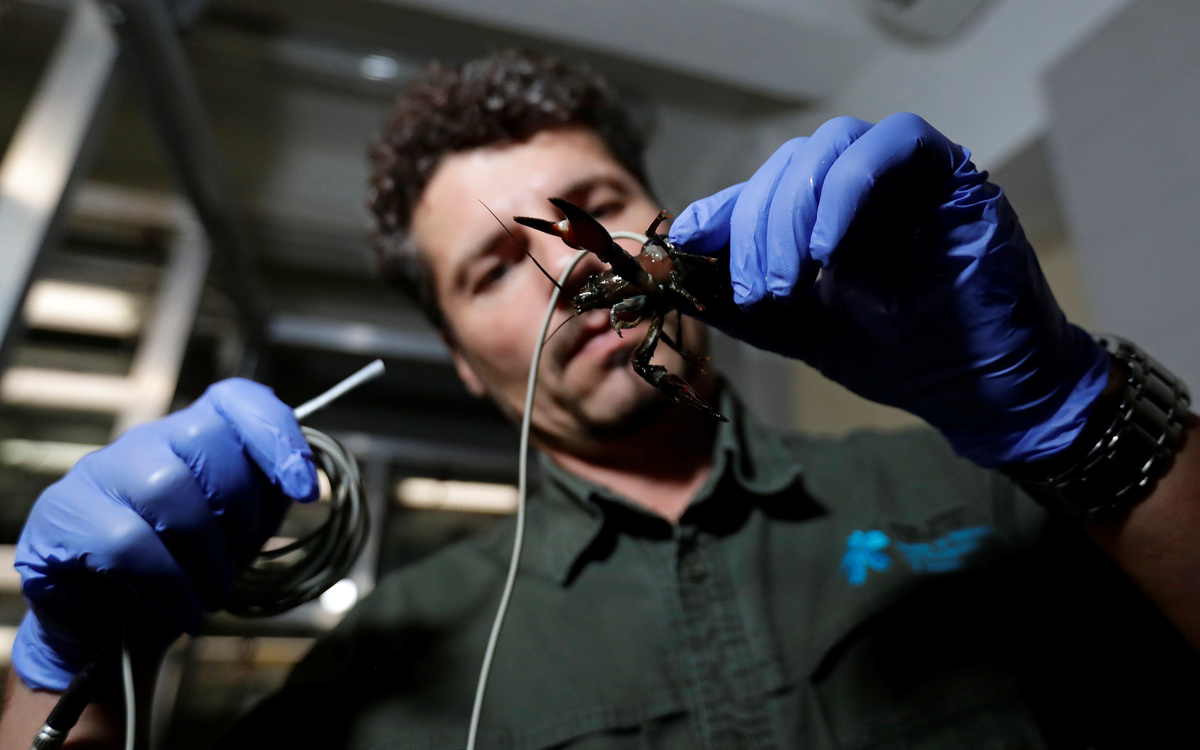
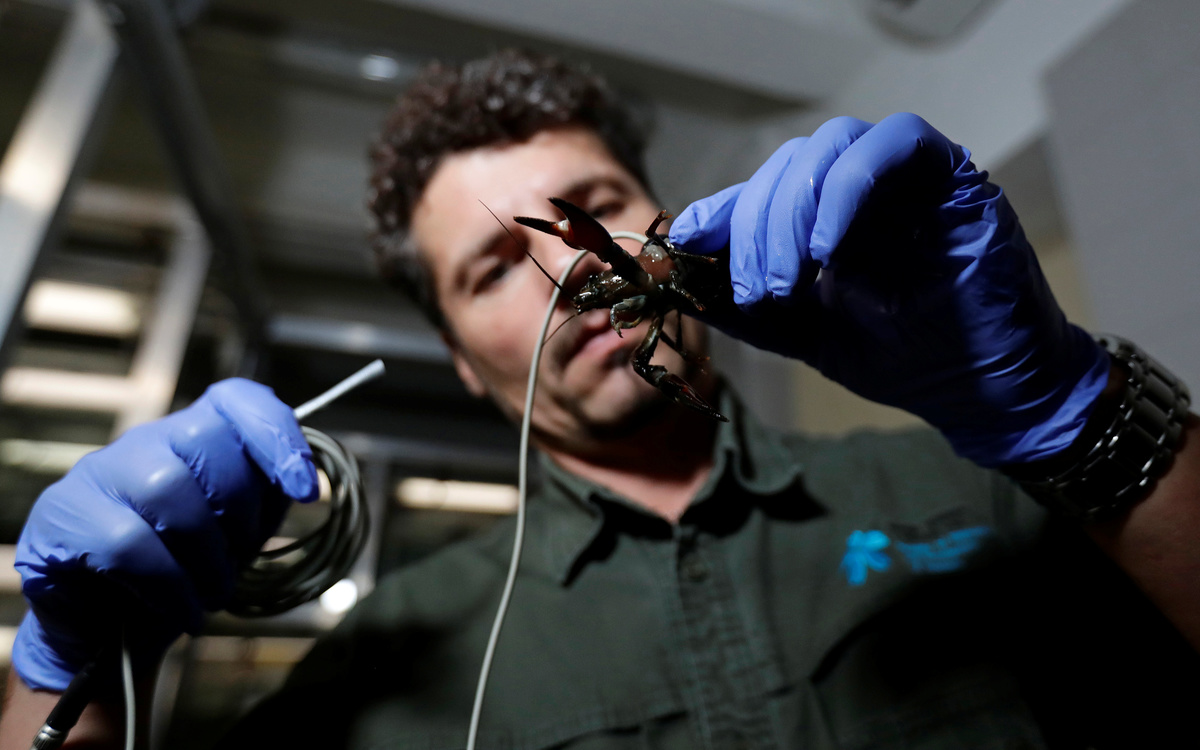
The animals are fitted with infrared bio-sensors which monitor their heartbeat and movement. Data is analyzed by a computer, and any changes in the animals' body or behavior flags a change in the purity levels of the water in its tank.
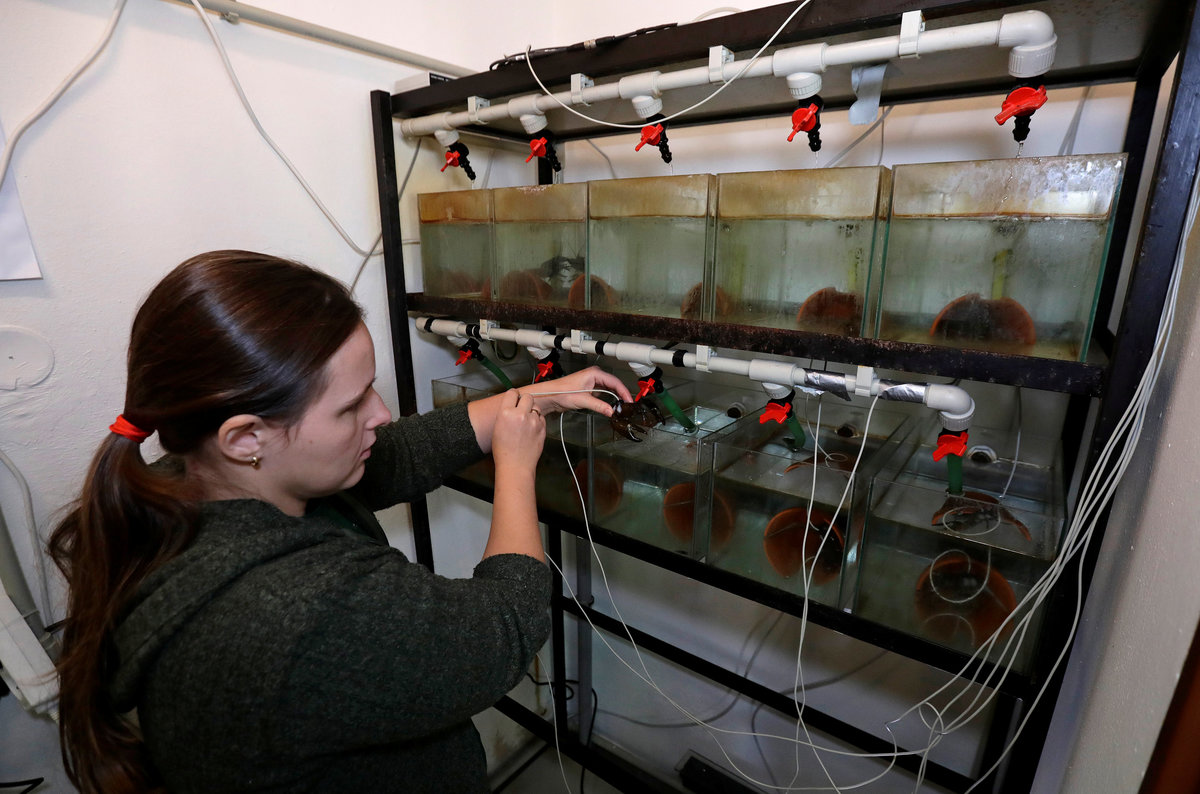
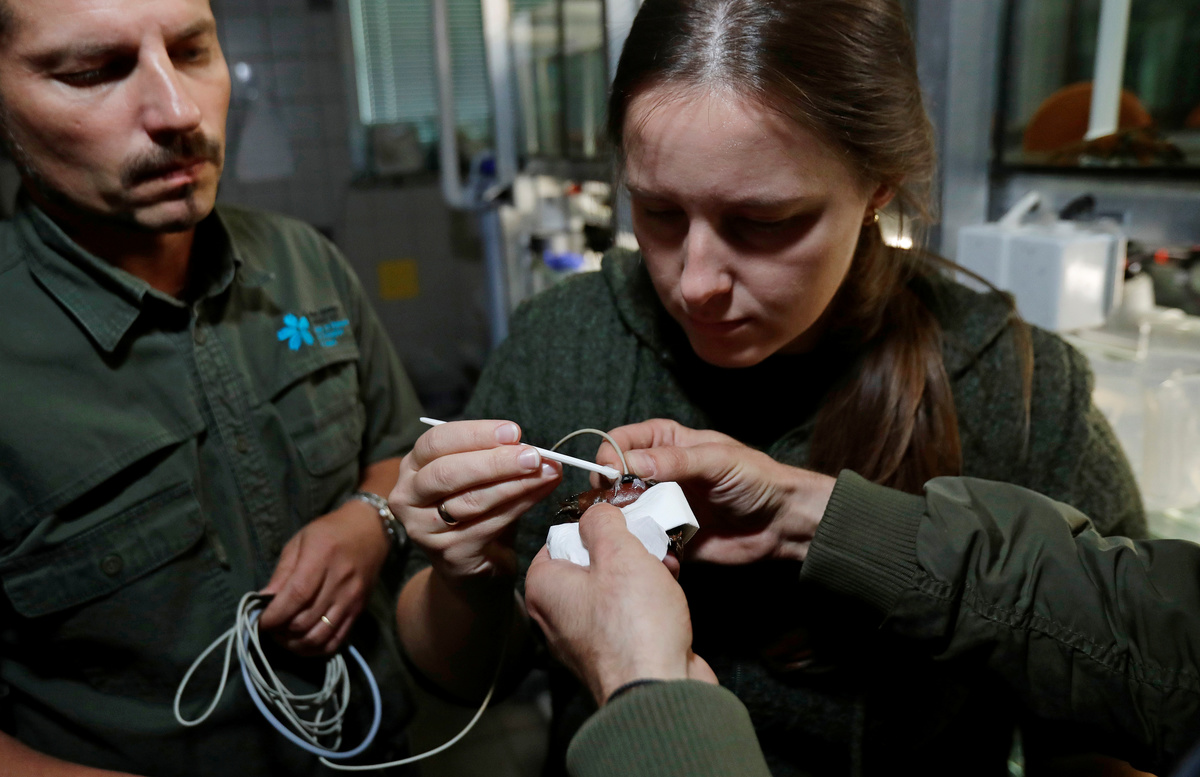
A scientist from the Faculty of Fisheries and Protection of Waters places a crayfish, equipped with a sensor, to a fish tank in Protivin brewery in Protivin, Czech Republic, September 26, 2017. Picture taken September 26, 2017. REUTERS/David W Cerny
"When three or more crayfish are moving or change their pulse activity, we know that the water parameters have changed. We can react quickly because we have the result within three minutes," head brewer Michal Voldrich told Reuters.
The water system was developed and patented by scientists at the Faculty of Fisheries and Protection of Water at South Bohemia University at Vodnany.
"We are using crayfish like a living chemical laboratory – like a bio indicator and bio sensor together," said Pavel Kozak, Director of the university's Research Institute of Fish Culture and Hydrobiology.
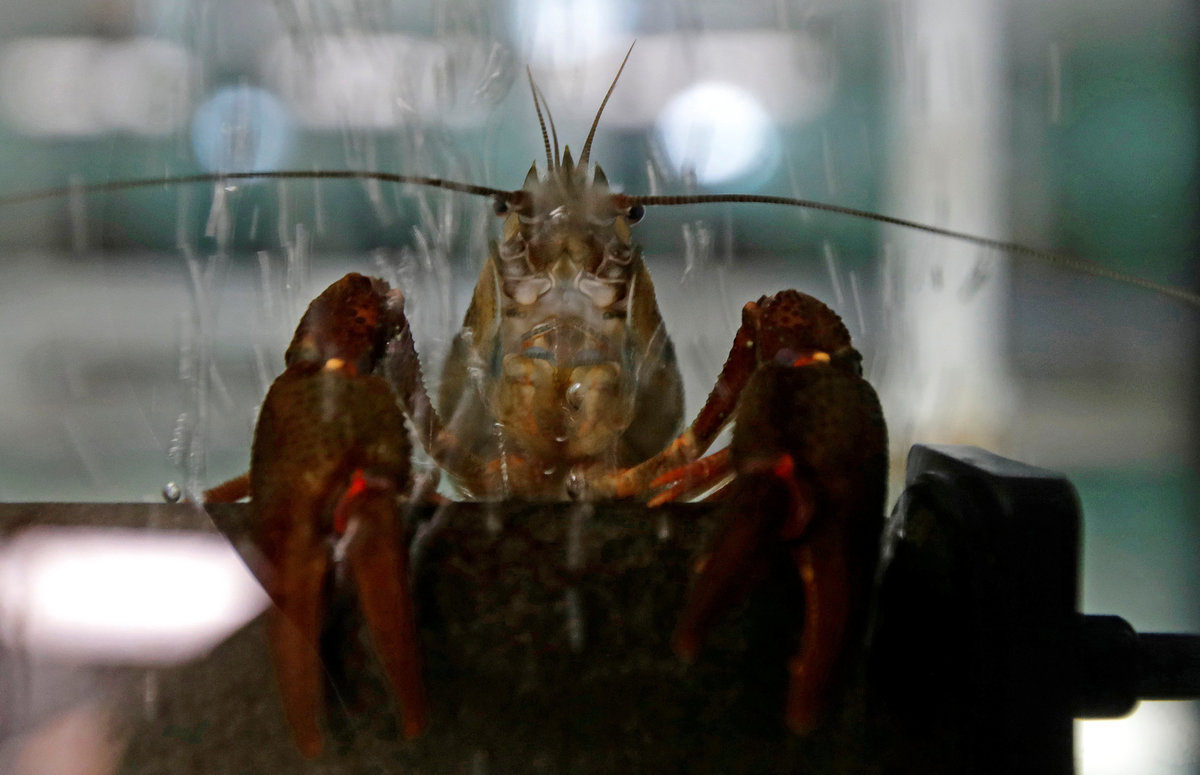
A crayfish rests on a bubble filter inside a fish tank in a laboratory of Faculty of Fisheries and Protection of Waters in Vodnany, Czech Republic, September 26, 2017. Picture taken September 26, 2017. REUTERS/David W Cerny
"The crayfish react very fast on any non-specific change, which is different than any other detectors, which react fast on a very low concentration (of pollution) but only on one specific agent."
Researchers aim to upgrade the technology used in the scheme, and plan to use special cameras to monitor the animals' hearts.
Scientists use naturally occurring crayfish populations in bodies of water as a method of studying water pollution, effectively turning the animals into bio-sensors.
A scientist from the Faculty of Fisheries and Protection of Waters places a crayfish, equipped with a sensor, to a fish tank in Protivin brewery in Protivin, Czech Republic, September 26, 2017. Picture taken September 26, 2017. REUTERS/David W Cerny
(Reporting by Reuters TV; Writing by Mark Hanrahan in London; Editing by Hugh Lawson)
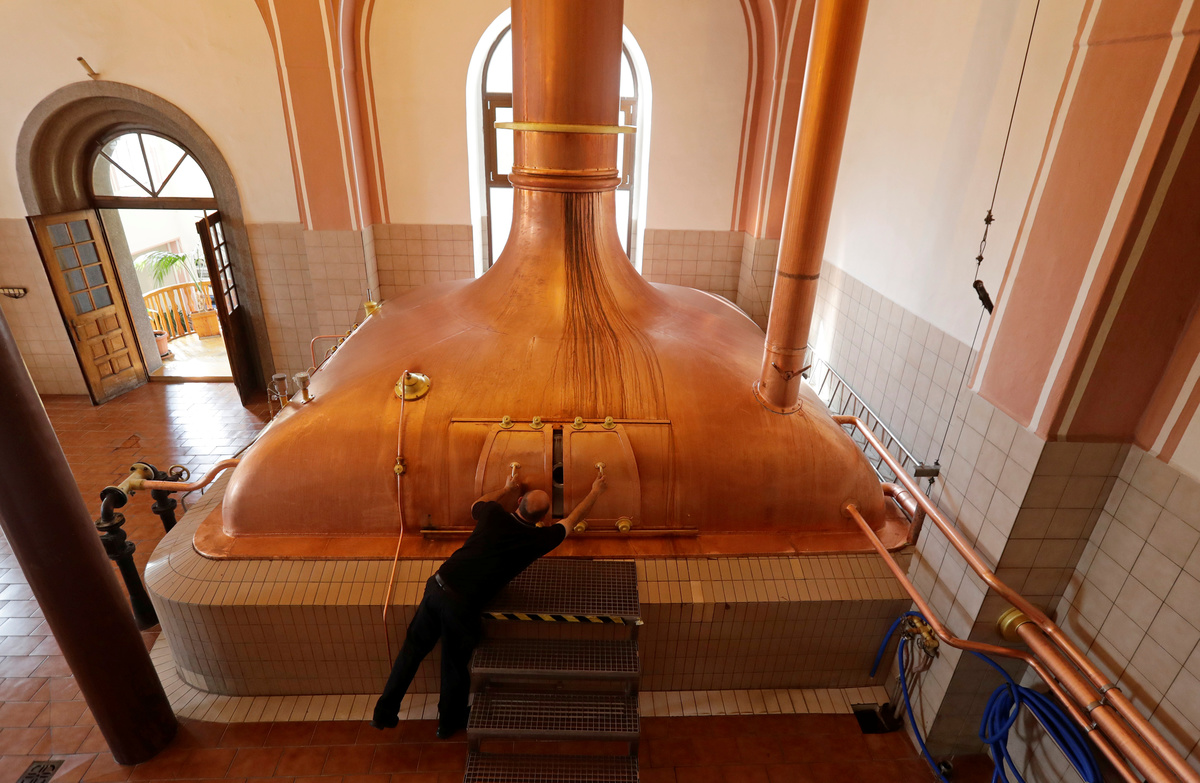
A head brewer opens a brewing kettle in Protivin brewery in Protivin, Czech Republic, September 26, 2017. Picture taken September 26, 2017. REUTERS/David W CernyScientists use a glue to attach a sensor on a crayfish in a laboratory of Faculty of Fisheries and Protection of Waters in Vodnany, Czech Republic, September 26, 2017. Picture taken September 26, 2017. REUTERS/David W CernyA crayfish rests on a bubble filter inside a fish tank in a laboratory of Faculty of Fisheries and Protection of Waters in Vodnany, Czech Republic, September 26, 2017. Picture taken September 26, 2017. REUTERS/David W CernyA head brewer points at a screen showing crayfish inside of fish tanks in Protivin brewery in Protivin, Czech Republic September 26, 2017. Picture taken September 26, 2017. REUTERS/David W CernyScientists from the Faculty of Fisheries and Protection of Waters attach a sensor on a crayfish in Protivin brewery in Protivin, Czech Republic, September 26, 2017. Picture taken September 26, 2017. REUTERS/David W CernyA scientist looks at a crayfish inside a fish tank in a laboratory of Faculty of Fisheries and Protection of Waters in Vodnany, Czech Republic, September 26, 2017. Picture taken September 26, 2017. REUTERS/David W CernyA crayfish, equipped with a sensor, sits inside a plastic container in a laboratory of Faculty of Fisheries and Protection of Waters in Vodnany, Czech Republic, September 26, 2017. Picture taken September 26, 2017. REUTERS/David W CernyA scientist checks a crayfish, equipped with a sensor, in a laboratory of the Faculty of Fisheries and Protection of Waters in Vodnany, Czech Republic, September 26, 2017. Picture taken September 26, 2017. REUTERS/David W CernyA scientist checks a crayfish, equipped with a sensor, in a laboratory of the Faculty of Fisheries and Protection of Waters in Vodnany, Czech Republic, September 26, 2017. Picture taken September 26, 2017. REUTERS/David W Cerny
Sign up to read this article
Read news from 100’s of titles, curated specifically for you.