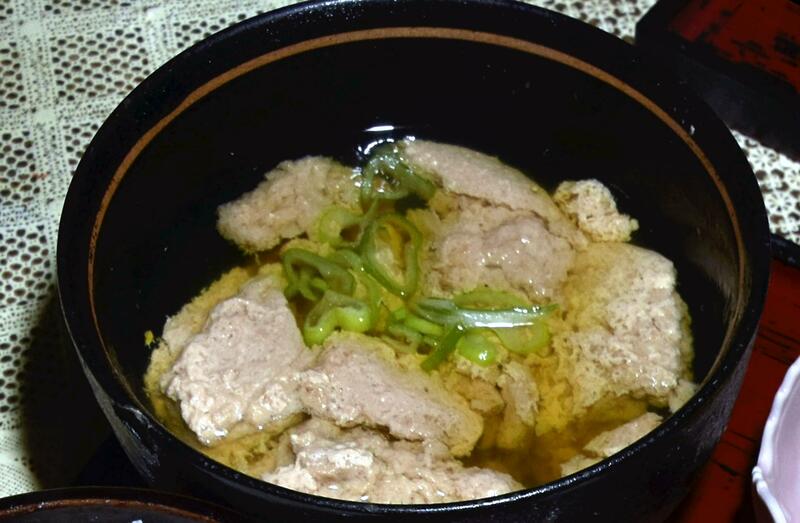
MIYAZAKI -- Kanimaki-jiru, a soup filled with the delicious flavor of mokuzugani crab, is a local delicacy in Nichinan, Miyazaki Prefecture.
Mokuzugani, or Japanese mitten crabs, are also known in the prefecture as yamataro crabs. They are a kind of Shanghai crab that inhabit rivers around the nation and are renowned for their excellent taste.
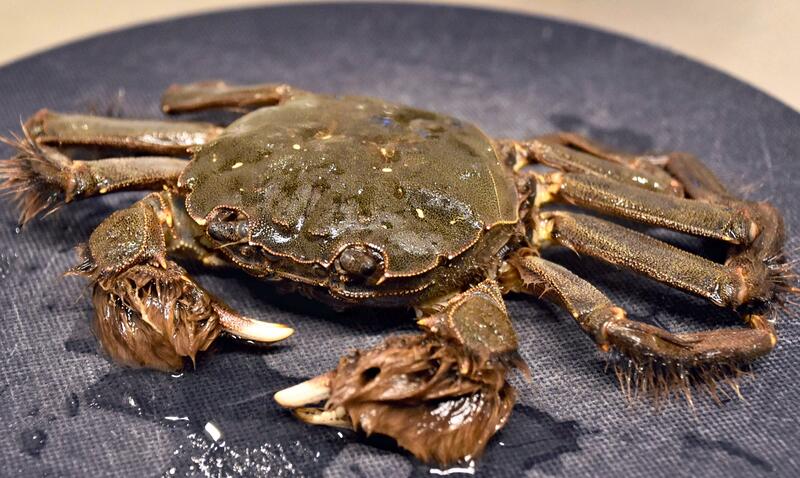
The name mokuzugani literally means seaweed crabs, as they are covered with seaweed-like hairs on their pincers.
When I visited the Hiroto River in the Kitago district of the city, I found a clear stream flowing gently with the greenery of the mountains. Even the stones at the bottom of the river were clearly visible.
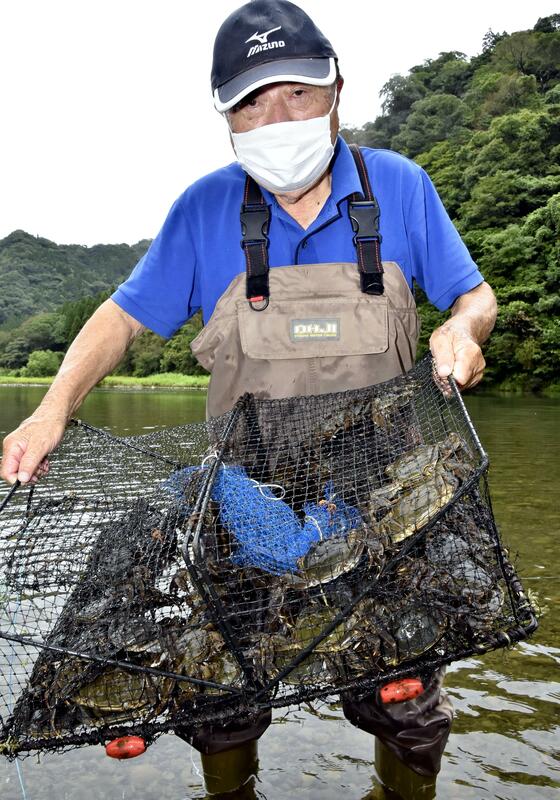
Hiroshi Toda, the head of the Nichinan Hirotogawa fisheries cooperative, was knee-deep in the water, pulling up a crab basket with both hands. Inside the basket were dozens of greenish and blackish-brown crabs with shells about 8 centimeters in size.
Toda places bait such as bonito heads and fish organs in the basket, sinks it into the river in the evening, and pulls it up the next day.
The fisheries cooperative sets the fishing season from September to November, and the harvested crabs are eaten in the region as autumnal treat. "The innards of the crab are rich and delicious," Toda said with a smile on his face.
-- Simple soup with umami flavor
At Agein restaurant, owner Taeko Hirose was in the kitchen putting about the meat of six crabs into a blender with water.
Hirose stopped the blender in the middle of her process, added the innards of the crabs, and turned it on again to finish making a thick liquid.
Then she put the liquid through a colander to remove any remaining pieces of shell and transferred it to a pot to heat slowly.
After a while, the liquid gradually became clearer while fluffy lumps began to float near the surface. During the heating process, the proteins clump together, she said. This is how kanimaki-jiru is prepared.
Miso is the only seasoning used in the soup, but as soon as I tried it, the flavor of the crab spread through my mouth. The fluffy chunks floating in the soup were chewy and soft. When I bit into them, my mouth was filled with umami flavor.
The set meal I ordered was 1,000, yen which included fried crab and rice. It is no wonder so many people come to the restaurant for this dish.
The restaurant keeps some crabs caught during the fishing season alive in a pond so that they can serve the crab soup throughout the year.
The crab must not be eaten or even tasted without thoroughly heating it, as it may contain a parasite called a lung fluke.
"My parents have made this soup for me since I was a child. In the old days, they crushed it with a mortar and pestle," Hirose said.
To protect the traditional taste and resources that have been handed down from generation to generation, the local fishermen's cooperative releases young crabs back into the water.
Read more from The Japan News at https://japannews.yomiuri.co.jp/