Denmark revisits its 'corona pass' as third wave of epidemic looms
Denmark has proposed reinstating the use of a digital “corona pass” to be presented when Danes visit indoor bars and restaurants, as the country is entering a third wave of the Covid-19 pandemic, Reuters reports.
The pass is used to verify that the holder is vaccinated or has tested negative for the coronavirus. Denmark was one of few countries to lift almost all remaining restrictions in September after having avoided a third wave of infections over spring and summer due to broad lockdown measures imposed since Christmas.
But the number of daily infections has risen steadily to around 2,300 in recent days from a low of just over 200 in mid-September.
The positivity rate, the share of total tests made that were positive, has also risen steadily in the past weeks from 1.2% in mid-September to 2.3% by the end of October.
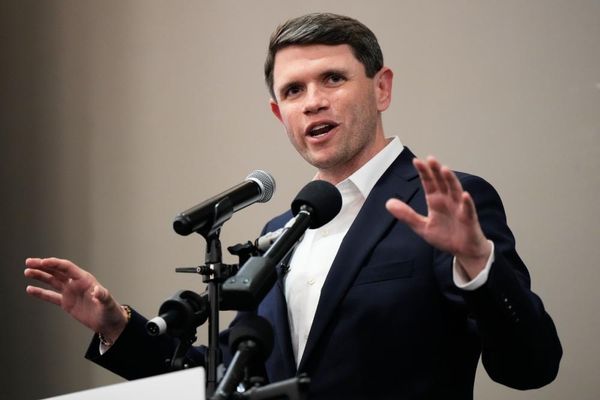
“Several European countries are now in the middle of their fourth wave of corona. In Denmark we are heading into our third corona wave,” health minister Magnus Heunicke said during a televised briefing on Monday.
Summary
Here is a recap of some of the main developments so far today:
-
UK prime minister Boris Johnson has faced criticism for not wearing a face mask during a visit to a hospital. Some photos from the visit to Hexham Hospital in Northumberland showed a maskless Johnson walking down a corridor and meeting staff, while in others he was wearing one. Labour’s shadow health secretary Jonathan Ashworth accused the PM of “irresponsibly parading round a hospital without a mask”. He added: “Patients and NHS staff deserve better than this.”
- The UK reported a further 57 deaths within 28 days of a positive test, and another 32,322 Covid cases, according to the latest data on the government’s dashboard. This represents a drop in infections by 16.6% in the past week, while deaths are up by 8.2%.
- Covid hospitalisations in France saw their highest daily rise since August. French health authorities said he number of people hospitalised because of Covid went up by 156 over the past 24 hours, the highest daily rise since 23 August, to reach a one-month peak of 6,865. The president Emmanuel Macron will address the nation on Tuesday about the resurgence of Covid infections.
- Russia’s one-dose Sputnik Light vaccine had a good safety profile and induced strong immune responses especially in people who had already encountered Covid, according to the results of phase 1 and 2 trials published in The Lancet Regional Health – Europe medical journal.
- The UK is “a long way away” from thinking about a winter lockdown, a leading scientist advising the government has said, but it is vital that anyone eligible gets their booster vaccine. Dr Mike Tildesley, a member of the Scientific Pandemic Influenza Modelling group (Spi-M), said “we are not out of the woods yet” as he urged people to have their flu and Covid booster vaccines. Asked about the prospect of a winter lockdown, he told Sky News that if the NHS were under severe pressure and the number of deaths started to increase “there may be discussions around whether more restrictions need to come in”. On the importance of booster take-up, he added: “It is certainly true that, if we don’t get good immunity across the population, there may need to be perhaps further measures taken.”
- Travellers excited at the prospect of seeing family and friends for the first time since the Covid pandemic began took off for the United States on as it lifted travel restrictions placed on much of the world for the best part of two years. The travel ban, first imposed in early 2020, had barred access to non-US citizens travelling from 33 countries - including China, India and much of Europe - and had also restricted overland entry from Mexico and Canada.
- Schoolchildren in large parts of France were ordered to again wear face masks in class, less than a month after being allowed to remove them, as the country tries to tamp down a surge in Covid cases. Primary schools in 40 of France’s 101 departments, which had been mask-free for weeks, are affected by the order, when the incidence rate rises above 50 new infections per 100,000 inhabitants over five consecutive days.
- It will be “impossible” for Nigeria to meet its target of vaccinating 40% of its population by the end of the year because Covid is not being taken seriously, health experts have warned. Fewer than 1.5% of the country’s 206 million population has been fully vaccinated. But with more people killed in conflict last year and substantially more recorded deaths from malaria than Covid in Nigeria, experts believe it is further down the list of concerns for many in the country. Story here.
-
Australia pledged more than 3m Covid vaccine doses to Cambodia, the prime minister Hun Sen said, which would help the country give booster shots to its people.
Updated
Israeli health officials will decide behind closed doors on whether to allow child Covid vaccinations, citing concerns that decision makers would otherwise not speak freely due to aggressive anti-vax rhetoric by members of the public.
Israel has been a world leader in vaccinations and more than 40% of the population has received a third shot.
Following the green light given by the US Food and Drug Administration for using the Pfizer/BioNTech coronavirus vaccine on children aged 5 to 11, Israel’s health ministry is set on Wednesday to hold a decisive discussion among experts on whether to follow suit.
A discussion last week was broadcast live, but the ministry on Monday said the next meeting would be closed to the public.
“All the considerations for and against this decision were discussed, including the ability to hold a free and open discourse on such a sensitive and crucial issue against the backdrop of a prevailing violent discourse, which may affect the course of the discussion,” the ministry said.
There have been an increasing number of threats against officials at the health ministry, police say, and at least one senior health official has been assigned a personal security detail.
Boris Johnson criticised for not wearing mask in hospital
This picture of Boris Johnson “irresponsibly parading” through a hospital without a mask is getting some attention online.
The UK prime minister missed an emergency debate on MPs’ standards in the Commons on Monday (live updates here). According to Downing Street, he was unable to get back to Westminster in time following a long-planned visit to Hexham Hospital in Northumberland.
Labour’s shadow health secretary Jonathan Ashworth accused him of “irresponsibly parading round a hospital without a mask”. He added: “Patients and NHS staff deserve better than this.”
Photos from the visit show a maskless Johnson walking down a corridor and meeting staff, while in others he is wearing one.
So not only is Boris Johnson too cowardly to turn up to Parliament to defend the sleazy corrupt government shenanigans of recent days.
— Jonathan Ashworth (@JonAshworth) November 8, 2021
He’s now irresponsibly parading round a hospital without a mask.
Patients and NHS staff deserve better than this. pic.twitter.com/wrrtcmrlZm
Updated
UK reports 32,322 Covid cases and 57 deaths
The UK has reported a further 57 deaths within 28 days of a positive test, and another 32,322 Covid cases, according to the latest data on the government’s dashboard. This represents a drop in infections by 16.6% in the past week, while deaths are up by 8.2%.
Updated
Ukraine’s Greek Catholic Church has opened a Covid vaccination centre in one of its Kiev cathedrals - the first religious institution to do so in a country where infections have surged.
Ukraine recently reported record numbers of daily Covid deaths and cases, while only 25% of its population is fully vaccinated.
Religious institutions in the country had been cautious to urge people to get vaccinated, let alone allow their premises to be used as vaccination points.
But clerics of the Ukrainian Greek Catholic Church, the third-largest in the country, on Sunday opened the doors of their main Kiev cathedral to those wanting a jab.
“The church sees no reason to refuse the vaccine,” Father Taras Zheblinsky, head of the Greek Catholic Church’s media department, told AFP.
“Taking the vaccine is a way to save your life and health,” he said, standing inside the large Patriarchal Cathedral of the Resurrection of Christ in eastern Kiev.
Ukraine reported a further 793 deaths on Saturday - a record for the country, which has an under-resourced health care system.
New daily cases hit a pandemic record of 27,377 last week and were at more than 13,000 on Monday.
“We are getting vaccinated so that if we get sick, then it will be a mild illness,” Nazar Kozak, one of dozens waiting for a jab told AFP.
“When trouble comes to a country, any community, including a religious one, should help people,” said the 32-year-old lawyer.
Ukrainian authorities initially struggled to source vaccine doses and have since fought to convince vaccine-sceptic Ukrainians to get inoculated.
But new restrictions requiring vaccinations have seen people across the country flock to vaccine centres, with inoculations now running at about 250,000 people a day.
Since the start of the pandemic, Ukraine has recorded more than 3 million coronavirus cases and 72,000 deaths.

French Covid hospitalisations see highest daily rise since August
French health authorities said on Monday the number of people hospitalised because of Covid went up by 156 over the past 24 hours, the highest daily rise since 23 August, to reach a one-month peak of 6,865.
The number of patients in intensive care units (ICUs) for the disease increased by 40 to 1,141, a ninth rise in 10 days.
The French president Emmanuel Macron will speak to the nation on Tuesday about the resurgence of Covid infections as well as his economic reform programme, the government said last week.
France also registered 55 new deaths in hospital from the epidemic, the highest daily increase since 5 October, taking the total to 91,053.
Including nursing homes fatalities, the French Covid death toll is close to 118,000.
Updated
The European Union’s medicines regulator said on Monday it will give region-wide recommendations for the Covid antiviral pill jointly developed by Merck and Ridgeback Biotherapeutics in the “shortest possible” time-frame.
The European Medicines Agency (EMA) said it was reviewing the available data as the watchdog seeks to help member states before possible approval, Reuters reports.
Denmark’s government aims to reinstate the use of digital certificates known as “corona passports”, to verify that the holder is vaccinated or has tested negative for the coronavirus, broadcaster TV 2 reported on Monday citing sources.
The number of daily infections in the country has risen steadily to more than 2,000 in recent days from a low of just over 200 in mid-September.
This is from the American Academy of Pediatrics, encouraging parents in the US to vaccination their children aged 5-11 against Covid
Children deserve to be protected from COVID-19, and now, the vaccine is here for children ages 5-11! Take it from these pediatrician leaders: now is the time for parents to vaccinate their children to protect their families and their communities. #ThisIsOurShot #VaccinesWork pic.twitter.com/LsGF2q7S3x
— American Academy of Pediatrics (@AmerAcadPeds) November 3, 2021
The European Union is negotiating with Merck & Co and Pfizer over possible contracts to supply their experimental Covid drugs, an EU official told Reuters, adding that talks with Merck were more advanced.
Both US drugmakers have developed antiviral pills that have shown promising efficacy in trials of adults with Covid who are at high risk of serious illness, with Pfizer’s at 89% and Merck’s around 50%.
“Contacts are ongoing with both,” the EU official familiar with the discussions said on Monday, asking not to be named as the negotiations are confidential.
Talks with Merck were more advanced because it has already begun submitting data to the European Union’s drugs regulator, the official added.
Pfizer has yet to submit any data because preliminary results of its trials were published only last week, a month after Merck’s first results.
A spokesperson for the European Commission, which coordinates talks with drugmakers on behalf of EU states, declined to comment on negotiations.
Merck was not immediately available for comment. Pfizer declined to comment.
EU officials discussed procuring Covid drugs at a meeting last week, the EU source said, stressing the bloc of 27 member states wanted to move as fast as possible to buy new treatments, but wanted to have further guarantees on their safety.
So far, the only approval is for Merck’s drug in the UK.
Both drugs treatments are given for five days. Pfizer’s regimen is for three pills taken in the morning and three at night. Merck’s is four pills in the morning and four at night.
Asked whether the higher efficacy shown by Pfizer’s treatment could affect talks with Merck, the EU official said they could not be compared for now and more data was needed.
A rush to secure the initial, limited courses of both pills is under way. The UK has procured 480,000 courses of Merck’s pill and 250,000 courses of Pfizer’s.
Meanwhile, Joe Biden said last week that the US had secured “millions” of courses of the Pfizer treatment, and has also bought 1.7 million courses of Merck’s.
Australia and several Asian countries have also secured courses of the new drugs or are in the process of doing so.
Indonesia’s drug regulator said on Monday that it was reviewing Merck’s pill, ahead of a possible purchase of up to 1 million courses of it next month.
Thailand, which has been in talks with Merck to buy 200,000 treatments since October, is also in negotiations with Pfizer for its pill, a medical adviser told Reuters.
Pfizer expects to produce more than 180,000 courses of its therapy by the end of 2021, whereas Merck plans output of 10 million courses. Both plan to ramp up production in 2022.

One in ten people in the UK have expressed their regret over buying items ranging from hot tubs to DIY tools during the pandemic, according to a survey conducted by insurer Aviva.
During lockdowns, some people used money which would normally have been spent on commuting, holidays and socialising, to treat themselves to items for the home or garden, or to get fit or start new hobbies.
A survey of 4,000 people found some are now experiencing buyers’ remorse, with many expensive items now either sold, given away or gathering dust, Aviva said.
Gaming equipment, DIY tools, home gym equipment, bikes, clothing and jewellery, musical instruments, kitchen appliances such as bread makers, garden furniture, pizza ovens and hot tubs all appeared on the regret list.
The BBC has the story.
*I regret buying Nintendogs, I’m sure my poor puppies ran away and left me circa lockdown 2.0.
Updated
Pfizer and BioNTech are expected to seek authorisation for their Covid vaccine booster shot for people aged 18 and above as soon as this week, the Washington Post reported on Monday, citing officials familiar with the situation.
The US Food and Drug Administration (FDA) in September authorised the extra shot for those aged 65 and above, people at high risk of severe disease, and others regularly exposed to the virus.
Pfizer and US health officials have argued that the boosters prevent hospitalisations and deaths and that emerging data indicates they can slow mild infections as well.
Pfizer did not immediately respond to Reuters’ request for comment.
After being hospitalised for 28 days with Covid-19, a man returned to the Seattle hospital that saved his life – to apologise for not getting vaccinated.
Richard Soliz, a 54-year-old graphic artist, developed blood clots on his lungs after contracting coronavirus. Admitted to Harborview medical center in late August, he spent close to a month on a ventilator and heart monitor, as doctors worried one of his blood clots might transfer to his brain or his heart.
Soliz pulled through, and in October he returned to the hospital to thank the staff for saving his life – and to say sorry.
“I deeply regret, you know, not making the decision to get vaccinated,” Soliz told Dr James Town, a pulmonologist and director of the medical intensive care unit.
“No one blames you or judges you,” Town told Soliz. “Everyone is just happy that you are willing to share the story, I think. And happy that you’re better.”
Soliz is now fully vaccinated but has been left with scarred lungs, which cause him to become winded even after slight physical activity. He has difficulty sleeping and struggles with a foggy memory and thoughts.
Doctors have told him he could begin to see improvements in his lungs in six months.
Maya Yang has the story:
Updated
Russia’s one-dose Sputnik Light vaccine had a good safety profile and induced strong immune responses especially in people who had already encountered Covid, according to the results of phase 1 and 2 trials published in The Lancet Regional Health – Europe medical journal.
The vaccine, a single-dose version of the two-dose Sputnik V vaccine unveiled last year, has already entered later phases of studies and is widely used in Russia, but the publication of the early research in a top western journal is a milestone as Russia moves towards making Sputnik Light its main vaccine for export.
Scientists from the vaccine’s developer, the Gamaleya Institute, oversaw 110 volunteers aged 18-59 in St Petersburg, who were inoculated in January 2021, looking at the response of the immune system and the main side-effects.
The results analysed virus neutralisation against the original variant and showed a slight but statistically significant decrease in the antibody response for the Alpha and Beta strains. Russia’s dominant strain is now the Delta variant.
Russia has already said that subsequent research showed Sputnik Light demonstrated 70% effectiveness against the Delta variant three months after injection.
“Sputnik Light might be considered not only for primary vaccination, but also could be useful as an efficient tool for further revaccination or vaccination after previous Covid-19 infection,” the study said.
Last week, the health minister Mikhail Murashko said that with the spread of the Delta variant, the ministry recommended the usage of Sputnik Light for re-vaccination only.
The Kremlin later said Sputnik Light was a standalone Covid vaccine, but some Russian regions reported that they had begun to administer it only to people with antibodies.
Sputnik Light was approved for clinical use in Russia on 6 May based on the results of trials published in The Lancet and Gamaleya has started an international and placebo-controlled phase 3 study with 6,000 participants.
“We believe Sputnik Light vaccine could contribute towards accelerating the pace of vaccination in Russia as well as in other countries that are lacking sufficient vaccine supply,” the scientists wrote.
Updated
The UK is “a long way away” from thinking about a winter lockdown, a leading scientist advising the government has said, but it is vital that anyone eligible gets their booster vaccine.
Dr Mike Tildesley, a member of the Scientific Pandemic Influenza Modelling group (Spi-M), said “we are not out of the woods yet” as he urged people to have their flu and Covid booster vaccines. Asked about the prospect of a winter lockdown, he told Sky News:
I think we’re a long way away from thinking in those terms. I think that, clearly, there is a situation that, if the NHS is under severe pressure, if the number of deaths sadly starts to increase, then of course, obviously, there may be discussions around whether more restrictions need to come in. I would hope that, with a very successful vaccination campaign, the idea of a winter lockdown is a long way away.
But it is certainly true that, if we don’t get good immunity across the population, there may need to be perhaps further measures taken. So it’s really important that we encourage people to come forward when eligible to take those booster jabs.
It comes as the prime minister Boris Johnson urged those eligible to book their booster vaccinations. He told broadcasters during a visit to a hospital in Hexham, in the North East:
I’m here to look at what we’re doing to encourage people to get their booster jabs and that is the single most important thing that the government can do at the present time. Unfortunately, what you’ve got at the moment is a situation in which the waning of the original two jabs is starting to see too many elderly people getting into hospital.
Sadly, the jabs do wane. We’ve done 10 million booster jabs already and it’s a very effective thing. It’s a wonderful thing, people get 95% more protection, so I’m encouraging everybody today to go online if you’ve gone over five months, you can go online and book.
The NHS has opened bookings for those needing a booster if five months have passed since their second dose so they can have a top-up jab at the six-month point.
Elsewhere, the education secretary Nadhim Zahawi suggested that Covid booster jabs will become an annual vaccination programme. “We will, I hope, be the first major economy to transition from pandemic to endemic, and have an annual vaccination programme,” he told the Sun.
Asked about the prospect, Dr Tildesley said he agreed it may become the case that people need booster jabs every year.
I think it’s possible. I remember having these sorts of discussions about nine months ago when the vaccinations were starting to roll out, that it’s possible that this virus could become endemic, so circulates in the population every year in the way that flu does. It’s possible that every year we’re having to go out and get our Covid jabs in the same way a lot of people are currently getting their flu jabs.
Dr Tildesley said the booster programme is “going in the right direction but there clearly is work to do for the people over 50, for vulnerable adults”.
Immunity will be starting to wane from the second jab so it is really important that that acceleration continues and hopefully we get as many people protected as possible as we move into the colder months.
As of Thursday, there were 9,160 people in hospital with Covid-19 across the UK, while, as of Sunday, 1,174 deaths had been recorded in the last week, up 6.8% on the week before.
The number of Covid cases after a positive test are falling, with 30,305 recorded on Sunday. Over the last week, the figures have fallen 12.9%.
Prof Peter Openshaw, a member of the New and Emerging Respiratory Virus Threats Advisory Group (Nervtag), said on Monday that the need for boosters has become “very clear”. The professor of experimental medicine at Imperial College London told Times Radio:
We don’t know how long a vaccine is going to last until we’ve had sufficient time to watch the immunity drifting downwards, and I think something which has become very clear recently is that these vaccines don’t appear to be forever - they do provide a lot of protection, but they have to be boosted.
He said the NHS is in a serious situation and coronavirus “is not over”.
There’s an awful lot of Covid still around. At the moment we’re seeing admission rates running at something like 1,000 people per day and there’s currently over 1,000 people on mechanical ventilators in our hospitals.
And I just don’t think people realise the serious situation that there is out there in the National Health Service hospitals, with so many people on ventilators and over 9,000 people actually in the hospital currently with Covid-19.
Covid isn’t done. It’s not over.
Over the weekend, a senior government scientist said older people who are double-jabbed are dying of Covid because they are not taking up the offer of a booster.
Dr Susan Hopkins, chief medical adviser at the UK Health Security Agency, urged more over-50s to come forward for a third dose to cut the risk of “a long and difficult winter” for the NHS. “Increasingly, because of immune-waning effects, there are deaths in the vaccinated group,” she told the BBC.
Elsewhere, Chris Hopson, chief executive of NHS Providers, which represents England’s NHS trusts, told Times Radio that hospitals in England are under “unprecedented” pressure but NHS staff realise that the country must now live with Covid.
We’re seeing bed occupancy levels of 94%, 95%, 96% at this point, before we’re into peak winter. We’ve not seen that before. That’s unprecedented. So there’s a real sense that the NHS is going to be under real pressure.
He added, however, that vaccines are having a dramatic impact.
I think all of us in the NHS recognise that we are moving from a situation of a pandemic towards an endemic where we need to live with Covid. And the bit I’m really keen for people to understand is that everybody in the NHS absolutely recognises that it’s our job to cope as best we can with Covid pressures, without resorting to the very draconian lockdowns that we’ve had to go through before.
Updated
Loved ones reunited as US drops travel bans after almost two years
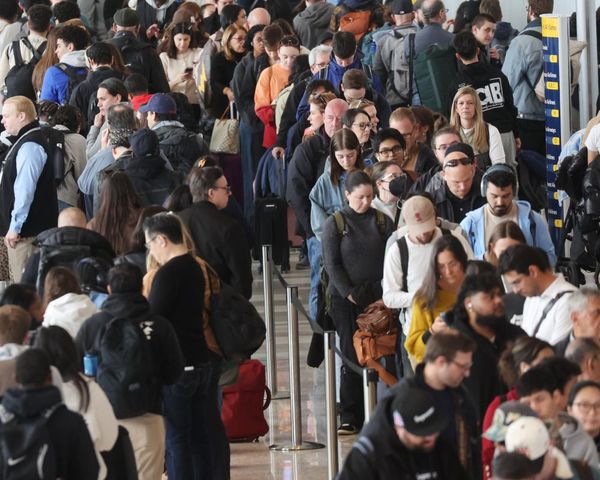
Travellers excited at the prospect of seeing family and friends for the first time since the Covid pandemic began took off for the US on Monday as it lifted travel restrictions slapped on much of the world for the best part of two years.
The travel ban, first imposed in early 2020, had barred access to non-US citizens travelling from 33 countries - including China, India and much of Europe - and had also restricted overland entry from Mexico and Canada.
The US lagged many other countries in lifting the curbs, made possible by the rollout of vaccines despite rising infections in many countries and critical to reviving tourism around the globe.
Months of pent-up demand triggered a major rise in bookings on Monday, with travellers only required to show official proof of vaccination and a recent, negative viral test.

Alice Keane, travelling to Miami to see her sister, said at London’s Heathrow airport, told Reuters: “I mean, I was meant to go just before Covid happened, and obviously it’s been delayed this long, so it’s really exciting to finally be able to go.”
Long-term rivals British Airways and Virgin Atlantic carried out simultaneous take-offs from Heathrow’s parallel runways just before 9am GMT, a stunt aimed at highlighting the importance of the transatlantic market to the UK’s aviation market.
The flights were full, Virgin Atlantic CEO Shai Weiss said, while passenger volume was expected to remain high in coming weeks with the approach of Thanksgiving and Christmas.
“It’s a major day of celebration,” Weiss said, adding that planes were “filling up nicely”, in what he called a significant tipping point for an industry brought to its knees by the pandemic.

The US was preparing for long lines and delays on Monday, with United Airlines alone expecting about 50% more total international inbound passengers compared to last Monday when it had about 20,000.
Delta Air Lines chief executive Ed Bastian warned travellers should be prepared for long waits. “It’s going to be a bit sloppy at first. I can assure you, there will be lines unfortunately,” Bastian said, adding that “we’ll get it sorted out”.
The prospect of long queues did little to dent the enthusiasm of those preparing to be reunited with loved ones.
“I think we might just start crying,” Bindiya Patel, who was going to see her one-year-old nephew in New York for the first time, said at Heathrow, where jugglers dressed in the colour of the US flags greeted travellers.

US land borders also reopened to non-essential travel on Monday, though some inoculated Mexicans will not be able to enter the country immediately if they received vaccines in Mexico that have not been approved by the World Health Organization, such as China’s CanSino and Russia’s Sputnik V.
“I never imagined that because I got the CanSino vaccine I wouldn’t be able to cross,” lamented Donato Suarez, a driver at a private university in Tijuana who had hoped to visit relatives in the US he has not seen for nearly two years.
Hundreds of migrants have arrived at Mexican border cities such as Tijuana in recent days, hoping the reset will make it easier to cross and seek US asylum and despite warnings from advocates that the re-opening is for people who have papers.
In Canada, long lines formed overnight at US border points for an early rush of travellers but a Canadian requirement that all returning travellers have a negative PCR test is expected to dampen travel.
Canada, which allowed fully vaccinated Americans to cross the land border in August, is under pressure to drop the negative test requirement from businesses and travellers, who say showing proof of vaccination should be enough.
At the land border crossings from Mexico and Canada, US Customs and Border Protection will ask travellers if they have been vaccinated and will spot-check some documentation.
Under-18s are exempt from the new vaccine requirements. Non-tourist travellers from nearly 50 countries with nationwide vaccination rates of less than 10% are also eligible for exemption.

Updated
Schoolchildren in large parts of France have been ordered to again wear face masks in class, less than a month after being allowed to remove them, as the country tries to tamp down a surge in Covid cases.
Primary schools in 40 of France’s 101 departments, which had been mask-free for weeks, are affected by the order, which comes a day before the president Emmanuel Macron addresses the nation about the health crisis, AFP reports.
Under the government’s Covid protocol, primary school pupils have to wear masks when the incidence rate rises above 50 new infections per 100,000 inhabitants over five consecutive days.
With nearly 75% of the population inoculated against the coronavirus, France is one of Europe’s vaccine leaders.
But the pace of new vaccinations has slowed since the summer, when millions rushed to get shots after the introduction of a Covid pass to enter bars, restaurants, gyms and other entertainment and sporting venues.
The latest government edict brings to 61 the number of departments where schoolchildren have to cover their noses and mouths. They include the areas surrounding Paris as well as the southern city of Marseille.
In secondary schools, masks remain compulsory irrespective of the number of Covid cases.
On Tuesday evening, Macron will address the nation about the health crisis for the first time since 12 July.
He is expected to discuss the booster shot campaign under way among over-65s and those with underlying health conditions.
So far only half of those eligible for a top-up shot have received the jab.
The prime minister Jean Castex told AFP on Friday that the government was considering updating the Covid pass to include a mandatory booster shot.
The World Health Organization has expressed “grave concern” over soaring Covid cases in Europe, warning that the continent could see another half a million deaths by early next year.
Germany last week set a new record for daily cases, with nearly 34,000 new cases over the previous 24 hours. France, by comparison, has been spared a steep rise in infections, with health authorities reporting 8,547 new cases between Saturday and Sunday.
In the absence of a fourth wave of infections, many parents and teachers have expressed dismay over the reimposed restrictions on younger children.
The secretary general of France’s biggest primary teachers union, the SNUIPP-FSU, warned that the “yo-yo effect” would have a detrimental effect on students. “This to-ing and fro-ing risks creating a sense of instability in schools,” Guislaine David said.
The education minister Jean-Michel Blanquer told France Info radio that while the new mask mandate was “unpleasant” it was “necessary”.
Updated
It will be “impossible” for Nigeria to meet its target of vaccinating 40% of its population by the end of the year because Covid is not being taken seriously, health experts have warned.
Fewer than 1.5% of the country’s 206 million population has been fully vaccinated. But with more people killed in conflict last year and substantially more recorded deaths from malaria than Covid in Nigeria, experts believe it is further down the list of concerns for many in the country.
In September, the World Bank’s International Development Association approved a $400m (£300m) credit to speed up Nigeria’s Covid vaccination programme. The money, the World Bank said, was for safe and effective vaccine acquisition and deployment.
Days later, the World Health Organization announced a strategy to help poorer countries achieve 40% vaccination coverage by the end of 2021, although WHO Africa regional director Matshidiso Moeti said that was unlikely in Africa.
Moeti said:
At this rate, the continent may only reach the 40% target by the end of March 2022.
The feasibility of Nigeria’s vaccination plan was questioned when it was announced in January by Faisal Shuaib, head of the country’s primary healthcare agency.
Now, it looks impossible, said Prof Isa Abubakar Sadiq, director at the Centre for Infectious Diseases Bayero University Kano.
The number of vaccines available in the country will not be enough for all those who would come forward. If we are to achieve the target, we need more doses to be available and people need to be mobilised to come forward and take the vaccine. Not enough people are coming forward to even take the available vaccines. People are not taking the disease seriously because the severity is not as projected. The risk perception is not as it should be.
Abubakar Adam Ibrahim has the story:
Biden administration plans to get US companies with more than 100 or more workers to vaccinate their staff or bring in regular tests have been welcomed by public health groups but criticised by Republicans and trade groups, who claim government overreach with negative economic consequences.
Such divided reaction to the rules announced last week mirrors much of America’s problematic vaccine rollout, where social and political headwinds have seen vaccination take-up slow down worryingly. US vaccination rates are some of the lowest in industrialised countries where the vaccine is readily available.
Subject at least to a temporary stay issued by a circuit court in New Orleans on Saturday, the new rule from the Occupational Safety and Health Administration (Osha) will take effect on 4 January.
It requires that large companies either ensure employees have been vaccinated or regularly administer Covid-19 tests and require masks at work for those who refuse to get the shot.
The rule will affect an estimated 84 million workers.
The Centers for Medicare & Medicaid Services also issued a rule requiring healthcare workers to be vaccinated by the same deadline, with no option for weekly testing rather than vaccination. That will affect 76,000 providers and more than 17 million workers.
The administration also extended a deadline for federal contractors to comply with the same sort of rule – vaccination without the testing option – from 8 December to 4 January.
Joe Biden said in a statement:
Too many people remain unvaccinated for us to get out of this pandemic for good.
Read the full story from Eric Berger here:
Updated
Australia has pledged more than 3m Covid vaccine doses to Cambodia, the prime minister Hun Sen said, which would help the country give booster shots to its people.
The assurance came during a visit by the Australian foreign minister Marise Payne aimed at expanding bilateral ties, Reuters reports.
Cambodia has vaccinated 87% of its more than 16 million people, one of Asia’s highest inoculation rates.
“The Australian government has decided to provide Cambodia with 3,250,000 doses of the Covid-19 vaccine, of which 1 million will be delivered to Cambodia before the end of this year,” Hun Sen said on his official Facebook page on Monday.
The country has already given 2m booster shots and begun inoculating children. Payne met Hun Sun and her counterpart Prak Sokhonn.
Hun Sen declared Cambodia fully open last week and the government has said tourist locations for vaccinated travellers will also be reopened by the end of this month.

Updated
Good morning from London. I’m Lucy Campbell, I’ll be bringing you all the latest global developments on the coronavirus pandemic for the next eight hours. Please feel free to get in touch with me as I work if you have a story or tips to share! Your thoughts are always welcome.
Email: lucy.campbell@theguardian.com
Twitter: @lucy_campbell_
Today so far
- Germany’s Covid incidence rate – measuring the number of new coronavirus infections per 100,000 people over the last seven days – has risen to 201.1 today. This is the highest official figure recorded by the Robert Koch Institute.
- In the eastern state of Saxony, where the incidence rate is more than twice the national average at 491.3, unvaccinated people face new restrictions. Access to indoor dining and other indoor events will be limited to those who are fully vaccinated or can show proof of recovery. The new rules are the toughest state-wide restrictions in Germany against non-inoculated people.
- Flights carrying the first UK leisure travellers to the US since the pandemic began have taken off from Heathrow, after Joe Biden permitted a reopening of the US border. Setting aside a longstanding rivalry, British Airways and Virgin Atlantic planes took off simultaneously in what the bosses of the two airlines described as a “pivotal moment” for the battered industry.
- All Aer Lingus flights to the US from Dublin were full on Monday. Delta Airlines warned passengers to be patient as the airports re-open to international travel.
- Dozens of crossings at the Mexico-US border reopened to non-essential travel on Monday after a 20-month closure. At Tijuana, ahead of the reopening, hundreds of cars formed lines stretching back kilometres from the border, while queues at pedestrian crossings grew steadily.
- In the UK, Prof Peter Openshaw, chair of the New and Emerging Respiratory Virus Threats Advisory Group (Nervtag), said the need for boosters had become “very clear”. Dr Mike Tildesley, a member of the Scientific Pandemic Influenza Modelling group (Spi-M) advising ministers in the UK, has said “we are not out of the woods yet” but the UK was not facing a winter lockdown.
- NHS workers in England must be legally required to get Covid vaccinations before the winter, former UK health secretary Matt Hancock has said, in his first intervention since leaving government.
- Northern Ireland’s health minister is suing Van Morrison after the singer accused him of being “very dangerous” over his handling of Covid restrictions.
- Russia has ended the national week long paid holiday that it hoped would break the Covid transmission chain. Today the country reported 39,400 new Covid cases, including 4,982 in Moscow. There were 1,190 further official deaths. Several regions, including Smolensk, Kursk, Chelyabinsk, Novgorod, Tomsk and Bryansk are extending restrictions.
- Hungary’s pharmaceutical company Richter Gedeon has made Covid-19 vaccinations mandatory for its over 12,ooo workers to ensure business continuity after a government decision allowing companies to do so.
- Singapore and Malaysia will allow quarantine-free travel between both countries for individuals vaccinated against Covid-19 from 29 November.
- Indonesia plans to give booster shots to the general public after 50% of its population has been fully vaccinated.
- Japan recorded no daily deaths from Covid-19 for the first time in 15 months on Sunday, according to national broadcaster NHK.
- In the US, first lady Dr Jill Biden and surgeon general Dr Vivek Murthy are set to visit the Franklin Sherman Elementary School in McLean, Virginia, to launch a nationwide campaign to promote child vaccinations. The school was the first to administer the polio vaccine in 1954. The visit comes just days after federal regulators recommended the Covid-19 vaccine for those aged five to 11.
- Auckland’s near-three-month lockdown is likely to end later this month with some coronavirus restrictions eased from Tuesday, according to prime minister Jacinda Ardern.
- School students could undertake daily Covid tests rather than quarantine at home under a “test to stay” approach being considered by Australia’s state and territory leaders.
For live coverage across the Guardian at the moment, Andrew Sparrow has our UK politics live, and Patrick Greenfield is bringing you the latest from Cop26 from Glasgow. Lucy Campbell will be here shortly to continue with our UK and global Covid coverage, and I will see you again tomorrow.
Updated
Hungarian drugmaker Richter Gedeon has made Covid-19 vaccinations mandatory for its over 12,000 workers to ensure business continuity after a government decision allowing companies to do so, chief executive Gabor Orban said today.
“We have made the decision to make (vaccinations) mandatory,” Orban told a news conference.
“The only question is the timeframe over which we will be able to carry this out the most efficiently,” he said, adding that the company was conducting a survey on the number of employees already inoculated against Covid-19.
Reuters reports the company said nearly 80% of its total workforce had been given a shot already. Those refusing the shot would be sent on unpaid leave.
“The vaccine is not mandatory, but then, neither is working at Richter,” Orban said. “It is extremely important that we retain our ability to keep the company running, to protect our workers’ health and their jobs.”
Updated
First lady Dr Jill Biden to visit Virginia school today to promote vaccines for those aged 5 to 11
In the US, the Biden administration is encouraging local school districts to host clinics to provide Covid-19 vaccinations to kids — and information to parents on the benefits of the shots — as the White House looks to speedily provide vaccines to those ages 5 to 11.
Zeke Miller reports for the Associated Press that today first lady Dr Jill Biden and surgeon general Dr Vivek Murthy are set to visit the Franklin Sherman Elementary School in McLean, Virginia, to launch a nationwide campaign to promote child vaccinations. The school was the first to administer the polio vaccine in 1954.
The visit comes just days after federal regulators recommended the Covid-19 vaccine for the age group. The White House says Biden will visit paediatric vaccination clinics across the country over the coming weeks to encourage the shots.
At the same time, health and human services secretary Xavier Becerra and education secretary Miguel Cardona are sending a letter to school districts across the country calling on them to organise vaccine clinics for their newly eligible students. The officials are reminding school districts that they can tap into billions of dollars in federal coronavirus relief money to support paediatric vaccination efforts.
According to research by Aviva, British households spent an eye-watering £6.6 billion on purchases they no longer use during the pandemic. Our community team would like to hear from you if you a hasty purchase during the pandemic that you regret.
All Aer Lingus flights to the US were full on Monday after Covid travel restrictions were finally lifted, the chief executive of the airline Lynne Embleton has said.
Dublin is one of the key hubs for travel to the US because of a facility to clear immigration at the airport and avoid queues stateside.
In the US Delta said it has seen a 450% increase in bookings since the travel ban was lifted by Joe Biden, while United Airlines said it was expecting 30,000 passengers to arrive on Monday, a 50% hike on last Monday’s experience.
Delta Airlines warned passengers to be patient as the airports re-open to international travel.
“It’s going to be a bit sloppy at first. I can assure you, there will be lines unfortunately,” Ed Bastian chief executive said.
Russia's national paid holiday week to stem rising cases ends – some regions retain restrictions
Russia has ended the national week long paid holiday that it hoped would break the Covid transmission chain and lead to reduced case numbers. It will take a couple of weeks to see any impact in the figures – today Russia reported 39,400 new Covid cases, including 4,982 in Moscow. There were 1,190 further official deaths.
Not all restrictions have ended though, as the Moscow Times reports this morning:
Most Russian regions left in place requirements for digital Covid passes to enter public areas and events. Moscow requires scannable QR codes for visits to any entertainment and sporting events with attendance of more than 500 people.
St Petersburg, meanwhile, has imposed strict QR code requirements to enter any venue, including shopping malls and hotels. Several regions have extended their paid holidays past Monday, including the Smolensk, Kursk, Chelyabinsk, Novgorod, Tomsk and Bryansk regions.
Angela Monaghan reports for our business desk on the resumption of transatlantic flights:
Flights carrying the first UK leisure travellers to the US since the pandemic began have taken off from Heathrow, after Joe Biden permitted a reopening of the US border.
Setting aside a longstanding rivalry, British Airways and Virgin Atlantic planes took off simultaneously in what the bosses of the two airlines described as a “pivotal moment” for the battered industry. Both airlines have reported huge losses and laid off thousands of staff during 20 months of restricted travel.

British Airways flight BA001 – a number previously reserved for Concorde – and Virgin flight VS3 took off from London Heathrow on parallel runways for New York’s JFK airport at about 8.30am, more than 600 days since the US travel ban was introduced.
Read more of Angela Monaghan’s report here: UK flights to US take off from Heathrow as border reopens
Singapore and Malaysia commit to re-opening travel corridor on 29 November
A quick snap from Reuters here that Singapore and Malaysia will allow quarantine-free travel between both countries for individuals vaccinated against Covid-19, they said in a joint statement on Monday.
The two neighbours will launch a vaccinated travel corridor between Changi Airport and Kuala Lumpur International Airport from 29 November, it said.
Prof Peter Openshaw, chair of the New and Emerging Respiratory Virus Threats Advisory Group (Nervtag), said the need for boosters had become “very clear”.
PA Media quotes the professor of experimental medicine at Imperial College London telling Times Radio: “We don’t know how long a vaccine is going to last until we’ve had sufficient time to watch the immunity drifting downwards and I think that’s something which has become very clear recently is that these vaccines don’t appear to be forever – they do provide a lot of protection, but they have to be boosted.”
Asked if it is just the elderly at risk of not getting their booster, he added: “Well if we look at the people who are sadly still dying of Covid, it’s predominantly in those over 50.
“And it’s that group that really does need to have the boosters in order to stop them from dying - particularly those over 60 and especially in those over 70.”
He also urged people who are still yet to take up any offer of the vaccine to get jabbed “as soon as possible”.
He also said the NHS was in a “serious situation” and that Covid “is not over”.
“There’s an awful lot of Covid still around,” he said. “At the moment we’re seeing admission rates running at something like 1,000 people per day and there’s currently over 1,000 people on mechanical ventilators in our hospitals.
“And I just don’t think people realise the serious situation that there is out there in the National Health Service hospitals, with so many people on ventilators and over 9,000 people actually in the hospital currently with Covid-19. Covid isn’t done. It’s not over.”
Updated
Dr Mike Tildesley, a member of the Scientific Pandemic Influenza Modelling group (Spi-M) advising ministers in the UK, has said “we are not out of the woods yet” but the UK was not facing a winter lockdown.
Asked about the prospect of a winter lockdown, PA Media quotes him telling Sky News:
I think we’re a long way away from thinking in those terms. I think that clearly there is a situation that if the NHS is under severe pressure, if the number of deaths sadly starts to increase, then of course, obviously, there may be discussions around whether more restrictions need to come in.
I would hope that, with a very successful vaccination campaign, the idea of a winter lockdown is a long way away. But it is certainly true that if we don’t get good immunity across the population, there may need to be perhaps further measures taken.
So it’s really important that we encourage people to come forward when eligible to take those booster jabs.
Asked about the future of booster jabs, he said “I remember having these sorts of discussions about nine months ago when the vaccinations were starting to roll out, that it’s possible that this virus could become endemic, so circulate in the population every year in the way that flu does.
“It’s possible that every year … we’re having to go out and get our Covid jabs in the same way a lot of people are currently getting their flu jabs.”
Dr Tildesley said the booster programme was “going in the right direction but there clearly is work to do for the people over 50, for vulnerable adults”.
He added: “Immunity will be starting to wane from the second jab so it is really important that that acceleration continues and hopefully we get as many people protected as possible as we move into the colder months.”
Updated
NHS England staff should have Covid vaccine before winter, Hancock says
NHS workers in England must be legally required to get Covid vaccinations before the winter, former UK health secretary Matt Hancock has said, in his first intervention since leaving government.
Writing in the Daily Telegraph, Hancock, who resigned as health secretary in June after it emerged he had breached Covid-19 social distancing restrictions with Gina Coladangelo, an adviser with whom he was having an affair, warned ministers against delaying mandatory jabs for nurses and doctors.
Hancock’s comments come as the chief executive of NHS England said the country faced “a difficult winter”, with hospital Covid admissions 14 times higher than they were this time last year.
It has been reported that the government is expected to say the law will not be changed to require Covid jabs for the NHS’s 1.45 million staff in England until spring 2022.
The law has already been changed to make Covid jabs mandatory for care workers in England, with the requirement to come into effect on Thursday.
Read more of Jamie Grierson’s report here: NHS England staff should have Covid vaccine before winter, Hancock says
Updated
Dozens of crossings at the Mexico-US border reopened to non-essential travel on Monday after a 20-month closure due to the Covid-19 pandemic.
Lizbeth Diaz reports for Reuters from Tijuana that ahead of the reopening, hundreds of cars formed lines stretching back kilometres from the border, while queues at pedestrian crossings grew steadily.
Differing rules over coronavirus vaccines threaten to hold up family reunions. Some inoculated Mexicans will not be able to enter the US immediately if they received vaccines in Mexico that have not been approved by the World Health Organization such as China’s CanSino and Russia’s Sputnik V.
“I never imagined that because I got the CanSino vaccine I wouldn’t be able to cross,” lamented Donato Suarez, a driver at a private university in Tijuana who had hoped to visit relatives in the United States he has not seen for nearly two years.
“We even had plans to do something when the border reopened,” he added, noting around 300 people where he works are in the same predicament. “We’ll have to wait.”
Updated
Daily tests may replace home quarantine for Australian school students
School students could undertake daily Covid tests rather than quarantine at home under a “test to stay” approach being considered by Australia’s state and territory leaders.
The Doherty Institute has released modelling which examines what would happen to infection numbers in a school outbreak under various scenarios.
It finds that incursions into schools would be “inevitable” during rising cases of community transmission, and notes that returning students to in-person learning and keeping schools open safely has been identified as a national priority.
The findings, provided to national cabinet on Friday, recommend surveillance testing to allow for early detection of positive Covid cases in schools, which would reduce the likelihood of an outbreak, and suggests that in the event of a positive case, close contacts should not have to quarantine.
“We compared a seven-day quarantine of classroom contacts to a strategy called a ‘test to stay’ … where for seven days, if there’s a case in a school, their classroom contacts need to have a daily rapid antigen test before attending school, and they can continue attending school provided they keep testing negative,” Dr Nick Scott, who oversaw the schools modelling for the Doherty Institute, said on Monday.
Read more of our Australian chief political correspondent Sarah Martin’s report: Daily Covid tests being considered to replace home quarantine for school students
Ukraine recorded 13,068 new Covid-19 cases and 473 coronavirus-related deaths in the last 24 hours. There were 3,532 hospitalisations registered. The seven-day average for new cases has been running at about 23,000 for the last week.
It’s a one picture story really, but here are the scenes a little while ago at Heathrow airport in London, where Sean Doyle, British Airways Chairman and CEO and Shai Weiss, Virgin Atlantic Chief Executive have been posing for pictures ahead of the resumption of transatlantic passenger flights. The two airlines were planning a synchronised departure on parallel runways, with both planes heading from London to New York.

Robert Koch Institute records Germany's highest ever seven-day Covid incidence rate
Germany’s Robert Koch Institute (RKI) has been recording some of the highest numbers of cases that the country has seen since the start of the pandemic. Germany’s incidence rate – measuring the number of new coronavirus infections per 100,000 people over the last seven days – has risen to 201.1 today. This is the highest recorded by the RKI.
Agence France-Presse report that in the eastern state of Saxony, where the incidence rate is more than twice the national average at 491.3, unvaccinated people face new restrictions from Monday.
Access to indoor dining and other indoor events will be limited to those who are fully vaccinated or can show proof of recovery.
The new rules are the toughest state-wide restrictions in Germany against non-inoculated people. Only children as well as those who cannot receive jabs for medical reasons will be exempt.
Indonesia plans to give booster shots to the general public after 50% of its population has been fully vaccinated, its health minister said today, which he expects to happen at the end of next month.
Indonesia, the world’s fourth most populous country, has inoculated 29% of its population of 270 million people, using a variety of vaccine brands.
Minister Budi Gunadi Sadikin told a parliamentary hearing the government decided on boosters at the 50% mark due to vaccine inequity concerns at home or abroad.
“Issues of injustice or ethics are so high in the world, because some countries haven’t gotten a lot of first shots,” he said.
Stanley Widianto reports from Jakarta that the minister’s plan prioritises the elderly and the poor who are insured by the government, while the rest of the population may have to pay for them. Many health workers have already received boosters.
Hello, it is Martin Belam here in London taking over from Samantha Lock. I’ll bring you any Covid lines that come out of the early interviews in the UK media round – it is Anne-Marie Trevelyan who is appearing for the government. Here are the latest UK Covid numbers.
Lockdown of New Zealand’s largest city likely to end this month
Auckland’s near-three-month lockdown is likely to end later this month with some coronavirus restrictions eased from Tuesday, according to prime minister Jacinda Ardern.
The city’s outbreak has grown to more than 4,500 cases with about 150 new infections reported each day over the past week.
Ardern said the city’s improving vaccination rate among people age 12 and older meant it could continue cutting back on restrictions during an announcement on Monday.
“Auckland hit 90% first dose and 80% second dose over the weekend, and it’s now a matter of weeks away from 90% double-dose,” she said. “And so while we’re getting those rates higher still, we are easing into our reopening.”
From Tuesday, retail stores and malls in Auckland can reopen, along with libraries, museums and zoos. Outdoor gatherings will be increased from a maximum of 10 people to 25.
Other facilities such as gyms and movie theatres will remain shut, and many Aucklanders will continue working from home.
Updated
Japan records zero daily Covid deaths for first time in 15 months
Japan recorded no daily deaths from Covid-19 for the first time in 15 months on Sunday, according to national broadcaster NHK.
Prior to Sunday, there hadn’t been a day without a Covid-19 death since 2 August, 2020, according to a tally by the broadcaster. The latest figures from the health ministry showed three deaths on Saturday.
Covid cases and deaths have fallen dramatically throughout Japan as vaccinations have increased to cover more than 70% of the population.
New daily infections peaked at more than 25,000 during an August wave driven by the infectious Delta variant. The country has had more than 18,000 deaths from the disease during the course of the pandemic.
The government plans to start booster vaccine shots next month and is working to secure pill-based treatments for milder cases to reduce hospitalisations and gird against a possible rebound this winter.
A very happy Monday to all and thanks for joining us for today’s live Covid coverage.
I’m Samantha Lock and I’ll be reporting to you from Sydney, Australia, to bring you all the top headlines from around the world.
For the first time in 18 months, the US is lifting travel restrictions for those who are fully vaccinated.
From today, 8 November, those travelling to the US by flight from 33 countries or through land borders with Mexico and Canada will be able to enter the country.
Up until now the US had restricted non-essential travel for non-US citizens from several destinations around the world, including the UK and EU.
It’s also good news for those in New Zealand’s largest city of Auckland after prime minister Jacinda Ardern announced it would likely end an almost three-month lockdown later this month, with some coronavirus restrictions to be eased from Tuesday, AP reports.
An outbreak of the delta variant has grown to more than 4,500 cases with about 150 new infections reported each day over the past week.
Summary of today’s developments
- US lifts bans on travel from 33 countries from Monday, allowing in international travellers, but they must be vaccinated. The US is also reopening the land borders with Canada and Mexico for vaccinated people.
- Germany reports 15,513 new Covid cases in the past 24 hours, a decrease from yesterday’s 23,543 reported cases, the Robert Koch Institute reports.
-
India’s daily Covid cases rose by 11,451 to reach a total of 34.37m and deaths rose by 266 for a total death toll of 461,057 the health ministry reports.
-
Russia and Ukraine hit record Covid numbers. Low vaccination rates are a major factor in the sharp rise in cases.
- Australia will begin administering booster shots of Pfizer’s Covid vaccine from Monday amid an accelerating immunisation drive against the coronavirus.
- More than 10 million people have had Covid booster jabs in the UK, according to figures, as people were told to get their top-up to help prevent restrictions this Christmas.
-
Northern Ireland’s health minister is suing Van Morrison after the singer accused him of being “very dangerous” over his handling of Covid restrictions.
- UK government could restrict travel for people who refuse Covid boosters as government sources confirmed they are looking at plans for travel restrictions on people who do not take up the booster offer.
- The UK will start to roll out Merck’s molnupiravir Covid-19 antiviral pill through a drug trial later this month, Dr Susan Hopkins, the chief medical adviser at the UK Health Security Agency said on Sunday.
- US president Joe Biden is pushing forward with an ambitious plan to require millions of private sector employees to get vaccinated by early next year, while simultaneously battling to convince workers in his own federal government to get the shot.
- Analysis puts the pandemic’s death toll between 10 million and 19 million people.
Updated