

Thanks for joining us with today’s coronavirus blog.
We are now shutting this live feed down but you can follow all the latest Covid developments on our new blog here.
Here is a detailed map showing Covid deaths per capita across US states.
Map numbers shown below are from Johns Hopkins University.

Updated
US Covid deaths preventable, health experts say
Health experts lament that many of the deaths in the United States were preventable by way of the vaccine, which became available in mid-December a year ago and was open to all adults by mid-April of this year.
More than 200,000 lives were lost after the vaccine became practically available, according to the Associated Press.
Dr Chris Beyrer, an epidemiologist at the Johns Hopkins Bloomberg School of Public Health, said:
Almost all the people dying are now dying preventable deaths.
And that’s because they’re not immunised. And you know that, God, it’s a terrible tragedy.”
When the vaccine was first rolled out, the country’s death toll stood at about 300,000. It hit 600,000 in mid-June and 700,000 on 1 October.
The number of deaths, as compiled by Johns Hopkins University, is about equal to the population of Atlanta and St. Louis combined, or Minneapolis and Cleveland put together. It is roughly equivalent to how many Americans die each year from heart disease or stroke.
About 200 million Americans are fully vaccinated, or just over 60% of the population. That is well short of what scientists say is needed to keep the virus in check.

Updated
How do US Covid deaths compare?
The US has lost more lives to the coronavirus this year than in 2020 due to the more contagious Delta variant and people refusing to get vaccinated.
Since the start of the year, over 450,000 people in the United States have died after contracting Covid-19, or 57% of all US deaths from the illness since the pandemic started, according to a Reuters tally.
The deaths this year were mostly in unvaccinated patients, health experts say.
It took 111 days for US deaths to jump from 600,000 to 700,000 and the next 100,000 deaths took just 73 days.
The death rate in the United States was more than three times higher than in neighbouring Canada and 11 times more than Japan.
When compared with the European Union, the United States has 1.3 times the per capita deaths reported in the last 11 months than the entire bloc.
New infections in the United States are averaging around 120,000 a day, with Michigan contributing the most cases a day.
Of the 10 states that reported the most deaths per capita in the last 11 months, eight were from the country’s south – Alabama, Georgia, Florida, Kentucky, Oklahoma, Mississippi, South Carolina and West Virginia.
Roughly 60% of the US population has been fully vaccinated against Covid-19, CDC data showed.
Here is a detailed Covid-19 map of the US with the latest cases state by state.
Updated
Older Americans aged over 65 have suffered most from the country’s Covid pandemic with 1 in every 100 succumbing to a Covid-related death.
About 75% of people who have died of the virus in the United States — or about 600,000 of the nearly 800,000 who have perished so far — have been 65 or older, according to the New York Times.
One in 100 older Americans has died from the virus. For people younger than 65, that ratio is closer to 1 in 1,400.
Despite representing a much higher vaccination rate than younger age groups, the demographic accounts for most of the 1,200 deaths from Covid-19 in the nation each day.
US Covid deaths surpass 800,000
The United States has surpassed 800,000 coronavirus-related deaths, according to recently updated data from Johns Hopkins University.
A total of 800,266 deaths and 50,226,427 coronavirus cases were reported as of 15 December.
The United States has the highest number of reported total Covid-19 deaths in the world, followed by Brazil and India.
With just 4% of the world’s population, the country accounts for about 14% of all reported Covid-19 deaths and 19% of cases worldwide, according to Reuters.
The grim milestone comes as the US reached 50 million confirmed cases of Covid-19 on Monday.
The nation is now bracing for a potential surge in infections due to more time spent indoors with colder weather and the highly transmissible Omicron variant of the virus.

Updated
A potential Omicron superspreader event in Melbourne, Australia, has just been identified
According to Victorian health authorities, a person who later tested positive for the Omicron variant of Covid-19 attended two venues in the inner Melbourne suburbs of Fitzroy and Collingwood on Friday, 10 December.
Summary
Here is a snapshot of all the key Covid developments:
- The UK has recorded another 59,610 Covid cases, the highest figure since early January. A further 633 confirmed Omicron cases were reported, taking the total to 5,346, according to the UK Health Security Agency (UKHSA).
- In England, MPs have backed Covid passes being required at nightclubs and large venues as dozens of Tories rebelled against the government’s ‘plan B’ winter Covid measures.
- Face coverings in more indoor public places including museums and galleries in England are set to return as well as allowing fully vaccinated people who come into contact with a Covid case to take daily lateral flow tests for seven days, rather than self-isolating.
-
Germany will exempt people who have had a booster jab from having to take a Covid test before entering some leisure facilities, federal and regional health ministers agreed on Tuesday.
- Italy has extended a Covid-19 state of emergency to 31 March.
- Denmark and Norway announced stricter Covid measures to battle soaring infection numbers.
- Austria is likely to recommend Covid booster shots for children aged 12 and over once four months have passed since their second vaccine dose, putting the country ahead of most European countries in terms of vaccinating children.
-
Moderna’s chief medical officer, Dr Paul Burton, said Omicron “poses a real threat” and cautioned against claims it causes milder disease, warning that Omicron and Delta are likely to circulate together for some time.
- The UK will need a mini-furlough in the event that the Omicron variant forces the government into closing parts of the economy, the International Monetary Fund has said.
- Pfizer says its antiviral Covid-19 pill showed near 90% efficacy in preventing hospitalisations and deaths in high-risk patients, and recent lab data suggests the drug retains its effectiveness against the Omicron variant.
- France detected 130 cases of the Omicron variant but so far has no plans to impose new restrictions.
- South Korea marked its deadliest day since the start of the pandemic.
- Israel’s prime minister Naftali Bennett is in quarantine after catching a flight with someone who tested positive for Covid.
- Billie Eilish revealed that she had Covid-19 in August, and said that she felt sure she “would have died” had she not been vaccinated.
- China’s economically important Zhejiang province is battling a Covid outbreak that has left half a million people quarantined and some districts under business shutdown.
- The US air force discharged 27 people for refusing to get the Covid-19 vaccine, making them what officials believe are the first service members to be removed for disobeying the mandate.
- The US surpassed 50 million coronavirus cases, according to Johns Hopkins University data.
- Mainland China detected its second imported case of the Omicron variant, this time in its southern Guangdong province, following reports of the first case in the northern city of Tianjin on Monday.
- Africa is experiencing its fastest surge in Covid cases this year, with the number up 83% in the past week, although deaths remain low.
- High levels of previous exposure to three previous waves of Covid infection in South Africa may explain the relatively low levels of hospitalisation and severe disease in the current outbreak of the Omicron variant, rather than the variant itself being less virulent.
Hello it’s Samantha Lock back with you on the blog as my colleague Leonie Chao-Fong takes a well-deserved break.
First up, some Covid numbers out of Australia.
The country’s most populous state of NSW has once again seen a significant jump in cases with 1,360 new Covid cases in the latest reporting period.
Victoria recorded 1,405 new Covid cases and three deaths.
Here’s what we know so far about Omicron’s spread in Australia.
A further 633 confirmed Omicron cases were reported across the UK today, taking the total to 5,346, according to the UK Health Security Agency (UKHSA).
Data processing delays in England may have affected today’s figure, the agency added.
633* additional confirmed cases of the #Omicron variant of COVID-19 have been reported across the UK.
— UK Health Security Agency (@UKHSA) December 14, 2021
The total number of confirmed COVID-19 Omicron cases in the UK is 5,346*. pic.twitter.com/9x2hfKTRzH
We’re going to pause this live blog for now. For more UK Covid news, including reactions to the Commons vote to introduce more restrictions, head over to our UK blog.
The World Health Organization (WHO) has warned that the Omicron variant is spreading at an unprecedented rate and is likely already present in most countries.
The variant was first detected in southern Africa last month but has already been reported in 77 countries, WHO chief Tedros Adhanom Ghebreyesus told reporters.
But, he stressed, “the reality is that Omicron is probably in most countries, even if it hasn’t been detected yet.”
“Omicron is spreading at a rate we have not seen with any previous variant.”
He also cautioned against “dismissing Omicron as mild”. “Surely, we have learned by now that we underestimate this virus at our peril,” he said.
“Even if Omicron does cause less severe disease, the sheer number of cases could once again overwhelm unprepared health systems.”
MPs have backed Covid passes being required at nightclubs and large venues across England, as dozens of Tories rebelled against the government’s “plan B” winter Covid measures to tackle the spread of the Omicron variant.
The prime minister made a last-ditch call for his backbenchers to support the move in a private meeting an hour before the first vote, and managed to win over a few.
However many still said they would oppose the move, branding the new rules illiberal, a “fundamental change in the relationship between the citizen and state” and a “knee-jerk” reaction.
Labour said that 101 Conservatives voted against the government, by far the largest rebellion of Johnson’s premiership since the 2019 election.
During a debate in the Commons on Tuesday, Tory MPs raised concerns over the recent problems some people have reported in ordering lateral flow tests, saying this would hinder some people’s ability to use a Covid pass to access some venues.
Some backbenchers also claimed that forcing people to confirm their vaccine status was unethical, and there was no evidence it would avoid them passing Covid on because even those who have been vaccinated could catch and transmit the virus.
Here’s the full story:
UK vaccine passport law passes by 369 votes to 126
The House of Commons has backed the UK government’s plan to introduce Covid passes for entry to large venues in England.
From Wednesday, people in England will have to demonstrate proof of either two Covid-19 jabs or a negative test to gain entry into nightclubs and settings where large crowds gather, including unseated indoor events with more than 500 people.
In a second vote, MPs also retrospectively approved the extension of mandatory face coverings for most indoor venues, including cinemas and theatres by 441 to 41 votes.
Updated
Good evening from London, I’m Léonie Chao-Fong. Health officials in France today reported 63,405 infections, the second-highest number of new cases this year since April.
Today’s figure has pushed the seven-day moving average of new cases to 49,506, marking the highest level this year.
Earlier today, government spokesperson Gabriel Attal said there were no plans to impose new domestic restrictions but that officials were closely monitoring the situation in the UK in case they may need to impose travel restrictions.
Germany will exempt people who have had a booster jab from having to take a Covid test before entering some leisure facilities, federal and regional health ministers agreed on Tuesday.
The proposal, agreed by the health minister, Karl Lauterbach, and ministers from Germany’s 16 federal states, is aimed at encouraging people to get a booster shot and relieving testing capacity.
However, a negative test result would still be required to enter hospitals and care homes to help protect more vulnerable people, according to the draft, reviewed by Reuters.
Some 69.9% of the population has had two vaccinations and 23.8% have received a booster.
The Bavarian health minister, Klaus Holetschek, told reporters that Germany was suffering from a vaccination shortage, and urged authorities to use “unconventional methods” - including direct contact with manufacturers - to boost supplies. Germany gets most of its vaccines through a joint EU procurement scheme.
Currently, people who have had two vaccine doses or have recovered must show a negative Covid test to enter places with a high risk of spreading infection, such as night clubs or discos.
“Scientific evidence suggests that a booster reduces both the risk of infection and the risk of further transmission. In addition, the lifting of the obligation to take a test could relieve the heavily used test capacity,” an earlier draft said.
Like other European countries, Germany is struggling to curb a fourth wave of the coronavirus. Some 473 people were reported on Tuesday to have died with Covid.
The Robert Koch Institute for infectious diseases also reported 30,823 new cases but the seven-day incidence fell to 375 per 100,000 people from 389.2 on Monday.
The document also proposed that travellers who had been in a “virus variant area” 10 days before their arrival in Germany should take a PCR test prior to leaving and carry out a further PCR test upon arrival in Germany at the airport.
Italy has extended a Covid-19 state of emergency to 31 March, government officials said, amid concerns over the spread of the Omicron variant.
The state of emergency, which was introduced in January last year, gives greater powers to the central government, making it easier for officials to bypass the bureaucracy that smothers much decision-making in Italy. It was set to expire at the end of December.
The Health Ministry also ruled that from 16 December to 31 January all visitors to Italy from European Union countries must take a test before departure. This requirement was already in force for many non-EU countries.
Those who have not been vaccinated must also undergo a quarantine of five days on arrival.
Italy’s daily coronavirus infections are rising steadily, with 20,677 new cases reported on Tuesday, and 120 deaths.
Pressure on hospitals remains less acute than in nearby countries such as Austria and Germany, where the rise in cases in the fourth wave of the pandemic began earlier.
Italy has so far reported 27 confirmed Omicron cases, the European Centre for Disease Prevention and Control (ECDC) said.
Italy has registered 135,049 deaths linked to Covid since February 2020, the second-highest toll in Europe after the UK and the ninth-highest in the world. It has reported 5.26 million cases to date.
Scotland’s first minister reiterated her earlier plea for Scots to limit their social contacts around Christmas during a televised address to the nation at 6pm.
Nicola Sturgeon told viewers:
Speaking to you in these terms is the last thing I wanted to be doing a few days before Christmas. We’ve all had enough of this. But the threat from Omicron is severe. And we must respond seriously.
Repeating her insistence that she is not asking people to cancel their main festive celebration, she went on:
But in the run up to, and in the aftermath of Christmas, I am asking - I am appealing - to everyone to cut down as far as possible our contacts with people in other households.
My key request to all of you today is - as far as you can, please minimise your indoor social interactions with other households at this time.
She added that she recognised the hospitality trade was already being hard hit as people followed advice from Public Health Scotland to defer Christmas parties, and that her government was putting in place a package of financial support, including isolation payments.
But, she added, the UK government were the only ones who could put in place critical support like furlough.
Alongside the Welsh and Northern Irish governments, we are hoping they will do more.
Public health authorities in Greece announced on Tuesday evening a further 130 Covid-related fatalities over the past 24 hours - the worst death toll the country has recorded since the start of the pandemic, when 134 fatalities were registered on 3 May this year.
Greece, which has a population of around 11 million, has recorded 19,475 Covid-linked deaths to date.
EODY, the public health body, confirmed a further 5,736 new infections overnight with 700 patients intubated in intensive care. More than 81% of that number were unvaccinated, it said.
An estimated 25% of the adult population remains unvaccinated in Greece with infection rates surging.
Resistance to immunisation is such that prime minister Kyriakos Mitsotakis recently unveiled a monthly fine for citizens over the age of 60 who refused to have the jab. The 100-euro penalty will come into effect on 16 January.
A prominent media commentator, Giorgos Trangas, was among Tuesday’s fatalities. Trangas, who had diabetes, had been vociferously critical of vaccine mandates and lockdown measures.
His death at the age of 71 has focused attention on the large demographic of elderly Greeks, who through fear of underlying illness or conviction, have yet to be inoculated against Covid.
Updated
Access to Covid tests has been beset by problems for a second day running as the availability of lab-processed kits and rapid tests were hit by intermittent shortages, with Downing Street drafting in Amazon to clear delivery hold-ups.
Slots for PCR tests – processed in laboratories – at walk-in or drive-through sites in some parts of England for people with coronavirus symptoms were unavailable and briefly there were none available in any part of the country.
The booking website was later updated to show slots available in every region, although there were still none available in some counties.
Home delivery PCR kits were available, the website said, but for the second day running, rapid lateral flow test kits only intermittently unavailable online. These could still be collected from pharmacies and other in-person sites, although there were reports of shortages at some pharmacies.
Downing Street said ministers were working with Royal Mail and Amazon to ensure more of the lateral flow tests could be delivered.
The prime minister’s official spokesman said:
We are increasing the capacity, Royal Mail are freeing up additional delivery slots to become available in the next few days and we’re working with a range of businesses including Amazon to further expand capacity.
He said 2.6m lateral flows tests were dispatched between 8pm on Saturday and 8pm on Sunday, compared with 584,000 on 13 November.
The spokesman insisted there was significant testing capacity despite suggestions of difficulties finding PCR tests. He said:
In terms of PCR availability, I don’t have the latest but I would envisage further booking possibilities will come online later and, of course, there are in-person opportunities as well.
Read the full story here: UK public hit by second day of problems obtaining Covid tests
Denmark and Norway have announced stricter Covid measures to battle soaring infection numbers, as authorities said the new Omicron variant was spreading fast and would probably become dominant in several EU countries within weeks or even days.
Amid a varied continental picture that includes sharply declining case numbers in many countries, the two Scandinavian governments said they expected daily infections would soon exceed all previous records as the highly transmissible variant combined with and fuelled a wave still largely driven by the previous Delta mutation.
Denmark, which like Britain carries out extensive rapid genetic sequencing to detect variants, is second only to the UK in the number of confirmed cases of the mutation, with 3,473 cases identified in a population of 5.8 million of which 80.6% are double jabbed.
In the UK, at least three opposition MPs have tested positive for Covid before a crunch vote on coronavirus restrictions later today.
You can read the full story here:
UK reports highest Covid cases since early January
The UK has recorded another 59,610 Covid cases, the highest figure since early January, as it faces what prime minister Boris Johnson has called a “tidal wave” on infections from the Omicron variant.
A further 150 people died within 28 days of a positive test, according to the latest data from the government’s coronavirus dashboard.
That is compared to 54,661 infections and 38 fatalities in the 24 hours prior.
Austria is likely to soon recommend Covid booster shots for children aged 12 and over once four months have passed since their second vaccine dose, the health minister, Wolfgang Mückstein, said on Tuesday.
The move would again put Austria ahead of most European countries in terms of vaccinating children. Some of its nine provinces including Vienna started vaccinating children over the age of five last month shortly before it was approved by the European Medicines Agency (EMA).
Austria has accelerated its vaccination efforts since a surge in coronavirus infections last month that prompted a three-week national lockdown, which it began lifting last Sunday.
“The National Vaccination Board will likely recommend tomorrow that we recommend the booster shot, i.e. the third vaccine dose, from the age of 12,” Mückstein told a news conference.
“That means that four months after their second shot all those as of the age of 12 should also get their booster shot,” he added. That would lower the age at which that recommendation applies from 18 currently.
The board is a panel of experts that advises the government. The government generally follows its recommendations.
Roughly 69% of Austria’s population is fully vaccinated against Covid, one of the lowest rates in western Europe. The conservative-led government plans to make vaccinations compulsory, with hefty fines for holdouts.
Africa is experiencing its fastest surge in Covid cases this year, with the number up 83% in the past week, although deaths remain low, the World Health Organization (WHO) said on Tuesday.
The rise in cases is driven by the Delta and Omicron variants, the WHO said in a statement. The number of new Covid cases on the continent is currently doubling every five days, the shortest time frame reported this year.
Africa’s low inoculation rates have encouraged viral mutations like the new Omicron variant to spread, according to health experts. The continent struggled to obtain vaccine doses until recently, and is facing challenges to distribute them including lack of funds, staff and equipment.
As of Monday, only 20 African countries had vaccinated at least 10% of their population, according to the WHO. Some countries, like Democratic Republic of Congo and Chad, have vaccinated less than 1%, data collected by Reuters shows.
“We are cautiously optimistic that deaths and severe illness will remain low in the current wave, but slow vaccine roll-out in Africa means both will be much higher than they should be,” said Dr Matshidiso Moeti, the WHO’s regional director for Africa.
Africa recorded more than 196,000 new cases for the week ending on 12 December, up from around 107,000 the previous week, the WHO said. Deaths dropped by 19% in the same period, it said, and have averaged about 1,000 per week in the fourth pandemic wave.
At the current pace, it will take until May 2022 before the continent reaches 40% vaccination coverage and August 2024 before it reaches 70%, the WHO said.
The Omicron variant was estimated to be 2.9% of the Covid variants circulating in the United States as of 11 December, according to data from the US Centers for Disease Control and Prevention.
For the week ending 4 December, Omicron constituted 0.4% of all the variants in the country, based on the specimens sequenced.
The agency also estimated that the fast-spreading variant was 13.1% of circulating variants in New Jersey, New York, Puerto Rico and the US Virgin Islands for the week ending 11 December.
Indonesia started vaccinating elementary school children aged 6-11 against Covid on Tuesday, becoming one of the few countries in Asia to start mass inoculations for young children.
Vaccinations against the virus for this age group has been a sensitive issue in some countries. Europe has just started vaccinations for younger children, but countries are pursuing different strategies because lack of data has made winning over parents more difficult.
Children and young people are seen as unwitting transmitters of the virus to high-risk people and experts say inoculating them is a critical step towards taming the pandemic.
Indonesia’s campaign kicked off with 100 children using China’s Sinovac vaccine. They are among 26.5 million targeted for immunisation in Indonesia.

Muhammad Avisena, 11, said the pain of the injection was worth it compared with potential suffering from becoming sick. “It will hurt more if exposed to Covid-19 because the lungs would be damaged and infected,” he told Reuters after his injection.
His mother, Siti Nuriyah Safitri, said the vaccination would help children get back to school faster after nearly two years of disruption. “I feel bad for the children if the learning system stays this way,” she said.
She added that at her son’s school only 50% of the children attend each day, with those not coming to school doing lessons online.
Covid has infected 4.2 million people and killed more than 143,000 in Indonesia, where about 38% of the 270 million population have been vaccinated.
In Asia, China has already started vaccinating children aged 3 and above, while Cambodia gave its first vaccines for young children in September. Singapore will soon start vaccinating children aged 5-11.
The UK health secretary, Sajid Javid, has announced that all 11 countries on England’s coronavirus travel red list will be removed from 4am on Wednesday.
Javid said the travel red list is less effective than it was because Omicron is spreading so much in the UK.
The changes mean arrivals from those countries will no longer have to go into hotel quarantine.
Following the announcement, the transport secretary Grant Shapps said all current testing measures remain in place and will be reviewed in the first week of January.
“As always, we keep all our travel measures under review and we may impose new restrictions should there be a need to do so to protect public health,” he added.
📢TRAVEL UPDATE
— Rt Hon Grant Shapps MP (@grantshapps) December 14, 2021
From 4am on Weds 15 Dec, ALL 11 countries will be removed from England's travel red 🔴 list #Internationaltravel (1/3)
✈️🧪 All current TESTING measures remain in place & will be reviewed in the first week of January.
— Rt Hon Grant Shapps MP (@grantshapps) December 14, 2021
Check the rules here👇 https://t.co/lLZa0DpTVv (2/3)
As always, we keep all our travel measures under review and we may impose new restrictions should there be a need to do so to protect public health (3/3)
— Rt Hon Grant Shapps MP (@grantshapps) December 14, 2021
Keep festive celebrations 'as small as family circumstances allow', Sturgeon says
Scots face renewed limits on social mixing over the festive period in an attempt to slow the spread of the Omicron variant while the vaccine booster programme accelerates across the country.
Emphasising that nobody should cancel their Christmas Day plans, Nicola Sturgeon urged people socialising before and immediately after 25 December to limit their indoor socialising to no more than three households.
Scotland’s first minister has asked the public to keep festive celebrations “as small as your family circumstances allow”, to make sure all those gathering have been vaccinated and have done a test in advance, to keep rooms ventilated and follow strict hygiene rules.
She said:
I want to be clear, I am not asking anyone to cancel Christmas but in the run up to and in the aftermath I am asking people to reduce contact.
We are not banning household mixing in law… but we are asking everyone to cut down as far as possible the number of people outside their households they are interacting with as of now.
Please minimise social mixing with other households as much as possible.
We ask that you limit the number of households to three, and make sure you test before you go.
We are not asking you to cancel or change your plans and we are not proposing limits on the size of gatherings.
But we will issue guidance to make Christmas safer. I would not be doing so if I didn’t believe it was absolutely necessary.
Read more on this story here: Nicola Sturgeon announces new Covid advice for Scotland
High levels of previous exposure to three previous waves of Covid infection in South Africa may explain the relatively low levels of hospitalisation and severe disease in the current outbreak of the Omicron variant, rather than the variant itself being less virulent.
The suggestion was made by vaccine expert Shabir Mahdi of the University of the Witwatersrand, who has led vaccine trials in the country, and warned that South Africa’s experience of Omicron might not be a reliable indicator for how the Omicron outbreak unfolds in other countries.
In a lengthy interview with the Global Health Crisis Coordination Center, Mahdi cited a recently completed seropositivity survey – the percentage of population who have already been infected – in Gauteng province, which has been at the centre of the Omicron outbreak, that suggested some 72% had experienced a previous infection of coronavirus.
That is well over three times the rate of previous infections detected by a similar survey during the Beta variant outbreak a year ago where seropositivity was some 20%.
While Mahdi said that emerging evidence pointed to the fact that Omicron was both more infectious and more able to evade antibody protection, he suggested that other mechanisms at work in acquired immunity through infection could explain the lower levels of hospitalisations and severe illness.
While the UK has a seropositivity rate above 90%, South Africa’s experience may be very different to the UK’s in terms of the Omicron, with the UK having an older population and different vulnerabilities to disease.
Read the full story here: South Africa: previous infections may explain Omicron hospitalisation rate
Two Pfizer doses give 70% protection against hospitalisation in South Africa - study
Two doses of Pfizer/BioNTech’s Covid vaccine appear to have given 70% protection against hospitalisation in South Africa in recent weeks, according to a major real-world study on the potential impact of Omicron.
The study released by South Africa’s largest private health insurance administrator, Discovery Health, which co-led the study with the South African Medical Research Council.
It was based on more than 211,000 positive Covid test results from 15 November to 7 December, around 78,000 of which were attributed to Omicron.
Two doses of the vaccine offered 93% protection against earlier variants, according to Pfizer and BioNTech.
It also found two Pfizer doses provide 33% protection against infection.
South Africa is using the Pfizer/BioNTech and Johnson & Johnson vaccines in its Covid immunisation campaign, with more than 20 million Pfizer doses administered so far.
Updated
Ghana’s president has warned EU lawmakers that the bloc’s drive to deliver Covid booster jabs could hamper vaccinations in Africa, as he hit out at travel bans over the Omicron variant.
“The unsavoury politics of vaccine nationalism we’re witnessing could … potentially derail global efforts made [to contain] the pandemic to date,” Nana Akufo-Addo said in a speech at the European Parliament on Tuesday.
“We, like the World Health Organization, are worried that the phenomenon of hoarding vaccines will worsen even further, as countries begin to administer booster shots,” he said.
His comment come as the WHO emergency director, Mike Ryan, said getting an initial course of Covid vaccines to unprotected groups all over the world should remain a top priority before offering booster shots to vulnerable groups.
A major study on Tuesday found that two doses of Pfizer/BioNTech’s Covid vaccine appear to have given 70% protection against hospitalisation in South Africa in recent weeks, suggesting weaker efficacy against the Omicron variant.
“People are always asking should we be going for a primary vaccination or boosters, the reality is we should be doing both. We should be focusing on getting those who are unvaccinated vaccinated as quickly as possible and then being able to give booster doses to those in vulnerable groups,” Ryan told an online event on Tuesday.
Akufo-Addo said the vaccination rate in Africa was lagging at under 10% and that countries were still not able to get vaccines in the “requisite numbers”.
Richer nations, including EU members, the US and UK, are scrambling to administer booster doses after the discovery of Omicron.
Experts say a third dose of Covid vaccines offer better protection against the variant.
The Ghanaian leader also blasted “the decision taken by countries, including those in the EU, to single out African countries for the imposition of travel bans on a variant that has been discovered in over 40 countries”.
Several countries, along with the 27-nation European Union, have imposed travel curbs on countries, mainly in southern Africa, after South Africa sounded the alarm about Omicron.
“The world should be grateful to the South African scientists whose knowledge and expertise in genomic sequencing, enabled them to identify the new variant,” Akufo-Addo said.
“Plaudits, not the condemnation of their peoples, should have been their portion.”
Updated
Pfizer says Covid pill near 90% effective for high-risk patients
Pfizer Inc has said final analysis of its antiviral Covid-19 pill still showed near 90% efficacy in preventing hospitalisations and deaths in high-risk patients, and recent lab data suggests the drug retains its effectiveness against the Omicron variant, Reuters reports.
The US drugmaker last month said the oral medicine was about 89% effective in preventing hospitalisations or deaths when compared with placebo based on interim results in about 1,200 people. The data disclosed on Tuesday includes an additional 1,000 people.
Nobody in the trial who received the Pfizer treatment died, compared with 12 deaths among placebo recipients.
The Pfizer pills are taken with the older antiviral ritonavir every 12 hours for five days beginning shortly after onset of symptoms. If authorised, the treatment will be sold as Paxlovid.
Pfizer also released early data from a second clinical trial showing that the treatment reduced hospitalisations by around 70% in about 600 standard-risk adults.
“It’s a stunning outcome,” Pfizer chief scientific officer Mikael Dolsten said in an interview. “We’re talking about a staggering number of lives saved and hospitalisations prevented. And of course, if you deploy this quickly after infection, we are likely to reduce transmission dramatically.”
Dolsten said he expects authorisation for use in high-risk individuals from the US Food and Drug Administration and other regulatory agencies soon. He does not believe an FDA advisory panel meeting will be needed.
“We’re in very advanced regulatory dialogues with both Europe and the UK, and we have dialogues with most of the major regulatory agencies globally,” Dolsten said.
There are currently no oral antiviral treatments for Covid-19 authorised in the US.
Dolsten said recent laboratory testing showed that activity against the protease of the Omicron variant is as “good as basically any Sars-Cov-2 variant of concern”.
The company has said it can have 180,000 treatment courses ready to ship this year and plans to produce at least 80m more in 2022.
Dolsten said Pfizer is looking to expand that output further as new variants, like Omicron, could push the need for antivirals substantially higher. Current vaccines appear to be less effective at preventing infection with Omicron.
Updated
Dutch schools to close early for Christmas in bid to limit Covid spread, reports say
Schools in the Netherlands will close a week early for Christmas this year as coronavirus infections remain high and hospitals struggle with a wave of patients, the Dutch broadcaster RTL said on Tuesday.
Schools will close from 21 December at the latest in an effort to stop children from infecting older family members during Christmas, RTL reported citing government sources.
The government had said it would consider the early Christmas break at a meeting to discuss coronavirus policies on Tuesday.
The prime minister, Mark Rutte, is expected to announce the new measure and likely an extension of restrictions that have been in place since 28 November at a news conference at 7pm on Tuesday.
These include the closing of all restaurants, bars, non-essential stores and other public places from 5pm to 5am, the barring of all spectators at sporting events, and advice to work from home as much as possible.
Infections in the country of 17.5 million have dropped from record levels following the introduction of the nighttime lockdown, but remain relatively high at around 85 per 100,000 inhabitants.
The number of patients in hospital with Covid has remained among the highest levels of the year and hospitals throughout the country have been ordered to postpone all non-emergency operations for weeks to free up beds in intensive care units.
As infections remain highest among young children, experts have advised the government to close schools a week earlier than planned, on 17 December, to better protect older family members during Christmas.
The government has repeatedly said it would do whatever it could to prevent schools from closing, but on Tuesday acknowledged the option was back on the table.
“It’s a tough decision to make”, the education minister, Arie Slob, told reporters before a government meeting to decide on the measure. “We will have to look very closely again at what is necessary.”
So far, the Netherlands has registered almost 2.9 million coronavirus infections, with 20,140 related deaths.
Updated
Omicron 'poses a real threat', says Moderna chief
In the UK, Dr Paul Burton, chief medical officer at Moderna, has been speaking to MPs on the Commons science and technology committee.
Burton said he expects data in the coming days to show how well the Moderna booster improves protection against the Omicron variant.
He cautioned against claims, largely from South Africa, that the variant is causing milder disease, and warned that Omicron and Delta are likely to circulate together for some time.
“I do not think Omicron is a milder, less severe version of the current virus,” he told the committee.
He added:
The idea it will push Delta out of the way and take over may occur in the future, but I think in the coming months these two viruses are going to co-exist, and Omicron, which I would maintain is actually a severe disease, will now infect people on a background of very, very strong Delta pressure.
It will also lead to a situation where individuals will become co-infected … which gives the opportunity for this virus to further evolve and mutate which is a concerning and worrying situation.
We certainly don’t have to panic, we have many many tools at our disposal, we’ve learnt so much about this virus over the last two years, and we can continue to fight it, but I think Omicron poses a real threat.
When you look at the data in SA about 15% of people who are hospitalised are in the intensive care unit, and while there’s variability, if you look back earlier in the year, at a time of delta surge in August, those numbers are about the same, 15%.
So while the mortality rate we are seeing right now is mercifully lower, I think as a disease it is a very fit virus and it’s severe.
Updated
India is struggling to export its surplus of Covid vaccines as logistical hurdles delay their use in many countries despite low levels of inoculation, vaccine producer the Serum Institute of India (SII) and a government official said on Tuesday.
Reuters reports that the SII, the world’s biggest vaccine maker that produces the AstraZeneca, Novavax and Sputnik Covid shots, has already announced plans to temporarily halve output of the AstraZeneca drug until more orders came, including possibly through boosters.
“All over the world, there is enough supply but it is getting the jabs in arms, which will take some time,” SII chief executive Adar Poonawalla told a virtual conference organised by the Confederation of India Industry.
“Certain countries have only vaccinated to the tune of 10 or 15% of the population, they really need to go to 60-70%. Demand is very much there, but it’s going to be spread out now that the supply has superseded the monthly demand,” he said.
Top Indian health official, Vinod Kumar Paul, told the event that current global Covid vaccine production was enough to reach the nearly 3.6 billion who have yet to receive a shot.
“India is in a position to offer vaccines, but is there traction [for it]?” he asked. “The debate should be how do we accelerate the delivery, raise the capacity of absorption in many countries, particularly in the African continent.”
Africa’s disease control body said late last month many of its nations were struggling with vaccine logistics, as inflows increased suddenly after months of delays.
Only some 8% of Africa’s total population of about 1.3 billion is fully immunised. India, with the same population, has fully vaccinated 37%, with the goal to administer two doses in all of its 939 million adults by next month.
India’s vaccine demand was only about 252 million doses in the past month, against a domestic production capacity of more than 345 million a month of its three main approved shots alone.
The SII’s monthly output of the AstraZeneca vaccine, which it brands Covishield, has nearly quadrupled since April to 250 million doses. The shot dominates India’s immunisation programme but the company has no further orders from the government.
The Covax platform that distributes vaccines mainly to low-income countries has sought only about 40 million doses of Covishield from the SII between November and December after New Delhi lifted a ban on exports.
Covax, which has an option to buy up to 550 million Covishield doses, is no longer as reliant on the SII as it was before India abruptly stopped vaccine exports in April to inoculate its own as infections surged. Many vaccines have been approved since then.
“It is critical that if India is to remain the pharmacy to the world that it continues to supply even during difficult times,” Seth Berkley, CEO of Covax backer Gavi, told the industry event.
“Otherwise, countries will need to look at alternate suppliers.”
UK may approve vaccines for children as young as five before Christmas
In the UK, the Joint Committee on Vaccination and Immunisation is “discussing” vaccinating children from the age of five, the chair of the committee’s Covid-19 panel, Prof Wei Shen Lim, has said.
He added that it is waiting for the vaccines to be approved by the UK health regulator, the Medicines and Healthcare products Regulatory Agency.
When asked if the JCVI will make a decision before Christmas, Prof Lim said: “I would expect so, we try and keep in step with the approval process.”
Updated
Mainland China has detected its second imported case of the Omicron variant, this time in its southern Guangdong province, following reports of the first case in the northern city of Tianjin on Monday.
The patient in Guangdong was a returnee from overseas, China’s health authorities said on Tuesday. Curiously, he entered the country on 27 November and has had multiple negative tests prior to the diagnosis.
The arrival of the Omicron variant in China comes as the authorities are racing to contain an emerging outbreak of the Delta variant in the country’s eastern Zhejiang province.
China’s National Health Commission reported 51 new community infections on Monday, 44 of which were found in Zhejiang.
More than 50,000 out of its 64.5 million residents have been placed in mandatory centralised quarantine facilities in a bid to curb the spread of the strain. About 500,000 residents are also being monitored for the virus.
Some local governments have urged workers not to travel home during the upcoming lunar new year holidays in response to the rising infections.
Meanwhile, the number of Omicron cases in Hong Kong – which runs a separate health system – has risen to eight on Tuesday. The authorities said the patient is 50-year-old who entered the territory from Tanzania, South Africa and Kenya via Qatar last Friday.
The Hong Kong authorities also noted that all eight Omicron cases identified in the city were identified at the airport or quarantine premises, therefore there has been no community spread.
With additional reporting by Rhoda Kwan
Updated
At the Commons science committee, Dr Angelique Coetzee, chair of the South African Medical Association has accused the UK of a “knee-jerk response” in bringing in a travel ban within 24 hours of Omicron being announced in South Africa last month.
It would have been better to get people to wear masks, socially distance and keep away from large gatherings, she added.
While proof of vaccination or a negative lateral flow test for certain events could help reduce the spread of the virus, Dr Coetzee said lockdowns were too restrictive.
“What I think is important to do is to get people vaccinated, get people to wear their masks, and get people to stay away from big gatherings. That should be the biggest plan at this stage to have in place,” she told MPs.
Dr Coetzee said she agreed with data released in South Africa today that the severity of disease might be 29% lower than in the country’s previous wave. But she added that the numbers were uncertain and that in many cases, doctors did not know which variant patients were hospitalised with.
Further data from South Africa suggest that a double dose of Pfizer, without a booster, provides 33% protection against Omicron infection, down from 80% with Delta, and 70% protection against severe illness, down from 93% protection against Delta.
In the UK, most older people have received booster shots of Pfizer on top of their original two doses.
“They can still get breakthrough infections,” Dr Coetzee said, “however, the breakthrough infections that we are seeing in primary healthcare are mild.”
My colleague Andrew Sparrow has more from the committee over on the UK politics live blog:
Updated
Good morning from London. I’m Lucy Campbell, I’ll be bringing you all the latest global developments on the coronavirus pandemic for the next eight hours. Please feel free to get in touch with me as I work if you have a story or tips to share! Your thoughts are always welcome.
Email: lucy.campbell@theguardian.com
Twitter: @lucy_campbell_
Today so far
- France has confirmed it has detected 130 cases of the Omicron variant. Government spokesperson Gabriel Attal said there were no plans to impose new domestic restrictions, although they were closely monitoring the situation in the UK in case they may need to impose travel restrictions.
- South Korea has marked its deadliest day since the start of the pandemic. The country, which had done a comparatively good job at containing the virus – with fewer than 5,000 deaths in total – on Tuesday reported 94 deaths from Covid-19 during the previous 24 hours, while critical cases reached a record high of 906.
- A person who was on Israel’s prime minister Naftali Bennett’s flight back from the United Arab Emirates has tested positive for Covid-19. Bennett is currently in quarantine in line with Israel’s regulations.
- Billie Eilish has revealed that she had Covid-19 in August, and said that she felt sure she “would have died” had she not been vaccinated.
- Norway’s government said it plans to reintroduce loan guarantees for companies facing liquidity shortages as a result of recently introduced lockdown measures. The government on Monday announced a four-week ban on serving alcohol in bars and restaurants, a closing of gyms and swimming pools to most users and mandatory work-from-home for those who can.
- China’s economically important Zhejiang province is battling a Covid outbreak that has left half a million people quarantined and some districts under business shutdown.
- The US air force has discharged 27 people for refusing to get the Covid-19 vaccine, making them what officials believe are the first service members to be removed for disobeying the mandate.
- The US surpassed 50 million coronavirus cases, according to Johns Hopkins University data.
- Scotland’s first minister Nicola Sturgeon is expected to address parliament in Edinburgh at about 2.05pm today, and announce new measures to try and stave off the spread of the Omicron variant.
- The UK parliament will vote on a series of anti-Covid measures today. There is expected to be a significant number of rebel Conservative MPs who will vote against their own government and the proposed public health measures.
- Deputy prime minister Dominic Raab caused confusion in the UK this morning by saying there were 250 people in hospital with the Omicron variant and it had caused “deaths”, before having to confirm the true numbers are one death and ten people in hospital.
Andrew Sparrow has a very busy UK politics and Covid live blog today. Lucy Campbell will be here shortly to bring you the rest of the day’s global coronavirus news.
This is my last day on the live blog until after Christmas, so from me, Martin Belam, I’d like to say thank you to all the readers who have followed this blog during the year, especially those who have been in touch, or spotted a mistake and helped me correct it. I hope all of you enjoy a great Christmas or however you celebrate during the holiday season. I will see you back here again in a couple of weeks. Take care and stay safe.
Updated
At the Commons science committee in the UK, Dr Angelique Coetzee, chair of the South African Medical Association, has given evidence about the impact of Omicron in South Africa.
She said Omicron was at least as transmissible as the Delta variant. She said it generally produced a mild disease.
It was different for people in hospital, she said. Most people in hospital were unvaccinated, she said. She told the MPs that they did not do genomic sequencing for most patients, so the hospital statistics did not differentiate between Delta patients and Omicron patients. But she said intensive care units were “not overwhelmed” with Covid cases.
In an article published in UK newspaper the Daily Mail today, Coetzee argues that the UK government is over-reacting. She says:
Yesterday there were only 11 Covid-related deaths in South Africa, far fewer than the 578 weekly average reported at Delta’s peak.
If Omicron really were such a deadly variant, we would expect the numbers to have shot up, yet that simply isn’t happening here.
This makes it all the more peculiar to see what’s happening in the UK. This huge over-reaction is scaring people unnecessarily, and if your government does decide go to for a hard lockdown in the new year, that could end up doing far more harm than good.
Updated
In our Science Weekly podcast today, Madeleine Finlay speaks to the Guardian’s science editor, Ian Sample, about the spread of Omicron, and what we can do to prevent a tidal wave of cases.
Russia’s Sputnik V vaccine has still not been approved by medical regulators for the European Union, which has sparked some terse diplomatic exchanges.
Reuters report that Kremlin spokesman Dmitry Peskov told reporters today that the certification process was under way. They quote him saying:
There is indeed some information that needs to be provided for certification that we have not yet provided because we had a different understanding of what exactly the information should be and how it should be presented.
We have different standards and so on. So we are gradually adapting to these requirements and we hope for a positive result from this work.
Updated
Anthony Costello is professor of global health at UCL, and a former director at the World Health Organization. He writes today saying the richest countries are vaccine hoarders – try them in the international court:
The situation is dire, and yet one year after the discovery of multiple effective vaccines, we still face a vaccine apartheid. Patent-protected vaccines are sold at great profit to wealthy countries by a few pharmaceutical companies. The global vaccine price ranges from $2 (for AstraZeneca) to $37 per dose, with mRNA vaccines such as Pfizer/BioNTech and Moderna the most expensive. Between January 2020 and December 2021 the market capitalisations of Moderna rose from $6.9bn to $134bn; Pfizer from $206bn to $314bn; and BioNTech from $6.6bn to $84bn.
It is clear that the existing efforts to distribute vaccines to poorer countries are not working. The Covax Advanced Market Commitment was set up in September 2020 by the Global Alliance Vaccine Initiative, in alliance with the World Health Organization, to accelerate the development and manufacture of Covid-19 vaccines, as well as diagnostics and treatments, and to guarantee rapid, fair and equitable access to them for people in all countries. Donor countries would thereby fund guaranteed volumes of vaccines from manufacturers to supply low- and middle-income countries.
The Covax scheme’s target was to deliver 2bn doses by the end of this month. And yet, by 5 December, well over a year since its launch, the Covax scheme had shipped only 669m doses to 144 countries, with just 250m donated to the poorest 95 countries at time of writing. Not only is it way off track, millions of vaccine doses donated to African countries have passed their expiry dates and have either been sent back or destroyed.
Read more here: Anthony Costello – The richest countries are vaccine hoarders. Try them in international court
A person who was on Israeli prime minister Naftali Bennett’s flight back from the United Arab Emirates has tested positive for Covid-19, the prime minister’s office said on Tuesday.
Associated Press reports Bennett returned to Israel on Monday from the two-day trip to the Gulf state, the first by an Israeli leader to the country.
He was in a three-day quarantine on Tuesday as per health ministry regulations, which require all returning travellers to Israel, even those vaccinated, to self-isolate. He was expected to take a coronavirus test on Wednesday, also in line with health regulations, and then end his quarantine if he tests negative, the prime minister’s office said.
Bennett’s office did not specify who the person was who tested positive.
Bennett was meant to be accompanied by Israeli and foreign journalists and a sizeable entourage on the visit. But a day before his departure, journalists were notified that because of concerns over Omicron, they would not be joining and that Bennett’s entourage would be downsized.
Updated
Andrew Sparrow has launched the combined UK politics and Covid live blog for the day. I expect it is going to be very lively. You can find him here:
I’ll be continuing with the latest global coronavirus news on this live blog.
Billie Eilish has revealed that she had Covid-19 in August, and said that she felt sure she “would have died” had she not been vaccinated.
Appearing on Howard Stern’s US radio show on Monday, Eilish said: “The vaccine is fucking amazing and it also saved [her brother/musical collaborator] Finneas from getting it; it saved my parents from getting it; it saved my friends from getting it.”
Eilish said she was unwell with the virus for two months and that she was still experiencing undisclosed side effects.
“I want it to be clear that it is because of the vaccine I’m fine,” she said. “I think if I weren’t vaccinated, I would have died, because it was bad.
“When I say it was bad, I more just mean that it felt horrible. But really, in the scheme of Covid, it was not bad. You know what I mean? When you’re sick, you feel fucking horrible.”
Read more of Laura Snapes’ report here: Billie Eilish – I would have died from Covid-19 if I hadn’t been vaccinated
Helen Stokes-Lampard is a GP in Lichfield and the chair of the Academy of Medical Royal Colleges, and she writes for us today, saying we must be frank about this booster campaign – and what it means for NHS waiting lists:
But it’s not just the challenge of resources needing to be met that we must be ready for. There will be a need for huge amounts of patience and understanding by patients, many of whom have already waited too long for the tests, treatments and procedures they have been prescribed and promised. We had only just begun to tackle the backlog; with further delays, there will inevitably be a negative impact on the health and wellbeing of those patients waiting. We must also face the harsh fact that the waiting list itself will lengthen. It will also require – and this may be no less challenging for many – everyone to do their bit by going back to proper social distancing, getting ourselves fully vaccinated and appropriately boosted.
It is inevitable that tough choices need to be made. But, that doesn’t mean irresponsible choices. If a patient needs to be seen in the NHS, they should be seen, and while it won’t necessarily feel like business as usual for the next few weeks it certainly shouldn’t feel as if no regular business is being done at all.
And to be clear, no one is saying that we should “hit the pause button” on urgent care – that really does need to continue as closely as we can come to business as usual. And this is where we can all help: the more beds that are taken up with Covid patients, the fewer beds there are for those with other serious conditions who have been admitted via A&E departments. If that part of the system gets clogged, it makes it harder to bring people in by ambulance. Covid will hit all of us if we aren’t very careful.
Read more here: Helen Stokes-Lampard – We must be frank about this booster campaign – and what it means for NHS waiting lists
Scotland’s First Minister Nicola Sturgeon is expected to address parliament in Edinburgh at around 2.05pm today, and announce new measures to try and stave off the spread of the Omicron variant.
Yesterday health secretary Humza Yousaf refused to be drawn on what might be announced, saying:
I think it’s inevitable we will announce additional protective measures. I would be reluctant to get into detail on that because we’re working through that detail. The First Minister will rightly update parliament first tomorrow.
It is really important that we try to do this with as much support from the Treasury which hasn’t been forthcoming thus far, because we know that of course there’s been an impact on businesses.
There is some speculation here on what might be coming from the BBC’s Nick Eardley.
Scottish cabinet meeting this morning to sign off new restrictions in response to Omicron.
— Nick Eardley (@nickeardleybbc) December 14, 2021
They will consider restricting household mixing again - likely to be guidance rather than law. Could be stronger WFH guidance and social distancing too.https://t.co/4EyG1FlKZ0
Some of the Conservative MPs who have said they are intending to vote against the concept of vaccine passports for large venues in England have said they are doing so because of fears it is an infringement on civil liberties.
Tobias Ellwood, MP for Bournemouth East, has taken a slightly different tack this morning on the BBC Radio 4 Today programme, arguing that he is against them because they will not be effective at curbing Covid. PA Media quotes him telling the programme:
Three votes are taking place today, firstly on face masks, I don’t disagree with that, that makes sense, secondly on mandatory vaccinations for NHS staff, I agree with that too.
It’s this final one to do with vaccine passports for large events, there are some practical implications as to how this will be enforced.
But, more importantly, you can go into a large venue with a recent negative lateral flow test, again that makes sense, but you can also turn up if you had proof of having two jabs, which may have been completed six months ago, so even with a new mutation you could actually be carrying Covid.
Leadership is about taking people to where perhaps they didn’t realise they needed to go, but they must understand the plan, and this is illogical at the moment.
If you can turn up with just a piece of paper, that documentation you’ve received that says you’ve had two jabs completed six months ago, that will not prevent Covid from entering a large venue.
Updated
It is 8.35am in the UK, and the government website has already run out of lateral flow testing kits for delivery again today.

You can still pick up rapid lateral flow tests from a pharmacy or other collection points today, but you cannot order them online.
It looks like my earlier suspicion about Dominic Raab’s command of his numbers was justified. [see 7.44am]
Earlier, Dominic Raab told @KayBurley there are 250 omicron cases in hospital right now but the correct figure is 10. He later corrected himself.
— Kate McCann (@KateEMcCann) December 14, 2021
Norway’s government said it plans to reintroduce loan guarantees for companies facing liquidity shortages as a result of recently introduced lockdown measures.
Reuters report the measure was one of several schemes intended to alleviate the situation, finance minister Trygve Slagsvold Vedum told a news conference. Recipients will in return face limitations on the dividends they can pay to shareholders, he added.
The government on Monday announced a four-week ban on serving alcohol in bars and restaurants, a closing of gyms and swimming pools to most users and mandatory work-from-home for those who can.
Updated
Labour: prime minister Johnson is 'no longer trusted' by country on key Covid issues
On Sky News, Labour’s shadow culture secretary Lucy Powell had some strong words over prime minister Boris Johnson’s leadership, saying:
The prime minister has just become somebody unable to persuade his own party, unable to persuade the country, because people have sort of lost trust in his judgment. Because they don’t feel that he’s putting himself through the same hardship, and to the same rules, that the rest of us are. And that’s been an incredibly unfortunate last few weeks for all of us, really. That the prime minister of the country is no longer trusted on some of these key issues.
Asked about Labour’s support for the proposed new Covid measures today when Johnson can’t persuade many members of his own party, Powell said:
I don’t see this in party political terms at all. We take our responsibilities as opposition incredibly seriously, and what we will always do is put public health ,we will put the scientific advice, and we will put the national interest first. So we’re not looking at party political calculations.
Pressed on whether introducing vaccine passports was an imposition on civil liberties in England, Powell told Kay Burley:
This doesn’t come naturally to any of us. These are not measures that any of us came into politics and into parliament to bring in. But what I would say is, I mean, firstly, these are Covid passes, so they’re not vaccine passports. You can take a lateral flow test before going to a large event instead.
And what I would say is, whether you’re going to a small gathering or a large gathering, I would encourage everybody to take lateral flow before they do that anyway.
But we have to think about the civil liberties of everybody, not just a small few who don’t want to use a vaccine or Covid pass. And all of our civil liberties are potentially at risk if we don’t all behave in a way that can suppress this variant and suppress this virus at this point in time. Because it might affect all of our civil liberties going into into the new year.
Updated
Unemployment in the UK fell in October despite the end of the furlough scheme, according to official figures, as companies continued to hire amid record numbers of staff vacancies.
The Office for National Statistics said the unemployment rate fell to 4.2% in the three months to the end of October, representing about 1.4 million people, down from 4.3% in the three months to the end of September.
Reflecting a continued recovery in the labour market after the end of the Treasury’s multibillion-pound job support scheme in September, it said the number of workers on company payrolls rose by 257,000 in November from a month earlier to stand at 29.4 million – almost half a million higher than pre-Covid levels.
The ONS said it was likely that some furloughed workers could yet move into unemployment because they might be working out their notice periods, but that the early responses to its business surveys suggest the numbers being made redundant were likely to be small.
Read more of Richard Partington’s report here: UK unemployment rate falls despite end of job furlough scheme
South Korea has marked its deadliest day since the start of the pandemic, amid warnings from medical experts that hospitals are struggling to cope with a surge in the number of seriously ill patients.
The country, which had done a comparatively good job at containing the virus – with fewer than 5,000 deaths in total – on Tuesday reported 94 deaths from Covid-19 during the previous 24 hours, while critical cases reached a record high of 906.
The daily caseload fell to below 6,000, according to the Korea Disease Control and Prevention Agency, having topped 7,000 for three days in a row last week. However, the 5,567 new infections were the highest yet for a Tuesday. The daily tally is usually lower at the start of the week because fewer tests are conducted at the weekend.
Associated Press quoted Park Hyang, a senior health ministry official, saying that medical resources were quickly running out in Seoul and nearby metropolitan areas, where about 86% of intensive care units designated for Covid-19 patients are already occupied.
More than 1,480 patients were still waiting to be admitted to hospitals or treatment shelters, and at least 17 people died last week at home or at facilities while waiting for beds.
The strain on medical resources forced the government to introduce modest restrictions, such as caps on social gatherings, last week, while officials are racing to administer booster shots to older South Koreans who have not been vaccinated or who have waning immunity after being inoculated at the start of this year. The interval between the second and third shots was reduced from four or five months to three months starting this week.
So far, 81.3% of the country’s 52 million people have been double jabbed, but only 13.9% have received a third dose of a Covid-19 vaccine, the agency said.

Medical staff have been sent to schools to increase the vaccination rate among children, while access to a range of venues, including restaurants and cafes, is dependent on proof of double vaccination or a negative test result, the Yonhap news agency said.
Social distancing rules that limit private gatherings to six people in the greater Seoul area, the centre of the recent surge, will stay in place until early next month.
The government has been criticised for easing social distancing rules and other restrictions too early in an attempt to encourage economic activity. But the president, Moon Jae-in, has resisted a return to strict measures, declaring that the country would not “retreat to the past”.
Health experts, however, have called for a more robust response, including financial support for small businesses to ensure that social distancing rules are observed.
“What we absolutely need now is an urgent standstill to allow our medical system to restore its ability to respond (to the virus),” a coalition of doctors’ groups said in a statement this week. “We express deep concern that there will be a high possibility of serious fatalities if (the government) fails to employ stronger measures to reverse the crisis before it’s too late.”
Updated
Tony Danker, director general of the Confederation of British Industry (CBI) has been on the BBC Radio 4 programme this morning, suggesting that the new restrictions in England are having a “chilling effect” on the economy. PA Media quotes him saying:
It seems to us that whilst we have measures to keep the economy open, we have messages that have ended up closing much of it down. People should be worried enough to go and get a booster urgently, but not so worried to stop going to shops, restaurants or airports.
That’s what’s not working, you have a double whammy for businesses in those sectors, hospitality, retail, leisure or travel, where demand is collapsing and there’s no support to recover.
So, whilst we all support the booster campaign, and I urge all employees to get their booster, the unintended consequence has been a really rather chilling effect on demand in a lot of sectors in our economy.”
Updated
Slightly firmer with his numbers is French government spokesperson Gabriel Attal. Reuters has just snapped that he has confirmed there are 130 Omicron cases in France.
He has also suggested that France is closely monitoring the situation across the channel, in regard to whether it will need to impose travel restrictions on visitors from the UK over the spread of the Omicron variant.
Updated
I can see a lot of journalists and Reuters have picked up on a specific line from UK deputy prime minister Dominic Raab that there are 250 people in hospital in the UK with the Omicron variant. I must confess that I didn’t include that myself because he seemed unclear on his figures.
He initially said there have been “deaths” when asked about the impact of Omicron, but when pressed by Sky News interviewer Kay Burley on whether this meant there were multiple deaths rather than the single death mentioned by British prime minister Boris Johnson yesterday, he rowed back, saying: “All I can tell you is the latest that I’ve seen … in terms of plural … I was referring to … we now know we’ve got a significant number in hospital.”
He was then asked how many people were in hospital with Omicron and on ventilators and he said: “I don’t know the latest facts.”
Updated
Raab: concerns about vaccine passports in England 'are overstated'
In the UK, deputy prime minister Dominic Raab has said of concerns over the introduction of vaccine passports in England “some of these concerns about this are overstated in my view”. He said:
I think if you’re going into a crowded place, I would personally want to for my own safety, but also for those around me, want to make sure that I either had a lateral flow test, or I was double, and in due course, triple jabbed.
I do understand the concerns people have, but I think it’s necessary. I think people want to see us grappling with the Omicron variant in a sensible targeted, proportionate way. You talked about people feeling uneasy. In other interviews, I’ve done this same thing. We want to provide that reassurance. I think this is a proportionate way of doing so.
All I would say, as I said before, is you know either you can demonstrate that you’ve been double-jabbed or that you’ve taken a lateral flow test. I don’t think that is a particularly intrusive thing to do, in order that we can all protect not just ourselves, but those around us, in the limited number of crowded situations or venues that this applies to. We’re talking about, I think, it’s over 500 people indoors, over 4,000 outdoors. This is just, I think, a sensible precautionary public health measure that will protect us all.
Deputy prime minister Dominic Raab is on Sky News in the UK at the moment. The opening questions have again been along the lines that this is an over-reaction by government as cases are mild, and so far there has only been reported death in the UK with the Omicron variant, and a small number of people hospitalised. Raab said:
We don’t know the precise figures, but we do know that there has been an increase. And above all, we are concerned about the rate of transmission. The positive side that we do believe and again, the information on Omicron is still sketchy, but if people get this jab, they’re over 70% protected.
We don’t know the full severity. What we do know is that the rate of transmission is so rapid, that even if the severity is relatively low, compared to other variants that we’ve seen, just because of the numbers, we need to take action now, which is what the government is doing today, I believe with a targeted proportionate approach.
Updated
Political journalists have been identifying some of the quirks written into the proposed legislation on Covid passes in England today. Here’s one example – a pub that is open all day but which stays open beyond 1am with a dance floor and serving alcohol looks like it either has to check people all day (even though it wouldn’t need to for daily trade) or do spot-checks at 1am.
Pubs with dance floors won't have to check any COVID passes... until 1am and then they will. https://t.co/HKEgagUj8N pic.twitter.com/EbjWQDNgqt
— Adam Fleming (@adamfleming) December 14, 2021
Here’s a little snippet from Politico’s London Playbook on how the political calculus might be looking for British prime minister over the next few weeks:
In one sense, the Plan B votes are futile because the government will win thanks to Labour’s backing. Opposition leader Keir Starmer said in his address to the nation last night: “We will always support measures designed to protect public health. That includes the measures in Plan B. We are a patriotic party. And it is our patriotic duty to vote for these measures to ensure that they go through.”
But seeing a Johnson-Starmer tag team crashing Plan B through will likely only enrage Tory MPs further. The real danger comes if Johnson decides he needs stronger restrictions in the coming weeks. Starmer’s support may not be there forever, and even if it is, it could well be the case that 54 Tory MPs would rather send a letter to Graham Brady [triggering a vote of no confidence in Boris Johnson as Conservative leader] than face Plan C.
This raises a vital question of party vs. country: If Johnson and his scientific experts decide more measures are needed to combat Omicron, but implementing them risks triggering a no confidence vote, what does he do?
The expected rebellion by backbench Conservative MPs today against further anti-Covid measures has been put into context here by my colleague Jessica Elgot, our chief political correspondent, as she lists the biggest rebellions that prime minister Boris Johnson has faced to date.
Hello, it is Martin Belam here in London, taking over from Samantha Lock in Sydney. I’ll bring you the latest lines from the UK morning media round as they come in. Deputy prime minister Dominic Raab is on duty for the government, shadow culture secretary Lucy Powell is on duty for Labour.
There’s a lot going on in parliament today in Westminster. As well as the votes on imposing new Covid restrictions in England, there is a 9.30am hearing about Covid, which we will be covering too.
Here are the latest official figures in the UK …
Over the last seven days there have been 363,682 new coronavirus cases recorded in the UK. Cases have increased by 9.9% week-on-week.
There have been 834 deaths recorded in the last week. Deaths have decreased by 0.6% week-on-week.
Hospital admissions have increased by 5.1% week-on-week. At the latest count on the UK government’s own dashboard, there were 7,372 people in hospital in total, of whom 901 are in ventilation beds.
Having said all of that, yesterday the health secretary said it was estimated that there were 200,000 Omicron infections a day in the UK.
Updated
China's export hub faces Covid outbreak
China’s economically important Zhejiang province is battling a Covid outbreak that has left half a million people quarantined and some districts under business shutdown.
Zhejiang, a major industrial and export hub on the country’s east coast and one of China’s leading provinces in terms of GDP and exports, reported 44 of the country’s 51 domestically transmitted coronavirus cases on Tuesday, Agence France-Presse reports.
More than 540,000 people have been put in quarantine in Zhejiang as officials employ mass testing and targeted lockdowns over concerns fresh outbreaks could threaten the Winter Olympics set to be hosted by Beijing in February.
In recent days, districts in Ningbo - the province’s main port - and the nearby city of Shaoxing said they also were suspending some business operations.

Ningbo’s Zhenhai district, a large petrochemical base, said all enterprises not related to virus control or deemed crucial to the public would be shut down and that petrochemical producers would have to reduce output.
A district in Shaoxing had ordered business to halt last Thursday.
Several publicly listed companies in Hangzhou, the province’s capital and largest city, have also released statements saying they had suspended production.
Zhaopeng Xing, senior China strategist at ANZ Research, told AFP:
The shutdown of Zhejiang factories will impact on the supply chains of various sectors, especially fibre and textiles.
“The impact will be similar to what happened in September and October, when power rationing was implemented.”
Updated
UK restaurants and pubs fear 40% cut in Christmas takings under Covid ‘plan B’
Pubs and restaurants throughout the UK predict that Christmas cancellations made following the introduction of measures to limit the spread of the Omicron variant of Covid-19 in England will cut their festive takings by 40%.
While hospitality venues have not yet been forced to reimpose measures such as social distancing or mandatory mask-wearing, industry leaders said tougher restrictions had already caused irreparable damage to trade, especially in city centres.
Trade body UK Hospitality has forecast that takings will be down by as much as 40% for December, usually the most lucrative month for venues by far, after hard data from last week revealed early signs that customers were staying away.

Data from the trade body for Monday to Sunday of last week showed a 13% drop in trade and a 15% increase in cancellations, compared with pre-pandemic levels.
In central London, which is particularly affected by office workers following government guidance to stay at home, takings were down 40%, while there was a 25% surge in Christmas bookings being cancelled.
Read the full story here.
Here is an interesting story from our reporter Zoe Williams, asking whether Covid has stolen our sex lives and examining a surge in ‘virginity anxiety’.
Zoe writes that there has been a surge of anxiety among young people who fear they won’t ever get the chance to lose their virginity.
Message boards and counselling services are reportedly heaving with gen-Zers who missed all the Rubicon events such as festivals, freshers’ weeks and parties.
Read the fully story here.
Hong Kong will accept Covid-19 vaccination records issued by Laos, Mexico, Mongolia, Oman and Qatar for residents returning from Group A specified places from Wednesday, 15 December.
The city state has so far reported seven cases of the Omicron variant. As all seven cases were detected at the airport restricted area or at a designated quarantine hotel, they are not considered to have been spread in the community.
On Monday, the Centre for Health Protection said two more confirmed Covid-19 cases were found to carry the Omicron variant. One involved a 62-year-old man who flew in from the UK on 10 December while the other was a 50-year-old woman who travelled with him. Both of them tested positive upon arrival in Hong Kong.
As England moves to plan B, prime minister Boris Johnson has announced that all adults will be offered a booster vaccine by the end of December. But will that be enough to protect the NHS from being overwhelmed?
Madeleine Finlay speaks to the Guardian’s science editor, Ian Sample, about the spread of Omicron, and what we can do to prevent a tidal wave of cases.
Listen to the latest Science Weekly podcast here.
South Korea reports record number of Covid deaths
South Korea marked its deadliest day of the pandemic on Tuesday with 94 deaths reported.
Health experts warn that hospitals are stretched thin, leaving people dying while waiting for beds and the country’s medical system is quickly approaching its limits.
A record 906 Covid patients were in serious or critical condition, the Korea Disease Control and Prevention Agency said in a statement on Tuesday.
Park Hyang, a senior Health Ministry official, said medical resources are quickly running out in densely populated capital Seoul and nearby metropolitan areas, where around 86% of intensive care units designated for Covid-19 treatment were already occupied and more than 800 patients were still waiting to be admitted. The KDCA said at least 17 patients died last week at home or at facilities while waiting for beds.
Officials have been squeezing hospitals to set aside more beds for Covid patients while scrambling to speed up the administration of booster shots by shortening the interval between second and third shots from four or five months to three months starting this week.
As of Tuesday, more than 81% in a population of more than 51 million were fully vaccinated, but only 13% were administered booster shots.
Officials may decide to further strengthen restrictions this week, depending on the numbers of infections and hospitalisation, Park said during a briefing.

India is reporting an additional 5,784 new coronavirus cases reported in the last 24 hours.
The number is the lowest to have been recorded in 571 days, according to a statement from the ministry of health.
A further 252 deaths were also reported with the tally of Omicron cases climbing to 41.
Summary
If you’ve just joined us here is a quick snapshot of all the key Covid developments from the past day.
- Australia is preparing to open up to live with Covid-19. Prime minister Scott Morrison said the Omicron variant will not “take us back” to more Covid-19 restrictions and the country’s high vaccination rate meant Australia could “continue to move forward”.
- NSW, Australia, is set to lift restrictions for the unvaccinated despite a sharp rise in case numbers.
- The US air force has discharged 27 people for refusing to get the Covid-19 vaccine, making them what officials believe are the first service members to be removed for disobeying the mandate.
- Germany is reporting an additional 30,823 new daily Covid cases and 473 deaths, according to the Robert Koch Institute.
- South Korea reported another 5,567 confirmed coronavirus cases in the past 24 hours. A further 94 deaths were also recorded.
- Mainland China reported its first Omicron case in the northern city of Tianjin, as the country’s eastern province of Zhejiang has been battling a rise in new infections.
- The United States surpassed 50m coronavirus cases, according to Johns Hopkins University data.
Australian prime minister, Scott Morrison, says the emergent Omicron variant will not “take us back” to more Covid-19 restrictions, and the country is prepared to open up and live with the virus.
Morrison said the country’s high vaccination rate meant Australia could “continue to move forward” as he announced a deal with Moderna and the Victorian government that will see a new manufacturing facility built in Melbourne by as early as 2024.
He said:
We’re not letting Omicron take us back.
We’ve decided as a country to live with this virus and Australians have worked so hard for that.
Australia can now open up. This Christmas we’re about to have a gift Australians have given to themselves by the way they’ve worked together with the settings that we’ve put in place.”
Morrison also conceded the Coalition had made mistakes during the pandemic, including in the early phases of the vaccination rollout, but said these had been overcome.
“When you’re in a crisis, it’s not unusual to have setbacks, [but] the proof of managing a crisis is being able to overcome them, and we did overcome.”
Updated
United States secretary of state Antony Blinken says by the end of next year, the US will have donated more than 1.2b Covid-19 vaccine doses to the world, Reuters is reporting.
US air force discharges 27 service members for refusing Covid vaccine
The US air force has discharged 27 people for refusing to get the Covid-19 vaccine, making them what officials believe are the first service members to be removed for disobeying the mandate.
The air force gave its forces until 2 November to get the vaccine and thousands have either refused or sought an exemption. The air force spokeswoman Ann Stefanek said Monday that these were the first airmen to be administratively discharged for reasons involving the vaccine.
She said all of them were in their first term of enlistment, so they were younger, lower-ranking personnel. And while the air force does not disclose what type of discharge a service member gets, legislation working its way through Congress limits the military to giving troops in vaccine refusal cases an honourable discharge or general discharge under honourable conditions.
The Pentagon earlier this year required the vaccine for all members of the military, including active duty, national guard and the reserves. Each of the services set its own deadlines and procedures for the mandate. The air force set the earliest deadline.
Read the full story here.
Germany is reporting an additional 30,823 new daily Covid cases and 473 deaths, according to recently published figures from the Robert Koch Institute.
The numbers are a rise on yesterday’s figures but a significant drop from previous days, with 39,585 cases reported on 10 December 45,460 cases on 9 December.
Covid infections have been steadily decreasing in the European nation since new lockdowns were introduced.

Some Covid numbers from South Korea have just been released.
The east Asian nation reported another 5,567 confirmed coronavirus cases in the past 24 hours. A further 94 deaths were also recorded.
South Korea has so far recorded a total of 528,652 cumulative confirmed coronavirus cases and 4,387 deaths.

A trove of nearly 800 letters recording the lockdown experiences of older New Zealanders has been collected in a University of Auckland research project called Have Our Say.
Researchers appealed for written accounts of lockdown to understand how older people coped with enforced isolation, and to amplify elders’ voices. The letter writers were all over 70.
Many described the importance of daily routines, their experiences during historical crises and how they stayed involved in their community. The letters will be held by the Auckland War Memorial Museum.
Read some excerpts from the collection gathered by our New Zealand reporter, Eva Corlett, here.
Speaking of Australia, here are some Covid numbers from Down Under.
The country’s most populous state of NSW recorded 804 new Covid-19 cases and one death, a significant jump from previous days and the most infectious day recorded in more than 10 weeks.
Victoria recorded 1,189 new cases a six deaths while Queensland reported one Covid-19 case in the community.
Domestic border restrictions in Australia have also eased with Western Australia announcing plans to reopen its hard border to the rest of the nation.
Prime minister Scott Morrison called on states and territories to ease their last remaining Covid-19 restrictions.
Here’s what we know so far about Omicron’s spread in Australia.
NSW, Australia, to lift restrictions for unvaccinated
As Covid cases in Australia’s most populous state of New South Wales continue to rise, the state government has committed to its plan to lift restrictions for unvaccinated residents from Wednesday.
On Tuesday, NSW recorded 804 new cases, a significant jump on previous days. However, the government has insisted it had considered all the options and was committed to easing restrictions on Wednesday in order to return the state “back to a full life of normality”, AAP reports.
From Wednesday, unvaccinated people will be allowed back in pubs, cafes, gyms and shops and mask mandates will be eased.
The NSW health minister Brad Hazzard made the comments as health authorities are battling to contain an outbreak of the Omicron variant, with a total of 85 cases now confirmed in the state.
“We’re not about to start backflipping on issues we promised,” Hazzard said.
Hazzard also warned:
Once the unvaccinated are mixing with the vaccinated, the numbers will increase even further.
That’s worrying because that puts pressure on our doctors and nurses and our frontline health system.”

Updated
Some distressing news for football fans has just come in, as Covid continues to wreck havoc on sporting matches and events.
England’s Manchester United game has been called off as the Premier League is hit by a record 42 Covid cases.
The Tuesday game at Brentford is now off with the possibility of more postponements to come.
Forty-two Premier League players and officials tested positive for the virus in the seven days that ended on Sunday, a record for a single week since testing began and more than three times the 12 of the previous week.
Manchester United are among the teams affected, with the club announcing on Monday evening that their away game at Brentford had been called off. “Our Premier League fixture at Brentford on Tuesday 14 December has been postponed and will be rescheduled in due course,” a club statement said.
Following PCR confirmation of positive LFT Covid-19 tests among the first-team staff and players, the outbreak requires ongoing surveillance. A decision was taken to close first-team operations at Carrington for 24 hours to help minimise risk of further infection, and individuals who tested positive are isolating in line with Premier League protocols.”
“Given cancellation of training and disruption to the squad, and with the health of players and staff the priority, the club requested the match to be rearranged ... The Premier League board took the decision to postpone based on guidance from medical advisors.”

Updated
Mainland China reports first Omicron case
Mainland China has reported its first Omicron case in the northern city of Tianjin, as the country’s eastern province of Zhejiang has been battling a rise in new infections of the Delta variant in recent weeks.
The Guardian’s China correspondent, Vincent Ni, provides an update on the situation in the country.
Chinese authorities reported that the Omicron case was detected from an overseas returnee, who showed no symptoms upon arrival on 9 December. The patient is now being quarantined and treated in a designated hospital.
Nearby Beijing is gearing up for the Winter Olympics, which is to be held in February. The Guardian understands the patient is not related to the Games.
China’s eastern Zhejiang province – a province with a population of 65 million – is battling against its first domestic Covid cluster outbreak this year. Among the 80 new locally transmitted cases with symptoms in mainland China on 12 December, 74 were identified in Zhejiang. In October, the province reported just one local case.
The outbreak in Zhejiang – home to the e-commerce giant Alibaba - has led more than a dozen publicly listed companies to halt production on Monday. Their shares fell sharply as a result.
The companies said that they would comply with the anti-virus control measures imposed by the local government, which will decide when production can be resumed.
Hello it’s Samantha Lock back with you as we go through all the latest coronavirus developments.
In a particularly grim milestone, the United States has just surpassed 50m coronavirus cases, according to Johns Hopkins University data.
Infections appeared to be declining across the country over the past two months but daily increases have been reported for the past two weeks with the number of hospitalised Covid patients up 20% since the Thanksgiving holiday
States in colder parts of the country are seeing the biggest surge in new infections on a per capita basis, including Vermont, New Hampshire and Michigan.
Chinese authorities have reported an Omicron case detected in an overseas returnee who reportedly showed no symptoms upon arrival on 9 December. The patient is now being quarantined and treated in a designated hospital.
The arrival of Omicron comes as the eastern Zhejiang province – a province with a population of 65 million – is battling against its first domestic cluster outbreak this year.
Here is a snapshot of all the key Covid developments:
- At least one person in the UK had died with the Omicron variant, Boris Johnson has said as he refused to rule out imposing further restrictions across England in the run-up to Christmas and appealed to members of the public to step forward to assist the Covid booster jab programme.
-
Norway has tightened Covid measures and banned the serving of alcohol in a bid to halt the Omicron outbreak.
- Protests in Latvia turned violent after a police officer was injured and four demonstrators arrested as several thousand people in the capital Riga protested anti-Covid restrictions.
- Peru says it is battling a “resurgence” of the pandemic, with infections and deaths rising. The country has the world’s highest coronavirus death rate.
- China has recorded its first case of the Omicron variant, state media report authorities in the northeastern city of Tianjin as saying.
- In Denmark, health authorities say a third dose of the Covid-19 vaccine will be offered sooner to everyone over 40 to curb the spread of the Omicron variant.
- The US Air Force has discharged 27 people for refusing to get the Covid-19 vaccine, making them what officials believe are the first service members to be removed for disobeying the mandate to get the shots.
- California will impose a statewide mask mandate in all indoor public spaces.
- Covid-19 cases in Canada may rapidly rise in the coming days due to community spread of the Omicron variant.
- Nigeria will destroy around one million expired Covid-19 vaccines, Faisal Shuaib, head of the National Primary Health Care Development Agency (NPHCDA), said.
- At least 200,000 Covid-19 vaccines have expired in Senegal without being used in the past two months and another 200,000 are set to expire at the end of December because demand is too slow, the head of its immunisation programme said.
- Thailand will halve to three months the time between administering a second Covid-19 vaccine shot and a booster, health officials said.





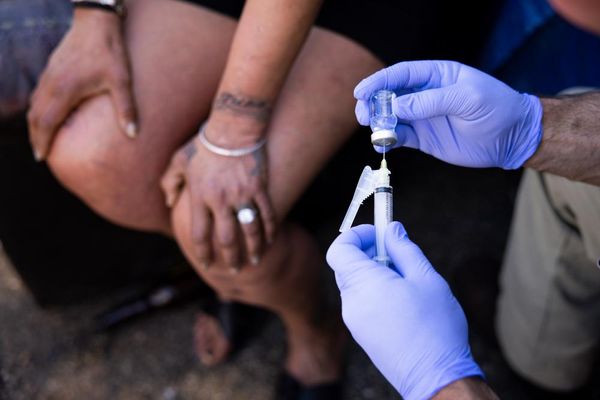

.png?w=600)



