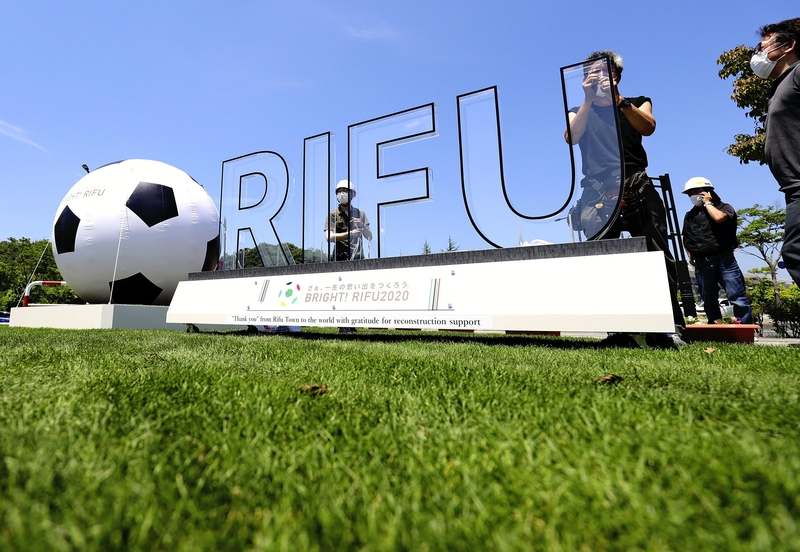
When Tokyo was selected to host the Olympics and Paralympics back in 2013, it's bid envisioned that the Games would be held under the symbolic banner of the "Recovery Olympics," championing the nation's reconstruction from the 2011 Great East Japan Earthquake just two years before.
As time would tell, it was a theme that would ultimately be overshadowed by the coronavirus pandemic.
In a policy speech in January last year, then Prime Minister Shinzo Abe emphasized his desire for "people to see with their own eyes and experience for themselves the state of the disaster-affected areas, which are poised to be vigorously reconstructed."
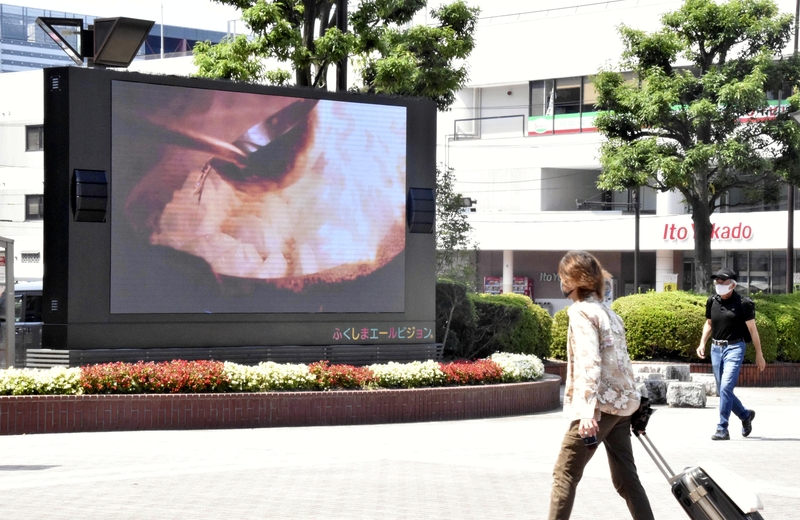
But as the coronavirus spread, the focus increasingly shifted to the virus control measures and whether the Games should be held at all. The subsequent barring of overseas spectators further reduced opportunities to promote the Tohoku region's recovery -- to the great disappointment of people in quake-affected areas.
Even before the Olympics began, Joji Endo, the mayor of Kuji, Iwate Prefecture, had said: "Now that the coronavirus is situated front and center, I don't feel that the conceptual message of the 'Recovery Olympics' has really reached the public."
The Tokyo Games seemed poised to be a golden opportunity for Fukushima Prefecture to dispel misgivings following the nuclear accident, until a series of events, including a tasting of local culinary delicacies, were canceled due to the pandemic.
"On the 10th anniversary [of the disaster], we missed out on the chance to demonstrate our gratitude for everyone's support and to have people see with their own eyes where [the prefecture] now stands," a prefectural official said. "We have derived no satisfaction whatsoever."
Even so, U.S. softball coach Ken Eriksen had plenty of praise for the prefecture, especially its peaches, in tweets that trended when the team visited Fukushima for matches.
Speaking at a press conference, Eriksen said that any first-time visitor to Fukushima would be hard-pressed to believe that it was ever the site of a disaster. He also noted the resilience of the people of Fukushima.
The Reconstruction Agency initially planned to invite foreign media on a tour of the three disaster-hit prefectures in the Tohoku region prior to the opening of the Games. However, the agency had to scrap the plan after the COVID state of emergency was declared.
In the face of limited other means for outreach, the Main Press Centre in Tokyo would end up serving as a crucial conduit that allowed the agency to reach overseas media. The agency set up a "reconstruction booth" where they screened a slide show about the past decade of progress on reconstruction, and invited survivors of the disaster and local farmers to share their stories online.
Twenty media outlets are said to have stopped by the booth each day and been overwhelmingly surprised by the progress toward recovery that had been achieved in only 10 years' time.
A senior official said the agency intends to continue these initiatives as it seeks ways to encourage people to visit Tohoku after the coronavirus has been contained.
"All we can do is keep plugging away patiently," the official said.
Read more from The Japan News at https://japannews.yomiuri.co.jp/