A Covid antibody treatment is effective against the omicron variant and its wide-ranging mutations, new data has confirmed.
The drug was tested against a synthesised version of the variant and analysis shows it stood up against all 37 of the mutations located in omicron’s spike protein.
The treatment, called sotrovimab and developed by GlaxoSmithKline (GSK), uses antibodies to target the variant’s spike protein and prevent it from gaining entry to the body’s cells.
Because of the heavily mutated nature of omicron, there was concern that sotrovimab would not be effective. But unlike other antibody treatments, it is not impacted by the variant’s mutations.
Given the less than three-fold drop in neutralisation during tests, “we are confident that sotrovimab will continue to provide significant benefit for the early treatment of patients hoping to avoid the most severe consequences of Covid-19,” said George Scangos, the chief executive of Vir Biotechnology, the drug’s co-developer.
GSK said last week that sotrovimab was effective against key mutations in omicron, but the more recent tests have provided assurances that it will likely hold up against the variant.
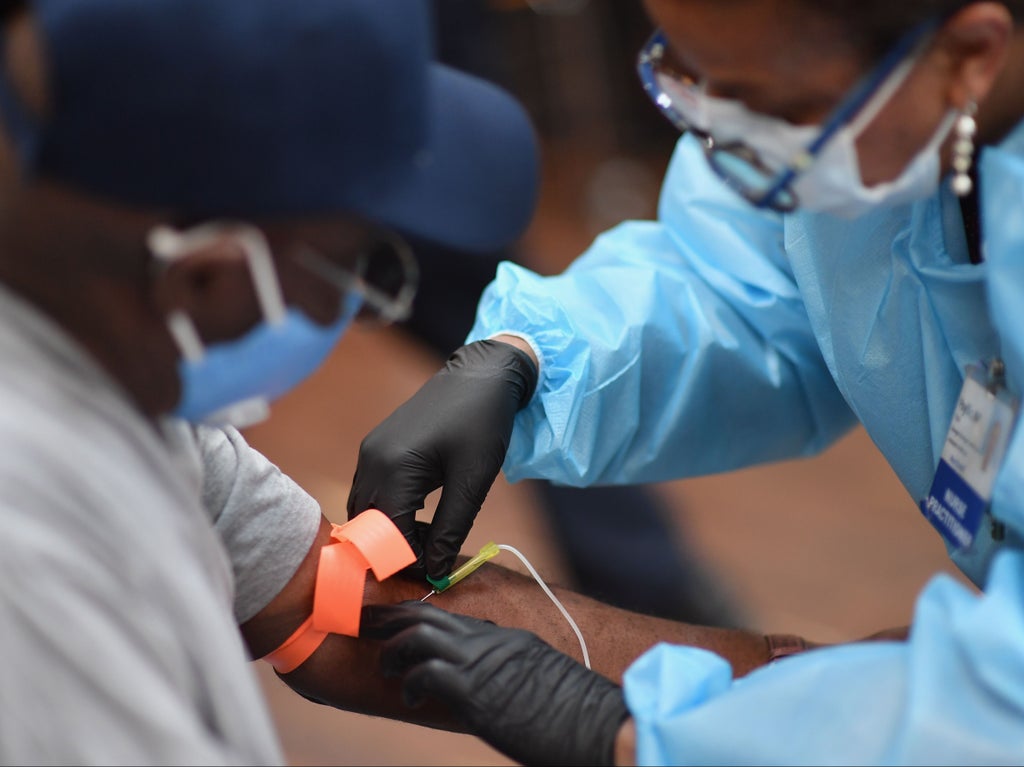
It is applied intravenously for patients who have been recently infected with Covid.
The drug was been approved by the UK's Medicines and Healthcare products Regulatory Agency last week after trials showed it cut the chance of hospitalisation and death in patients with mild to moderate Covid symptoms by 79 per cent.
The UK government has already ordered around 100,000 courses of the treatment.
The MHRA authorisation means it has now approved two lab-made antibody treatments, ronapreve and sotrovimab, and one antiviral, known as molnupiravir.
However, experts have warned that ronapreve is impacted by the mutations present in omicron and will likely be less effective.
Regeneron, the developer of the drug, said last week that early analysis indicated this was the case. “There may be reduced neutralisation activity of both vaccine-induced and monoclonal-antibody conveyed immunity,” the company added.
Professor Wendy Barclay, a virologist at Imperial College London and member of Sage, said the mutations identified in omicron’s spike protein suggested the lab-made antibodies used in ronapreve “won’t work as well as they would do against the wild type [original] virus”.
She added: “That is really a cause of concern because those antibodies are available as a treatment now for patients who, for example, don’t make a good immune response themselves.
“And such patients may not benefit as much as we would hope for that kind of treatment if affected with this virus.”