

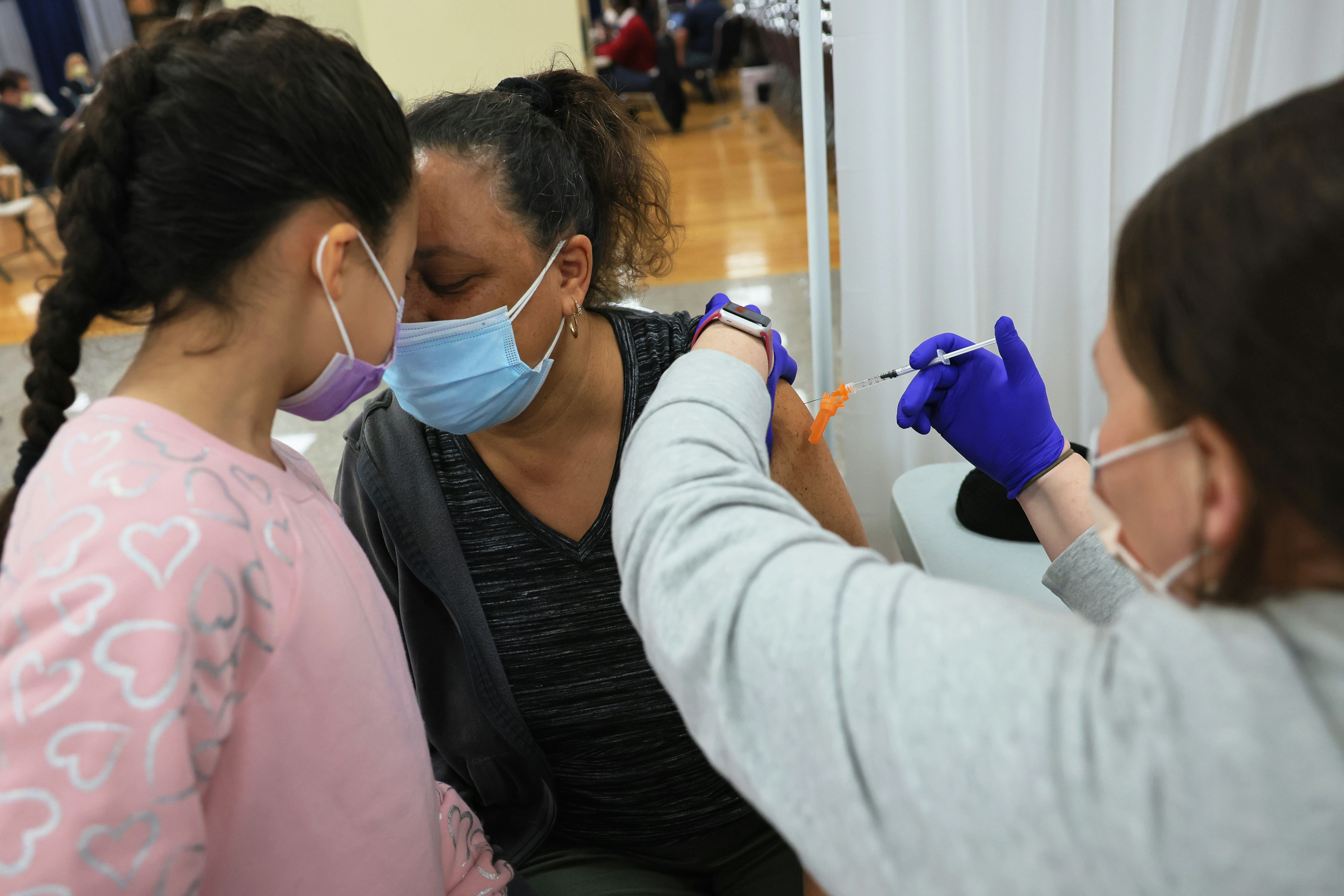
The era of Covid-19 vaccine booster shots has begun in earnest.
On Wednesday, August 18, 2021, the Biden Administration followed up a few days of hinting by announcing a plan — in very broad strokes — for Covid-19 vaccine booster shots for people 18 and older who received either the Pfizer or Moderna vaccines. The Covid-19 vaccine booster shots will be available starting the week of September 20, 2021.
Emphasis ours:
“We conclude that a booster shot will be needed to maximize vaccine-induced protection and prolong its durability,” reads a CDC statement released Wednesday, August 18 by the U.S. Department of Health and Human Services leadership.
There are several big questions about the Covid-19 booster shot:
- Who can get one first?
- Why they are necessary?
- What do they do in the body?
- What are the side effects?
- Will more booster shots be required in the months and years ahead?
Here’s everything you need to know about the Covid-19 vaccine booster shot for Pfizer and Moderna (and vaccines developed by other companies).
(This codex article will be updated as more information becomes available and noted here.)
The Covid-19 booster shot history
The booster shots being talked about now are actually the second booster shot for the Pfizer and Moderna vaccines. The two-shot vaccines that began going into arms on December 14, 2020, consist of the initial priming dose and a secondary booster shot either three weeks (Pfizer) or four weeks (Moderna) later.
In January 2021, Moderna executives announced they were working on a third booster shot as a result of the South African variant (and later, the India-established strain now known as the Delta variant) and its ability to cause immunity to wane faster.
See also: Delta variant: 8 things vaccinated people should know about breakthrough Covid-19
“Every time a new variant comes up we should be able to test whether or not [our vaccine] is effective,” Pfizer CEO Albert Bourla in January 2021, to Bloomberg. “Once we discover something that is not as effective, we will very, very quickly be able to produce a booster dose that will be a small variation to the current vaccine.”
Bourla’s comments came one day after Moderna had announced it was studying the need for a Covid-19 vaccine booster shot that could more effectively immunize people against fast-spreading variants.
The side effects of the Covid-19 booster shot
There’s not much we know as of August 18, 2021, about the side effects of an additional booster shot for the Covid-19 vaccine. As evidence builds though, the CDC states that you can expect something similar, although maybe in less severity, as to what you felt after the first vaccine:
- Fatigue and pain at the injection site are the most commonly reported side effects
- Most symptoms are mild to moderate
This is according to the “COVID-19 Vaccines for Moderately to Severely Immunocompromised People” report on the CDC website.
A J&J Covid-19 vaccine booster shot is “likely” coming
Because the Johnson & Johnson single-dose vaccine arrived after the Pfizer and Moderna vaccines — J&J’s Covid-19 vaccine debuted in March 2021 — more study is needed before the HHS can officially recommend a booster shot, but it’s likely. Here’s the HHS:
“We also anticipate booster shots will likely be needed for people who received the Johnson & Johnson (J&J) vaccine,” announced the HHS on the CDC website on Wednesday, August 18, 2021.
“Administration of the J&J vaccine did not begin in the U.S. until March 2021, and we expect more data on J&J in the next few weeks. With those data in hand, we will keep the public informed with a timely plan for J&J booster shots as well.”
Interestingly, the Johson & Johnson vaccine, a single-dose vaccine, included 100 micrograms of the vaccine. The Pfizer vaccine included 60 micrograms split over two shots in 30-microgram doses.
Covid-19 booster shot: How it works in the body
The way a booster shot works is this: Just as the original doses of the Covid-19 vaccine primed the immune system to recognize, fight, and neutralize the virus if it tried to infiltrate the body, so too do the booster shots.
Think of a Covid-19 vaccine booster shot as a continuing education program for your immune system: After a given period of time, vaccine effectiveness wears off and you need to re-up the protective effect with a booster.

This is why we get a flu shot every year, a tetanus shot every ten years, and several rounds of some childhood vaccines, like the MMR and the meningitis C jabs.
In the case of the Pfizer-BioNTech and Moderna vaccines, each dose contains pieces of mRNA from the coronavirus — essentially the blueprint for genes to make proteins. In this case, the protein in question is the spike protein, which the coronavirus uses to unlock the body’s cell and become entrenched there.
The virus starts to replicate once it’s in the cell. But by training the immune system to recognize the spike protein before an infection takes place, the various players in that system — T-cells, antibodies, and more — can then go into action and stop the virus before it gains a foothold.
For the coronavirus vaccines, Pfizer-BioNTech have data to suggest that a third dose of the Covid-19 vaccine significantly boosts antibody response to the original coronavirus strain as well as the Delta variant that is currently dominant in the United States.
In a statement on its website, Pfizer says that the data show a “robust” immune response to the third shot — it has submitted the Phase 1 clinical trial data to the FDA for review.
“The data we’ve seen to date suggest a third dose of our vaccine elicits antibody levels that significantly exceed those seen after the two-dose primary schedule,” Albert Bourla, chairman and chief executive officer of the drug company, said.
Who is allowed to get the booster shot on September 20, 2021?
According to a statement released on August 18, 2021, by the CDC, the U.S. Department of Health and Human Services is “prepared to offer booster shots for all Americans beginning the week of September 20 and starting 8 months after an individual’s second dose.”
While “all” Americans will be allowed, the 8 months mark does specify who will be first in line — namely, those who were vaccinated the earliest. This group of individuals includes seniors, nursing home residents, and health care providers. The same statement mentions intended efforts to “deliver booster shots directly to residents of long-term care facilities.”
“All” also pertains to who is currently eligible for the Covid-19 vaccine: anyone 12 years of age or older. Pfizer is anticipated to be the first vaccine available to children under 12 — the company expects the vaccine will be administered via an emergency use authorization by the end of September.
As of August 12, approximately 50.4 percent of the total U.S. population is fully vaccinated. This means they’ve either received both doses of an mRNA vaccine (Moderna or Pfizer) on one dose of the Johnson & Johnson vaccine. Being fully vaccinated is a requirement for getting a booster.
If you are not vaccinated and are concerned you are ineligible due to allergies or autoimmune diseases, you should talk with your healthcare provider about the risks and benefits.
How long do you have to wait to get the booster shot?
If you have received the Pfizer or Moderna vaccine, the plan is to offer a booster shot starting 8 months after your second dose.
While the CDC anticipates booster shots will also be needed by those who received the one dose Johnson & Johnson vaccine, there’s currently not enough data to provide guidance on when a booster shot should be given. The CDC anticipates receiving this data “in the next few weeks,” per the August 18, 2021 statement.
When immunocompromised people get a Covid-19 booster shot vaccine
While most people will need a booster shot eight months after their first dose — which will first affect people in long-term care plus healthcare and essential workers — the CDC recommends that severely immunocompromised people receive a third dose of mRNA vaccines “at least 28 days” after receiving the second Pfizer-BioNTech or Moderna doses.
Getting the booster shot sooner than 8 months after the Covid-19 vaccine
In addition to those with have known immune system issues such as HIV or DiGeorge Syndrome, the CDC recommends that patients receiving active cancer treatment, people who have received a recent organ or stem cell transplants, and people taking high doses of corticosteroids or other drugs that might suppress the immune system receive a booster shot.
While the CDC recommends people receive the same vaccine for their second dose, if the drug involved "is not available or is unknown," either one will suffice.
As for those who received the Johnson & Johnson vaccine, which is not mRNA, "There is not enough data at this time to determine whether immunocompromised people who received the Johnson & Johnson’s Janssen COVID-19 vaccine also have an improved antibody response following an additional dose of the same vaccine."
What if people don’t get the Covid-19 booster?
The decision to permit boosters in the U.S. is based on data suggesting protection against severe disease, hospitalization, and death could “diminish in the months ahead,” per the CDC statement.
This data is disputed by other parties. During a World Health Organization (WHO) briefing on August 18, Joachim Hombach, executive secretary of the WHO’s Strategic Advisory Group of Experts on Immunization, announced that while there is an observed decline in protection against mild disease and infection, “the data does not indicate that boosters are needed” to protect against severe disease and death.

According to the New York Times, as of August 18, approximately 4.79 billion vaccine doses have been administered worldwide. Eighty-three percent of these doses were given in high and upper-middle-income countries.
In a Twitter thread posted on August 16, Andy Slavitt, the former Biden White House Senior Advisor for Covid-19 response, lays out the reason for dispute: global vaccination will “dramatically reduce the potential for the more deadly variants.” Continuing to vaccinate the same relatively small groups (rich countries) increases the odds of future variants. He frames it as viewing the purpose of vaccination as a way to prevent death or a way to prevent symptoms and transmission. The latter, Slavitt writes, supports the case for boosters.
In an editorial published on August 17, Nature, a leading scientific journal, generally agrees with WHO’s call to halt boosters, save for in the instances of immunocompromised people, or people who received vaccines manufactured by the Chinese company Sinopharm and Sinovac. The editorial argues boosters will limit the already limited global supply of vaccines, and the science behind the benefits of boosters isn’t agreed on.
As of August 18, experts continue to debate whether or not there is enough data to support the idea that people who are not immunocompromised will need boosters to protect against severe illness and death.
This codex article will be updated with more information as we get it. (Last updated August 18, 2021).


.png?w=600)