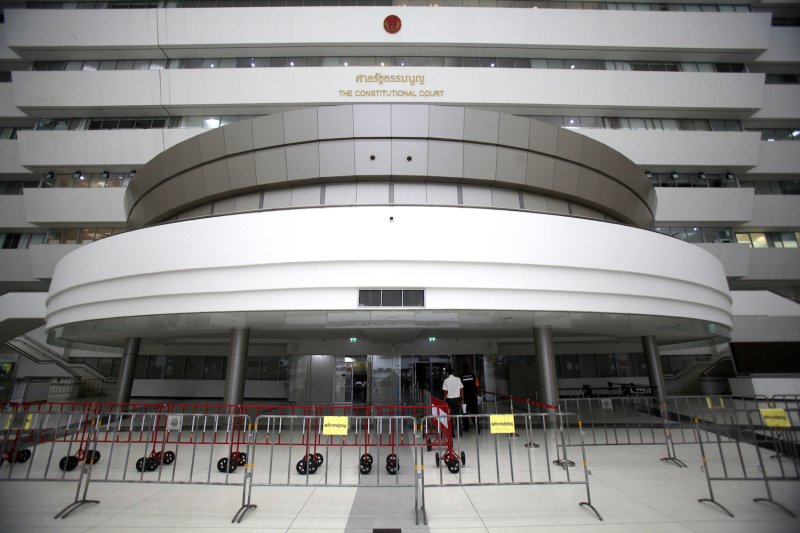
The Constitutional Court ruled on Thursday that the government’s 400-billion-baht emergency loan decree was lawful, lifting uncertainty over state spending plans.
The funds were intended to be equally divided between the Thais Help Thais Plus consumer subsidy scheme that started last month, and for financing a green energy transition.
Opposition lawmakers, who brought the case to the charter court, argued that although they backed the clean energy policy, they disagreed with use of an emergency decree.
They also said funding plans for the energy component were vague and merited more detailed parliamentary scrutiny.
The opposition People’s Party argued that the prevailing situation did not meet the strict test of an “urgent and unavoidable necessity” required to justify using an emergency decree instead of a standard parliamentary bill.
Finance Minister Ekniti Nitithanprapas maintained that the borrowing is necessary because higher energy prices impact everyone.
“The court finds that the loan decree is constitutional,” the court said in a statement.
The cabinet led by Prime Minister Anutin Charnvirakul in May approved the borrowing decree in a bid to cushion a flagging economy from higher oil prices.
“We are disappointed, but not surprised,” People’s Party leader Natthapong Ruengpanawut said in response to Thursday’s decision.
“We maintain the government does not need to issue an emergency loan decree because there is no urgency.”
He said clean energy programmes can use the fiscal budget without turning to emergency borrowing, adding that the government’s projects did not meet criteria for such a loan.
Projects ‘pre-arranged’?
Sirikanya Tansakun, the party’s deputy leader, expressed concern that some of the energy transition money might end up going to projects that have been quietly pre-arranged.
She said documents circulated to local administrative organisations resembled a “catalogue” of projects eligible for funding, raising concerns that contractors or procurement arrangements have already been lined up.
The government has insisted the borrowing decree is essential for the energy transition, citing Thailand’s heavy reliance on imported energy — equivalent to nearly 10% of gross domestic product — as a key vulnerability.
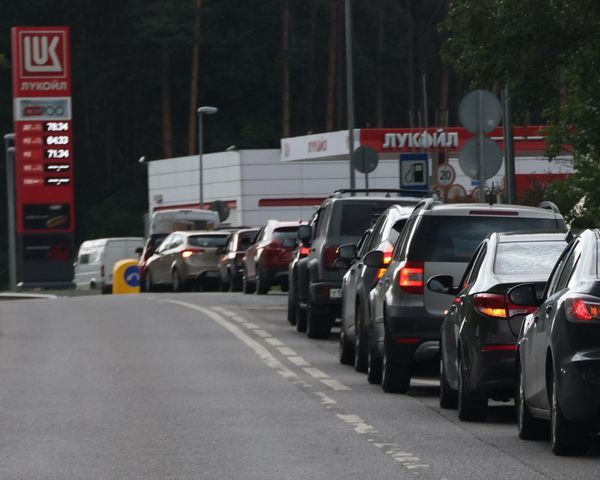
Only months into its four-year term, the Anutin government is already facing discontent as a price shock driven by the war in Iran deepens a farm debt crisis.
Thailand’s economy, the second largest in Southeast Asia, expanded by only 2.4% last year, lagging regional peers, with 2026 economic growth forecast raised to 2.3%.