The haze is already shimmering above the ground – a mirror-like band of shining silvers, blues, yellows and whites – when I reach the embankment. In the distance, a line of white shingle stretches in front of the sea, and beyond, on the horizon, lie the low, rounded hills of the Isle of Wight.
Rooks and crows amble on the grass, calling loudly to one another. Dirty-white gulls drift overhead and land on the brown mud bordering the water that runs through the breach in the sea wall. They are moulting adult and young gulls – black-headed, herring, two great black-backed and two Mediterranean gulls. They squabble, preen and cry.
A corn bunting repeats its short, pretty jangling song – often likened to shaken keys – across the marsh. It’s far away, perched on a small bush on the edge of a patch of long grass, but I can just make out the rotund, thick-necked little bird, with its long, slightly forked tail, through the telescope. Its wide gape opens as it sings again and again.

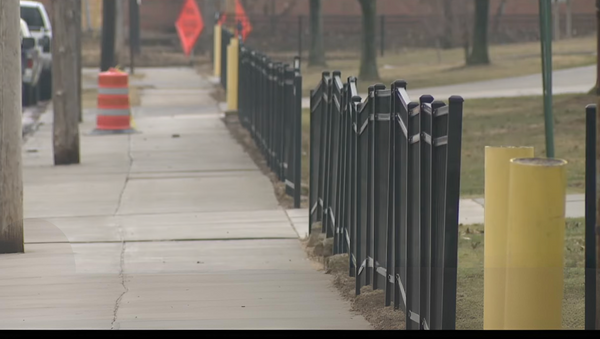
Completed in 2013, this is the largest managed – and sustainable – realignment of coast in Europe. The Environment Agency, in partnership with the RSPB, breached the sea wall to allow the water to be absorbed by 183 hectares of newly created intertidal habitat, including mudflat, saltmarsh and transitional grassland. A 7km-long embankment curls round the marsh. Together, the bank and marsh absorb the flooding, to protect nearby housing in Selsey, and to provide a home in summer to breeding birds, including the corn buntings, skylarks and seabirds. The area also offers vital grazing and wetland for geese, ducks and waders in winter.
Along the bank, eight rooks gather side by side on the fence, panting in the heat. By keeping their bills open, the birds are helping moisture to evaporate from their throat and lungs, which in turn loses heat from their bodies.
They fly away as I approach. Further along, another, much smaller, streaky brown bird, with buff underparts and a pale eyestripe – a whinchat – jumps up on to the fence. It’s one of the many migrating birds now moving south along the coast.