Since the issue of killings by police officers was thrust on to the national agenda by the unrest in Ferguson, Missouri, last year, the US government has been heavily criticised for its deficient systems for counting such incidents.
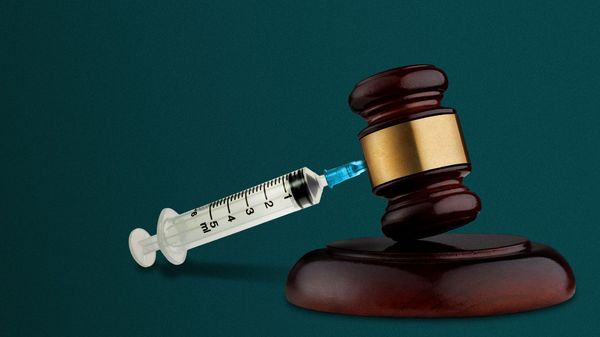
Following a Guardian investigation to record all deaths caused by law enforcement, both the FBI and Department of Justice have announced that they will overhaul their programs and publish more extensive data.
Here we trace the milestones on the path to these major changes in public policy.
31 March 2014
The Department of Justice suspends its arrest-related deaths program on the grounds that the collection was missing too many occurrences to meet data quality standards. The program had sought to capture all deaths “during an attempt by law enforcement to detain an individual”.
9 August 2014

The fatal police shooting of Michael Brown in Ferguson, Missouri sets off a wave of protests and rioting in the city and prompts a national discussion about race and policing. Brown’s death comes a month after Eric Garner was killed by an NYPD officer in Staten Island and is followed by a string of high profile police killings of unarmed African Americans, including Tamir Rice in Cleveland, Ohio and Laquan McDonald in Chicago, Illinois.
24 November 2014

A grand jury in Ferguson declines to indict Darren Wilson over the shooting of Michael Brown. Riots and unrest swept the city and protests erupt all over the United States.
18 December 2014

Barack Obama signs an executive order to create the Task Force on 21st Century policing. Its 11 members come from a variety of backgrounds including law enforcement, activism and academia, tasked with finding solutions that “strengthen the relationships between local police and the communities they are supposed to protect and serve”.
4 April 2015

Walter Scott, a 50-year-old unarmed African American in North Charleston, South Carolina, is shot dead by white police officer Michael Slager. Cellphone video later emerges, and shows Scott was running away at the time he was shot in the back. Slager is charged with murder. The witness who filmed the incident, Feidin Santana, later tells the Guardian that he lives in fear of his life.
12 April 2015

Freddie Gray is arrested in Baltimore, Maryland and sustains fatal neck injuries in the back of a police van. His death prompts weeks of protests, culminating in riots throughout city. The six officers involved in his arrest are charged. A team of Guardian journalists report from the ground throughout.
18 May 2015
Obama’s Task Force on 21st Century Policing releases its recommendations which include an emphasis on better national data on use of force incidents, on “community policing”, better training and police embracing a “guardian” rather than “warrior” mentality.
1 June 2015

The Guardian launches The Counted, the most comprehensive database of police killings in the US ever published. The interactive database uses a verified crowdsourcing model to record fatal encounters through 16 data points. It monitors fatal police shootings, deaths in custody, deaths following Taser use and deaths involving police vehicles. The Guardian reveals that black Americans are more than twice as likely to be unarmed when killed during encounters with police as white people. The ongoing investigative project starts with a series of reports on individuals killed by police who had not previously received national media attention.
1 September 2015
The Guardian starts publishing a series of long form investigations into recurring police use of force issues identified by analysis of data in The Counted. The series starts with an investigation into police shooting at moving vehicles despite federal guidance against the practice. The series goes on to report on a pattern on police shootings involving suicidal people, the deadly use of Tasers, and culminates in a five-part investigation into Kern County, California, that has the highest rate of officer involved deaths in the US in 2015.
3 September 2015
Officer Stephen Rankin, who shot and killed unarmed 18-year-old William Chapman after a struggle in a Walmart parking lot is indicted on first-degree murder charges. The Guardian revealed in June that Rankin had been removed from patrol by commanders for 33 months between 2011 and 2013, following a previous fatal shooting of an unarmed man. In total 15 police officers have been officer charged with manslaughter or murder in 2015 after an officer-involved shooting. This is three times the number in 2014.
5 October 2015

The Department of Justice announces its statistics division, the Bureau of Justice Statistics will relaunch the Arrest Related Deaths program, employing a verified open-sourced methodology that is similar to the Guardian’s.
Three days later FBI director James Comey says it is “ridiculous [and] embarrassing” that the Guardian and the Washington Post (who launched a database counting police shootings a month after the Guardian) were “becoming the lead source of information about violent encounters between police and civilians”.
8 December 2015
The FBI announces an overhaul of its system for counting officer-involved deaths. The agency previously published an annual ‘justifiable homicide by law enforcement’ count, using data voluntarily supplied by police departments. The FBI accepted that the voluntary nature of this reporting meant its annual tally of officer involved deaths was well below the real figure. Officials said the agency would now expand its criteria, counting deaths in police custody and Taser-involved deaths in real time. This mirrors the criteria of The Counted. The FBI’s program will, however, remain voluntary.
The announcement follows an early presidential campaign season where Democratic presidential candidates Hillary Clinton and Bernie Sanders both met with activists and protesters from the Black Lives Matter movement. A group of these high profile activists launched a comprehensive police reform platform named Campaign Zero.