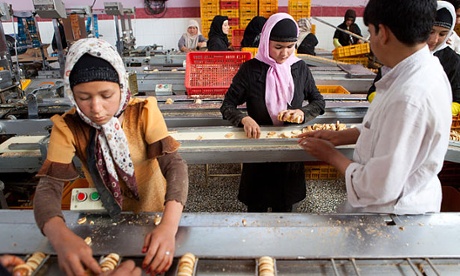
Accountants aren’t often associated with advocating on social issues, but times are changing. A recent report by the Association of Chartered Certified Accountants (ACCA) suggests that the accountancy profession could hold the key to ensuring businesses start to address children’s rights as part of their core business.
Accountants are arguably best known for focusing on a company’s finances – analysing invoices, preparing balance sheets, advising on tax affairs and so on. Yet with over a million professional accountants working in positions of strategic or functional leadership for businesses and governments worldwide, accountants and their professional bodies are in a unique position to look at the wider impact that business has on society and promote ethical conduct, accountability and transparency.
It is in this vein that the ACCA published its briefing paper that calls on finance and business leaders to view children’s rights as a key issue for corporate concern.
ACCA’s message is clear: protecting children’s rights is good for business as it leads to better risk management, enhanced reputation and the social license to operate a motivated workforce, and a stable and sustainable business environment. If business and finance leaders fail to consider children’s rights they run ethical, reputational and legal risks that will affect the bottom line.
The ACCA’s paper responds to the growing requirements for companies to report on their human rights performance. In the UK, a recent change to the Companies Act means that larger listed companies now have to report on human rights issues. More robust reporting criteria is coming down the line with an EU directive on disclosure of non-financial and diversity information.
So too are some companies lobbying for regulation that encourage consideration of business impacts on human rights. Primark, Tesco, Marshalls and others wrote to the prime minister insisting that the modern slavery bill, currently being debated in parliament, include a clause requiring companies to report on the steps they have taken to eliminate modern day slavery from their supply chains.
Much of the momentum behind these developments was generated by the “ruggie principles”, unanimously endorsed by the UN Human Rights Council in 2011. At the heart of the guiding principles lies the concept of due diligence - an ongoing process that businesses must undertake to identify, prevent, mitigate and account for how they address their impacts on human rights.
The UK government’s action plan on the implementation of the ruggie principles is also unequivocal in its expectation that all responsible businesses should “adopt appropriate due diligence policies”.
However, very few UK businesses are currently doing so and they need better support to undertake what is a challenging and novel process that requires consultation with groups and individuals, with whom they are unaccustomed to interacting.
For this reason, UNICEF developed the children’s rights and business principles, which advise companies on the actions they can take to respect and support children’s rights. We’ve subsequently created a number of tools for businesses on how to write a policy commitment to children, conduct a child right’s impact assessment, and how to consult with child rights stakeholders and report on child rights impacts.
But some businesses will still need more hands on support. For this reason, UNICEF UK has established a dedicated unit to focus on child rights and business.
In the context of growing scrutiny of company performance from employees, customers, investors, shareholders and the media amongst others, it is inevitable that the onus on businesses to conduct human rights due diligence will only increase. The publication of the ACCA report indicates that this point is not lost in the accountancy profession. The prospect of the “activist accountant” is certainly at odds with the usual image of social justice campaigners. But it might just work.
For more information please contact csr@unicef.org.uk
Samah Abbasi is policy and advocacy adviser for child rights and business at UNICEF UK
Copy on this page is provided by UNICEF, supporter of the children: the next business agenda hub
More from the UNICEF partner zone: