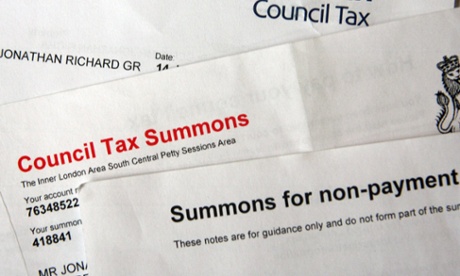
Councils are taking court action and using bailiffs to recover people’s debts, rather than helping arrange affordable payment options, a debt charity has said.
Enforcement action “appears to be the norm, not a last resort”, said StepChange on Monday, after a survey of its clients found that even after speaking to their council about their debts, 62% had been threatened with court action and 51% had been threatened with bailiffs.
In contrast, only 25% were offered an affordable payment option and just 13% were encouraged to get debt advice.
The charity said it had seen a huge increase in the number of people seeking its help with council tax debt, and the growth was outstripped only by the growth in problems caused by payday loans.
StepChange said that in 2010, 13,353 people who contacted it were in arrears to their council, but in 2014 this figure had risen to 63,016 – an increase of 372%.
Over the same period the average amount owed rose from £675 in 2010 to £832. Of StepChange’s clients, 28.3% had council tax debt in 2014, compared with 10.4% in 2010.
Changes to council tax benefit benefits, the rising cost of living and the tough stance taken by councils were likely to be driving the increase in the number of people seeking help.
Mike O’Connor, chief executive of StepChange, said: “It is shocking that many councils are less likely to be helpful to people in debt than banks are, and are more likely to take people to court.”
He added: “Councils need to pursue debts but they must have a responsible and proportionate approach to dealing with people in arrears and not default to aggressive enforcement that often only serves to deepen debt problems.”
StepChange said councils were under pressure to collect tax, and were named and shamed based on these rates, but a fall in collection rates in 2013-14 suggested tough enforcement action was not working.
It calls for changes to the Council Tax (Administration and Enforcement) Regulations 1992 to force councils to provide evidence that they have tried to pursue an affordable repayment plan, and for consumers to get protection against enforcement of unaffordable repayments if they are seeking help with their debts.