City of Newcastle recorded a $32 million deficit this past financial year, a figure it says is inflated by almost $9 million due to funds set aside for landfill remediation.
The operating result, before grants and capital contributions, is the second consecutive deficit for the council after it achieved a run of six surpluses before the coronavirus outbreak.
The draft 2020/21 financial statements, to be endorsed for exhibition on Tuesday, show council's operating income grew to $340 million, an increase of $14 million on the year prior and about $3 million more than budgeted. Expenses rose $40 million to total $344 million, about $5 million more than budgeted.
The council had budgeted for a $22.7 million deficit and while a report prepared for next week's ordinary meeting puts the achieved result down to a number of factors, it highlights how it is inflated by a decision to put $9 million aside to remediate an old landfill site at Sandgate.
The biggest expense increase was materials and services, up 23 per cent on the year prior to total $116 million. The use of contractors and consultancies accounted for almost half of this, at $56 million, an $11 million increase on 2019/20. Employee costs rose 9.5 per cent to reach $115 million.
Rates and annual charges revenue hit $192.7 million, up $8.5 million on the year prior. User fees and charges revenue dropped, down $1.5 million to $76.6 million.
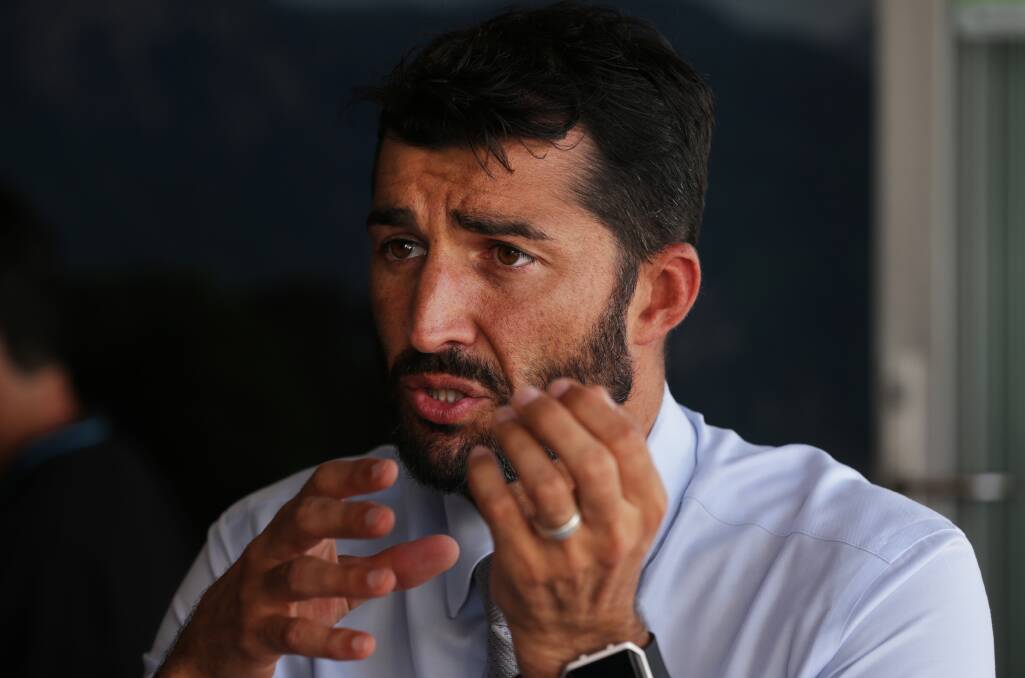
City of Newcastle CEO Jeremy Bath said in a statement it had been an "extraordinary 18 months" for the council given the pandemic and it would have to "gradually" work back to a surplus.
"Despite the repeated hits from having to close down so many of our income generating services, we were able to avoid laying off staff, cutting community grants or suspending infrastructure projects," he said. "It will be a gradual return to profitability given the impact of the recent lockdown."
Despite budgeting to spend $36.5 million on renewing assets, the council spent $26.8 million.
As of June 30, it had an infrastructure backlog of $39 million. But this figure is contentious as in 2019/20 the council wiped $101 million off the backlog by changing its reporting method.
The backlog ratio, a measure of how much the council needs to spend to keep basic infrastructure at a satisfactory level, is now 3.61 per cent.
But under the old reporting, the asset renewal backlog would be $140 million and the ratio more than 12 per cent, well above the 2 per cent upper limit prescribed by the Independent Pricing and Regulatory Tribunal.
The council is due to consider a proposal to increase its 2021/22 infrastructure works program by $14 million at Tuesday's meeting.