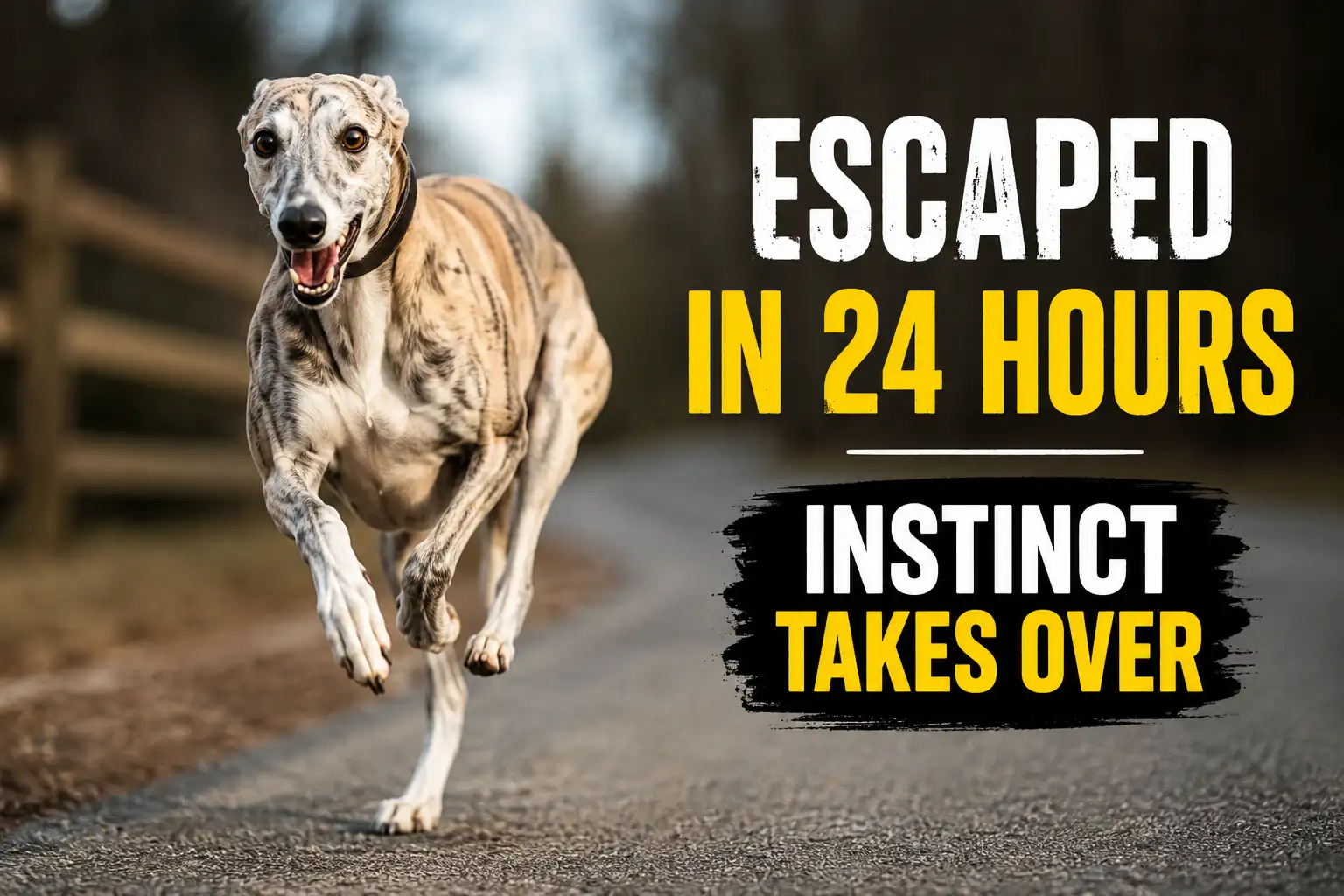
Losing sight of a Greyhound or Whippet, even for a few seconds, can become one of the most stressful experiences for any owner. These gentle, affectionate dogs often appear deeply attached to their families at home, yet their behavior can change dramatically after an escape.
Lost-dog recovery specialists and veterinary behavior experts have long observed that frightened sighthounds may stop responding to familiar voices or commands surprisingly quickly. This reaction does not mean the dog has forgotten its owner or no longer wants to return home. Instead, it reflects a powerful survival response that can temporarily override years of trust and training. Understanding why this happens is one of the most important steps owners can take before they ever face an emergency.
Why do Greyhounds and Whippets behave so differently after escaping?
Greyhounds and Whippets belong to a group known as sighthounds, breeds developed over generations to rely on exceptional eyesight, speed, and quick decision-making while pursuing moving prey. Those natural instincts never completely disappear, even in dogs that have spent their entire lives as cherished household companions.