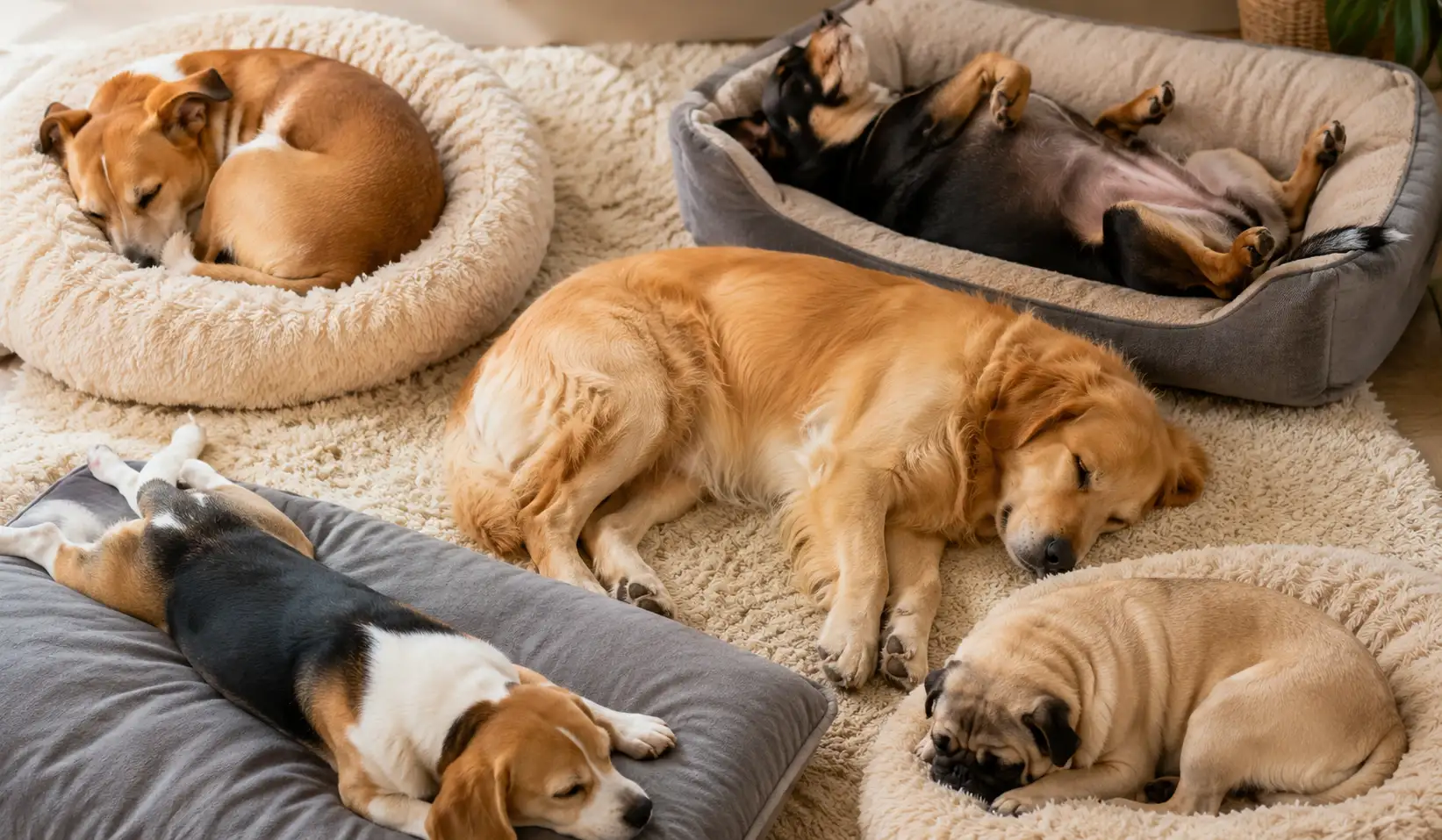
Dogs spend a huge part of their lives asleep. According to the American Kennel Club (AKC), healthy adult dogs typically sleep 12 to 14 hours a day , while puppies, senior dogs, and some large breeds may sleep even longer. Most owners notice how much their dog sleeps but overlook something equally important—the position they choose.
Veterinary behaviorists say a dog's sleeping posture can offer small but useful clues about comfort, confidence, body temperature, and overall well-being. It is not a medical diagnosis, and no single position automatically means something is wrong. Instead, sleep posture should be viewed alongside changes in appetite, energy, mobility, and behavior.
Whether your dog curls into a tight ball, stretches across the floor, or sleeps upside down with all four paws in the air, each position usually has a reason. Understanding those reasons can help owners recognize what's normal for their pet—and notice when something changes.
Why do dogs curl up into a ball when they sleep?
If your dog sleeps with its nose tucked close to its tail, you're looking at one of the oldest canine instincts still seen today. Before dogs became household companions, their wild ancestors slept outdoors where warmth and safety mattered. Curling into a ball helped conserve body heat while protecting the chest and abdomen from potential danger. Even though today's dogs sleep on comfortable beds and couches, that instinct hasn't disappeared.