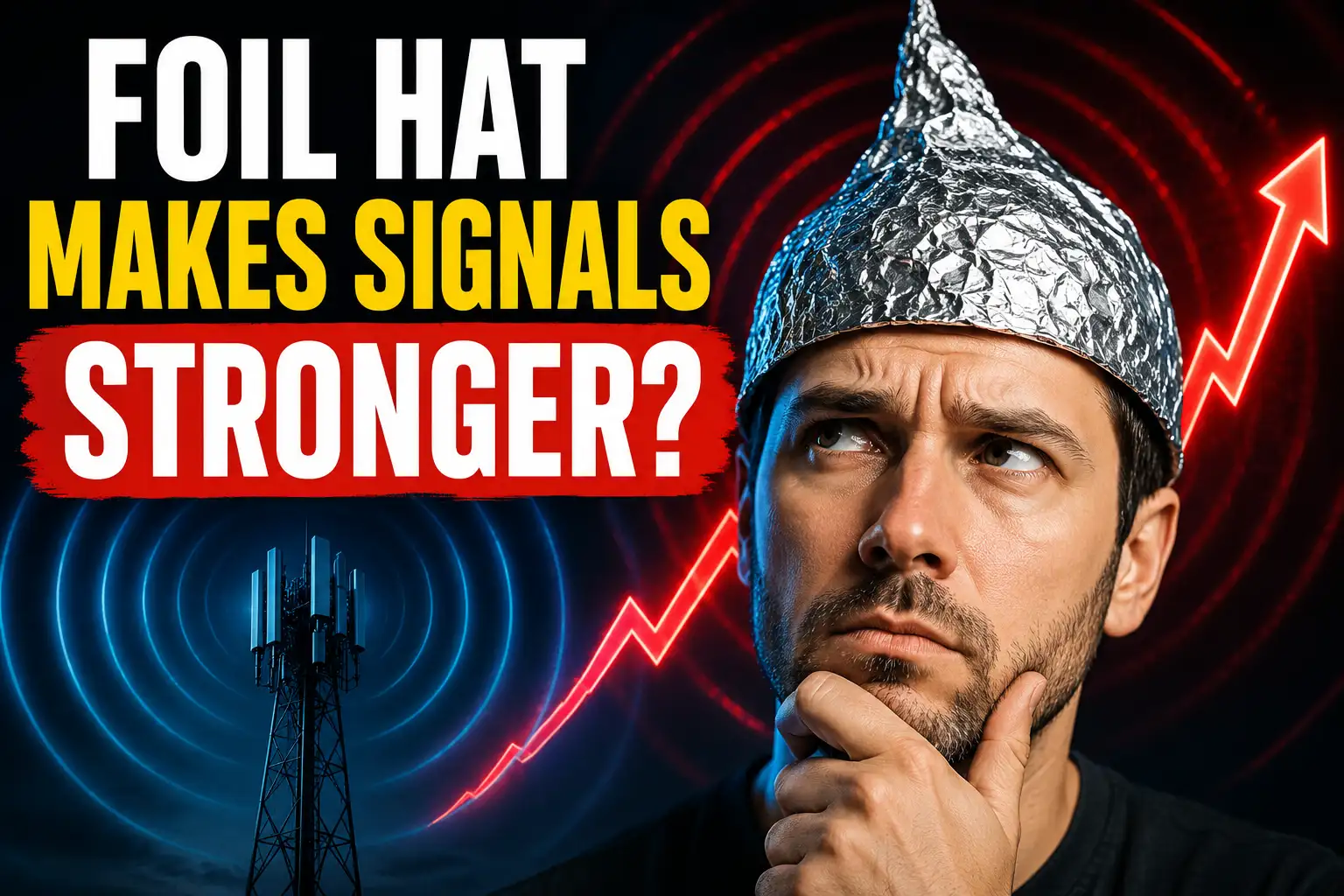
The aluminum foil hat has long been associated with conspiracy theories, often portrayed as a homemade way to block mind control or secret surveillance. It has appeared in movies, television shows, internet memes, and online discussions for decades. While most people recognize it as a cultural joke, one scientific experiment unexpectedly gave the idea new attention—not because it proved the myth, but because it produced a surprising result.
In 2005, a group of students at the Massachusetts Institute of Technology (MIT) decided to test the popular belief using basic engineering principles. Rather than debating the claim, they measured how aluminum foil hats interacted with radio-frequency signals. Their findings showed that the hats did not act as a simple protective shield. Depending on the frequency, they could reduce some signals while making others stronger.
Could an aluminum foil hat really make some signals stronger?
The MIT experiment focused on how radio-frequency waves interacted with a homemade aluminum foil hat. Researchers created hats from ordinary household aluminum foil and measured signal strength across different frequencies.
Their results showed that the hats behaved differently depending on the radio frequency involved. At certain frequencies, signal strength decreased. At others, particularly around 1.2 GHz and 2.6 GHz , the hats appeared to increase signal reception instead of blocking it.