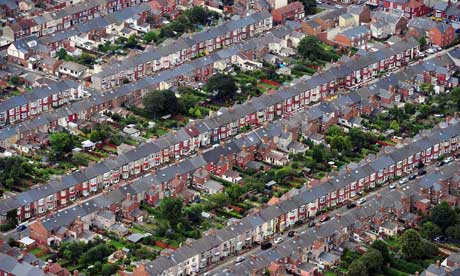
The UK has some of the oldest housing stock in the world, leaking heat and contributing 27% of the nation's total carbon emissions.
Retrofitting homes is now a government priority. But the sheer scale of the job and the potential costs are terrifying (a large town of homes retrofitted per week for the next 20 years would just about do it). For individual householders, research by Forum for the Future has shown that the £6,500 loans planned through the Green Deal are around 10 times short of what is needed by owners of some older properties. For large-scale landlords, the notion of universal and comprehensive retrofitting looks impossible.
At the heart of the problem is picking out the real issues behind energy use and efficiency. What's to blame: are homes really kept in a tropical condition – hot, humid and basically unhealthy – or are we just making old and draughty houses bearable in the UK climate? What measures will actually make the greatest difference to energy use and carbon emissions?
Sensor technologies in homes, providing data and insights into behaviour and building performance will be critical to the future of retrofitting projects and the development and support for the right technologies. A three-year project run by Coventry University with a social housing group has developed low-cost sensors which monitor temperature, humidity, CO2 levels and light, tracked against consumption of energy and water. This way landlords can find out whether excessive carbon emissions are caused by the behaviour of residents, problems with heating systems or the fabric of the building itself.
Sensors are to be tried in 150 properties owned by Orbit Heart of England. More than 200,000 items of data are generated from each sensor, crunched into a form that can be analysed by non-experts. On the basis of the 20 homes monitored and analysed so far, Orbit has been able to start making decisions on investment. For example, ground-source heating is often regarded as being energy efficient, but it needs to be permanently switched on. People more familiar with controlling the heat of a central heating system often switch the groundsource system off, which leads to a cold house with increased humidity and the potential for mould to form, resulting in unnecessary repair costs.
In this instance, the data collated has enabled the university to research the prediction of mould formation, which is essential information for Orbit. Mould is much easier to combat if it is caught in its early stages as it can be fixed using simple cosmetic measures, avoiding longer-term damage by ensuring tenants are better informed about how to use the heating system. The next stage of our research is to monitor 23 new "passiv" homes, testing their claims to be "zero carbon" and how they perform in practice with social housing tenants.
Having access to this type of information means that building managers and tenancy engineers can decide whether a refurbishment is needed or whether the tenant just needs more advice on how to manage the home more efficiently. Some properties will have a combination of issues that put them at risk of being below the threshold for healthy living. Sensor data allows Orbit to prioritise those that need refurbishments urgently and to highlight potential problems before they happen. The growing pressure of carbon-reduction targets aside, inefficient homes also tend to be unhealthy homes. Properly targeted retrofitting will also improve the living conditions and health of tenants.
Evaluation of a building's performance is just not a common part of construction and commissioning, the assumption being that a building will perform according to the design specification. Research has overwhelmingly shown that how a building is used is the critical factor, with up to 200% variation in energy consumption from identical buildings. A culture of monitoring – more accurate sensing, cheaper technologies and better analysis of the data – will be crucial to creating a sustainable future for UK housing, retrofitting and newbuild.
Professor Elena Gaura is a member of the Low Impact Buildings Grand Challenge Initiative at Coventry University
This content is brought to you by Guardian Professional. Join the housing network for more like this direct to your inbox.