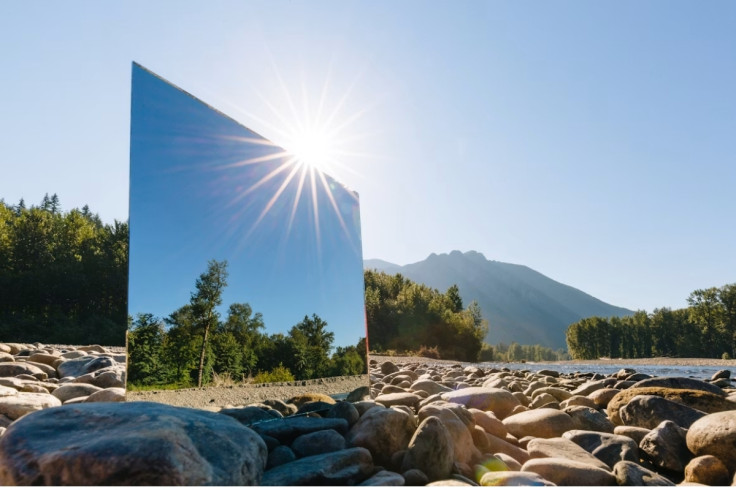
The US has approved the first test of a 'Sunlight on Demand' space mirror after the Federal Communications Commission (FCC) authorised Reflect Orbital to launch Earendil-1, an experimental satellite designed to reflect sunlight back to Earth.
The approval allows the company to test a single satellite, although Reflect Orbital has said it hopes to eventually build a network of more than 50,000 satellites by 2035.
Reflect Orbital says its technology could provide extra daylight for solar farms, agriculture and emergency response efforts after disasters. While only one satellite has been approved for testing, the decision comes as companies race to develop new commercial projects in low-Earth orbit, leaving regulators to consider technologies that barely existed a few years ago.
However, scientists and astronomers have already voiced concerns, warning that the technology could affect everything from road safety to wildlife and night sky observations.
'Sunlight on Demand' Could Bring Benefits Alongside New Risks
Reflect Orbital says Earendil-1 will reflect sunlight onto an area about five kilometres wide. To keep the light focused, the satellite would need to change its position every four minutes.
Reflect Orbital’s plan to deliver “sunlight on demand” using thousands of giant orbital mirrors is just the latest in a growing list of disruptive commercial activities in space
— Scientific American (@sciam.bsky.social) 2025-11-06T15:58:39.360Z
The company believes the technology could help industries that depend on sunlight, especially after sunset or during emergencies. But researchers argue that creating artificial daylight could have unintended consequences if the idea expands beyond the initial test.
However, many warn that flashes of reflected sunlight could distract pilots and drivers. It also says extra light at night may interfere with the natural body clocks of people, animals, and plants that depend on regular daylight and darkness.
Astronomers have raised another concern. Bright reflected light could interfere with powerful telescopes studying the night sky, while satellites that rely on stars to navigate could also be affected.
The FCC acknowledged the concerns but said they fall outside the agency's responsibility when deciding whether to approve the use of radiofrequency spectrum.
According to the commission, 'the risks of harm raised on the record regarding Reflect Orbital's solar reflector are unrelated to the Commission's role in authorizing use of radiofrequency spectrum.'
A Giant Mirror Among Too Many Space Satellites
The approval also comes as Earth's orbit becomes increasingly crowded with satellites. The source notes that nearly 11,000 Starlink satellites are already in orbit, while several companies have proposed launching tens of thousands more for future projects.
The FCC recently referred to many of these proposals as 'weird space stuff,' describing ideas such as private space stations, pharmaceutical research in orbit, artificial meteor showers, and satellites designed to collect solar energy.
One of the biggest concerns is whether existing rules keep pace with technological development. The FCC was created to regulate radio communications, but it is now reviewing projects that also raise questions about environmental impacts, space safety, and the growing number of satellites circling Earth.
Researchers also argue that large satellite networks come with environmental costs. Although many projects are promoted as clean energy solutions, every satellite must be built, launched, and eventually disposed of. Burning thousands of satellites in Earth's atmosphere could affect ozone and other parts of the atmosphere, although research into those long-term effects is still developing.
The FCC's approval applies only to Reflect Orbital's first demonstration satellite, not the larger constellation the company hopes to launch in the future. Whether that vision becomes reality will likely depend on the outcome of the test and how regulators respond to growing concerns from scientists and the public.