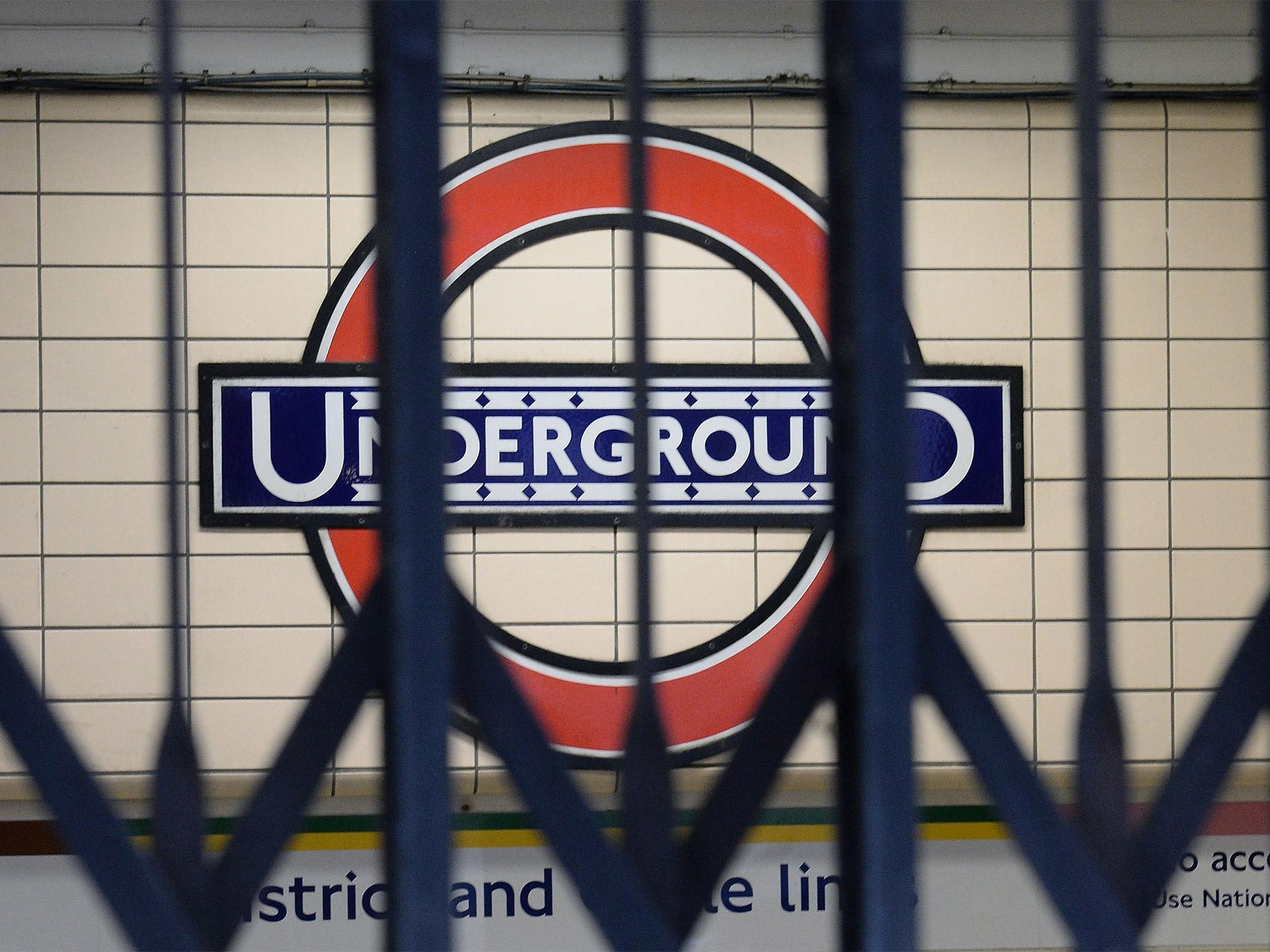
An academic study of public transport in London has suggested that Tube bosses should be wary of their trains travelling too quickly.
The study, conducted by mathematicians Emanuele Strano, Saray Shai, Simon Dobson and Marc Barthelemy, found that if Tube trains go too fast, overall congestion could increase.
The nature of London's train network means that there are a number of large interchanges where people switch modes of transport, outside of the city centre.
If Tube trains go too quickly, then these busy areas will become bottlenecks, which will result in congestion reaching back into central London.
In pictures: Tube strike in London
Their findings, published in the Royal Society Interface journal, suggested that for optimal function, the Tube should travel at around 1.2 times faster than the average speed on the roads.
If this idea was adopted, it would see the optimum Tube speed re-defined as 13mph, slower than the current average of 21 mph.
Read more: Six misconceptions about Tube drivers
Against the Tube strike? Spend 15 years as a driver
The Tube driver's letter that may change your mind about the strike
However, while this theory may make sense on paper, it could have very different effects in real life.
Dr Barthelemy told the BBC that the study was theoretical, and more data would be needed to make specific recommendations.
However, the study does shed light on the sheer interconnectedness of London's transport network - from the Tube, to buses, to roads, each element can have a profound effect on the effciency of another.