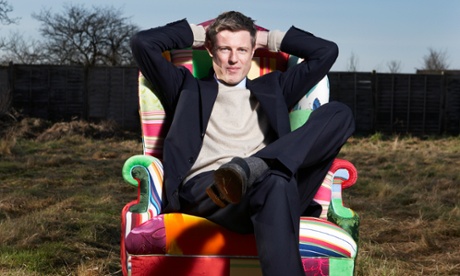
Another time, another world: at the meetings of the Conservative Philosophy Group, hosted in the 1990s at Jonathan Aitken’s home, Sir James Goldsmith was accompanied by a lanky young man with a flop of blond hair, not quite free of teenage diffidence but courteous to a fault.
This was Zac Goldsmith, one of his billionaire father’s eight children, already immersed in environmentalism – a cause that most of the intellectual bluebeards gathered in Aitken’s vast drawing room would have regarded as profoundly suspect. Yet two decades later Goldsmith Jr, presently MP for Richmond Park, is hoping to be the Tory party’s candidate for mayor of London.
Sir James died of pancreatic cancer soon after the May 1997 general election, a contest in which his Referendum party had symbolised the self-destruction of the Conservative party over Europe. Its immediate impact had been to force John Major (and then Tony Blair) to accept at least the necessity of a referendum on entry into the euro. Longer term, the fuse lit by Goldsmith Sr ignited fully in David Cameron’s Bloomberg speech in January 2013 promising a full vote on EU membership before the end of 2017. What was once the guerrilla politics of a “maverick tycoon” is now the official policy of a Conservative prime minister and HMG.
This excursus into recent history is essential if one is to understand the context of Goldsmith the Younger’s candidacy for the top job at City Hall. There is a paradox to his position. On the one hand, he is the conspicuous beneficiary of the celebrity culture and cult of personality that has gripped politics as much as it has the contemporary psyche. Hypermodernity meshes perfectly with the ancient notion of dynasticism and filial piety. On the other, he is understandably keen to demonstrate that he is very much his own man, proud of his family rather than merely its latest iteration.
Above all, Goldsmith dislikes the suggestion that he is Downing Street’s pick and that all the other prospective nominees are regarded by the party’s leadership as also-rans before the running has even begun. As in 2007, all Londoners on the electoral roll will be able to register to vote in a primary to choose the Tory nominee for the 2016 mayoral election on 5 May. But – crucially – they will be offered a shortlist of only two or three potential nominees from an original longlist of at least seven.
Goldsmith, who favours an open primary, will instead be interviewed on Saturday by a panel to decide the names on the shortlist of two or three. According to the Conservative party’s website, by the end of July these names will be made public, with the overall victor announced in September – the eve of the Conservative conference in Manchester.
The most senior figures in the party are doing Goldsmith no favours by talking him up – as they undoubtedly are, however insistent their official spokesmen remain that the Tory leadership is neutral. “Zac will be a great candidate,” a senior cabinet member said to me recently. “And a great mayor. He is maverick enough, but not too maverick.” This encapsulates the sense of class and party entitlement that so aggrieves voters – and which, to be fair, so annoys Goldsmith.
If he wins, he wants to be perceived as having won fair and square rather than on a feather bed of patronage. The words “posh-boy stitch-up” fit all too neatly in a headline. Like Boris Johnson, he is a ferocious opponent of Heathrow’s third runway. Like Boris, he went to Eton – though unlike the incumbent mayor he was asked to leave after cannabis was found in his room. Physically, he looks a little like Boris stretched out by Oompa Loompas using the taffy-pulling machine (Mike Teavee’s fate, as I recall), or Dolph Lundgren’s smarter brother.
He will need every one of those brain cells if he is to beat Tessa Jowell, the probable Labour candidate. Full disclosure: I sat on a lottery grant-giving commission with Dame Tessa for several years, and she is the most effective chair I have ever seen in action. It is also true that the London Olympics would not have happened without her leonine persistence, and that as much as anyone she was responsible for the triumph of the Games. She is a formidable politician with a formidable will to win. Whoever stands against her is in trouble already.
In private, Goldsmith’s enemies portray him as a cross between Swampy and Roderick Spode, Wodehouse’s unforgettable “amateur dictator”. They see his brew of environmentalism, Euroscepticism and personal ambition as obscurely menacing and demagogic. But they ignore the most interesting aspect of his politics: an almost compulsive belief in direct democracy and localism.
He is a strong believer in the voters’ right to recall – that is, to subject MPs to a fresh constituency vote in the case of serious misconduct – and was furious, for instance, that the coalition’s Recall of MPs Act gave the Commons standards committee effective control of the process. In the general election, he increased his majority by 19,000 – in a seat created in 1997 that was held by the Lib Dems for the first 13 years of its existence. This remarkable surge seems to reflect – at least in significant part – his work as constituency MP: the scrapping of plans to impose parking charges in Richmond and Bushy parks, saving playing fields, campaigning for free 30-minute parking to help local businesses.
Whether this is noblesse oblige by a “Tory toff” or the “new localism” in action is a matter of supreme indifference to the beneficiaries. Indeed, how many prospective candidates for high office would seek the permission of their constituents, as Goldsmith did, before he put his name forward for the Conservative mayoral candidacy? Last month he wrote to his 77,071 constituents asking for the green light; Of the 19,890 ballots that were received, 79% endorsed his hopes.
“Zac has never run a whelk stall,” says a longtime friend who opposes this particular ambition. “What makes him think that he can run a global city?” He did, as it happens, edit a magazine (The Ecologist), as did Boris Johnson (The Spectator). But his real response to the whelk-stall charge is that there is no true preparation for such a job. What London’s voters expect of their mayor, he told LBC’s Iain Dale last week, is “empathy and an ability to solve problems”. Well, he would say that, I suppose. But I think Goldsmith is right that the days when politicians won by brandishing lengthy CVs are long gone.
In the modern game, authenticity trumps experience, and charisma dwarfs argument. This is the age of Obama, who was in the Oval Office four years after taking office as a US senator; of Schwarzenegger, who is back making Terminator movies after an eight-year sabbatical as the Governator. Had Chuka Umunna remained in the Labour leadership contest, the frontrunner to succeed Ed Miliband would be an MP first elected to the Commons in 2010.
In this, and other senses, Zac Goldsmith is a child of his time. Which is not to say that he will beat Dame Tessa, (assuming she is Labour’s candidate) or even that he will be the Tory nominee. But if he is rejected by London’s voters at any stage, it will not be because he looks too new.