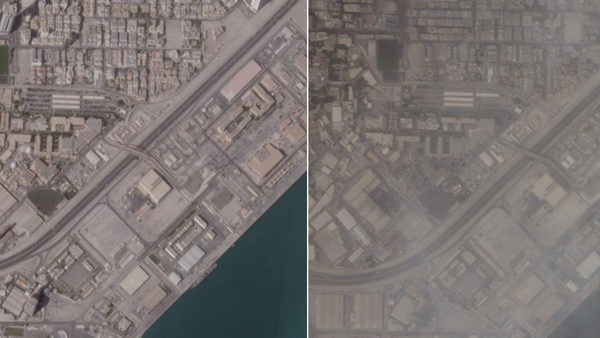
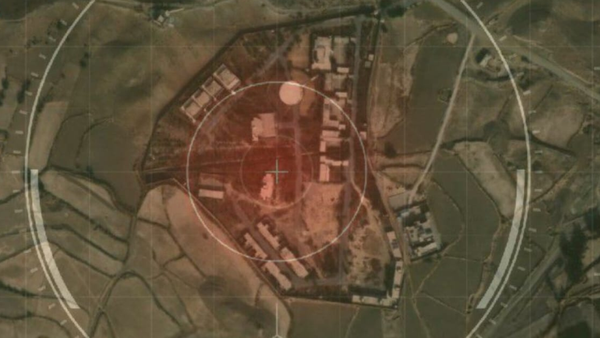
‘The reason you don’t generally hit runways,” Donald Trump tweeted on Saturday, “is that they are easy and inexpensive to quickly fix (fill and top)!” Presumably he consulted his national security adviser, HR McMaster, for this doctrinal nugget. Which is strange, because McMaster served in the 1991 Gulf war. As the congressional report on Desert Storm states: “the early emphasis was on denying the use of the runways” – cratering them and then dropping mines to prevent engineers filling the holes. Only five days in did the US switch to systematically hitting aircraft in shelters.
The difference? That was a war: this is theatre. Those who woke up cheering Trump’s missile strike on Friday morning need to realise what they were cheering for: a public relations exercise that killed nine civilians. Trump’s generals didn’t bother hitting the runway because they were not trying to disable Bashar al-Assad’s airbase, just send a message. The problem is, even three days later, we have no idea what that message is.
I am convinced, on the current evidence, that Assad’s planes dropped chemical weapons on the rebel-held town of Khan Sheikhun on 4 April. Once verifiable forensic evidence is presented to the UN, it should trigger a war crimes prosecution against Assad.
But I am not convinced that Trump’s missile strike was either justified, wise, legal or militarily effective. Jeremy Corbyn was correct to withhold support, even as Labour’s backbench bombardiers slandered him, and hopes surged among Syrian refugees that it signalled a reversal of the US appeasement strategy towards Assad.
Details emerging since Friday only confirm that it does not. They confirm instead the need for restraint, multilateral action and action within the rule of law. The Pentagon gave Russia 90 minutes’ warning. The Russians then warned the Syrian airforce, leaving only civilians to die in the attack. Trump consulted neither his Nato allies, the US Congress, nor the UN. Even without the UN, a strike to prevent an imminent repeat of the attack could have been lawful on humanitarian grounds – but Trump did not seek that justification. The strike was framed as a punitive gesture, for the US’s self-defence. The outcome is dangerously unclear. Having five days earlier signalled to Assad that the US was no longer seeking to remove him, the US is now calling for regime change. McMaster admitted to reporters that the attack was “not meant to reduce Assad’s capability to murder his own people”, and that he expected the Syrian dictator’s fate to be decided in “a ceasefire process leading to elections”.
And because the strike against Syria coincided with a palace coup inside the White House, removing isolationist Steve Bannon from the National Security Council and restoring some intelligence chiefs and generals Trump had removed, it is not even clear who is making US policy on Syria, let alone what it is.
However, as US secretary of state Rex Tillerson flies in to Moscow, those who have opposed Trump’s strikes have to go beyond calls for evidence and restraint. The situation on the ground in Syria is approaching a crunch point. Soon US-backed rebels, the Kurdish-led SDF, will launch an assault on the Islamic State stronghold of Raqqa. Once Raqqa falls, together with Mosul in Iraq, the Isis caliphate is over and Assad’s allies will have to confront a civil authority on the ground in Syria that is protected by the US.
The US calculates that Putin will then have to negotiate some kind of partition of Syria, including a measure of self-determination for the Kurds, and the replacement of Assad.
The complication is the emergence of the jihadi rebel alliance Tahrir al-Sham. Formed in January, and dominated by factions loyal to al-Qaida, TAS is the leading force in the rebel attack on Hama, for which Khan Sheikun is the co-ordinating centre.
On 11 March Trump’s administration designated TAS a terrorist group. On 17 March a US drone strike killed at least 42 people in a mosque near Aleppo, in an attack on what it called “Al-Qaida militants”.
Until last Friday then, Trump was running a side-operation aimed at destroying the very same rebels Assad’s airforce targeted with chemical weapons.
Labour’s starting point – which reflects the wider scepticism and isolationism of many British voters – is to bring the evidence to the UN, seek multilateral action against Assad and keep any military response within international law. But China and Russia will block this on the security council. Then – as in 2013 – the question becomes: when would you back or take action to prevent chemical attacks unilaterally?
Large numbers of Labour members and supporters would like the answer to be “never”. They are wrong. It would be entirely lawful and just, in principle, for Labour to support a coalition to impose a no-bomb zone such as that advocated by Syrian solidarity groups in the UK, using ship-based missiles, radar and jamming technologies operating outside Syrian airspace.
That wing of the British left that is either pacifist or pro-Assad will not accept the possibility of humanitarian action in Syria. But for those like me who do, it dramatises the real question: could Britain ever fight a just war in Syria alongside Trump? I think the answer has to be no. He has no strategy; his campaign team and administration is riddled with people under investigation for links to the Kremlin; he is, at best, making the Syria policy up as he goes along.
At worst there remains the possibility raised by the Steele dossier, that, as former CIA director Michael Morrell put it, Trump is an “unwitting agent” for Russia. That poses the risk that the past five days has been a pas-de-deux choreographed from Moscow. That is the depth of the rabbit hole we went down once the Kremlin engineered Trump’s victory last November. All further military action against Assad would involve the calculated risk of war with Russia.
If you remove Trump, the risks get easier to calculate and consent for humanitarian action becomes easier to secure. The clearer US allies make that point to Congress, the military, the US electorate – and to Syria’s rebels and refugees – the better.