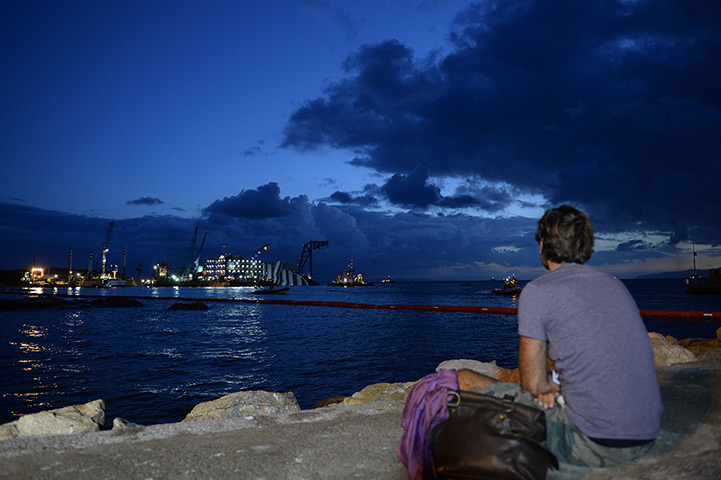
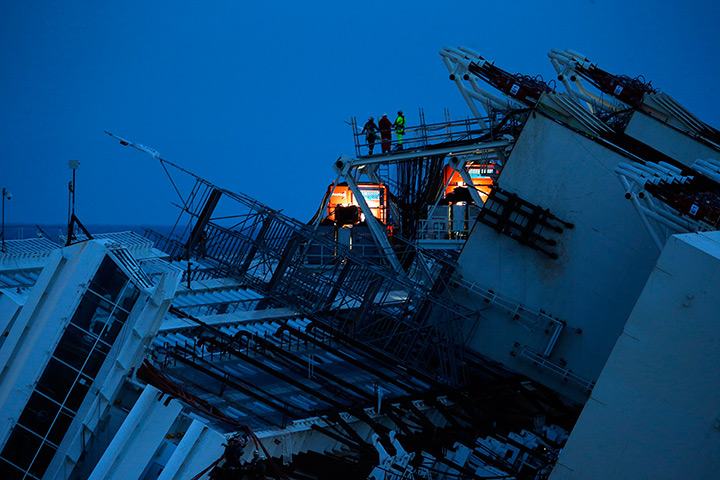
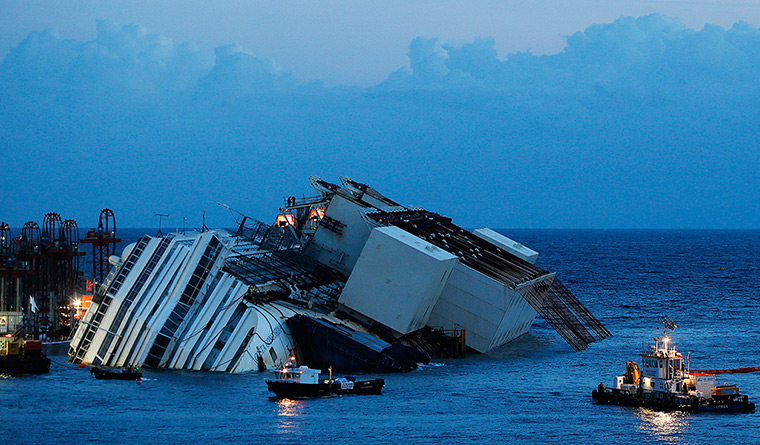
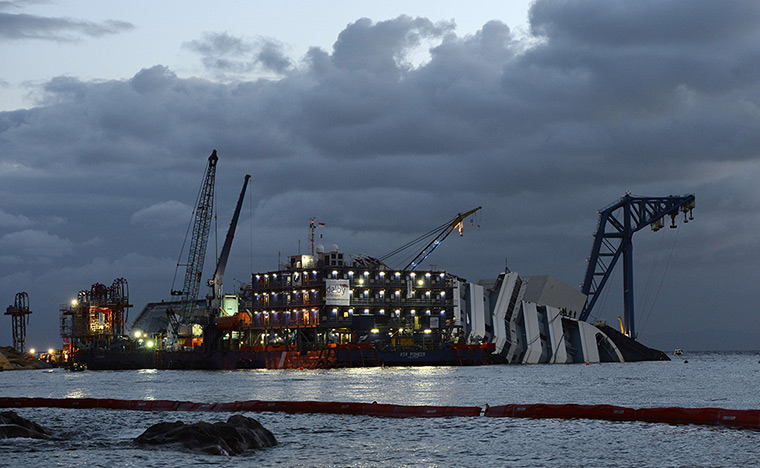
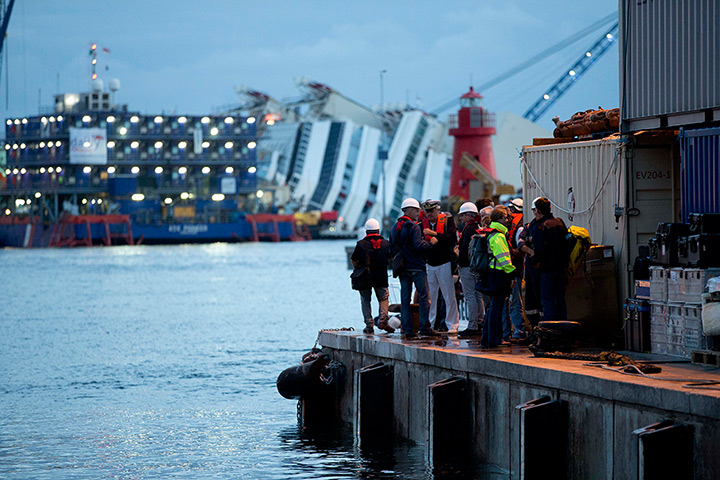
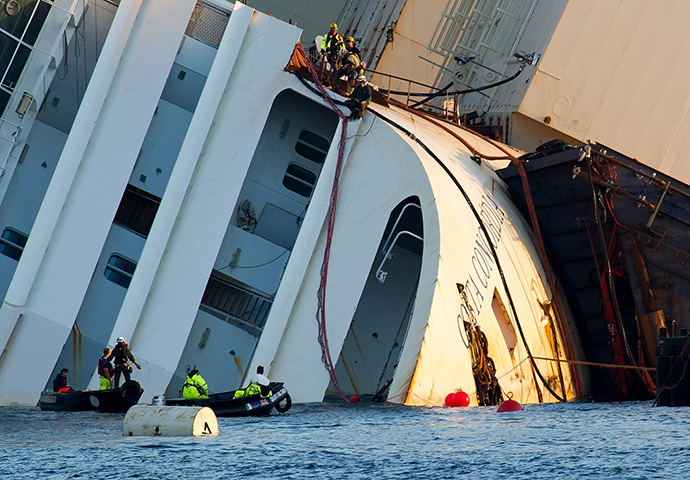
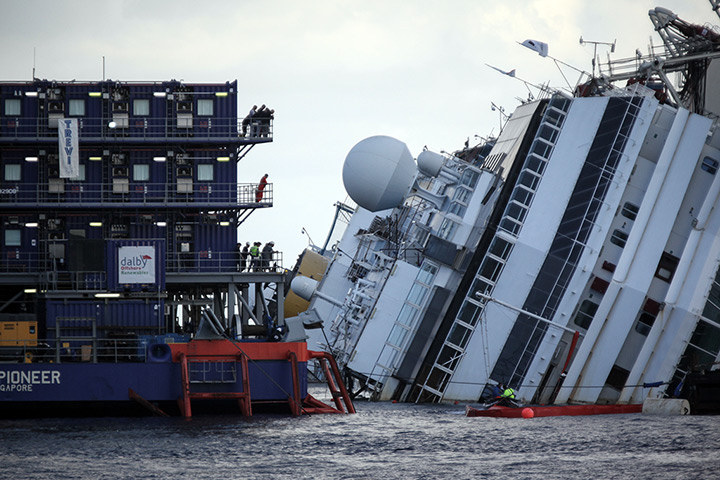
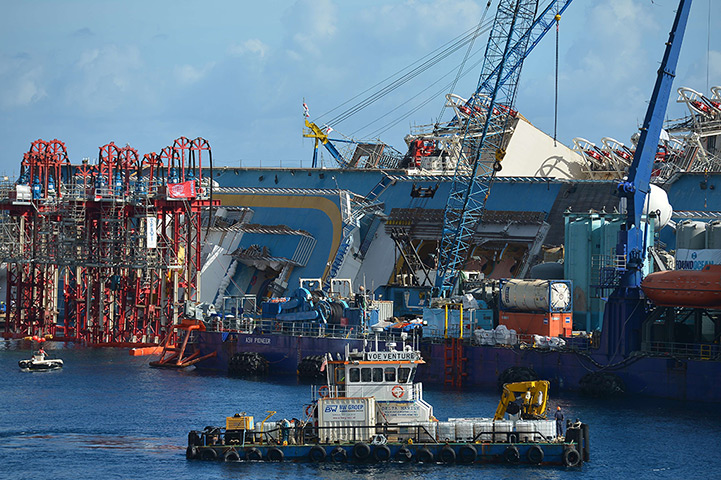
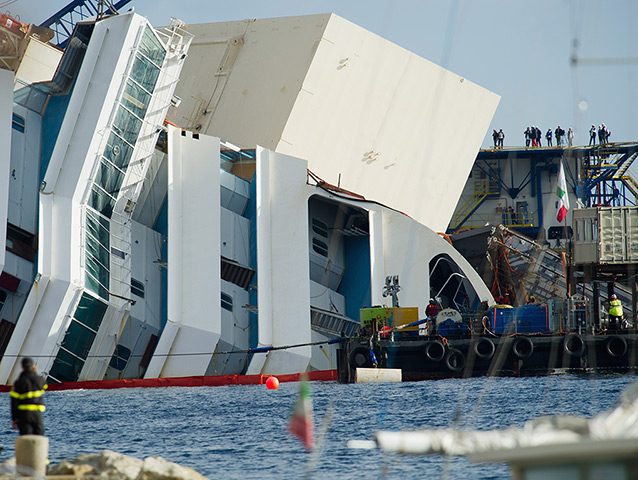
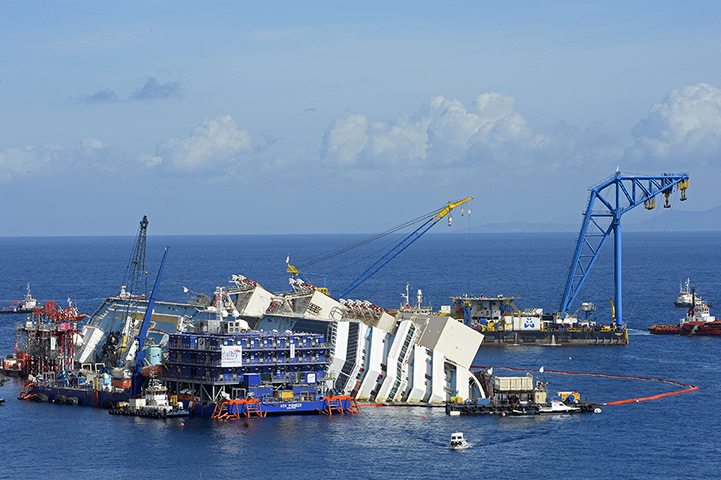
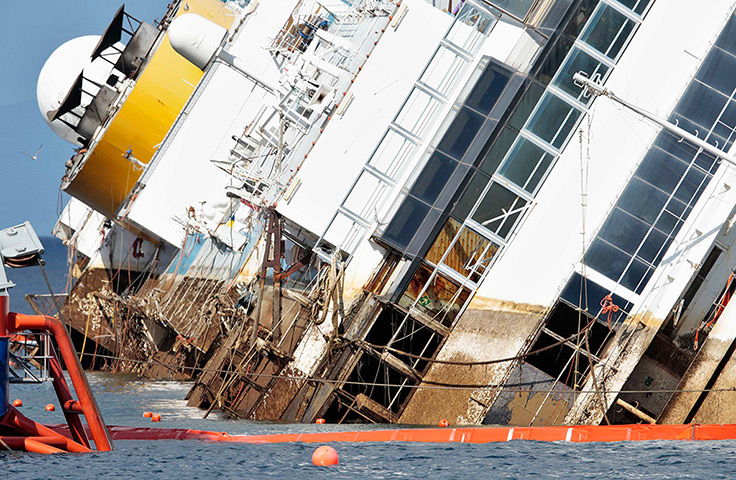
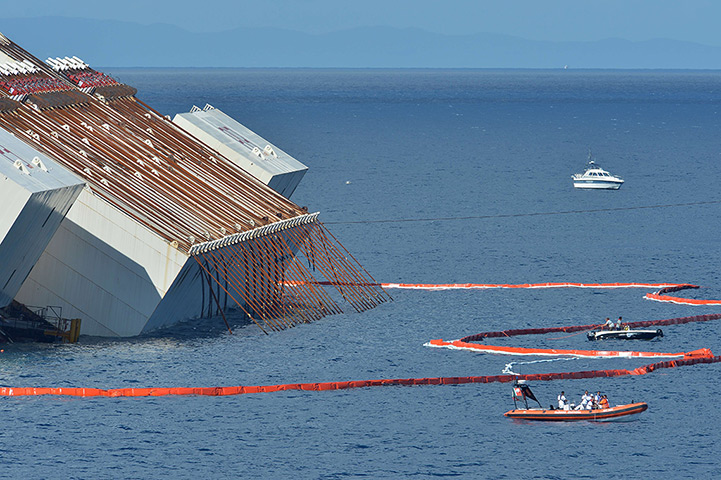
A man looks at the wreck of the Costa Concordia cruise ship near the harbour of Giglio PortoPhotograph: ANDREAS SOLARO/AFP/Getty ImagesSalvage crew workers on the side of the capsized cruise liner Photograph: Tony Gentile/ReutersThe salvage procedure, known as parbuckling, has never been carried out on a vessel as large as the Costa Concordia before. It involves rotating the ship using a series of cables and hydraulic machinesPhotograph: Tony Gentile/Reuters
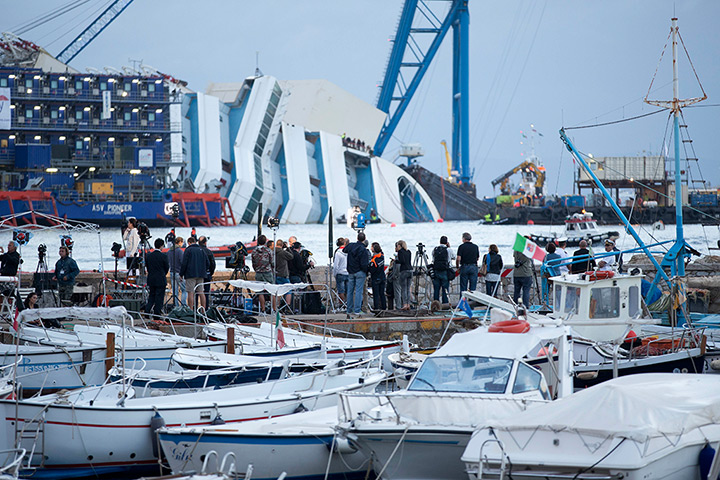
The operation to raise the ship was delayed for a couple of hours because of a storm during the nightPhotograph: Andreas Solaro/AFP/Getty ImagesAn international team of engineers is trying a never-before-attempted strategy to set the luxury liner upright Photograph: Andrew Medichini/APEngineers work on the bow of the Costa Concordia before the start of the salvage operation Photograph: Marco Secchi/Getty ImagesRolling the ship off the seabed and on to huge underwater platforms is expected to take about 12 hoursPhotograph: Federico Scoppa/Demotix/CorbisReporters watch the Costa Concordia ship lying on its side Photograph: Andrew Medichini/APThe US salvage company Titan and Italian firm Micoperi work at the wreck Photograph: Vincenzo Pinto/AFP/Getty ImagesIf the operation is successful, the ship will be towed away and scrappedPhotograph: Marco Secchi/Getty ImagesThe wreck begins to emerge from the waterPhotograph: Andreas Solaro/AFP/Getty ImagesBy midday, a rusting stain can be seen as the ship starts to liftPhotograph: Tony Gentile/ReutersThe operation will see the ship rotated by a series of cables and hydraulic machines, pulling the hulk from above and below and slowly twisting it uprightPhotograph: Vincenzo Pinto/AFP/Getty Images
Sign up to read this article
Read news from 100’s of titles, curated specifically for you.