Sky-high rents and grocery bills are pushing U.S. families to pack up and move. See who’s leaving, where they’re going, and why 2025 looks different.
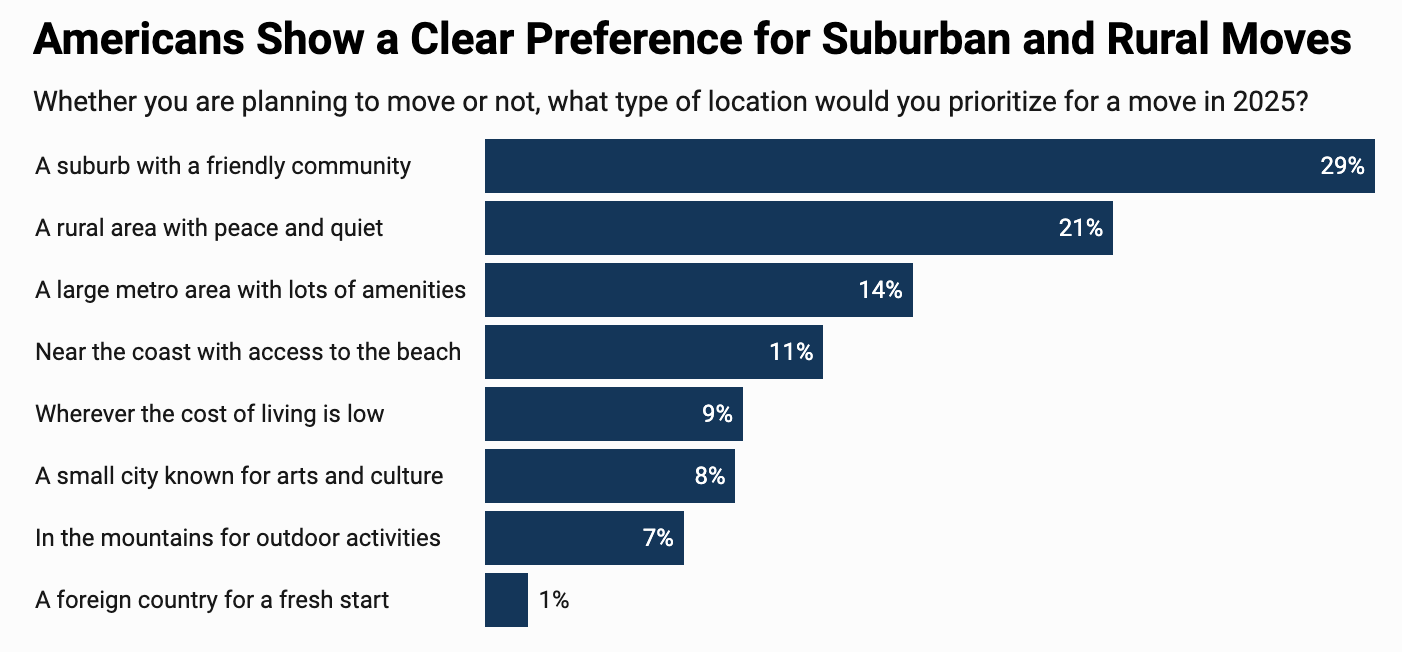
Image: Demetria C. Lester on Mortgage Point
A paycheck that feels lighter, a grocery cart that empties your wallet, a studio apartment priced like a ranch house—2025 has turned the cost-of-living screw a notch tighter.
Across social feeds and some deep dives on how various factors are steering Americans toward the suburbs, headlines tell of middle-class families swapping coastal ZIP codes for inland metros they once flew over. The motive isn’t wanderlust; it’s survival. According to the latest Consumer Price Index, essentials from rent to childcare still outpace wage growth in 60 percent of U.S. counties. When budgets break, boxes get packed.
The Rising Cost of Living: What’s Changing for American Families?
Sticker shock is no longer an urban myth; it’s a line item. Between January 2022 and March 2025:
- Rent climbed 18 percent nationally, but spiked 31 percent in tech hubs.
- Groceries rose 14 percent, with dairy and produce leading the surge.
- Childcare now averages $11,800 a year, roughly a quarter of median household income.
Financial advisors suggest the 30-percent-of-income rule for housing is “obsolete.” Many households, already allocating 38 percent of take-home pay to shelter, are making a calculation: if you can’t trim expenses, you relocate to where they’re lower.
Cost-of-living calculators, relocation dashboards, and quote aggregators now make that choice a data exercise rather than a gamble. Furthermore, Great Guys Moving demonstrates the average full-service long-distance move at about $4,300 for a 7,400-pound shipment covering 1,225 miles, a number you can drop next to projected savings on rent or childcare. When the break-even point shrinks to just a few months, relocation stops looking like a leap of faith and starts feeling like rational math.
The Migration Shift: Who’s Moving and Where?
Not all Americans are heading for the same horizon. Patterns emerging from USPS address-change data, business coverages, and real-estate trackers point to three distinct streams:
- Sunbelt Bargain Hunters – Families quitting Los Angeles, Seattle, and Boston for inland metros such as Boise, Knoxville, and Tulsa, because they all deliver a real break for homeowners. Census Bureau data show their median monthly owner costs with a mortgage at roughly $1,716, $1,301, and $1,494, respectively—about 10% to 32% below the U.S. median of $1,902.
- Midwest Returnees – Alumni of Chicago and Minneapolis suburbs boomeranging to hometown counties, lured by $250k colonials and remote-first job perks.
- High-Earner Tax Shoppers – Six-figure tech and finance professionals swapping high-tax coasts for zero-income-tax states like Tennessee and Texas to preserve COVID-era salary bumps.
Why secondary metros?
- Affordability without isolation – Cities of 250K-700K offer cultural amenities but keep commute times under 25 minutes.
- Builder pipelines – Permits for mid-density “missing-middle” homes doubled in Raleigh and Columbus, creating room to grow.
- Airport connectivity – Regional hubs have reopened pre-pandemic direct flights, crucial for hybrid workers expected in HQs quarterly.
Remote Work’s Role in Relocation Decisions
Remote work is no longer the singular catalyst it was in 2021; it’s the enabler that keeps the wheels turning. Upwork’s 2022 Future Workforce Report found an estimated 9.3 % of U.S. workers planned to move because of full-time remote work (survey of 1,000 hiring managers). The result is evident: a new orthodoxy of location-agnostic résumés and Slack-first team culture, erasing the career penalty once tied to leaving big metros.
Yet hybrid models complicate the map. Workers eyeing Denver must weigh once-a-month flights to San Francisco. Those costs, be they monetary or environmental, factor into spreadsheets right besides property taxes. Recent coverage shows that climate-conscious professionals are gravitating towards metros, pouring money into cleaner transport. Remote workers now rank “ease of getting around” and robust public transit among their top relocation factors, urging cities to invest in multi-modal, low-carbon networks.
Challenges of Moving Amid Rising Costs
Even a savings-driven move carries hurdles -
- Inventory Crunch – Affordable homes list for an average of nine days in Charlotte and Tampa. Bid wars haven’t vanished; they’ve migrated.
- Hidden Relocation Fees – From security deposits equal to three months’ rent to utility hookup charges, newcomers face a cash-flow dip before savings materialize.
- Childcare Deserts – Rural and exurban counties gaining transplants often lack preschool slots, forcing families onto year-long waitlists.
Cost-saving tactics
- Group moves – Extended families combine resources for bulk-rate van lines.
- Move-in ready audits – Buyers pay inspectors extra to estimate first-year fixes, avoiding surprise HVAC replacements.
- Seasonal timing – Moving in late fall shaves up to 20 percent off professional-mover quotes compared with June peaks.
How Moving Services Are Adapting to the Demand
Moving companies that survived pandemic whiplash now face a volume spike and a more budget-savvy clientele. Competitive responses include:
- Dynamic Pricing Dashboards – Algorithms update long-haul rates daily in sync with diesel prices and lane demand.
- Subscription-Style Bundles – Flat monthly fees covering storage, packing supplies, and two short-haul moves per year appeal to digital nomads testing multiple cities.
- Carbon-Offset Add-ons – Firms partner with reforestation nonprofits, an upsell that resonates with sustainability-focused millennials.
Some van lines report that cost-conscious customers request “DIY hybrid” packages: pros handle bulky furniture, while families haul sealed bins in rented SUVs. The model reduces billable weight, aligning with their goal of escaping cost pressures rather than piling on new ones.
What This Means for the Future of American Housing
Economists debate whether the 2025 migration will calm or aggravate affordability. Early forecasts suggest:
- Soft price deceleration in Bay Area and New York cores as exits outpace arrivals.
- Rent inflation in “Zoom towns” like Bozeman and Fayetteville will continue until local councils up-zone or approve accessory dwelling units.
- Increased build-to-rent communities in the Southeast, giving families a single-family feel without mortgage commitments.
Local governments stand at a policy crossroads. Do they court newcomers with tax incentives and risk pricing out long-time residents? Or accelerate zoning reform to expand supply? How they answer will shape the next decade of American demographics.
Conclusion
The 2025 relocation wave isn’t a fad; it’s households rebalancing spreadsheets in real time. High prices lit the fuse; remote work cleared the runway; information tools from CPI dashboards to inkl digests offered a compass. For movers who plan carefully, leveraging cost-comparison sites, readingsuccess stories, and negotiating hybrid work perks, this year’s upheaval can become a step towards financial breathing room. Where wallets finally find relief, new communities take root.