PHILADELPHIA _ Bill Cosby's defense lawyers on Wednesday took aim at the 13 additional accusers prosecutors hope to call as witnesses at his sexual assault trial next year, calling them liars with "ancient, remote, incredible, uncorroborated, bandwagon allegations."
Allowing a jury to hear their accounts, lawyer Brian J. McMonagle said, would make it impossible for the 79-year-old entertainer to receive a fair trial. He credited a coven of "clever lawyers who have as an agenda the bringing down of an American icon."
"This case never had anything to do with Andrea Constand," McMonagle said, referring to the case's central accuser. "This case was a way to try to vindicate ... a bandaged bandwagon of claims that have been put together in Pandora's Box."
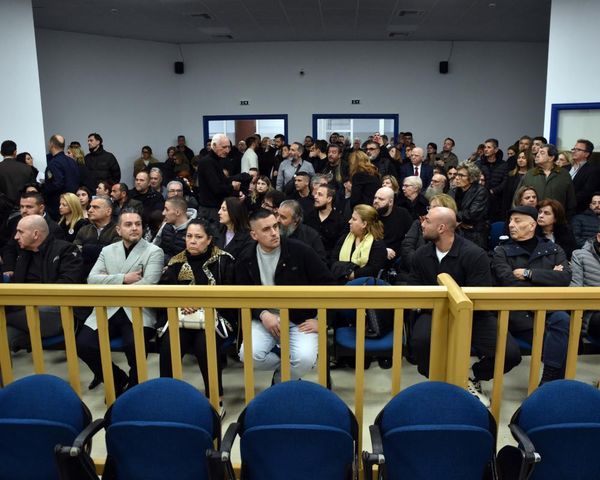
His arguments came as lawyers returned to Norristown for the second day of hearings on what could be the central legal issue in Cosby's case.
Prosecutors say the testimony from the 13 women is "crucial" to their argument that the celebrity once known as "America's Dad" is a serial sexual predator.
Without it, Montgomery County District Attorney Kevin R. Steele said, the case against Cosby would hinge on Andrea Constand's uncorroborated testimony of events that occurred 12 years ago.
The accounts of the other 13, he argued, would show that Cosby was following a pattern when he allegedly drugged and assaulted her at his Cheltenham mansion in 2004.
"This is a lifetime of sexual assault on young women," Steele told Montgomery County Judge Steven T. O'Neill. "He uses his fame, notoriety and public status to instill trust in the victim and then he exploits that trust."
But Cosby's defense also pointed to the age of the allegations in seeking to convince O'Neill to ban the other women from the witness box.
The claims, which stretch as far back as a half-century ago, McMonagle said, are too vague and too old to effectively rebut in court and may have been shaped by civil attorneys like celebrity lawyer Gloria Allred, who represents several women on the list.
" 'Some time in the early 1970s _ not sure when _we were drinking champagne and smoking pot.' Now, defend against that," McMongale said, sarcastically recapping the account of one accuser. "Our Supreme Court would scoff."
The issue could be a fraught one for O'Neill, who has said he would like to hold Cosby's trial by June.
Pennsylvania law allows testimony about so-called previous bad acts if it establishes a common scheme or pattern of behavior by a defendant.
It can also be used to show "absence of mistake" in committing a crime. Despite Cosby's claim that his sexual contact with Constand was consensual, prosecutors could use other women's accusations to argue the pattern of behavior proves his intentions.
But judges must weigh the value of such unproven claims against the threat that it could unfairly prejudice a jury against the accused.
Pennsylvania's Supreme Court this year upheld a Superior Court ruling that overturned the child endangerment conviction of the Philadelphia Archdiocese's former Secretary of Clergy Msgr. William J. Lynn, in perhaps the most well-known recent case in which evidence of past, uncharged crimes played a central role.
The appellate judges ruled that the trial judge in that case had overstepped by allowing jurors to hear evidence of 21 other purported past incidents of sex abuse by priests in decades past that were allegedly covered up by the archdiocese.
"The trial court has apparently mistaken quantity for quality in construing the probative value of this evidence," the court wrote in its opinion.
O'Neill nodded to that concern Wednesday, acknowledging from the bench that he could allow all, none or just some of the 13 women to testify based on his assessment of how their accounts relate to Constand's.
Most of the 13 were chosen by prosecutors from the more than 50 who have publicly accused Cosby of assaults stretching back decades. Nearly all have come forward publicly with their accusations, either in interviews, lawsuits or both.
They include Heidi Thomas, an aspiring actress who alleges in 1984 that Cosby got her drunk ostensibly to coach her on how to play a drunk person. She fell in and out of consciousness, she says, while Cosby forced her to perform oral sex.
Rebecca Neal was working as a masseuse in Las Vegas in the mid-'80s, when she says Cosby plied her with drinks, invited her to dinner and a show and raped her in his hotel room And Cindra Ladd, the aspiring model turned wife of a Oscar-winning Hollywood producer, alleges Cosby offered her a "miracle drug" in 1969 New York before he assaulted her.
Like Constand, each had turned to Cosby as a much younger woman seeking career advice before he plied them with drinks and pills, the district attorney told O'Neill on Wednesday.
"Whether he's looking under their tongue to make sure they took them or he's asking them 'Don't you trust me,' the intoxicants that he's given to each of these individuals is so powerful that they become incapacitated," Steele said. "None of these women can consent to what he has done."