
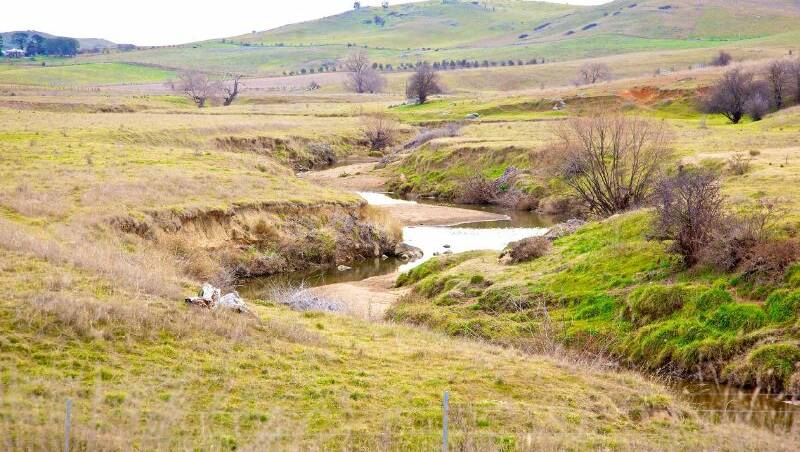
The ACT Heritage Council will work with members of the Ngunnawal community and other Aboriginal groups to find a name for a newly registered corroboree ground in the language of the territory's traditional custodians.
The Ginninderra Creek corroboree ground was placed on the territory's heritage register earlier on Tuesday, a move which coincided with Reconciliation Week.
Yeddung Dhaura, an area in Forde where archaeological artefacts of Aboriginal heritage have been found, was also provisionally registered.
The nomination for the site, behind the Parkwood egg farm, was submitted on behalf of the Ginninderry Aboriginal Advisory Group, which will now be involved in work to find a new name for the site in the language of traditional custodians.
Caroline Hughes, a Ngunnawal traditional custodian and member of the Heritage Council, said the naming of places was important part of recognition and reconciliation.
"Our language is the key to all our relationships and how we interact with each other. It is the salient ingredient to spirituality, lore, law and retaining our cultural identity and connection to Country," Ms Hughes said.
"For the Aboriginal community, the registration of these two places is a step closer to acknowledging that this land is ancient, and its features, waterways and cultural landmarks have always had names."
Heritage Council chair Dr Kenneth Heffernan said the ACT's Aboriginal heritage stretched back at least 25,000 years and the council was pleased to increase protection and recognition of Aboriginal places.
"These places are important in the collective memory of Aboriginal people, especially the association with corroborees and the connection with the cultural landscape," Dr Heffernan said.
"Corroborees were special community events for Aboriginal people and the memory of the Ginninderra Creek Corroboree Ground has endured in collective conscious."
The Heritage Council found the corroboree ground, near Ginninderra Creek, to have a strong association with the collective memory of Aboriginal people and to have high potential to hold more information about the cultural history of Aboriginal people in the ACT.
"The importance of the place also relates to the fact that it is a node embedded within a broader associative cultural landscape. This represents cultural interpretations associated with the movements of Aboriginal people along pathways and songlines and the associated cultural interpretation of landscape features," the council's decision said.
Yeddung Dhuara, also on Ginninderra Creek, is a camp site which the Heritage Council found to have one of the highest concentrations of excavated stone artefacts in the ACT.
"Aboriginal peoples returned to this place on multiple occasions possibly using it as an itinerant campsite when collecting resources and moving in the cultural corridor along Ginninderra Creek pathway nearby," the council's provisional registration says.
Public consultation on the provisional registration of Yeddung Dhaura is open until June 29.













