Summary
- The US coronavirus death toll has surpassed 60,000. The US has also confirmed more than 1m cases of coronavirus, representing about a third of all cases from around the world.
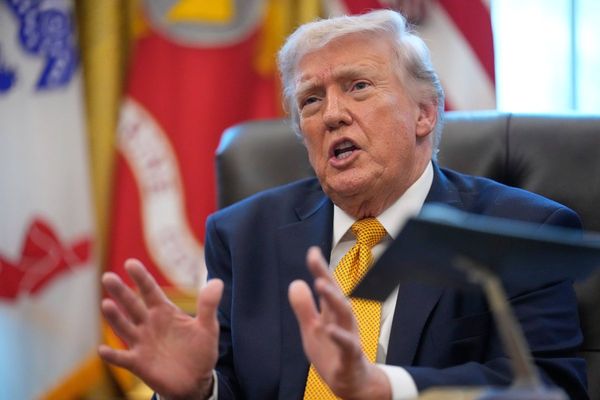
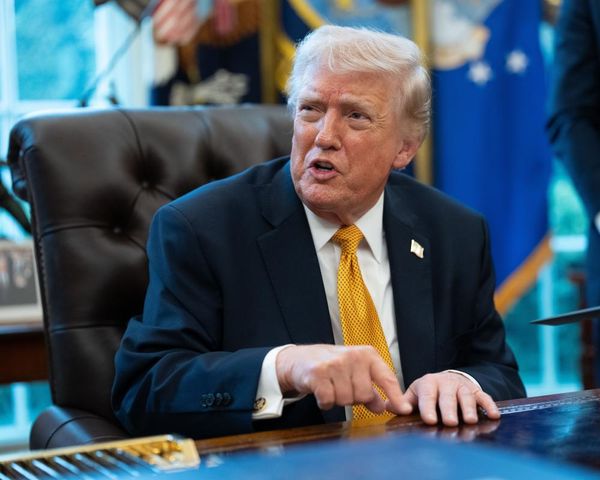
- Trump said federal guidelines aimed at limiting the spread of the virus would be “fading out”. The guidelines are set to expire tomorrow, and Trump signaled he was looking ahead to reopening the country, applauding governors who have started to allow some businesses to reopen with restrictions. “I am very much in favor of what they’re doing,” Trump said. “They’re getting it going.”
- Dr Anthony Fauci expressed cautious optimism about the results of a trial of the drug remdesivir to treat coronavirus. The results indicated the drug reduced patients’ recovery time and had an impact on patients’ survival rate. “This will be the standard of care,” Fauci said. “What it has proven is a drug can block this virus.”
- The US economy shrank by 4.8% last quarter, according to new data from the commerce department. The figure is the latest indication of the devastating impact the pandemic is having on the economy.
- A new poll indicates most Americans are not ready to reopen the country. The PBS NewsHour/NPR/Marist poll showed large majorities of Americans are uncomfortable with reopening schools or restaurants unless coronavirus testing is significantly expanded.
Updated
The Guardian’s technology reporter Kari Paul writes from California:
Tesla founder Elon Musk went off script in the company’s Q1 earnings call on Wednesday, calling San Francisco’s shelter-in-place orders “fascist” as his frustration over the closure of his Bay Area factory continues.
“We are a bit worried about not being able to resume production in the Bay Area,” he began. “The extension of shelter in place -- or as I would call it, forcibly imprisoning people in their homes, against all constitutional right - and in my opinion infringing on people’s freedoms in ways that are horrible and wrong, and not why people came to America or pulled this country - what the fuck?” he trailed off.
He said shelter in place will cause “great harm” to companies. This comes after Musk sent a series of erratic tweets calling on the government to relax social distancing restrictions, sharing articles and praising examples of places relaxing their orders. “FREE AMERICA NOW,” one tweet read.
Tesla reported stronger than expected earnings for quarter one, despite disruptions from coronavirus. Shares of the company were up nearly 2% at $813.77 in extended trade.
Online demand for the anti-malaria drug hydroxychloroquine surged by more than 1,000% after Donald Trump endorsed it as a potential treatment for Covid-19 without providing evidence it worked, a new study has found.
There are no proven prescription therapies to treat Covid-19, the disease caused by the coronavirus. Despite the lack of evidence, the presidential endorsement drove up online searches for buying hydroxychloroquine, and its chemical cousin chloroquine, by 1,389% and 442% respectively.
Internet searches remained high, researchers said, even after NBC News reported an American couple had accidentally poisoned themselves by taking a liquid containing chloroquine meant to treat parasites in fish tanks, following a Trump press briefing in which he promoted the drug.
“We know that high-profile endorsements matter in advertising, so it stands to reason that these endorsements could spur people to seek out these medications,” said Michael Liu, a graduate student at Oxford University and the study’s first author, in a statement.
Want to catch up on coronavirus updates from around the world? Read The Guardian’s global coronavirus blog:
CDC survey of Georgia hospitals found more than 80% of Covid-19 patients were black
As Georgia governor Brian Kemp moves to reopen businesses in the state, against the advice of public health officials and the president, Black Georgians are disproportionately getting sick.
In a survey of eight Georgia hospitals, researchers found that out of 305 Covid-19 patients, 247 were Black. The results were released by the Centers for Disease Control and Prevention today.
African Americans, who make up 30% of Georgia’s population, overall account for 36% of confirmed cases, according to state data.
The Guardian’s Vivian Ho reports from California:
As coronavirus tore through jails and prisons across the United States, California reduced bail for most low-level offenses to $0, allowing thousands of defendants to wait out their court dates at home instead of in custody.
The response across the criminal justice system in the state has been disparate, echoing longstanding tensions about reform. Prosecutors in Tulare county have “worked around the clock” to oppose the early release of more than 1,000 defendants, according to the district attorney there. In Los Angeles, leaked emails showed the district attorney’s office instructing prosecutors to seek a loophole in the new bail schedule for some cases. And police unions in cities across California have argued the emergency schedule will lead to an uptick in crime.
Hanging over the bail schedule debate is a referendum in November, when Californians will get to decide whether the state should eliminate its bail system moving forward. The success or failure of the emergency guideline, beyond the infection rate of the state’s inmate population, has the very real possibility of becoming a talking point in all future debates for bail reform for years to come, criminal justice reform advocates say.
Read more:
Updated
Here’s what you need to know about Justin Amash, the Michigan congressman who announced plans to jump into the presidential race as a Libertarian candidate, from the Guardian’s Daniel Strauss:
Who is Amash?
Amash, 40, is a lawyer by trade who first served in the Michigan statehouse before ascending to the US Congress in 2010 during the Tea Party wave. Amash, in his first campaign, benefited from support from major Tea Party groups.
In 2019 Amash left the Republican party in protest of its seemingly immovable support for Donald Trump. He decided to join the Libertarian party and has served as one of the few members of Congress not part of the Republican or Democratic party.

Photograph: J Scott Applewhite/AP
Could Amash’s candidacy have an impact in the 2020 presidential election?
It’s possible. Amash, a fiscal conservative, could siphon away right-leaning voters disinclined to vote for Trump from former vice-president Joe Biden. Or his candidacy could attract small-government Republicans away from Trump to the benefit of Biden.
His chances of winning the presidency are slim. Amash is getting into the race late and no presidential candidate running on the Libertarian party has ever actually been elected president. They usually perform poorly.
What is his relationship with Trump?
Contentious. Amash has been a vocal critic of the president and the feeling is mutual. When Amash announced he was leaving the Republican party, Trump tweeted: “Great news for the Republican Party as one of the dumbest & most disloyal men in Congress is ‘quitting’ the Party. No Collusion, No Obstruction! Knew he couldn’t get the nomination to run again in the Great State of Michigan. Already being challenged for his seat. A total loser!”
(Amash, at times, has been mentioned as a potential candidate for statewide office but has never actually run for Senate or governor.)
Read more:
Updated
The White House meeting with business executives – which in many ways resembled a coronavirus briefing – just ended.
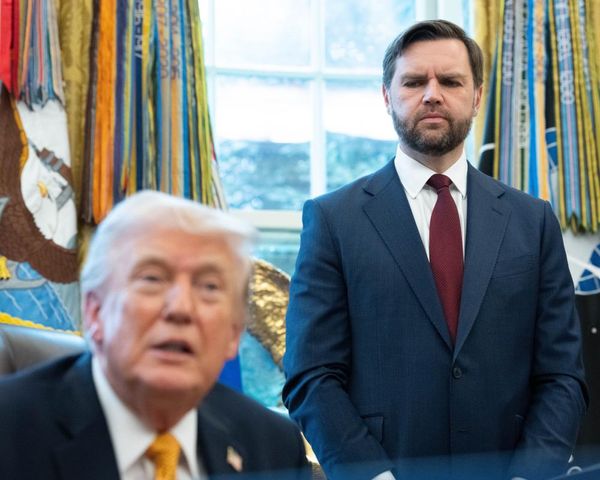
As he’s done at briefings, Trump took questions from reporters, alongside Mike Pence and Steven Mnuchin, the Treasury secretary. The president made many of the same claims he’s made at press briefings, blithely repeating that the pandemic will soon “be gone”, without explaining why.
But there were a few key differences between the press briefings and today’s live-streamed meeting. Trump’s public health advisers were absent. And notably, the camera was continuously focused on Trump – there was no footage of the reporters in the room asking questions.
Updated
Trump said he’s planning a trip to Arizona next week, and Ohio soon.
“Hopefully in the not too distant future we’ll have some massive rallies and people will be sitting next to each other,” Trump said. “I can’t imagine a rally where you have every fourth seat full, every six seats are empty for everyone you have full. That wouldn’t look too good.”
The president suggested that a vaccine may not be needed as part of a recovery from the pandemic. “If you don’t have a vaccine, if the virus is gone, you’re like where we were before,” he said.
At least 89 coronavirus vaccines are in development, according to the World Health Organization, but even the most promising options still need to undergo rigorous safety testing, which could take a year to 18 months.
But without a vaccine, why does Trump think the pandemic will just go away? He dodged the question.
“It’s gonna go, it’s gonna leave,” Trump said, without explaining his thinking. “It’s gonna be eradicated.”
The Guardian’s Sam Levine reports:
Daniel Kelly, the conservative Wisconsin supreme court justice who lost his re-election bid earlier this month, will participate in a controversial case before he leaves the court over whether more than 200,000 voters should be removed from the state’s voter rolls.
The Wisconsin supreme court is currently considering whether to hear the case, which was brought by the Wisconsin Institute for Law and Liberty, a conservative legal group. The group wants to force the state to immediately remove voters it suspects have moved from the voter rolls. The state has refused to remove the voters, saying it is not confident enough the voters have moved and wants to give voters until after the 2020 election to confirm their voter registration.
Last year a circuit court judge ordered the state to remove the voters, but an appeals court reversed the ruling. The suit is being closely watched because it is believed to be an obvious effort to benefit Donald Trump, who won the state by just under 23,000 votes in 2016. Voters who lived in zip codes that were predominantly students or African Americans were more than twice as likely to be flagged for removal, a Guardian analysis found.
Kelly recused himself in November when the court considered a request to hear the case on an expedited basis. His recusal made a difference – the court wound up deadlocking 3-3. Kelly lost his election to Jill Karofsky, a liberal challenger, by more than 163,000 votes. But now that the election had passed, Kelly said he saw no ethical obstacle preventing him from hearing the case. “In light of the fact that this case cannot now affect any election in which I would be a candidate while the case is being decided, there is no ethical bar to my participation in the consideration of the petition for review or the merits of the case if the petition for review is granted,” Kelly wrote in a Wednesday order. Karofsky’s 10-year term begins on 1 August, and she will narrow the conservative majority on the court from 5-2 to 4-3.
Stephen Gillers, a law professor at NYU and an expert on judicial ethics, said he did not see anything improper in Kelly’s decision. “It is rare but not unheard of for a judge who recuses to unrecuse,” he wrote in an email. “Judge Kelly is still a judge and the matter is before his court. The reason for the prior recusal, which was correct at the time, is no longer present. So it is fine to reverse his position.”
Updated
“I see the new normal being what it was three months ago,” Trump said. I think we want to go back to where it was.”
So far, his public health advisers have disagreed. The new normal, per Dr Anthony Fauci and Dr Deborah Birx, as well as the president’s own plan to reopen the economy, suggest that distancing will have to be scaled back slowly.
Nevertheless, Trump insisted, “the target date” to reopen “is as soon as possible,” Trump said. “If I watch Alabama play LSU, I don’t want to see 20,000 people instead of 120,000 people.”
Updated
Hi, it’s Maanvi Singh – blogging from the west coast. The president is speaking at a White House with industry executives.
“I don’t see protecting cities and states if they’re going to be sanctuaries,” Trump said. Municipalities that prevent their law enforcement from cooperating with immigration authorities shouldn’t get federal coronavirus aid, he said.
Updated
Today so far
That’s it from me today. My west coast colleague, Maanvi Singh, will take over the blog for the next few hours.
Here’s where the day stands so far:
- The US coronavirus death toll has surpassed 60,000. The US has also confirmed more than 1 million cases of coronavirus, representing about a third of all cases from around the world.
- Trump said federal guidelines aimed at limiting the spread of the virus would be “fading out.” The guidelines are set to expire tomorrow, and Trump signaled he was looking ahead to reopening the country, applauding governors who have started to allow some businesses to reopen with restrictions. “I am very much in favor of what they’re doing,” Trump said. “They’re getting it going.”
- Dr Anthony Fauci expressed cautious optimism about the results of a trial of the drug remdesivir to treat coronavirus. The results indicated the drug reduced patients’ recovery time and had an impact on patients’ survival rate. “This will be the standard of care,” Fauci said. “What it has proven is a drug can block this virus.”
- The US economy shrank by 4.8% last quarter, according to new data from the commerce department. The figure is the latest indication of the devastating impact the pandemic is having on the economy.
- A new poll indicates most Americans are not ready to reopen the country. The PBS NewsHour/NPR/Marist poll showed large majorities of Americans are uncomfortable with reopening schools or restaurants unless coronavirus testing is significantly expanded.
Maanvi will have more coming up, so stay tuned.
Vice President Mike Pence said he expects the US to be conducting 2 million tests a week next month.
“We’re doing more than a million tests a week now, 5.8 million tests total,” Pence said moments ago during a White House event with industry executives. “We expect by next month very quickly to be at a capacity to do more than 2 million tests a week.”
That would work out to about 285,000 tests being conducted every day, but some health experts have said the country will need to conduct millions of tests a day to effectively limit the spread of the virus.
The Guardian’s Kenya Evelyn reports:
New York City’s mayor, Bill de Blasio, personally oversaw the dispersal of a large, tightly packed Hasidic Jewish funeral on Wednesday, lashing out at the conduct of mourners, sparking angry counter-criticism from community leaders.
In a tweet, the mayor called the large processional “absolutely unacceptable”, and vowed to bring social gatherings such as that event to an end while movements are still restricted by coronavirus guidelines.
A follow-up tweet from the mayor drew criticism for singling out the Jewish community and generalizing about its members:
My message to the Jewish community, and all communities, is this simple: the time for warnings has passed. I have instructed the NYPD to proceed immediately to summons or even arrest those who gather in large groups. This is about stopping this disease and saving lives. Period.
— Mayor Bill de Blasio (@NYCMayor) April 29, 2020
Jonathan Greenblatt, CEO of the Anti-Defamation League, tweeted that generalizing New York’s Jewish population “is outrageous especially when so many are scapegoating Jews”.
On Wednesday morning De Blasio apologized at a press event for a heavy-handed response, saying: “If you saw anger and frustration, you’re right. I spoke out of real distress. People’s lives were in danger right before my eyes.”
Mayor de Blasio on his tweet singling out the Jewish community for large gatherings: “If in my passion and in my emotion I said something that was hurtful, I'm sorry" but he has "no regrets calling out this danger" and says the city will "deal with it very, very aggressively” pic.twitter.com/9poDjhgZR5
— CBS News (@CBSNews) April 29, 2020
On the same day as the funeral, crowds gathered to watch a city flyover by the US navy’s Blue Angels and the air force’s Thunderbirds planes in honor of healthcare workers.
“Only bigots have a problem when a few 100 Hasidim do what thousands of people in the same city have done the same day: not social distance,” the Orthodox Jewish Public Affairs Council tweeted.
The Dow closed up more than 500 points following today’s promising news about a potential coronavirus treatment.
The Dow closed up 532 points, or about 2.2%, to 24,634, although markets are still significantly down from February.
The markets seemed to be responding to the cautious optimism about the results of a trial of the drug remdesivir to treat coronavirus.
Dr Anthony Fauci, the government’s top infectious disease expert, said of the drug earlier today, “This will be the standard of care. ... What it has proven is a drug can block this virus.”
But bad news still far outweighs the good when it comes to the state of the economy. New data from the commerce department shows the US economy shrank by 4.8% last quarter.
US coronavirus death toll surpasses 60,000
The number of Americans who have died of coronavirus has now surpassed 60,000, according to data compiled by Johns Hopkins University.
The country has recorded 60,207 deaths from coronavirus, and 1,030,487 cases of the virus have been confirmed in the US, representing about a third of all the cases confirmed around the world.
The US has now lost more people to coronavirus than the Vietnam War. Over the country’s nearly two decades of involvement in Vietnam, 58,220 Americans were killed.
The death toll will continue to climb in the coming weeks, and data from the Centers for Disease Control and Prevention indicates the current death toll may represent an undercount.
Trump says federal coronavirus guidelines will be 'fading out'
Trump said earlier today that the federal guidelines on limiting the spread of coronavirus, which are set to expire tomorrow, will be “fading out.”
Pres. Trump told reporters in the Oval Office that the current coronavirus social distancing guidelines will be “fading out”https://t.co/Sn26l57Lcd pic.twitter.com/oRuv2uACcy
— CBS News (@CBSNews) April 29, 2020
Appearing alongside Louisiana governor John Bel Edwards in the Oval Office, Trump indicated the guidelines would be relaxed as states start to look toward reopening their economies.
“I am very much in favor of what they’re doing,” Trump said of the governors who are starting to allow businesses to open with restrictions in place. “They’re getting it going.”
Vice President Mike Pence added, “Frankly, every state in America has embraced those guidelines at a minimum, or even done more, and now our focus is working with states as governors, like Gov. John Bel Edwards, unveil plans to open up their states again.”
Public health experts have warned the country could risk another surge in coronavirus cases if restrictions are relaxed too quickly, and many governors have looked to the federal government for guidance on how to safely reopen.
Trump will participate in a virtual Fox News town hall on reopening the economy this weekend, the White House has just announced.
In a press release on the town hall, Fox News said the event would take place Sunday from 7 pm to 9 pm ET, and it will be co-moderated by anchors Bret Baier and Martha MacCallum.
The virtual town hall, which is entitled “America Together: Returning to Work,” will air live from the Lincoln Memorial.
Fox News noted the president would answer viewer-submitted questions for an hour and a half of the town hall, which is interesting considering Trump reportedly wanted to start a talk radio show as coronavirus cases started to rise in the US.
According to the New York Times, the president envisioned hosting the show for two hours a day and taking listeners’ questioners, but he ultimately decided against it because he didn’t want to compete with controversial radio host Rush Limbaugh.
House minority leader Kevin McCarthy criticized speaker Nancy Pelosi after the Democratic leader announced the members who would serve on the coronavirus select committee.
GOP Leader McCarthy’s spox re the Democrats tapped to Select Coronavirus Cmte:
— Alex Moe (@AlexNBCNews) April 29, 2020
“Instead of looking for innovative ways to help the American people, Speaker Pelosi has chosen to pursue ‘impeachment 2.0’ with a partisan and unnecessary oversight committee..."
McCarthy accused Pelosi of trying to launch “impeachment 2.0 with a partisan and unnecessary oversight committee.” “The roster the speaker has chosen makes clear that this is not an honest effort at transparency and accountability, but rather another attempt to politically damage the Trump administration,” a spokesman for the California Republican said.
McCarthy previously said he would not name the Republican members of the select committee until the Democratic members were announced. Pelosi said she gave McCarthy her list of names last week.
House speaker Nancy Pelosi has announced the Democratic members who will serve on the coronavirus select committee, which will oversee the distribution of government funds from the coronavirus relief bills that Congress has passed.
The Democratic members are majority whip Jim Clyburn, finance committee chairwoman Maxine Waters, oversight committee chairwoman Carolyn Maloney, small business committee chairwoman Nydia Velázquez, congressman Bill Foster, congressman Jamie Raskin and congressman Andy Kim. Clyburn will also serve as the chair of the select committee.
“As House Speaker, I am proud to appoint these distinguished and accomplished leaders of the Congress and Country to the Select Committee on the Coronavirus,” Pelosi said in a statement.
“We must make sure that the historic investment of taxpayer dollars made in the CARES Act is being used wisely and efficiently to help those in need, not be exploited by profiteers and price-gougers.”
Fauci says coronavirus drug trial results are 'quite good news'
Dr Anthony Fauci, the government’s top infectious disease expert, said the results of a trial of the drug remdesivir showed “quite good news” for the treatment of coronavirus.
As Trump met with Louisiana governor John Bel Edwards in the Oval Office, Fauci told reporters that the results showed a “clear-cut positive effect in diminishing time to recover.”
The trial found that the group of patients who received remdesivir took an average of 11 days to recover, versus 15 days for the placebo group. The remdesivir patients also saw a mortality rate of 8%, compared to 11.6% for the placebo group.
“This will be the standard of care,” Fauci, the director of the National Institute of Allergy and Infectious Diseases, said. “When you know a drug works, you have to let people in the placebo group know so they can take it.”
He added, “What it has proven is a drug can block this virus.”
Updated
The Guardian’s Sam Levine reports:
A Kansas law requiring residents to prove their citizenship when they registered to vote is both illegal and unconstitutional, a federal appeals court ruled on Wednesday.
The law, which went into effect in 2013, required Kansans to show a document such as birth certificate or a passport when they went to register to vote. Before it was blocked by a lower court in 2016, it prevented around 30,000 people from registering to vote.
Kris Kobach, the former Kansas secretary of state nationally known for his anti-immigrant views and support of voting restrictions, championed the measure, saying it was necessary to prevent non-citizens from registering to vote in his state. In an unusual move, Kobach personally defended the measure in court in a 2018 trial.
Practically speaking, the ruling on Wednesday from the U.S. Court of Appeals for the 10th circuit, upholds a lower court ruling from 2018. It does not change much in Kansas because the law was first blocked by a lower court in 2016.
But it offered more affirmation that there was not the kind of voter fraud in Kansas to justify the law, as Kobach claimed. The court noted that “at most” 39 non-citizens had registered to vote in Kansas over the last 19 years. Many of those cases, the court be explained by administrative error, and did not justify the burden placed on 30,000 voters.
Whoa! This is the case, Fish v. Kobach, which I profile at the beginning of my new book, #Electionmeltdown. I called that trial the most important voting rights trial so far of the 21st century. https://t.co/i3uL3qKRtX
— Rick Hasen (@rickhasen) April 29, 2020
The case was “the most important voting rights trial of the 21st century,” tweeted Richard Hasen, an election law expert and law professor at the University of California, Irvine.
It was closely-watched among voting rights advocates, who have long seen Kobach, who chaired Donald Trump’s short-lived voter fraud commission, as a leader in a conservative push to restrict voting rights. The American Civil Liberties Union, which helped represent the plaintiffs in the case, saw it as a chance to put Kobach’s claims about voter fraud on trial and show how flimsy they were.
It reads more like a congressional report than a judicial opinion. It is also a perversion of the 14th Amendment Equal Protection Clause to say that it prevents a state from requiring voters to prove their citizenship. 2/
— Kris W. Kobach (@KrisKobach1787) April 29, 2020
Kobach said the ruling was an example of “judicial activism” and a “perversion of the 14th Amendment Equal Protection Clause.” A spokesperson for Kansas Secretary of State Scott Schwab said his office was reviewing the ruling.
JUST IN - We won the appeal in the case striking down Kansas's documentary proof of citizenship law. Many thanks to the entire legal team from @ACLU @aclukansas @dechertllp @sophlin229 @rdanjuma @LilaRomaine https://t.co/MBRYirLzcu
— Dale Ho (@dale_e_ho) April 29, 2020
“This law disenfranchised tens of thousands of Kansans, denying them the most fundamental right in our democracy,” said Dale Ho, the director of the ACLU’s voting rights project.
“We are gratified the court struck it down, and now call upon Kansas Secretary of State Scott Schwab to turn the page on Kris Kobach’s sorry legacy of voter suppression, drop any further appeals, and work with us collaboratively in the interests of all Kansas voters.”
Wisconsin election led to 50-plus new coronavirus cases

There are no plans to postpone or otherwise alter a special congressional election in Wisconsin that is less than two weeks away, even though more than 50 people who voted in person or worked the polls during the state’s presidential primary earlier this month have tested positive for Covid-19, The Associated Press writes.
Democratic governor Tony Evers tried to change the April 7 election so that it would be conducted entirely by mail, but he was blocked by the Republican-led state legislature and conservative Wisconsin Supreme Court.
Several of the 52 people who have tested positive and were at the polls on April 7 also reported other ways they may have been exposed to the virus, the Wisconsin Department of Health Services, said.
Because of that, it’s unclear if those people contracted the virus at the polls, but there were dire warnings at the time that demanding in-person voting could lead to a surge in coronavirus cases.
The 52 positive cases were in people who tested positive in the two weeks after the election, so by April 21.
Most people show symptoms within 14 days of exposure, though some people who have the virus don’t show symptoms.
After next week, the state will no longer ask people who test positive for the virus whether they were at the polls on April 7 because of how much time has passed, said Julie Willems Van Dijk, who heads the state health agency.
“We’re getting to the point where the door will be closing on those,” she said.
Statewide, there have been more than 6,200 confirmed cases and 300 deaths since the outbreak began.
Updated
Today so far
Here’s where the day stands so far:
- The US economy shrank by 4.8% last quarter, according to new data from the commerce department. The figure is one more indication of how the economy is suffering as a result of the coronavirus pandemic.
- Most Americans are not ready for the country to reopen, according to a new poll. The PBS NewsHour/NPR/Marist poll showed large majorities of Americans are not comfortable with reopening restaurants or schools without an increase in coronavirus testing.
- Jared Kushner described the federal government’s response to coronavirus as a “great success story,” despite widespread criticism of the early response. The comment came one day after the US reached the grim milestone of having confirmed more than 1 million cases of coronavirus.
The blog will have more coming up, so stay tuned.
Kushner: Federal government's coronavirus response is 'a great success story'
Jared Kushner, the president’s son-in-law and senior adviser, described the federal government’s response to coronavirus as “a great success story” just a day after the US reached the grim milestone of confirming more than 1 million cases of the virus.
“We’re on the other side of the medical aspect of this,” Kushner told Fox News. “The federal government rose to the challenge, and this is a great success story, and I think that’s really what needs to be told.”
Jared Kushner, as the US coronavirus death toll surpasses the Vietnam War and approaches 60,000: "This is a great success story, and I think that's really what needs to be told." pic.twitter.com/ax6ok3cYCV
— Aaron Rupar (@atrupar) April 29, 2020
Kushner’s comments are objectionable for several reasons. For one, it is hard to argue that any crisis resulting in the death of at least 59,000 Americans can be categorized as a “great success story.”
For another, the federal government’s early response to the virus has been widely criticized, in part due to a critical delay in testing that hobbled states’ ability to identify early cases.
Finally, it’s unclear whether the country is “ on the other side of the medical aspect of this,” considering public health experts have warned the country could see a second wave of infections in the fall. Some states may also see a surge in cases in the coming weeks if social distancing restrictions are relaxed too quickly.
Cuomo briefing summary
New York governor Andrew Cuomo has just ended his daily briefing on the state’s response to coronavirus.
Here’s some of what he covered:
- The governor once again criticized Senate majority leader Mitch McConnell for opposing additional fundings for state governments. Cuomo again noted McConnell’s home state of Kentucky is much more reliant on federal funding than New York is, and the governor accused the Republican leader of playing politics with American lives.
- Cuomo has ordered the MTA to come up with a plan to sanitize every subway car every night. The announcement comes as the governor has expressed alarm about homeless New Yorkers potentially spreading the virus as they sleep in subway cars.
- The state is expanding coronavirus testing for first responders. New York has conducted more than 2,000 antibody tests on first responders, and the results indicated 17.1% of New York fire department and EMT workers and 10.5% of New York police officers have coronavirus antibodies.
- Another 330 New Yorkers died of coronavirus yesterday. The daily death toll has come down significantly from earlier this month, but it remains alarmingly high.
- Cuomo unveiled a mural of hundreds of homemade masks sent to New York from across the country. The governor said the mural represented a “self-portrait of America” and suggested it should serve as an example for politicians, although some viewers questioned why the masks had not been distributed.
New York governor Andrew Cuomo warned it was “extraordinarily dangerous” to bring politics into the country’s response to coronavirus.
The Democratic governor said this was the “most dramatic” situation the country has faced in recent decades, and it will require cooperation across the different branches of government.
“This is all uncharted water,” Cuomo said of the crisis, adding that handling the pandemic will require politicians to be “at our best.”
New York governor Andrew Cuomo’s large collage of handmade masks sent to the state immediately prompted this question on Twitter: why hadn’t the masks been distributed?
A senior adviser to the governor responded by noting the state has been distributing millions of masks to vulnerbale populations in recent weeks.
These are handmade cloth masks. We have more than 7 million of them from Haynes and others we’ve been distributing to county OEMs to distribute to vulnerable populations .
— Rich Azzopardi (@RichAzzopardi) April 29, 2020
But that response didn’t directly answer the question of why the governor decided to use the masks as a prop to criticize Senate majority leader Mitch McConnell.
Moments ago, New York governor Andrew Cuomo once again went after Senate majority leader Mitch McConnell for opposing additional government funding for states.
Reminder:
— Andrew Cuomo (@NYGovCuomo) April 29, 2020
-NYS pays $29B more to the fed gov't than it gets back every year.
-Kentucky TAKES $37B more than they pay.
-Florida TAKES $30 billion more than they pay.
Facts Matter.
Echoing comments from last week, Cuomo noted McConnell’s home state of Kentucky is much more reliant on federal funding than New York is.
Cuomo accused McConnell of playing politics in the middle of a national crisis, dividing the country into “us” and “them” as the US coronavirus death toll approaches 60,000.
The governor also suggested Republicans were trying to direct government funds to big businesses instead of average Americans as the country suffers deep economic hardship.
New York governor Andrew Cuomo unveiled a large collage of the masks that Americans from across the country have sent the state as it suffers the effects of the pandemic.
.@NYGovCuomo unveils hundreds of masks sent to NY from concerned Americans. pic.twitter.com/QJ2EqHGNGk
— Jesse McKinley (@jessemckinley) April 29, 2020
Cuomo said the hundreds of masks represented “a self-portrait of America” and said the collage spelled “love.”
The governor unveiled the collage after sharply criticizing Senate majority leader Mitch McConnell’s comments last week suggesting states should declare bankruptcy rather than receive additional federal funding.
“Politicians, try to be half as good as the American people,” Cuomo said as he stood beside the collage.
New York governor Andrew Cuomo said the state would administer coronavirus tests to 1,000 transportation workers.
Cuomo said he has also directed the MTA to develop a plan to disinfect every subway car every night to limit the spread of the virus.
The governor once again railed against allowing those who are homeless to sleep in subway cars, warning that could cause transmission of the virus.
“To let homeless people stay on the trains with no mask, no equipment -- you’re not helping the homeless,” Cuomo said.
New York governor Andrew Cuomo said the state would move to expand coronavirus testing for frontline workers, who face an increased risk of contracting the virus.
New York State has tested over 2,000 first responders for COVID-19 antibodies.
— Andrew Cuomo (@NYGovCuomo) April 29, 2020
Preliminary results:
FDNY/EMT: 17.1% positive
NYPD: 10.5% positive
The governor announced the state has conducted more than 2,000 antibody tests on first responders so far, which showed 17.1% of New York fire department and EMT workers and 10.5% of New York police officers tested positive.
New York governor Andrew Cuomo just referenced a Guardian article on the spread of coronavirus in Germany during his daily briefing.
Cuomo was citing our report on how Germany has asked citizens to stay home as much as possible amid evidence that coronavirus infections are on the rise.
The Guardian’s Philip Oltermann reports from Berlin:
The basic reproduction number (R), indicating how many new cases one infected person generates on average, has come to be seen as the key indicator over whether restrictions on public life can be loosened after Angela Merkel stressed the importance of keeping the number below one.
On Tuesday, the German government’s disease control agency, the Robert Koch Institute (RKI), announced the reproduction number for Monday 27 April had risen to 1, after having put it as low as 0.7 in mid-April.
Lothar Wieler, the RKI’s president, later specified that the reproduction rate for Monday was 0.96, and therefore technically still below one. ...
Wieler appealed to the German public to ‘preserve our success’ of having prevented health services from being overwhelmed by continuing to apply physical distancing even though federal authorities have already begun to relax restrictions on social movement.
Another 330 New Yorkers died of coronavirus yesterday
Another 330 New Yorkers died of coronavirus yesterday, governor Andrew Cuomo announced during his daily briefing on the state’s response to the pandemic.
Tuesday’s daily death toll was almost identical to Monday’s, meaning the rate of fatalities in the state is remaining high, even though it has come down significantly from a few weeks ago.
Cuomo noted overall coronavirus hospitalizations once again dropped slightly, but the number of new hospitalizations was up slightly from Monday, a disconcerting sign as the state looks ahead to reopening.
Data from the Centers for Disease Control and Prevention suggests the US coronavirus death toll may be significantly higher than currently reported.
The New York Times reports:
Total deaths in seven states that have been hard hit by the coronavirus pandemic are nearly 50 percent higher than normal for the five weeks from March 8 through April 11, according to new death statistics from the Centers for Disease Control and Prevention. That is 9,000 more deaths than were reported as of April 11 in official counts of deaths from the coronavirus.
The new data is partial and most likely undercounts the recent death toll significantly. But it still illustrates how the coronavirus is causing a surge in deaths in the places it has struck, probably killing more people than the reported statistics capture. These increases belie arguments that the virus is only killing people who would have died anyway from other causes. Instead, the virus has brought a pattern of deaths unlike anything seen in recent years.
If you look at the provisional deaths from all causes, death counts in New York, New Jersey, Michigan, Massachusetts, Illinois, Maryland and Colorado have spiked far above their normal levels for the period. In New York City, the home of the biggest outbreak, the number of deaths over this period is more than three times the normal number.
New York officials have already said the state’s reported death toll, which is the highest in the country, is likely an undercount because many coronavirus victims died at home without being officially tested for the virus.
Trump mocked Justin Amash after the independent congressman announced the formation of an exploratory committee to seek the Libertarian party’s presidential nomination.
No, I think Amash would make a wonderful candidate, especially since he is way behind in his district and has no chance of maintaining his Congressional seat. He almost always votes for the Do Nothing Dems anyway. I like him even more than Jill Stein! https://t.co/V8kutnfvIj
— Donald J. Trump (@realDonaldTrump) April 29, 2020
The president sarcastically said Amash “would make a wonderful candidate, especially since he is way behind in his district and has no chance of maintaining his Congressional seat.”
Amash, who left the Republican party last year due to his criticism of Trump, had already said he would not campaign for his congressional seat again.
Trump went on to say of Amash, “I like him even more than Jill Stein!” Stein was the Green party’s 2016 presidential nominee, and many Democrats criticized her for helping to draw votes away from Hillary Clinton in the general election.
The president’s mocking tweet could indicate he thinks Amash’s third-party bid will help his chances of reelection.
The acting navy secretary has ordered a wider investigation of how coronavirus spread on the USS Theodore Roosevelt, delaying a decision on whether to reinstate the ship’s former commander.
“I am directing Adm. Gilday to conduct a follow-on command investigation,” acting navy secretary James McPherson said in a statement, referring to the chief of naval operations.
“This investigation will build on the good work of the initial inquiry to provide a more fulsome understanding of the sequence of events, actions, and decisions of the chain of command surrounding the COVID-19 outbreak aboard USS Theodore Roosevelt.”
The former commander of the ship, Captain Brett Crozier, was removed from his post after his letter raising concerns about the spread of coronavirus among sailors was made public.
The first lady urged a slow reopening of the economy in a new tweet, as a number of states start to look at loosening some social distancing restrictions.
As some states slowly start to open businesses, please be sure to check CDC guidelines, continue to practice social distancing & wear a face cover. We need to make sure we slowly get back to normal while still fighting to keep the virus suppressed.
— Melania Trump (@FLOTUS) April 29, 2020
Melania Trump encouraged Americans to continue practicing social distancing and covering their faces to limit the spread of coronavirus. “We need to make sure we slowly get back to normal while still fighting to keep the virus suppressed,” the first lady said.
The tweet was noteworthy because of how ardently the first lady’s husband has been pushing for states to reopen in the hope it will help the US economy quickly recuperate its recent losses.
Reports emerged yesterday that Trump told governors they should “seriously consider” reopening schools, even though many states have already announced schools will stay closed for the remainder of the academic year.
Trump has told intelligence agencies to investigate whether China or the World Health Organization concealed early information about coronavirus, according to a new report.
NBC News reports:
A specific ‘tasking’ seeking information about the outbreak’s early days was sent last week to the National Security Agency and the Defense Intelligence Agency, which includes the National Center for Medical Intelligence, an official directly familiar with the matter said. The CIA has received similar instructions, according to current and former officials familiar with the matter.
President Donald Trump appeared to refer to the request at his news conference Monday. ‘We’re doing very serious investigations,’ Trump said. ‘We are not happy with that whole situation, because we believe it could have been stopped at the source, it could have been stopped quickly, and it wouldn’t have spread all over the world.’
As part of the tasking, intelligence agencies were asked to determine what the WHO knew about two research labs studying coronaviruses in the Chinese city of Wuhan, where the virus was first observed. NBC News has previously reported that the spy agencies have been investigating the possibility that the virus escaped accidentally from one of the labs, although many experts believe that is unlikely.
As the president has attracted widespread criticism for his administration’s early response to coronavirus, Trump has tried to shift the blame to everyone from congressional Democrats to China and the WHO.
Independent congressman Justin Amash announced yesterday he has formed an exploratory committee to seek the Libertarian party’s presidential nomination.
The Michigan lawmaker, who left the Republican party last year due to criticism of Trump, previously indicated he was considering a long-shot, third-party bid for the White House.
We’re ready for a presidency that will restore respect for our Constitution and bring people together. I’m excited and honored to be taking these first steps toward serving Americans of every background as president.
— Justin Amash (@justinamash) April 29, 2020
“Americans are ready for practical approaches based in humility and trust of the people,” Amash said in his announcement about the exploratory committee. “We’re ready for a presidency that will restore respect for our Constitution and bring people together.”
It’s unclear whether Amash’s bid would do more to help Trump or Joe Biden in the general election, but a number of the president’s critics on both sides of the aisle warned that Amash could bolster Trump’s chances of winning reelection.
I admired how @justinamash stood up for the rule of law in Trump’s impeachment. And needless to say, my views align more closely with Amash’s than Biden’s.
— George Conway, Noble Committee Chair (@gtconway3d) April 29, 2020
But the only real effect Amash could have in this campaign is to enhance Trump’s chances.
This is a terrible idea. https://t.co/lAimU4KEoB
The Guardian’s Dominic Rushe and Amanda Holpuch report:
Donald Trump rolled out a new blueprint for reopening the country on Tuesday, dubbed Opening up America Again, that included ramping up testing and a partnership with drugstore chains to expand access to tests nationwide.
“We are doing everything in our power to heal the sick and to gradually reopen our nation and to safely get our people back to work,” Trump said. “There is a hunger for getting our country back, and it is happening.”
But the real truth is that the reopening of America will happen slowly, bit by bit, state by state, city by city, business by business, building by building. Corporate America will have as large a say as Trump as to when things will really reopen. So will the state governors. And as the US contemplates getting back to normal, it is also becoming clear our definition of “normal” may have changed forever.
The very nature of work-life is being rethought: some 49% of CFOs see remote working as a permanent solution for some workers.
A widespread reopening will have to take all these factors into account. Country by city, building by building, job by job. A federal or local order to reopen will be just one part of this incredibly complex puzzle and all these changes will take time.
Here’s an unsurprising headline: Joe Biden won Ohio’s Democratic presidential primary yesterday.
The former vice president won the support of 72% of Ohio’s Democratic voters, while Bernie Sanders secured 17% of the vote, even though he has suspended his campaign. (The Vermont senator has said he will remain on states’ ballots in an effort to win more delegates and thus influence the Democratic party’s platform.)
This unprecedented primary election has concluded.
— Frank LaRose (@FrankLaRose) April 29, 2020
Ohioans can take pride in how we all rose to the occasion to overcome great adversity and run a safe, fair and accurate election. #VoteOhio#InThisTogetherOhio pic.twitter.com/6TEj1zmeaQ
But the more interesting headline from Ohio may be how it was able to transition to an almost entirely vote-by-mail primary in a little over a month.
Ohio’s primary was originally scheduled for last month, but governor Mike DeWine moved to cancel in-person voting at the last minute due to concerns about voters spreading coronavirus at polling places.
Many states have since followed in Ohio’s footsteps, delaying their presidential primaries and expanding absenteee voting options to limit in-person voting, and Ohio’s transition to vote-by-mail could serve as one example for the general election in November, barring the last-minute confusion about in-person voting last month.
In a statement earlier this week, Ohio secretary of state Frank LaRose said, “In a matter of weeks, we’ve done something that’s taken other states years to do – transform our state into one capable of voting entirely by mail.”
US economy shrank 4.8% last quarter
The longest economic expansion in US history officially came to an end on Wednesday when the commerce department announced the economy shrank 4.8% in the first three months of the year.
The economic slump, the steepest since the last recession in 2008, is just an early indicator of how severely the coronavirus pandemic has mauled the US economy.
Much of the US economy shut down in March in an effort to contain the virus, which triggered 26 million people to file for unemployment benefits and wiped out a decade of jobs gains, at the end of the first quarter. The next set of figures from the commerce department will more accurately reflect the true scale of its impact.
Kevin Hassett, senior economic adviser to the White House, has predicted gross domestic product (GDP) – the widest measure of the economy – could fall at an annualized rate of 30% in the next quarter. Goldman Sachs expects a 15% unemployment rate in the US by mid-year, up from 4.4% at present.
The fall is the sharpest quarterly decline in GDP since the end of 2008 when the economy contracted by an annualized rate of 8.4%. But on current forecasts the drop-off could soon rival the economic collapse of the Great Depression. In 1932 the US economy shrank 13% over the year.
Updated
Most Americans not ready to reopen, poll finds
Good morning, live blog readers.
There are a pair of new polls out this morning that are sure to make Donald Trump a bit nervous about how Americans are weathering the coronavirus crisis.
According to a PBS NewsHour/NPR/Marist poll, most Americans do not feel ready to relax social distancing restrictions, even as the president pushes states to start the process of reopening.
When asked if it was a good idea for students to return to schools without further coronavirus testing, only 14% said yes. Only 19% said the same of restaurants reopening, and allowing large groups of people to attend sporting events got the approval of only 8% of respondents.
This is all despite the fact that 50% of those who were surveyed said their household had suffered a job loss or a reduction in hours since the start of the crisis.
Another poll adds some context to Americans’ hesitation on reopening. A new Politico/Morning Consult poll shows 79% of voters consider a second wave of coronavirus cases to be very or somewhat likely.
All of this paints a very alarming picture about the state of the country. Americans are suffering because of the current crisis, but they realize that there is no simple way to return to normal, no matter how much the president may wish for there to be.