Australia's tightened restrictions on international travellers entering the country have begun, with all arrivals to be placed in self-isolation in a hotel for 14 days to slow the spread of coronavirus.
This story is being updated regularly throughout Sunday. You can also stay informed with the latest episode of the Coronacast podcast.
International travel quarantine enforcement begins
As of midnight last night, all Australians returning home from overseas will be put into compulsory quarantine in hotels for two weeks.
Travellers will be quarantined at the airport in which they enter the country, meaning they will not be able to board a connecting domestic flight.
"If their home is in South Australia or in Perth or in Tasmania and they have arrived in Melbourne, they will be quarantining in Melbourne," Prime Minister Scott Morrison said.
Those in quarantine will receive "self-isolation care packs" of food and other essential items.
Mr Morrison could not put a figure on what the measures would cost the taxpayer, but said it would be paid for by the states and territories.
The Federal Government will help out with logistics, transport, Australian Defence Force personnel and Border Force officials.
Global number of COVID-19 cases surpasses 600,000
The number of confirmed coronavirus infections worldwide has topped 600,000 after new cases stacked up quickly in Europe and the United States.
The latest landmark comes only two days after the world passed half a million infections, according to a tally by Johns Hopkins University, showing that much work remains to be done to slow the spread of the virus.
It showed more than 615,000 cases and over 28,000 deaths.
Italy's death toll has now surpassed 10,000 with 889 dying in the past 24 hours.
The United States now leads the world in reported infections with more than 104,000 cases.
Australia has recorded 3,640 cases with 14 deaths.
Boris Johnson to write to UK households urging them to stay home
British Prime Minister Boris Johnson, who is self-isolating after testing positive for coronavirus, will write to every UK household to urge people to stay at home.
Mr Johnson, who has described his symptoms as mild, is leading the Government's response to the crisis, chairing meetings by video conference.
A statement from 10 Downing Street included an excerpt of the letter, to be sent to 30 million households starting next week.
"We know things will get worse before they get better," Mr Johnson will write.
"But we are making the right preparations, and the more we all follow the rules, the fewer lives will be lost and the sooner life can return to normal."
His Health Minister has also tested positive and is working from home and another member of his Cabinet has developed symptoms after sitting next to Mr Johnson in the House of Commons on Wednesday.
The Prime Minister is the highest-profile political leader to have contracted the virus.
The United Kingdom has seen an increase of 260 coronavirus deaths in the past 24 hours, bringing the country's total to at least 1,019.
Coronavirus deaths in the UK have been roughly doubling every three days, and the number of confirmed cases is doubling every three to four days.
The peak of the epidemic in the country is expected to come in a few weeks. Government advisers have warned that even tougher lockdown and physical distancing measures may be put in place.
Medicare, mental health, family violence package on its way
Australia is injecting another $1.1 billion into critical health services that are already seeing a major increase in demand as the coronavirus pandemic spreads.
The money will go towards mental health, domestic violence, Medicare and emergency food services. It will be split into:
- $669 million for expanding Medicare subsidies for telehealth services so that GPs can consult with patients over the phone or via video conferencing
- $74 million for mental health services, including a dedicated coronavirus wellbeing hotline coordinated by BeyondBlue
- $150 million for family violence counselling services
- $200 million for charities that provide emergency household relief
Prime Minister Scott Morrison says the new measures will be rolled out immediately.
Some restrictions lifted in the Chinese city of Wuhan
As the epicentre of the virus has shifted westward, some restrictions have been lifted in China.
Six subway lines restored limited service in Wuhan, where the virus first emerged in December, after the city had its official coronavirus risk evaluation downgraded from high to medium on Friday.
After being cut off from the rest of the country for two months, the reopening of Wuhan marks a turning point in China's fight against the virus.
However, life in Wuhan remains far from normal. The vast majority of shops are still shut while roadblocks remain.
China is now facing a rising number of imported cases and restrictions on foreigners entering the country went into effect on Saturday.
Donald Trump considering imposing quarantine on New York
US President Donald Trump says he is considering a quarantine for coronavirus hotspots in New York, New Jersey and Connecticut, though it wasn't clear whether he had the power to order state residents to stay put.
But New York Governor Andrew Cuomo, who criticised the Government's response as his state became the country's virus epicentre, said the issue had not come up in a conversation he had with Mr Trump earlier today.
"I don't even know what that means," he said at a briefing in New York.
"I don't know how that could be legally enforceable and from a medical point of view, I don't know what you would be accomplishing."
Mr Cuomo has also postponed the state's presidential primary from April to June.
Coronavirus cases are expected to peak in the state in mid or late April.
"I don't think it's wise to be bringing people to one location to vote," Mr Cuomo said, joining over a dozen state governments that have delayed elections due to the COVID-19 outbreak.
More than 52,000 New Yorkers have contracted the virus, and the death toll has exceeded 700, making it the epicentre of the US coronavirus outbreak.
Tesla, Mercedes, Red Bull switch lanes to make ventilators
Leaders of the automotive industry are pitching in all over the world to build thousands of ventilators to help health services deal with the coronavirus pandemic.
The machines, which help patients breathe, are vital in treating severe cases of those suffering from COVID-19.
Tesla chief Elon Musk pledged to donate hundreds of ventilators to New York, the hardest-hit state in the US. He said given the "pressing needs", delivery would begin straight away.
"We're deeply grateful. We need every ventilator we can get our hands on these next few weeks to save lives," New York City Mayor Bill de Blasio tweeted.
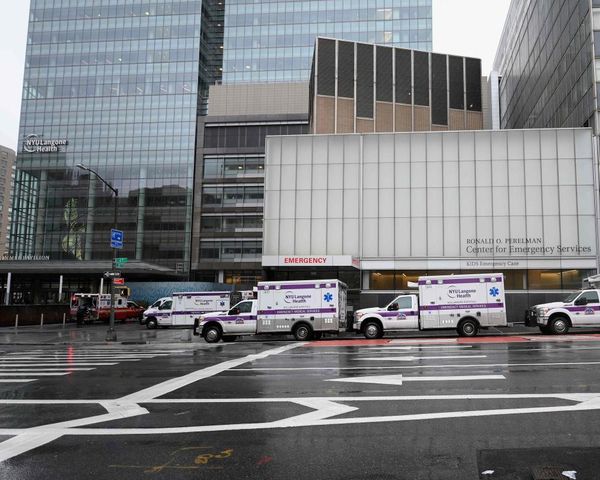
There are already more than 6,000 hospitalised COVID-19 patients in New York, with almost 1,600 in intensive care.
Mr de Blasio said that next Sunday, April 5, would be "a decisive moment for the city" in terms of having enough medical workers, supplies and equipment.
In the UK, seven Formula 1 teams have joined forces to create Project Pitlane, assisting the National Health Service with manufacturing equipment and potentially designing a new device.
The teams working together include Red Bull, Racing Point, Haas, McLaren, Mercedes-AMG, Renault and Williams.
Virus prevention measures turn violent in parts of Africa
Measures imposed to prevent the spread of the coronavirus have taken a violent turn in parts of Africa as countries impose lockdowns and curfews or seal off major cities.
Minutes after South Africa's three-week lockdown began, police screamed at homeless people in downtown Johannesburg and went after some with batons, with reports of rubber bullets fired. Police fired tear gas at a crowd of Kenyan ferry commuters as the country's first day of a curfew slid into chaos.
In Rwanda, the first country in sub-Saharan Africa to impose a lockdown, police have denied that two civilians shot dead were killed for defying the new measures, saying the men attacked an officer after being stopped.
Experts are concerned the continent will not be able to handle a surge in cases without the depth of medical facilities available in more developed economies.
Pope Francis leads solitary prayer in St Peter's Square
The Pope said the coronavirus pandemic had put everyone "in the same boat" as he held a dramatic, solitary prayer service in St Peter's Square, urging the world to see the crisis as a test of solidarity and a reminder of basic values.
The Vatican called the service An Extraordinary Prayer in the Time of Pandemic, a sombre echo of an announcement by Italian officials minutes earlier that the coronavirus death toll in the country had surged past 9,000.
Pope Francis walked alone in the rain to a white canopy on the steps of the basilica and spoke sitting alone before a square where he normally draws tens of thousands of people but is now closed because of the pandemic.
The leader of the world's 1.3 billion Roman Catholics said God was asking everyone to "reawaken and put into practice that solidarity and hope capable of giving strength, support and meaning to these hours when everything seems to be floundering."
The Vatican said that tests showed Pope Francis and his closest aides do not have coronavirus.
Spain records 832 deaths in one day, its highest daily death toll so far
Spain, where stay-at-home restrictions have been in place for nearly two weeks, reported 832 more deaths on Saturday, bringing its total to 5,690.
Another 8,000 confirmed infections pushed that count above 72,000.
But Spain's director of emergencies Fernando Simón said some parts of the country had "probably already passed" the peak of infections.
State-by-state numbers of confirmed coronavirus cases
There have been more than 3,600 confirmed cases of COVID-19 in Australia, including 14 deaths. The latest update was at 8:30AM AEDT on Sunday, March 29.
- NSW: 1,617 (8 deaths)
- Victoria: 685 (3 deaths)
- Queensland: 625 (1 death)
- Western Australia: 278 (2 deaths)
- South Australia: 287
- ACT: 71
- Tasmania: 62
- NT: 15