

More than 400 tech startups have responded to a Twitter call from Sam Altman, president of the startup funding company Y-Combinator, on Sunday afternoon that asked innovators from across the globe to share tech ideas for combatting COVID-19 in a public spreadsheet.
"[This is] basically the one thing I know how to do that can help," writes Altman.
In a blog post explaining his idea, Altman writes that he's interested in funding startups that will come at this problem in a way governments and large corporations have not, including finding new ways to quickly produce ventilators, masks, and hospital gowns, developing novel approaches to creating vaccines and therapeutics, and screening existing drugs for effectiveness against COVID-19.
While Altman did not mention the amount of funding currently available for these ideas, Y-Combinator invests $150,000 in a large group of small startups twice a year (84 during the summer of 2019) and Altman writes that other investors are likely interested in funding these projects as well.
Of the startups that have signed up for the project thus far, a few different approaches to combating the virus stand out.
Encouraging people to home — More than a few companies on the list propose map-based apps and sites to keep users in the know about COVID-19 cases near them and to encourage them to stay home. Provene, an app originally designed to track cravings of recovering addicts, plans to revamp its design to work as a symptom and GPS tracking app for those under quarantine. Similarly, an app called Snewpit, a map-based app that collects crowd-sourced news data, is working to add a COVID-19 filter so that users can plug in their address and see where the closest confirmed cases of the virus are near them.
Meanwhile, another group called Stayhome, is playing the role of everyone's aggressively loving friend and intends to design an app that sends hourly reminders to users to STAY HOME as well as offering a Find My Friends-like feature that would allow users to keep tabs on friends and family to ensure they're staying home as well.
Virtual symptom assistance — Another slew of companies are working to combat the lack of accessible testing or medical consultation by designing virtual symptom tracking apps. One company called Bodymap has designed a game to reduce overcrowding in hospitals by helping users assess their possible symptoms from the safety of their homes. The app asks questions like if they have a fever or have been washing their hands and recommends at-home solutions like taking fever-reducing medication.
Another company, PatchAI is taking a similar approach and is also working to connect patients directly with NHS (National Health Services) in their country if necessary.
Open source masks and ventilators — Meanwhile, instead of focusing on individual cases, another group of companies are instead focusing on ways to bolster the health care system by quickly designing new ventilators and masks for patients. One company, called OpenMask, is working to design an open-source, 3D printable surgical mask using a flexible material designed to better seal to a users' face. The OpenMask team writes that its first prototype will be ready on Tuesday, March 17th.
Another group called DIY Ventilators has created an online library of ventilator designs that can be constructed locally using easy-to-find parts. The site describes its efforts as a "mini-hackathon" designed to quickly refine these designs and make them available for countries around the world in the event that hospital ventilators become rwhelmed.l can seem impossible to look beyond the onslaught of bad and scary news about COVID-19, this global collaboration reminds us that we are not alone and not withoup.
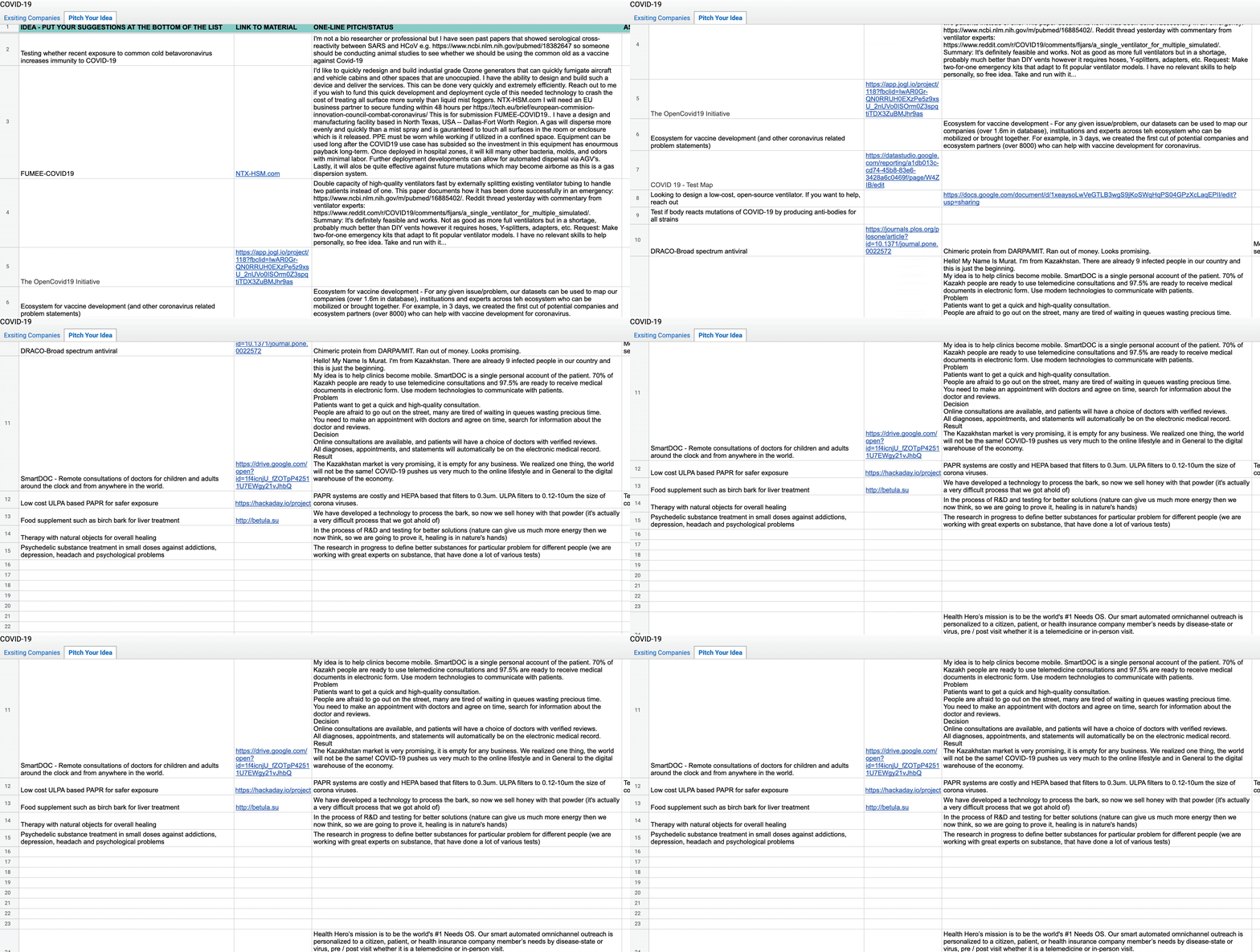
More than 400 tech startups have responded to a Twitter call from Sam Altman, president of the startup funding company Y-Combinator, on Sunday afternoon that asked innovators from across the globe to share tech ideas for combatting COVID-19 in a public spreadsheet.
"[This is] basically the one thing I know how to do that can help," writes Altman.
In a blog post explaining his idea, Altman writes that he's interested in funding startups that will come at this problem in a way governments and large corporations have not, including finding new ways to quickly produce ventilators, masks, and hospital gowns, developing novel approaches to creating vaccines and therapeutics, and screening existing drugs for effectiveness against COVID-19.
While Altman did not mention the amount of funding currently available for these ideas, Y-Combinator invests $150,000 in a large group of small startups twice a year (84 during the summer of 2019) and Altman writes that other investors are likely interested in funding these projects as well.
Of the startups that have signed up for the project thus far, a few different approaches to combating the virus stand out.
Encouraging people to home — More than a few companies on the list propose map-based apps and sites to keep users in the know about COVID-19 cases near them and to encourage them to stay home. Provene, an app originally designed to track cravings of recovering addicts, plans to revamp its design to work as a symptom and GPS tracking app for those under quarantine. Similarly, an app called Snewpit, a map-based app that collects crowd-sourced news data, is working to add a COVID-19 filter so that users can plug in their address and see where the closest confirmed cases of the virus are near them.
Meanwhile, another group called Stayhome, is playing the role of everyone's aggressively loving friend and intends to design an app that sends hourly reminders to users to STAY HOME as well as offering a Find My Friends-like feature that would allow users to keep tabs on friends and family to ensure they're staying home as well.
Virtual symptom assistance — Another slew of companies are working to combat the lack of accessible testing or medical consultation by designing virtual symptom tracking apps. One company called Bodymap has designed a game to reduce overcrowding in hospitals by helping users assess their possible symptoms from the safety of their homes. The app asks questions like if they have a fever or have been washing their hands and recommends at-home solutions like taking fever-reducing medication.
Another company, PatchAI is taking a similar approach and is also working to connect patients directly with NHS (National Health Services) in their country if necessary.
Open source masks and ventilators — Meanwhile, instead of focusing on individual cases, another group of companies are instead focusing on ways to bolster the health care system by quickly designing new ventilators and masks for patients. One company, called OpenMask, is working to design an open-source, 3D printable surgical mask using a flexible material designed to better seal to a users' face. The OpenMask team writes that its first prototype will be ready on Tuesday, March 17th.
Another group called DIY Ventilators has created an online library of ventilator designs that can be constructed locally using easy-to-find parts. The site describes its efforts as a "mini-hackathon" designed to quickly refine these designs and make them available for countries around the world in the event that hospital ventilators become overwhelmed.
While it can seem impossible to look beyond the onslaught of bad and scary news about COVID-19, this global collaboration reminds us that we are not alone and not without help.