The number of people infected with the novel coronavirus has begun to show signs of increasing.
In certain areas the trend has shifted to expansion, and the situation remains unpredictable. At the same time, analytical efforts have made progress in detecting the factors that lead to the outbreak of cluster infections, allowing a clearer picture of the cases in which group infections occur.
How individual people behave as winter approaches will be key to preventing the spread of infections.
-- Spread from hostess bars
Hirosaki, Aomori Prefecture, is in the middle of its autumn foliage season. Because of the sudden spread of the coronavirus, this year's Hirosaki Castle Chrysanthemum and Autumn Foliage Festival, which was supposed to start Friday, was canceled. Last year, the festival was a major event that drew about 400,000 visitors.
"The Cherry Blossom Festival and the Neputa Festival in summer were canceled this year, so we had hopes for the autumn festival. It's a pity," said a man who runs a souvenir shop and restaurant in the city. "Even so, we want to take thorough preventative measures to welcome the tourists who still come to Hirosaki."
The first cluster infection in Hirosaki was discovered on Oct. 15, among customers and employees at hostess bars. Fifteen people were originally infected, and the virus spread to their family members and coworkers. As of Saturday evening, 143 in total were infected, including four people from outside of the prefecture.
Aomori Prefecture had seen 41 infected people up through Oct. 14, but the figure grew to more than four times that in only 10 days.
The government's subcommittee on COVID-19 measures assessed the recent infection situation nationwide as "changing from flat to slightly increasing." Since this month, however, the spread has been noticeable in regional areas.
In Hokkaido, the number of infections has increased in Sapporo, Kushiro and other cities, with a record 51 cases confirmed on Friday. In Fukushima Prefecture, clusters have been found in Koriyama and elsewhere, and the number of people infected in one month exceeded 100 for the first time.
-- Influx from Tokyo?
Takaji Wakita, director of the National Institute of Infectious Diseases, said regarding the situations in Hirosaki and Koriyama: "It may have started with an influx of people from the Tokyo metropolitan area. The infection situation in the Tokyo metropolitan area must improve first."
The so-called effective reproduction rate, which indicates the average number of other people who are infected by a person who has contracted the virus, has been hovering around one in Tokyo and Osaka, with no signs of abating.
According to the Cabinet Secretariat, the number of cluster infections in Japan in July and September was level at more than 300, but the number of cases seen in host and hostess bars was halved from 47 to 23. At the same time, the diversification of infection routes has become a problem.
-- Blind spots
This month, the government interviewed 12 municipalities across the country about cluster outbreaks. In some cases, the virus was suspected to have been transmitted in locations where people tend to become careless, such as dinners involving alcohol, office break rooms and changing rooms. Smoking areas where people take off their masks and talk were found to be a particular blind spot.
There were also cases of possible contact infection through sharing unexpected items, such as telephones and intercoms at call centers, and wet sponges used in sports, as they are often shared among team members.
In Japan, it is believed that only one in five people transmits the virus to others. As long as this one person can keep the virus from infecting a large number of people, the virus will naturally come under control. But a large cluster or chain of infections could cause an outbreak.
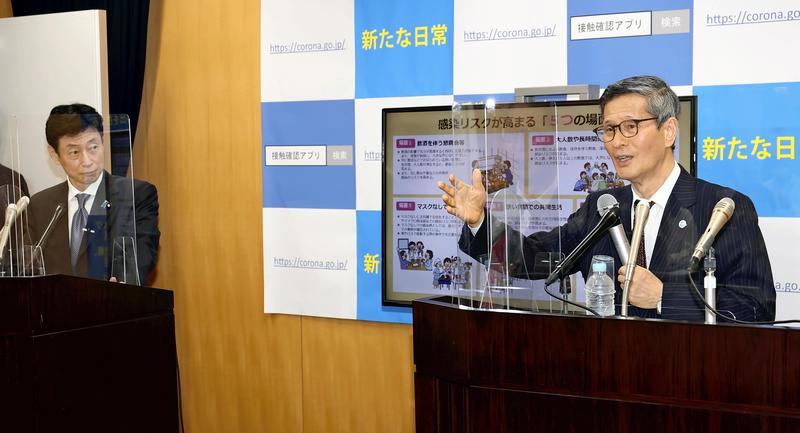
"The virus spreads in a rush once it gets going," said Shigeru Omi, chairman of the government's subcommittee. "It is important for each individual to take steps to reduce the risk of infection."
Omi called for swift action from local governments, including early testing and the quarantine of infected people.
Read more from The Japan News at https://japannews.yomiuri.co.jp/