The growing spread of the novel coronavirus in Japan has left many hospitals in need of some urgent aid themselves.
During the first wave of infections earlier this year, many hospitals that treated coronavirus patients were forced to curtail their regular medical treatments and services. This created a sharp drop in sales and profits, which have yet to recover. The government included support measures for medical institutions in the second supplementary budget for fiscal 2020 and through other avenues. However, many local governments have no definite timeline for when this support can be distributed, even as many hospitals cry out for urgent financial assistance.
"The more coronavirus patients a hospital has treated, the greater the [hospital's] economic pain has been," Tokyo Medical and Dental University President Yujiro Tanaka said. "I want someone to quickly explain when we will receive subsidies from the Tokyo metropolitan government, and how much we will get."
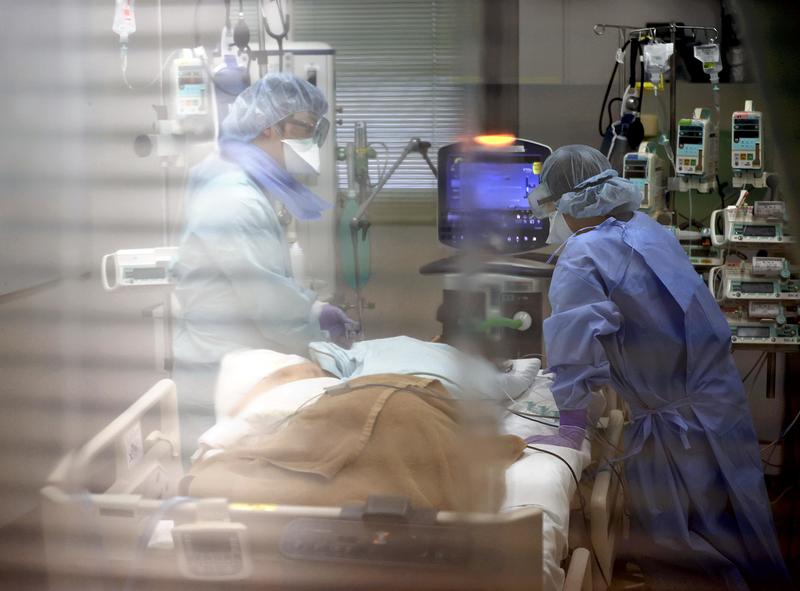
As of Wednesday, the university hospital had 64 beds set aside for treating coronavirus patients. It has so far treated about 640 coronavirus-related patients, including some severe cases. In April and May, as the hospital cared for patients infected during the first wave, the hospital chalked up a loss 2.2 billion yen worse than during the same months the previous year. This was mainly the result of curbing regular admissions and surgeries so beds could be freed up for coronavirus patients.
The government has rolled out a raft of support measures to help the management of hospitals accepting coronavirus patients. Fiscal 2020's second supplementary budget set aside money for fees covering empty beds saved for coronavirus patients. This subsidy of up to about 300,000 yen per bed per day was available to "key medical institutions," which have established wards dedicated to treating coronavirus patients, and "cooperating medical institutions," which have prepared private rooms exclusively for patients suspected of having the virus. This subsidy was made in consideration of the burden these hospitals would shoulder if they were left with empty beds because they had no coronavirus patients using them.
Prefectural governments ***can*** designate facilities as "key medical" or other institutions. However, the Tokyo metropolitan government has not yet designated any such institutions. Consequently, there is no prospect of the "empty bed fee" or other central government subsidies being paid.
According to the Tokyo government, creating detailed criteria for the designation is taking time. Before any payment can be made, the government also must confirm details including how many beds at each hospital were empty since April.
"Many hospitals operate in Tokyo, and we also have a shortage of staff able to do this work," a Tokyo government official said.
Tokyo Medical and Dental University reduced its regular medical consultations during the first coronavirus wave, but restored them to normal levels from June. Providing care to regular patients while also treating coronavirus patients places a significant strain on a medical facility.
"If the number of coronavirus patients increases further, it'll become even harder to run our hospital," said Tanaka. "I think some hospitals will even become unable to accept coronavirus patients."
-- Rural areas also affected
In rural areas, the designation of important medical institutions has been delayed for other reasons. Establishing dedicated coronavirus wards is difficult in regions that have scant medical resources.
"We also must keep some beds for emergency situations, so it's not easy to arrange this," a Tochigi prefectural government official said.
If the designation of important medical institutions is not decided, the distribution of subsidies for the entire prefecture cannot be finalized. Ultimately, these payments get delayed.
Compounding this, "empty bed fees" are for beds unused since April. This will not cover hospitals in Kanagawa Prefecture that treated many people who became infected during an outbreak on the Diamond Princess cruise ship in February.
"We want the government to provide assistance for the cost of treating the cruise passengers," a Kanagawa prefectural government official said. "They should take this into account so local governments can implement measures without worrying about their financial resources."
-- Medical system teetering
A survey released Thursday by the Japan Hospital Association and two other organizations revealed the plight of hospitals across the nation.
Hiroji Shima, vice president of the association, said: "If things continue as they are, some hospitals will go bankrupt and dealing with the coronavirus outbreak will become impossible. The regional medical care system could even be overwhelmed."
International University of Health and Welfare Prof. Koji Wada, a public health expert, also had a stark warning.
"These subsidies should be paid quickly to the hospitals," Wada said. "They are essential for our medical workers. On top of that, the lives of residents in Japan are at stake."
Read more from The Japan News at https://japannews.yomiuri.co.jp/