Coronavirus preys on inequalities in working class Paris suburb
Health framework Aline Lheureux, 39-year-old, wearing a face protective mask, works in the Intensive Care Unit (ICU) for coronavirus disease (COVID-19) patients at the Clinique de l'Estree private hospital in Stains near Paris as the spread of the coronavirus disease continues in France, April 20, 2020. REUTERS/Benoit Tessier
Resuscitation nurse Aline Lheureux feared there would be trouble in the impoverished Paris suburb where she works when she heard youngsters playing sport in the streets outside even though France was under tough lockdown rules.
"During meetings you could hear football matches being played," Lheureux said. "People here live on top of each other in small flats that make it difficult to respect the lockdown."
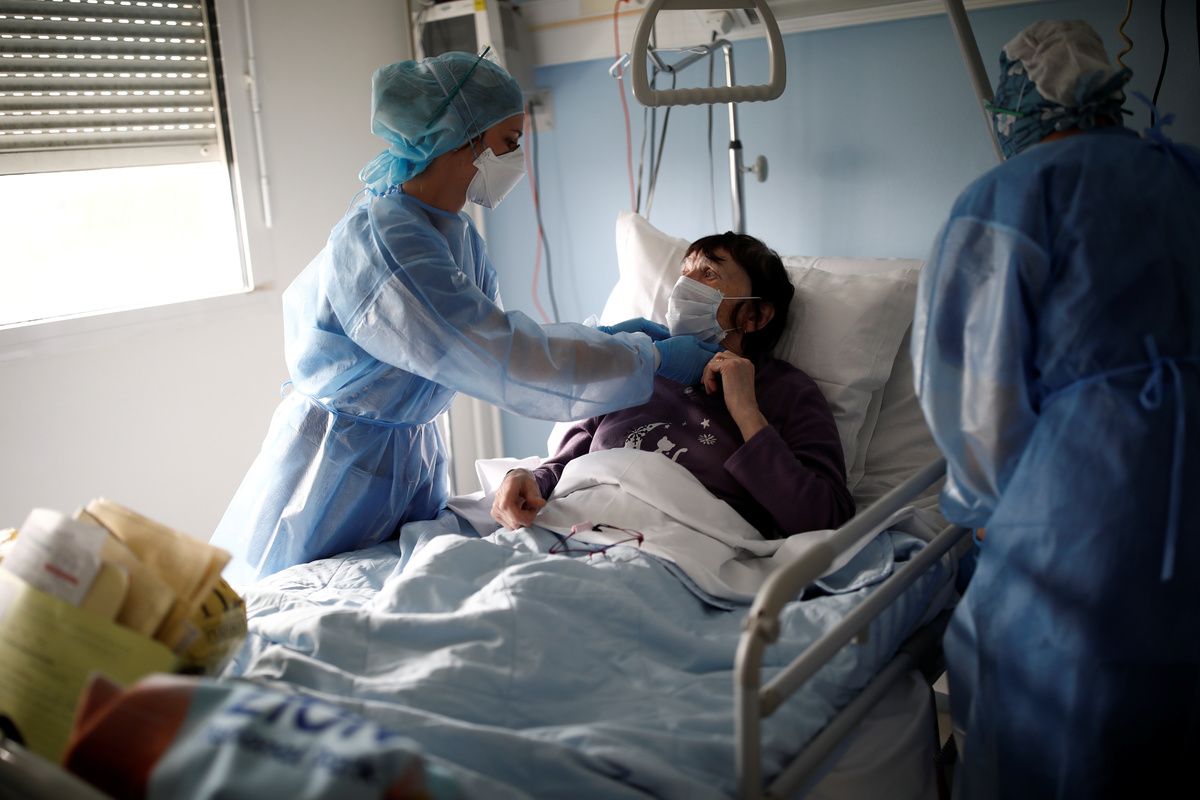
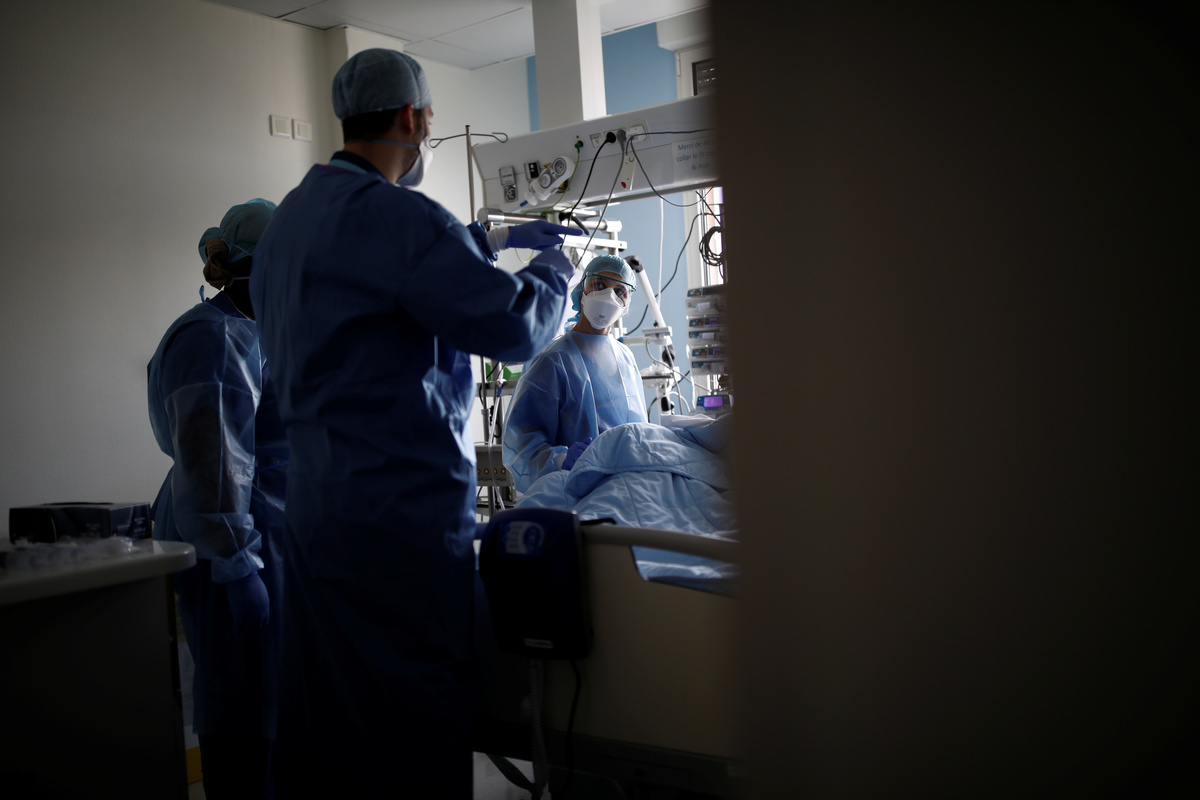
A patient suffering from coronavirus disease (COVID-19) is treated in the Intensive Care Unit (ICU) at the Clinique de l'Estree private hospital in Stains near Paris as the spread of the coronavirus disease continues in France, April 20, 2020. REUTERS/Benoit Tessier
In late March, she helped convert a unit of her private Estree clinic into a makeshift intensive care ward, as the coronavirus overwhelmed hospitals in Seine-Saint-Denis, one of France's poorest districts on the northern edge of Paris.
Official data show that the spike in mortality rates during the coronavirus outbreak has been markedly higher in Seine-Saint-Denis than in the affluent capital on the other side of the ring-road.
The heavy toll highlights how the combination of cramped social housing, workers with frontline jobs and a restless youth have turned some low-income zones from France to the United States into infection hotspots.
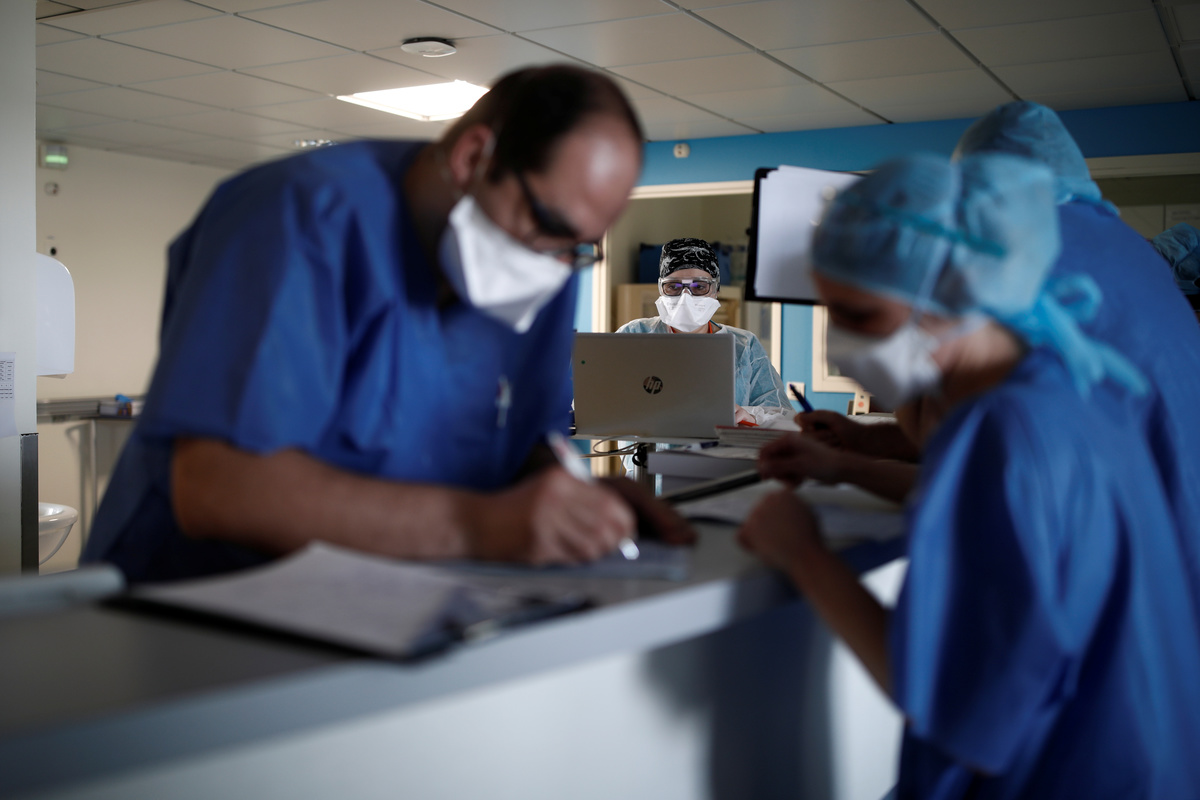
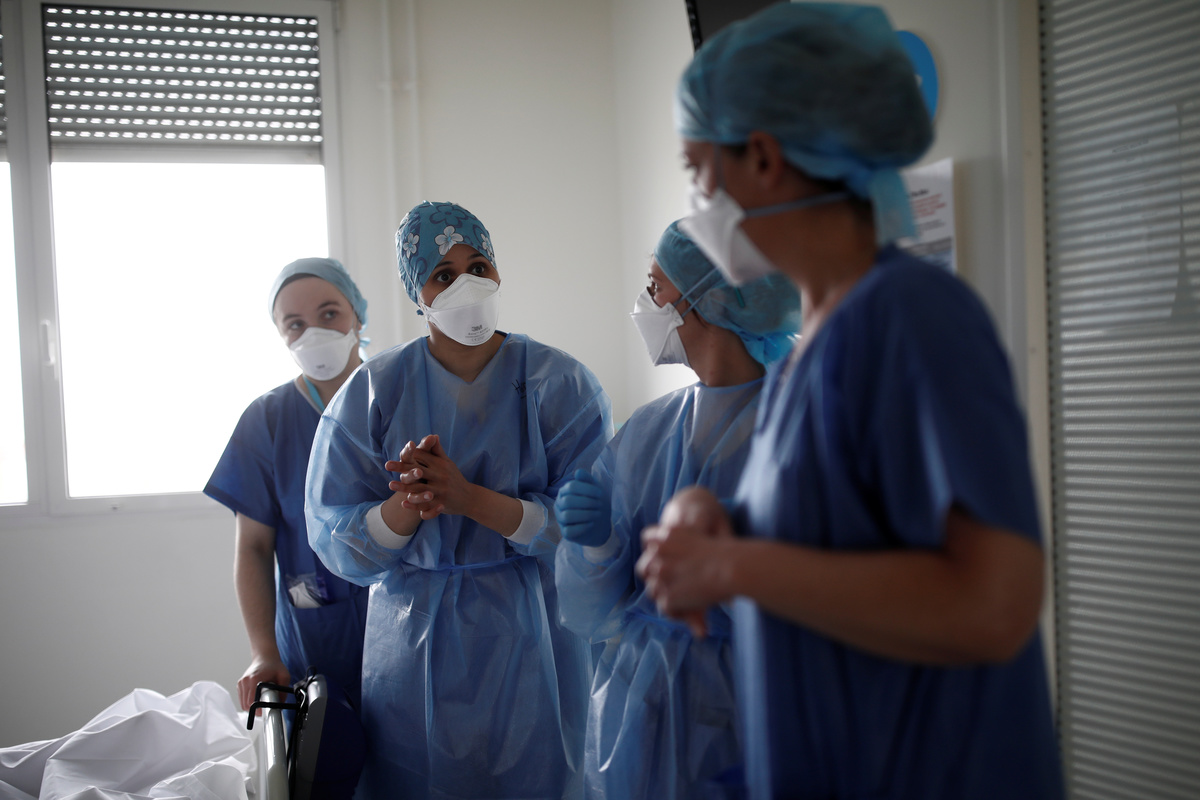
Members of the medical staff, wearing protective face masks, work in the Intensive Care Unit (ICU) for coronavirus disease (COVID-19) patients at the Clinique de l'Estree private hospital in Stains near Paris as the spread of the coronavirus disease continues in France, April 20, 2020. REUTERS/Benoit Tessier
From the clinic, located in the suburb of Stains, a cluster of high-rise tower blocks dominate the skyline. Often it is families of Maghreb and sub-Saharan African descent who live in the 'banlieues' that ring many French cities.
Unrest has broken out during the past three nights in nearby suburbs where police enforcement of the lockdown has exacerbated deep-rooted social and economic tensions.
INEQUALITY
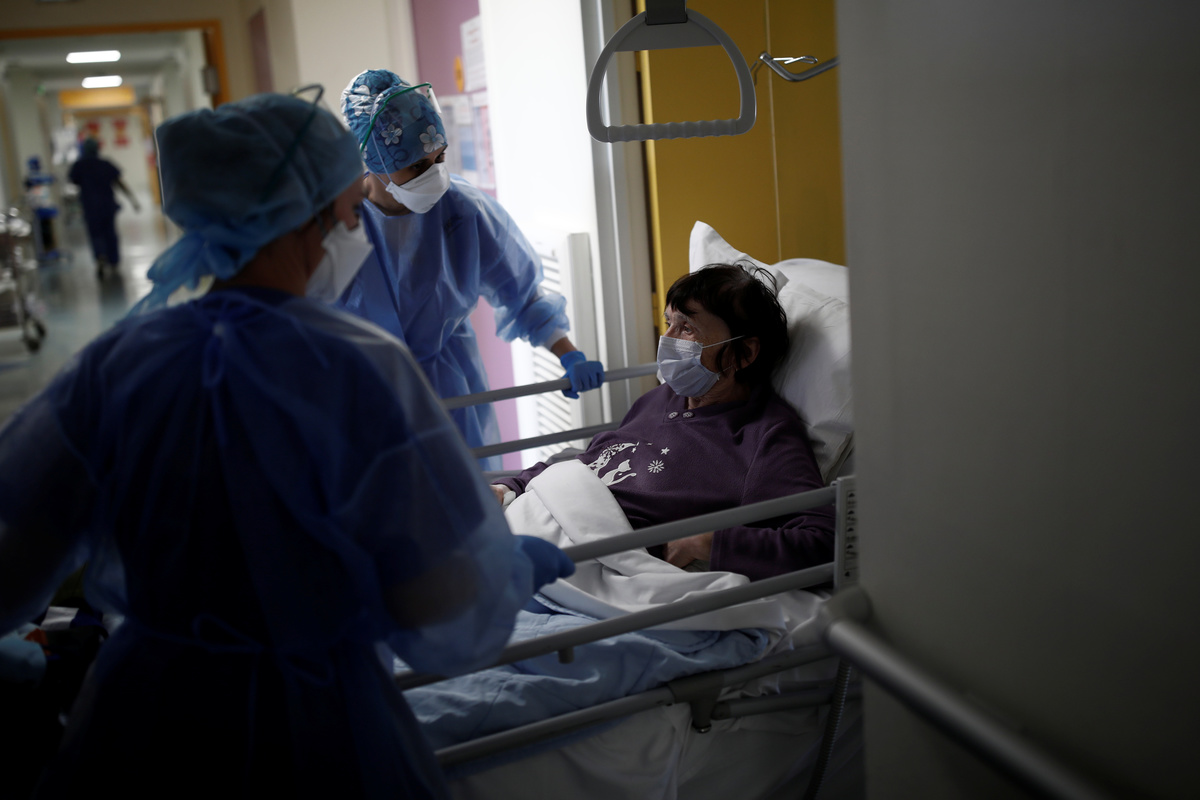
Patient Christine Anest, 82-year-old, prepares to leave the Intensive Care Unit (ICU) after being treated for the coronavirus disease (COVID-19) at the Clinique de l'Estree private hospital in Stains near Paris as the spread of the coronavirus disease continues in France, April 20, 2020. REUTERS/Benoit Tessier
Unemployment runs at more than double the national average in Seine-Saint-Denis. It is worst among youths, with more than one in three 15 to 24-year-olds out of work.
Those with jobs are often employed in roles that put them at risk of infection, such as bus drivers, supermarket cashiers and nurses. Remote schooling has also been harder for some families in these areas, with not all pupils having internet access.
"People need to get out. Kids need to breathe air and it's tougher in these areas because they don't have the escapes that you have elsewhere in Paris," said Lahoucine, a teacher in neighboring Aulnay-sous-Bois.
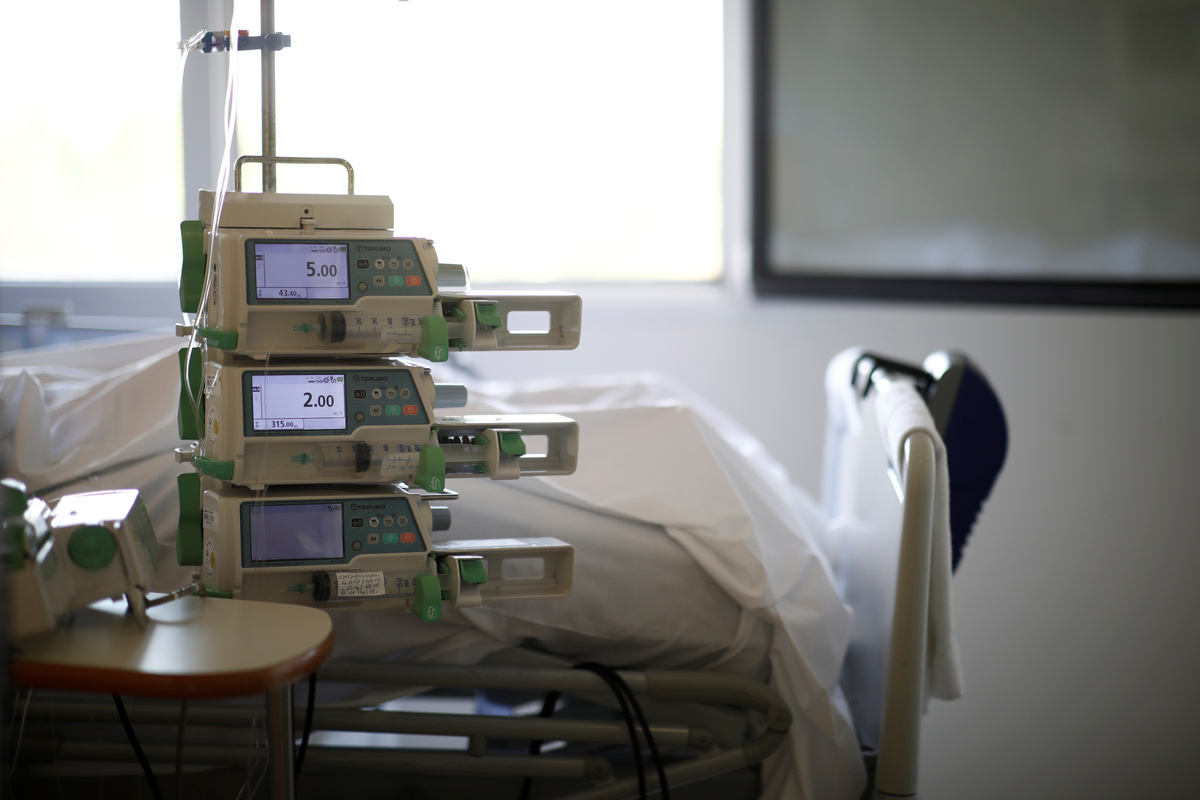
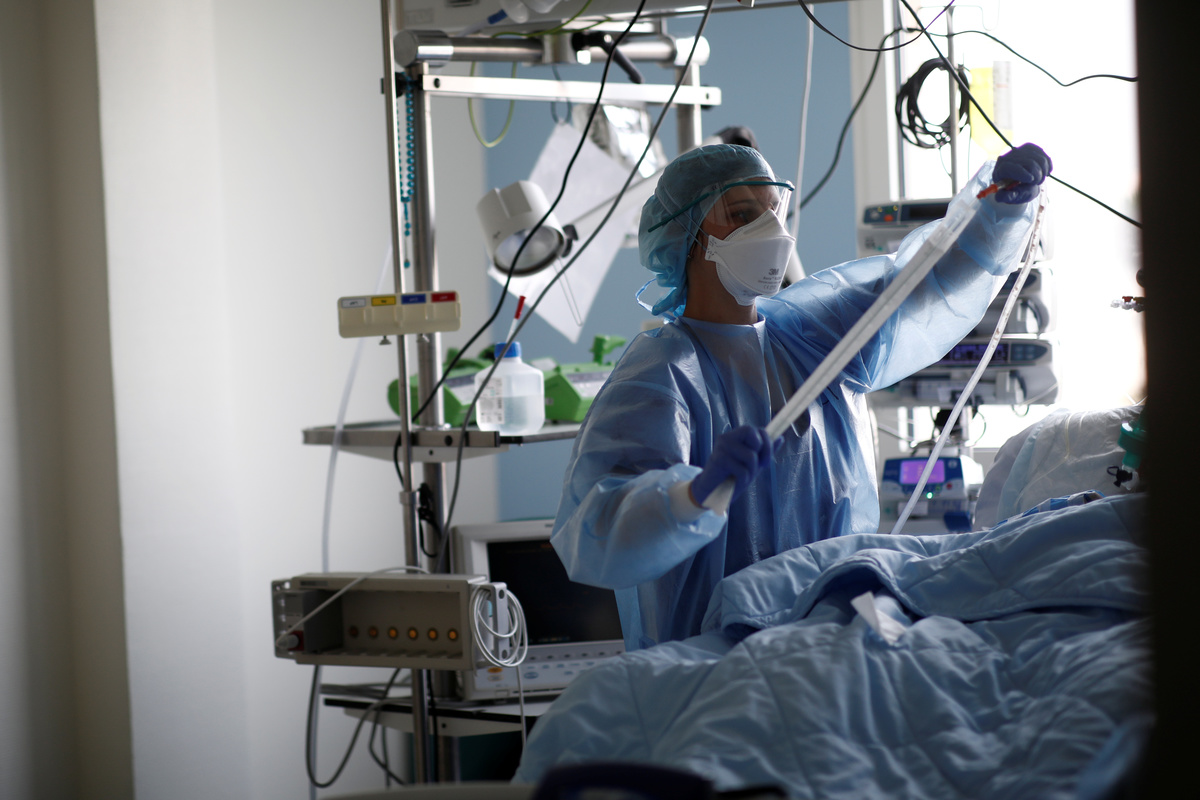
Nurse Samantha Poirier, 28-year-old, prepares antihypertensive drugs as she treats a patient suffering from coronavirus disease (COVID-19) in the Intensive Care Unit (ICU) at the Clinique de l'Estree private hospital in Stains near Paris as the spread of the coronavirus disease continues in France, April 20, 2020. REUTERS/Benoit Tessier
Local officials decry years of under-investment in Seine-Saint-Denis.
According to government figures, the district has the lowest number of doctors anywhere in France and the largest rate of chronic diseases such as diabetes that can be major risk factors for COVID-19 sufferers.
"Inequalities are killing Seine-Saint-Denis," five local mayors wrote in an op-ed earlier this month.
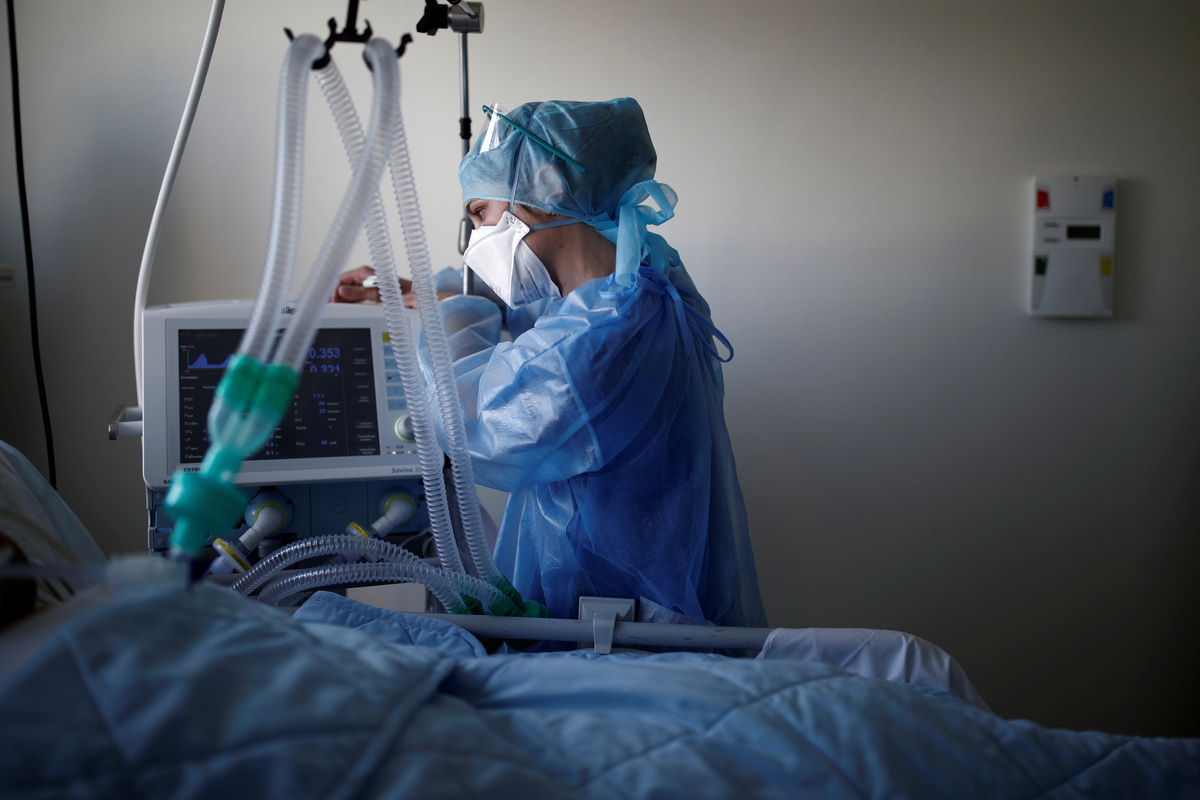
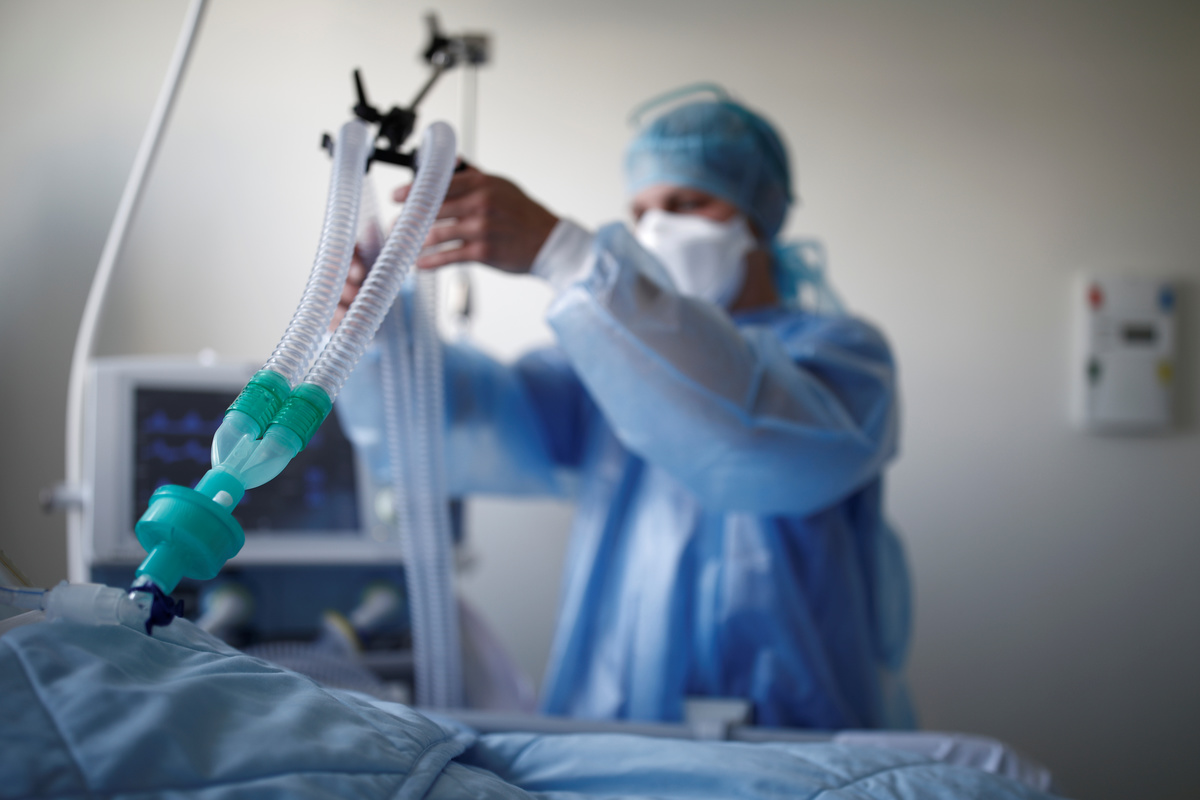
Nurse Samantha Poirier, 28-year-old, checks an artificial respirator as she treats a patient suffering from coronavirus disease (COVID-19) in the Intensive Care Unit (ICU) at the Clinique de l'Estree private hospital in Stains near Paris as the spread of the coronavirus disease continues in France, April 20, 2020. REUTERS/Benoit Tessier
"These deep injustices, that nobody can choose to ignore, we must tackle them head on with actions. The new world post-pandemic ... cannot follow the course of budgetary austerity that sacrifices lives," they wrote.
President Emmanuel Macron last week announced France would slowly unwind its lockdown from May 11. But Widad Abdi, an anaesthetist-intensive care doctor at the Estree clinic, said the announcement on its own had prompted local residents to flout lockdown rules even more.
"I fear there will still be a lot of COVID-19 cases here even if they diminish in other areas," she said.
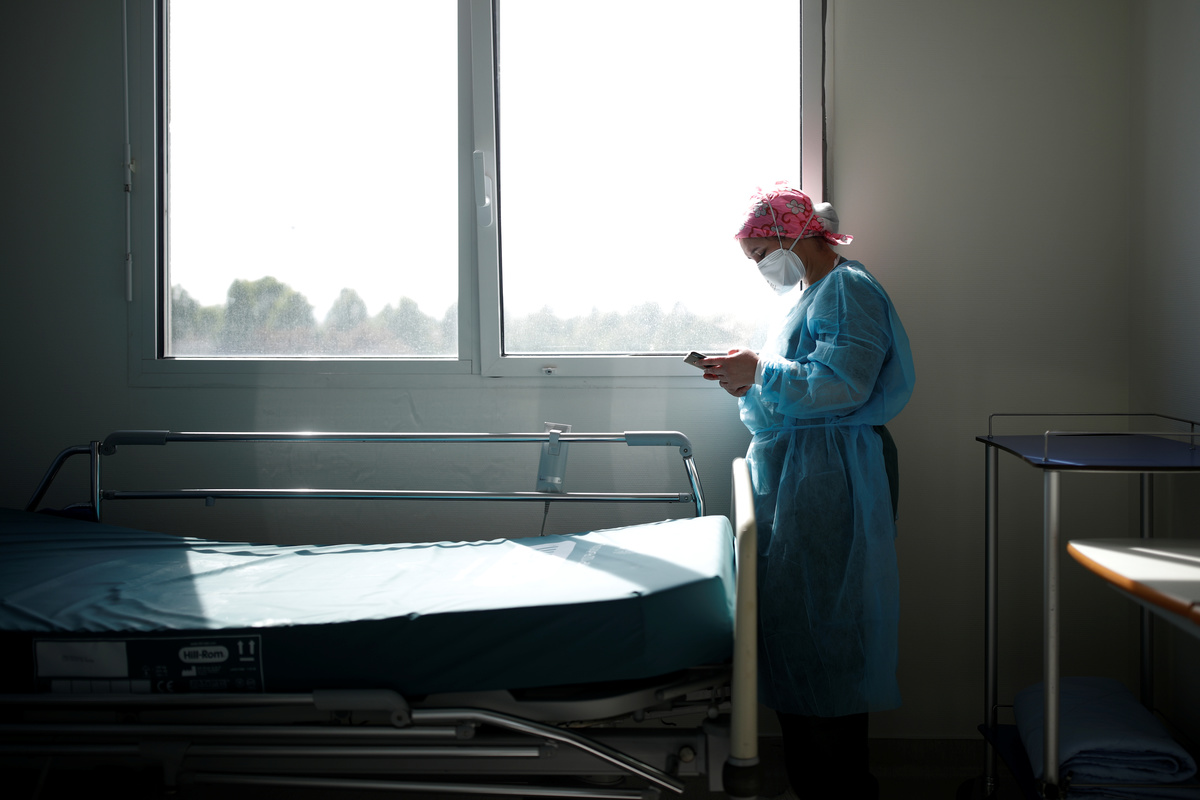
A member of the medical staff, wearing a face protective mask, sends a message on her mobile phone during a break as she works in the Intensive Care Unit (ICU) for coronavirus disease (COVID-19) patients at the Clinique de l'Estree private hospital in Stains near Paris as the spread of the coronavirus disease continues in France, April 20, 2020. REUTERS/Benoit Tessier
(Reporting by John Irish and Clotaire Achi; editing by Richard Lough and Mike Collett-White)
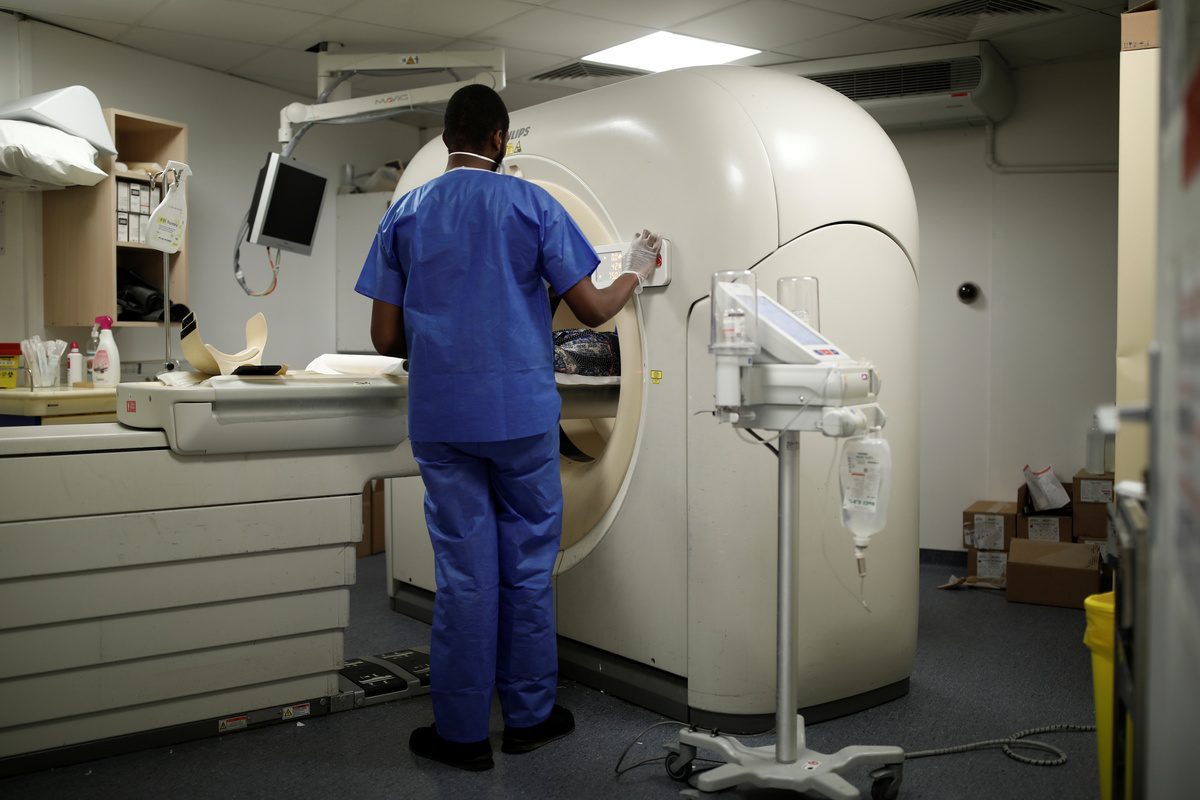
A patient suffering from coronavirus disease (COVID-19) lies a CT (Computed tomography) scanner in the Intensive Care Unit (ICU) at the Clinique de l'Estree private hospital in Stains near Paris as the spread of the coronavirus disease continues in France, April 20, 2020. REUTERS/Benoit TessierDoctor Widad Abdi, 42-year-old, wearing a protective face mask, works in the Intensive Care Unit (ICU) for coronavirus disease (COVID-19) patients at the Clinique de l'Estree private hospital in Stains near Paris as the spread of the coronavirus disease continues in France, April 20, 2020. REUTERS/Benoit TessierNurse student Catharina Lopes, 21-year-old, wearing a protective face mask, works in the Intensive Care Unit (ICU) for coronavirus disease (COVID-19) patients at the Clinique de l'Estree private hospital in Stains near Paris as the spread of the coronavirus disease continues in France, April 20, 2020. REUTERS/Benoit TessierNurse Samantha Poirier, 28-year-old, wearing protective suit and face mask, works in the Intensive Care Unit (ICU) for coronavirus disease (COVID-19) patients at the Clinique de l'Estree private hospital in Stains near Paris as the spread of the coronavirus disease continues in France, April 20, 2020. REUTERS/Benoit TessierNurse Samantha Poirier, 28-year-old, checks an artificial respirator as she treats a patient suffering from coronavirus disease (COVID-19) in the Intensive Care Unit (ICU) at the Clinique de l'Estree private hospital in Stains near Paris as the spread of the coronavirus disease continues in France, April 20, 2020. REUTERS/Benoit TessierNurse Samantha Poirier, 28-year-old, wearing protective suit and face mask, works in the Intensive Care Unit (ICU) for coronavirus disease (COVID-19) patients at the Clinique de l'Estree private hospital in Stains near Paris as the spread of the coronavirus disease continues in France, April 20, 2020. REUTERS/Benoit TessierPatient Christine Anest, 82-year-old, prepares to leave the Intensive Care Unit (ICU) after being treated for the coronavirus disease (COVID-19) at the Clinique de l'Estree private hospital in Stains near Paris as the spread of the coronavirus disease continues in France, April 20, 2020. REUTERS/Benoit TessierMembers of the medical staff, wearing protective suits and face mask, work in the Intensive Care Unit (ICU) for coronavirus disease (COVID-19) patients at the Clinique de l'Estree private hospital in Stains near Paris as the spread of the coronavirus disease continues in France, April 20, 2020. REUTERS/Benoit TessierNurse student Catharina Lopes, 21-year-old, works in an intensive care unit for coronavirus disease (COVID-19) patients at the Clinique de l'Estree private hospital in Stains near Paris as the spread of the coronavirus disease continues in France, April 20, 2020. REUTERS/Benoit Tessier
Sign up to read this article
Read news from 100’s of titles, curated specifically for you.