How seriously do they take the threat of the novel coronavirus and what message are they conveying to the public? The differences in how the two candidates are perceived have become distinct. These will also have an impact on the judgment of voters.
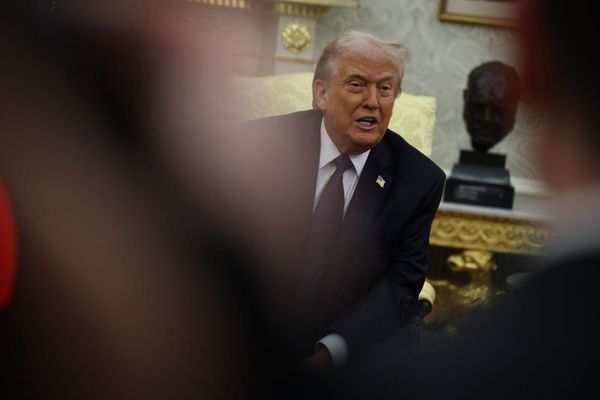
U.S. President Donald Trump, a Republican, and former Vice President Joe Biden, a Democrat, held their final televised debate in the run-up to the Nov. 3 U.S. presidential election.
Trump, who himself was infected with the novel coronavirus, expressed an optimistic view that the situation in the United States is improving and demonstrated his own argument that the resumption of business, schools and other activities should speed up. He has refused to take responsibility for the novel coronavirus pandemic, saying, "It's China's fault."
In response, Biden came down hard on Trump for having "no plan," and concluded, "Anyone who's responsible for that many deaths should not remain as president of the United States of America." He also strongly warned that infections could possibly spread further.
More than 220,000 people have died in the United States due to infection with the novel coronavirus, far more than in any other country. Trump's argument that coronavirus infections are a global problem and that there was no way to stop the spread must be said unconvincing.
In an opinion survey asking about "the most important problem facing" the United States, both "the government/poor leadership" and "coronavirus/diseases" were cited by 25% of respondents, topping "economic problems," which were cited by 9%. There are signs of growing concern about the administration's ability to manage the crisis of an infectious disease.
After Trump recovered, he immediately resumed his massive campaign rallies. He may have wanted to send a message to the public that the situation has normalized, but this may be out of touch with the people's sensibilities.
For Japan, the direction U.S. policies on China and North Korea are going in is also a cause for concern.
Biden expressed a view of working with friendly countries to increase pressure on China to make it play by international rules. His attempt to change Trump's "America first" policy and disregard for the United States' alliances, and to return to international cooperation, is commendable.
Trump claimed that a series of summit meetings with Kim Jong Un, the chairman of the Workers' Party of Korea, prevented the United States and North Korea from going to war.
In reality, North Korea continues to develop its nuclear and missile programs, and its recent military parade featured a new type of intercontinental ballistic missile (ICBM). It will be difficult to achieve denuclearization through personal relations between the leaders alone.
On the other hand, Trump's criticism is right that former President Barack Obama's administration, in which Biden served as vice president, had the result of allowing China's military buildup and North Korea's nuclear and missile tests.
The question is what concrete measures will be compiled to get China and North Korea to change their behaviors along with how to combine dialogue and pressure.
-- The original Japanese article appeared in The Yomiuri Shimbun on Oct. 24, 2020.
Read more from The Japan News at https://japannews.yomiuri.co.jp/