Professor Chris Whitty, England’s chief medical officer, has warned that the chances of a “highly effective” vaccine being ready for distribution by Christmas are “very low”.
Giving evidence to the Commons Health and Social Care Select Committee on Tuesday, Prof Whitty said although he was “cautiously optimistic” there would be a vaccine this side of Christmas, the chances of it being “actually highly effective is in my view very low.”
It comes as a Nobel Prize winning geneticist has warned the UK government risks sleepwalking into a “winter of discontent” unless clear governance structures are implemented for the remainder of the pandemic. Professor Sir Paul Nurse, a distinguished scientist and director of the Francis Crick Institute, criticised what he described as the government’s “pass the parcel” approach. Matt Hancock has since told MPs preparing for winter was a 'priority' for his department.
Summit chairman Charles Michel tweeted "Deal" shortly after the 27 leaders finally reached agreement at a 5.15am (4.15 BST) plenary session.
The deal includes a €750bn coronavirus recovery fund, as well as an agreement on the bloc's broader seven-year budget, worth about €1.1tn

Doctors, dentists, teachers, police officers and soldiers are among those who will see extra money in their wage packets, as the government chooses to honour the recommendations of independent pay review bodies.
Teachers and doctors will see the largest above-inflation increases, at 3.1 per cent and 2.8 per cent respectively, according to the Treasury. But NHS staff in other roles were left out of the announcement.

The early stage trial, which involved 1,077 people, has found that the vaccine trains the immune system to produce antibodies and white blood cells capable of fighting the virus. It also causes few side effects.
Professor Sarah Gilbert, co-author of the Oxford University study, described the findings as promising but said there “is still much work to be done before we can confirm if our vaccine will help manage the Covid-19 pandemic”.

The pandemic has hit the typical family’s finances by 4.5 per cent, the Resolution Foundation said. It calculated the fall by comparing the months leading up to the crisis with the situation in May this year.
According to the think tank’s Living Standards Audit, this was the biggest short-term income drop since the oil crisis-induced inflation spikes of the mid-1970s.

Policing minister Kit Malthouse has said social care workers would have to rely on increases in the minimum wage to improve their pay levels.
As almost a million public sector workers were awarded pay rises, Mr Malthouse said: "The vast majority of social care workers are paid in the private sector so our ability to influence pay rates there is limited."
"That, we hope, will push through into these private sector jobs.
Russia has reported 5,842 new cases of coronavirus, pushing its total infection tally to 783,328, the fourth largest in the world.
The country's coronavirus response centre said 153 people had died in the past 24 hours, bringing Russia's overall death toll from the virus to 12,580.
Government borrowing reached £35.5bn in June, around five times more than the same month last year, due to the soaring cost of the coronavirus crisis.
June was the third highest for any month on record, the Office for National Statistics (ONS) said.
The figures mean borrowing in the first quarter of the financial year was more than double the £55.4bn seen in the whole of the previous year as the UK spent heavily on emergency support measures during the lockdown.

Sir John Bell, regius professor of medicine at Oxford University, said regulators would face a tough decision on whether to approve a Covid-19 vaccine.
He told BBC Radio 4's Today programme: "Probably the toughest job of anybody will be the regulator who has to make the call on whether this is safe and effective in a way that it can be rolled out to the population. I would not want that job."
The University of Oxford's Covid-19 vaccine could be rolled out by the end of the year but there is no certainty that will happen, the lead developer of the vaccine has said.
The experimental vaccine, which has been licensed to AstraZeneca produced an immune response in early-stage clinical trials, data showed on Monday, preserving hopes it could be in use by the end of the year.
However Professor Sarah Gilbert told the BBC: "The end of the year target for getting vaccine rollout, it's a possibility but there's absolutely no certainty about that because we need three things to happen."
She also said it needed to be shown to work in late stage trials, there needed to be large quantities manufactured and regulators had to agree quickly to licence it for emergency use.
"All of these three things have to happen and come together before we can start seeing large numbers of people vaccinated," she added.
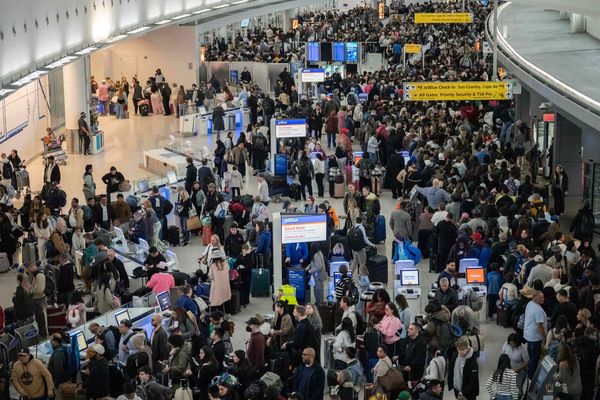
Nepal will allow regular international airline flights from August 17, a minister said today, nearly four months after suspending them to curb the spread of the coronavirus pandemic.
Wedged between China and India, Nepal enforced a nationwide lockdown, halting scheduled flights, in March, when reported its first confirmed cases of Covid-19.
So far, Nepal has reported 17,844 infections with 40 deaths from the disease.
Nepal, home to eight of the world's 14 highest mountains including Mount Everest, is dependent on tourism including mountain climbing.
The decision to restart flights from Nepal's only international airport in Kathmandu was taken at a cabinet meeting late on Monday.
"We'll prepare the safety regulations which must be followed by airlines to operate," tourism and civil aviation minister Yogesh Bhattarai told Reuters.
Deochandra Lal Karna, a spokesman for Kathmandu airport, said safety rules like social distancing, use of sanitisers and masks were already in place for specially chartered evacuation flights for nationals stranded because of the pandemic.
"Now the airlines will submit their flight schedules for approval before starting services," he said.
The fast bowler was excluded from the second Test after breaching the strict coronavirus protocols that have been implemented for the series to go ahead, with the 25-year-old leaving the ‘bio-bubble’ to return to his home in Hove between the first and second Tests, where he came into contact with an unnamed individual.

Just over 56,100 deaths involving Covid-19 have now been registered in the UK, PA news agency reports.
Figures published today by the ONS show that 51,096 deaths involving Covid-19 occurred in England and Wales up to July 10, and had been registered by July 18.
Wellcome Trust director Professor Sir Jeremy Farrar has said he regrets the Scientific Advisory Group for Emergencies (Sage) was not more "blunt" with its advice.
He told the Commons Health and Social Care Select Committee: "If it was possible to ramp up testing, to have testing in place throughout January and February, as was the advice of WHO (World Health Organisation) at that time, and as what actually Germany and Korea and Singapore were able to do, and Vietnam, that would have been a better option, to ramp up the testing in February.
The Swedish climate activist received the Gulbenkian Prize for Humanity on Monday and was awarded a total of €1 million.
Thunberg, 17, immediately promised to use all of the prize money to support climate projects around the world through her Fridays for Future Foundation, with the first €100,000 going to SOS Amazonia, an organisation that protects the rights of Brazil indigenous people.

Weekly coronavirus deaths have fallen by almost a third within seven days and remain at the lowest level since before the lockdown, official statistics show.
There were 366 deaths registered in the week ending July 10 involving Covid-19 - accounting for 4.2% of all deaths in England and Wales, the Office for National Statistics (ONS) said.
This is a 31.2% fall from the previous week, when there were 532 deaths where coronavirus was mentioned on the death certificate.
It is also the fourth week in a row that deaths have been below the number that would usually be expected at this time of year, based on an average from the previous five years.
There were a total of 8,690 deaths registered in England and Wales in the week to July 10, according to the Office for National Statistics (ONS), 560 fewer than the five-year average of 9,250.
The number of deaths in care homes and hospitals was also below the five-year average (283 and 901 deaths lower respectively).
But the number of deaths in private homes remains above the average, with 706 deaths higher during the week.
PA
Oman will ban travel between all provinces from July 25 to August 8 to prevent the spread of the new coronavirus, state news agency ONA has said.
The Gulf state will also implement a daily 7pm to 6am curfew during that same period, which includes the Muslim holiday of Eid al-Adha. Shops and public spaces will be closed during the curfew hours.
Coronavirus may be more severe in colder months than warmer ones, and dry indoor air may encourage its spread, new research suggests.
Severe Covid-19 outcomes decreased as the pandemic progressed from winter to the warmer months, analysis indicates.
Experts warn that their findings paint a grim picture for the colder weather, when it is thought the disease may re-emerge.
Researchers analysed data from 6,914 patients admitted to hospital with Covid-19 in Croatia, Spain, Italy, Finland, Poland, Germany, the UK and China.
They mapped this against local temperature and estimated indoor humidity and found that severe outcomes - being taken to hospital, admittance to ICU or the need for ventilation - dropped in most European countries over the course of the pandemic, covering the transition from winter to early summer.
The study, which has not been peer-reviewed, suggests there was a corresponding decrease in the rate of deaths from the disease.
There was roughly a 15% drop in mortality for every one degree Celsius rise in temperature, the King's College London researchers say.
PA
The Brussels summit brought 27 leaders face-to-face after five months of remote diplomacy, in which time the pandemic brought existing cracks across the bloc into sharp focus.
With some diplomats fearing talks over a record €1.1trn budget and €750bn coronavirus stimulus could be “make or break” for the bloc, the distance between the aims of four so-called “frugal” nations – led by the Netherlands – and other member states, finally began to diminish on Monday, albeit at the cost of environmental schemes.