Get all your news in one place.
100's of premium titles.
One app.
Start reading
The Independent UK
The Independent UK
Health
Jane Dalton, Jon Sharman

Coronavirus: Cases double globally every five days as UK invests in search for new vaccine

A British man who flew home from China ​suffering from coronavirus-like symptoms is expecting to receive results within hours telling him whether he has the illness.

Anthony May-Smith, who was put into isolation after landing, said later he felt fine.

The total number of deaths from the epidemic in China has risen to 362, with new infections in China increasing by 2,829 on Sunday, bringing the total to 17,205.

At least another 171 cases – including two in Britain – have been reported in countries including Australia, France, Germany, Hong Kong, Japan, Russia, Spain and Thailand.

The number of cases of the virus worldwide is doubling roughly every five days, Matt Hancock, the health secretary, revealed.

It came as Chinese scientists revealed they had uncovered fresh evidence that the novel coronavirus had originated in bats. 

Please see below for what was our live coverage.

Hello
 
Welcome to The Independent's live coverage of the coronavirus outbreak.
 
A few key points from overnight:
 
- More than 2,000 Hong Kong medical workers have gone on strike, demanding the government close the border with mainland China
- The UK has ploughed £20m into a global effort to find a vaccine. CEPI is looking at an "ambitious" timescale of eight months
- China's financial markets have taken a massive hit
Info campaign
 
The UK government has launched a public health campaign in a bid to prevent the spread of coronavirus following confirmation of the first British cases of the deadly disease, writes Conrad Duncan.
 
Adverts informing people on how to protect themselves are to appear on social media, in newspapers and on the radio from Sunday as part efforts to reassure the public over the outbreak, which has killed 304 people in China.
 
Basic hygiene such as washing hands regularly and using tissues to catch a cough or sneeze are key ways to help slow the spread of the virus, the advice says.
 

UK government launches campaign encouraging ‘basic hygiene’ to slow spread of coronavirus

Adverts to appear in newspapers and on social media telling public how to reduce risk of virus
Hong Kong strike
 
Hong Kong medical workers have gone on strike demanding the government close the border with mainland China.
 
About 2,400 people - plus 100 supportive members of the public - also called for better distribution of face masks, more isolation wards for patients and a ready supply of equipment.
 
Hong Kong has seen 15 confirmed cases of the virus.
 
Leader Carrie Lam has suspended high-speed rail services to the mainland and cross-border ferries, but she has stopped short of closing the entire frontier, saying it would be "inappropriate and impractical".
The sight of coach loads of Britons being escorted into quarantine by police and officials wearing protective suits is reminiscent of Hollywood disaster movies, so it’s hardly surprising some members of the public are worried, writes health correspondent Shaun Lintern.
 
Protective face masks have been selling out in some parts of the country after news the Chinese coronavirus has reached the UK, and with wall-to-wall media coverage even the most rational of people might start wondering how bad this could get.
 
The reality is, while the coronavirus does present potentially very serious risks to public health, it is not nearly as serious as it could be.
 

Analysis: Why we don’t need to panic about coronavirus, just yet

Analysis: Every year in the UK hundreds of people are killed by normal seasonal flu – coronavirus is cause for concern, not panic
By the numbers
 
According to John Hopkins University's running tally, there are now 17,405 confirmed cases of coronavirus. Three hundred and sixty-two people have died - but 487 have recovered.
More travel restrictions
 
The Czech government has joined the ranks of countries banning direct flights to China, effective from 9 February.
Vaccine attempt
 
Scientists are hoping to develop a potential vaccine against the Chinese coronavirus within 16 weeks, ready for clinical trials that would last four months, writes health correspondent Shaun Lintern.
 
The head of the Coalition for Epidemic Preparedness Innovations (CEPI) said the rapid development would be unprecedented in vaccine history.
 
CEPI, a public-private partnership launched in 2017 to develop new vaccines to stop future epidemics, is being given £20m by the UK government to help fund the efforts as the UK and countries around the world try to prevent the coronavirus spreading further.
 

Coronavirus: Global alliance of scientists hope to create vaccine in record time

‘This is an extremely ambitious timeline – indeed, it would be unprecedented in the field of vaccine development’
The latest from Russia
 
Russia's Interfax news agency has quoted prime minister Mikhail Mishustin as saying Moscow may deport foreign citizens found to be infected with coronavirus.
 
So far, two cases of the disease have been uncovered in Russia, which shares an extensive land border with China.
 
Russia is to begin evacuating its citizens from Wuhan, and has also stopped passenger train services to China.
More Britons arrive home
 
The second group of evacuees from the city at the centre of the coronavirus outbreak in China have entered quarantine after being flown back to the UK, writes Peter Stubley.
 
Eleven people, including British nationals and family members, arrived at RAF Brize Norton in Oxfordshire shortly before 8pm on Sunday.
 
They were taken to Arrowe Park Hospital in the Wirral, where 83 UK citizens have already begun their 14-day isolation period.
 

Second group of British evacuees from China begin coronavirus quarantine in UK

British nationals and family members join 83 already in isolation in the Wirral
 
Xenophobia
 
I’ve bought surgical masks. I’ll admit it. I’ve been wearing one a day for a while. Before there were reports of coronavirus cases in the UK, I was already cautious, writes Sophie Lau.
 
Truth is, in the west, we have had little to worry about in terms of recent health crises, but the widespread panic among the Chinese diaspora right now is caused by a dark shadow in Chinese collective memory: that of the 2003 Sars outbreak.
 
There is plenty of information around about why Sars happened; how it spread so rapidly and why it was as lethal as it was. Certainly, the Chinese government covering up the outbreak for four months and healthcare workers not being properly informed of the dangers played a part.
 

Opinion: Coronavirus-related xenophobia is spreading – and I'm feeling the effects in the UK

A number of countries have seen overt instances of racist stereotypes – such instances are something we all need to avoid
Possible re-routing of US flights
 
In the US, the homeland security department has warned airline passengers that their plans may be diverted if it is discovered that someone on board has been in China in the last fortnight.
 
Mike Pompeo, the secretary of state, said a small number of flights would be heading to China to bring Americans back home from Hubei province, which is at the heart of the outbreak.
 
"The exact timing of those we're still coordinating with the Chinese government," he said at a press conference on Monday in Tashkent, Uzbekistan. "We anticipate that they will happen in the next handful of days and we'll return those American citizens."
 
Mr Pompeo added: "We may well end up bringing some citizens back from other countries as well. We're working through the details on that."
 
The US may try to deliver some medical supplies to the region.
 
Speaking of Mike Pompeo, he was challenged by a reporter in Kazakhstan on his treatment of an American journalist who had asked him difficult questions.
 
Yet more travel restrictions
 
The Maldives has banned travellers arriving from China. It could hit the Indian Ocean nation's tourism industry, however, as Chinese tourists were the most numerous in 2019 - with 280,000 making the trip.
'Fearmongering'
 
China has accused the US of fostering an environment of fear instead of helping it combat the coronavirus.
 
Washington was the first foreign capital to suggest pulling out its embassy staff and the first to impose a ban on Chinese travellers, said foreign ministry spokesperson Hua Chunying.
 
"All it has done could only create and spread fear, which is a bad example," she added.
 
The World Health Organisation said last week it didn't believe travel restrictions were necessary - but countries around the world have imposed them anyway.
   center no-repeat #999999;cursor:pointer;top:-8px; border-radius: 2px;">↵
Apple store closures
 

Apple has said it will close all of its stores and offices in mainland China until the end of the week amid fears over the coronavirus outbreak, writes Samuel Osborne.
 
“Out of an abundance of caution and based on the latest advice from leading health experts, we’re closing all our corporate offices, stores, and contact centres in mainland China through 9 February,” Apple said in a statement.
 
The company said it looked forward to re-opening stores “as soon as possible”.
 

Apple to close all shops in China over coronavirus fears

McDonald’s and Starbucks stores also shut as precautionary measure
G7 call
 
Health ministers from the G7 countries will hold a teleconference to discuss coronavirus at 2pm today, Italy has said.
 
It comes a day after the death of the first patient outside China, which took place in the Philippines.
Hong Kong imposes new border restrictions
 
Hong Kong's leader, Carrie Lam, has said that 10 of 13 border crossings into mainland China have been closed. It's a more stringent measure than Ms Lam had previously acquiesed to but falls short of demands from some doctors that she shutter the entire frontier.
 
New hospital in Wuhan
 
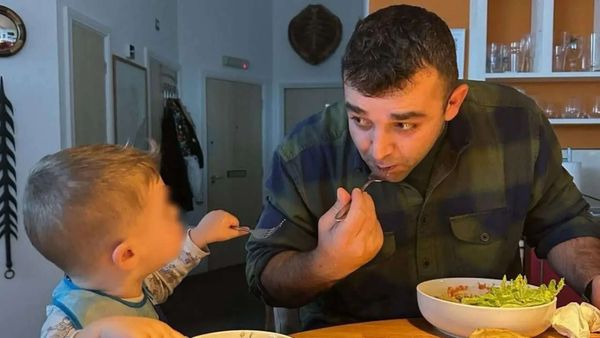
A new 1,000-bed hospital has been built in just 10 days in Wuhan, the Chinese city at the epicentre of the coronavirus outbreak, writes Tim Wyatt.
 
The first patients have already begun arriving at the prefabricated Huoshenshan hospital, which was thrown up by the authorities after the scale of the epidemic became clear.
 
Thousands of construction workers toiled 24 hours a day to complete the two-storey, 60,000 square metre structure, which has 30 intensive care units.
 

China builds new coronavirus hospital in Wuhan in 10 days as infections top 17,000

Prefabricated hospital features 30 intensive care units, autonomous robots and video-link with Beijing
Another hospital
 
In addition to the new 1,000-bed hospital that has been built in record time, a 1,500-bed facility is also due to open this week.
 
The ruling Communist Party's military wing, the People's Liberation Army, has sent 1,400 doctors, nurses and other personnel to staff the Wuhan hospital, the official Xinhua news agency reported.
Numbers update
 
There have been 151 cases of coronavirus in 23 countries outside China, the World Health Organisation has announced.
Do you need a face mask?
 
How concerned should the public be about contracting coronavirus, which is transmitted human-to-human, and are there practical steps you can take, like wearing a face mask, to reduce your risk? writes Sophie Gallagher.
 
Surgical masks were first introduced into hospitals in the late 1700s but they did not make the transition into public use until the Spanish flu outbreak in 1919.
 
The masks are designed for use in a clinical setting, such as a hospital ward or theatre, where they are primarily meant for preventing visible sprays or splashes of fluid.
 

Can face masks really protect you against coronavirus or flu?

As WHO declares the illness an international emergency and two cases are confirmed in the UK, what can you do to protect yourself?
Sign up to read this article
Read news from 100's of titles, curated specifically for you.
Already a member? Sign in here
Related Stories
Top stories on inkl right now
One subscription that gives you access to news from hundreds of sites
Already a member? Sign in here
Our Picks
Fourteen days free
Download the app
One app. One membership.
100+ trusted global sources.