Bottles and firecrackers were hurled at police during protests in Rome on Monday against Covid-19 restrictions.
Shouting “freedom!” and “reopen now!”, an estimated 800 people gathered in San Silvestro square in the centre of the Italian capital before trying to reach parliament, where they were blocked by riot police.
The demonstration was organised by a movement called ‘Io Apro’ (I Open’), which is mainly made up of restaurant, bar and gym owners. The business owners are angry about the long closures endured due to Covid-19 and the scant financial support.
“We are not tax numbers, we are people, we are families,” Corriere della Sera reported a restaurant owner from Naples as saying. “We are not criminals, but people who worked 14 hours a day.”
Another protester told police: “We are ready for war.”
There were also clashes with police during a protest organised by the same group outside parliament last week. The majority of Italy is now in the ‘orange zone’ level of restrictions, meaning bars and restaurants can only provide takeout services and gyms must remain closed. The government is yet to come up with a clear strategy out of lockdown.
The United Arab Emirates may invest in a Covid-19 vaccine production facility in Indonesia, Reuters reports.
The UAE state news agency WAM cited energy and infrastructure minister Suhail al-Mazrouei.
Protesters scuffled with police for a second week running on Monday as frustrated restaurant and small business owners demonstrated against Italy’s continued coronavirus restrictions that are pounding the economy.
Reuters reports that around 200 people from all over the country tried to reach the prime minister Mario Draghi’s office, but were held back by lines of police in full riot gear.
Chanting “we are all workers”, some protesters hurled stones at the police lines, and let off fireworks, which filled the street with billowing smoke.
“The problem is we just don’t know what to do. They tell us that we can only do take-aways, but in my neighbourhood with a population of 3,000, what kind of take-aways can I do?” said Silvio Bessone, a chef from the northern Piedmont region.
The government has imposed repeated curbs over the past 14 months to try to contain Covid-19, which has killed more than 114,000 people in Italy, the second worst official tally in Europe after the UK.
While an initial national lockdown in March 2020 was widely accepted, the announcement of renewed restrictions in October faced immediate pushback in several Italian cities.
Those protests faded as infection rates soared, but the decision to prolong curbs into the spring, with no firm date for when they might be eased, has once again raised hackles.
Czech schools, libraries, zoos and some stores reopened on Monday after months of coronavirus closures in one of the world’s worst-hit countries, Reuters reports.
The Czech Republic’s six-month state of emergency expired at midnight, lifting restrictions on movement including a night-time curfew and a ban on non-essential travel among districts. Children in pre-schools and grades 1-5 returned to classes, mostly on a weekly rotating basis. Pupils must take a nasal swab test twice a week.
“It is hugely visible on these young children when they are not in school,” father Rudolf Zurek, accompanying his daughter inside a Prague school, told Reuters. “This is good and I only hope that it lasts, that it is not overturned in a month and children go back home.”
Kristyna Franova said her daughter was looking forward to returning to school along with her older sister, who still has to stay at home as higher grades remain closed for now. “We do not mind the testing, what we do mind is its low effectiveness, because if the tests have 40% reliability then it’s worthless and a joke,” she said.

The Health Ministry reported 976 new coronavirus cases on Sunday, the lowest daily number since September. The seven-day average dropped to below 4,000, still high compared with most EU countries but down from over 12,000 in early March, when the toughest lockdown was imposed.
Many Czechs have been exhausted by the lengthy shutdowns, as well as policy turnarounds by the government which has admitted reopening too quickly in the past. It said last week that the end of the state of emergency meant a ban on meetings of more than two people inside and outside would be changed to 10 inside and 20 outside.
But after an expert group warned against going too far, the new health minister - the fourth since September - said at the weekend the change would not happen, drawing a barrage of criticism including legal challenges.
Many people have ignored the ban on gatherings and consumption of alcohol in public spaces. Parks in Prague were packed last weekend during a sunny spell.
The government has kept non-essential shops, restaurants and sport and entertainment centres shut since October except for a brief re-opening in December that was quickly reversed.
Zoological gardens were among sites allowed to reopen on Monday for the first time since December. “People are coming despite the cold weather,” said the director of Prague Zoo, Miroslav Bobek. “For us this was something terrible. A closed zoo is defying its purpose.”

The country of 10.7 million has reported 1.58 million Covid-19 infections since the pandemic started in March 2020 and deaths are nearing 28,000, the highest per-capita rate in the world, according to Our World in Data.
The Czech Republic has also been among the slowest countries in the EU to administer vaccinations, having given 2.09 million doses to 1.37 million people as of Sunday.
Coronavirus pandemic 'a long way from over', WHO's Tedros says
Confusion and complacency in addressing Covid-19 means the pandemic is a long way from being over, but it can be brought under control in months with proven public health measures, the WHO director-general Tedros Adhanom Ghebreyesus said.
He told a news briefing on Monday:
We too want to see societies and economies reopening, and travel and trade resuming. But right now, intensive care units in many countries are overflowing and people are dying and it’s totally avoidable.
The Covid-19 pandemic is a long way from over. But we have many reasons for optimism.
The decline in cases and deaths during the first two months of the year shows that this virus and its variants can be stopped, he added, saying transmission was being driven by “confusion, complacency and inconsistency in public health measures”.
India has overtaken Brazil to become the nation with the second highest number of infections worldwide after the US, as it battles a massive second wave, having given about 105 million vaccine doses among a population of 1.4 billion.
WHO team leader on Covid-19 Maria van Kerkove told the news briefing the pandemic was growing exponentially, with a 9% increase in cases last week, the seventh consecutive week of increases, and a 5% rise in deaths.
Tedros said that in some countries, despite continuing transmission, restaurants and nightclubs were full and markets were open and crowded with few people taking precautions.
Some people appear to be taking the approach that if they’re relatively young, it doesn’t matter if they get Covid-19.
Updated
An inhaled, widely available asthma drug shortens recovery time in people with coronavirus who have not been admitted to hospital, a study suggests.
Researchers say the discovery is a “significant milestone” for the pandemic, and that the drug, budesonide, is effective as a treatment at home and during the early stages of the illness.
Early treatment with the medication shortens recovery time by a median average of three days in those with Covid-19 who are at higher risk of more severe illness and are treated in the community, according to the research.
Joint chief investigator Professor Richard Hobbs, head of Oxford University’s Nuffield Department of Primary Care Health Sciences, said: “For the first time, we have high-quality evidence of an effective treatment that can be rolled out across the community for people who are at most risk of developing more severe illness from Covid-19.”
There have been seven weeks of increasing Covid-19 cases despite more than 700m doses of vaccines administered globally, the World Health Organization said.
Updated
Almost 200 Dutch tourists have traded lockdown in the Netherlands for eight days of voluntary confinement in a Greek holiday resort, as part of a test to see if safe holidays can be arranged during the pandemic.
For €399 (£345) each, participants will have “all-inclusive” access to the pools, restaurants and other facilities of the Hotel Mitsis Grand Beach on the island of Rhodes.
They will have to settle for watching the sea from their room or the hotel terraces, as no one is allowed to leave the resort, where they will be the only guests.
Despite the restrictions, demand for the trip was high with about 25,000 people signing up last month in the hope of getting a ticket.
Updated
Theatre staff in Belgium are occupying two venues in Brussels and are threatening to stage unauthorised performances to protest against Covid-19 restrictions.
Agence France-Presse reports:
Their anger over theatres being kept dark with no reopening date is fused with that of other professions – restaurants, non-essential shops, hairdressers – which keep seeing prospects for a return to activity pushed back.
“I see people around me with a lot of doubts and uncertainty, and living on the brink too, with friends unable to pay the rent,” said Thymios Fountas, a 31-year-old playwright and stage director.
He is part of a group that has taken over a state theatre and concert hall, La Monnaie, for more than a week, using a tactic already seen in neighbouring France.
The venue’s management, after negotiations, is allowing 10 of the protesters, including Fountas, to sleep in the theatre until the end of this week. Members of the public are not allowed inside.
Updated
The curve of Bhutan’s Covid-19 vaccination drive has risen upwards since day one, crossing Israel, the US, Bahrain and other countries known for vaccinating people rapidly.
Associated Press reports:
Those countries took months to reach where they are, painstakingly strengthening their vaccination campaigns in the face of rising coronavirus cases.
But the story of Bhutan’s vaccination campaign is nearly finished – just 16 days after it began.
The tiny Himalayan kingdom wedged between India and China has vaccinated nearly 93% of its adult population since 27 March. Overall, the country has vaccinated 62% of its 800,000 people.
The rapid rollout of the vaccine puts the tiny nation just behind Seychelles, which has given jabs to 66% of its population of nearly 100,000 people.
Its small population helped Bhutan move fast, but its success has also been attributed to its dedicated citizen volunteers, known as “desuups”, and established cold chain storage used during earlier vaccination drives.
The country has recorded 910 coronavirus infections and one death since the pandemic began.
Updated

Spain will initially prioritise people aged between 70 and 79 for coronavirus vaccines produced by Johnson & Johnson’s Janssen unit, which are due to start arriving this week.
Reuters reports:
Spain will take a first delivery of 300,000 doses of the single-shot vaccine on Wednesday morning, Carolina Darias told reporters at Gran Canaria airport after a visit to the Spanish Canary Islands.
Johnson & Johnson began delivering its vaccine to EU countries on Monday after some delays due to production issues, European Union officials and the company said.
Following a sluggish start to its vaccination campaign, Spain is betting on a surge of deliveries in the second quarter to meet its target of inoculating half the population by July.
South Africa’s president, Cyril Ramaphosa ,believes Africa must expand its medical manufacturing capacity and forge partnerships to boost expertise and investment to combat the Covid-19 pandemic and future health emergencies.
Reuters reports:
The continent has struggled to acquire vaccines to fight Covid-19 and imports the vast majority of its medicines and medical equipment, leaving it at the mercy of overseas supplies.
“In ensuring an effective response to the current pandemic, we must strengthen our ability to both respond to future health emergencies and to achieve health security for the people of our continent,” Ramaphosa told continental leaders during a webinar.
He said the medium-term strategy should be to expand existing manufacturing facilities into regional hubs that could serve Africa’s health needs.
“We also need to forge sustainable partnerships with entities in both the developed world as well as the developing world,” he said.
Updated
Some 14.1 million doses of the Pfizer BioNTech Covid-19 vaccine have been allocated to 47 countries and economies for delivery in the second quarter of this year.
Reuters reports:
Brazil, Colombia, Mexico, the Philippines, South Africa, and Ukraine are set to be among the main recipients of the Pfizer vaccine between April and June, according to the GAVI vaccine alliance table “based on current knowledge of Covid-19 vaccine supply availability”.
Deliveries of the AstraZeneca vaccine to 142 participants under a previously announced round were under way, “with some delays” that may extend deliveries past May, it said.
Updated
Switzerland’s executive government has urged voters to back the nation’s Covid-19 law, which is being challenged by people who fear it eases approval requirements for vaccines and has shifted too much political power away from parliament, Reutrs reports.
Voters go to the polls on 13 June to weigh in on whether the law to help combat the pandemic went too far. The seven-member executive on Monday agreed at a closed-door session to recommend to voters to back the law.
Switzerland passed the Covid-19 law last September, which governs how financial aid is split among hard-hit businesses and employees who risk losing their livelihoods, without measures to soften the blow.
“The law makes it possible to continue with financial help,” the government said in a statement.
“More than 100,000 companies and more than a million people have been and are dependent on this financial assistance.”
Updated
Johnson & Johnson has begun delivering its Covid-19 single-dose vaccine to EU countries, Norway and Iceland.
Reuters reports:
The company had initially planned to start its deliveries at the beginning of April but delayed the rollout due to production issues.
“The first doses are leaving warehouses for member states today,” a European commission spokesman told a news conference on Monday.
The US company has committed to delivering 55m doses to the EU by the end of June and another 120m in the third quarter, EU industry commissioner Thierry Breton said this month.
A spokeswoman for Johnson & Johnson confirmed that it began deliveries on Monday to EU countries, Norway and Iceland, but declined to comment on supplies for April and the first quarter.
It said it aimed to deliver 200m doses in 2021 to the EU, Norway and Iceland.
Updated
Eli Lilly and Company has announced it has terminated a supply agreement with the US government for its Covid-19 antibody drug and would now focus on selling it in combination with another therapy, Reuters reports.
The pharmaceutical company and the US government have agreed to modify the purchase agreement for the drug, bamlanivimab, and focus on its supply with etesevimab, it added.

The European commission is seeking clarification from AstraZeneca over its shortfalls in supplies to the European Union after it sent a letter to the company in March as part of a dispute-resolution process, Reuters reports.
“The commission still expects the company to clarify a number of outstanding issues,” a spokesman for the EU executive told a news conference, noting there had been a meeting on the matter.
Updated
Turkey's case numbers soar
Turkey’s daily coronavirus infection numbers have soared above 50,000 and president Tayyip Erdoğan is likely to order a tightening of restrictions this week ahead of the tourism season, a senior government official told Reuters.
Turkey ranks fourth globally in new case numbers, which peaked near 56,000 last week – a five-fold jump from early March, when Erdoğan loosened social curbs in what he called a period of “controlled normalisation”.
The official, who wished to remain anonymous, said: “There does not appear to be a solution other than taking much harsher measures.”
The official said steps may include limiting intercity travel, restricting movement of those under 20 and over 65 and closing sports and leisure facilities.
Updated
A drug company will seek approval in the US for its Covid-19 antibody cocktail as a preventative treatment after a trial showed it helped reduce the risk of symptomatic infections in households where someone else is ill.
Reuters reports:
REGEN-COV, as the combination shot of casirivimab and imdevimab is called, reduced the overall risk of progressing to symptomatic Covid-19 by 31%, and by 76% after the third day.
The trial also demonstrated that it shortened symptom duration and markedly lowered viral levels, the Regeneron company said in a statement.
Regeneron has enlisted Switzerland’s Roche and its biotech facility in San Francisco to help make around 2m doses annually.
The drug has emergency US approval for mild to moderate Covid-19 patients.
Updated
Plans to copy Greece by creating “Covid-free” islands are causing a ruckus in Italy.
Leaders of small Italian islands, including Elba off the Tuscan coast and Capri in the bay of Naples, are striving to vaccinate all residents by the end of April in order to salvage the tourism season.
An official plan is being discussed by the government following a request from Ancim, the association for small islands, a few months ago. The idea has been embraced by tourism minister, Massimo Garavaglia, who said: “It can be done and should be done because if others do it and we don’t, the disadvantage will be enormous.”
However, the move has sparked protest from Italy’s larger islands, Sicily and Sardinia, with leaders of both arguing that the main focus should be on vaccinating everyone on their islands instead as they have the capacity to host more tourists, thereby “aiding the recovery of the national economy more significantly”.
Meanwhile, Stefano Bonaccini, president of the Emilia-Romagna region, has called on Garavaglia to reject the plan, arguing that “there cannot be privileged tourist locations at the expense of others”. Massimiliano Fedriga, who leads Friuli-Venezia Giulia, said the plan should be “equal” in order to avoid “social tensions”.
Small island leaders are pushing ahead regardless, with Marino Lembo, the mayor of Capri, saying on Friday that the island would be “Covid-free” within two weeks. “All citizens will be vaccinated, which would allow us to begin the tourism season safely,” he added. The neighbouring isles of Ischia and Procida are aiming for similar goals.
Greek authorities have vowed to vaccinate residents across 69 islands in the Aagean archipelago by the end of April.
Updated
Botswana is investigating the deaths of two people among thousands of people given doses of AstraZeneca’s Covid-19 vaccine to see if there is any link, the health ministry said.
Reuters reports:
The southern African country has so far administered about 31,000 doses of the AstraZeneca vaccine, the only vaccine it has started rolling out.
The two people who died had taken the jabs manufactured in India. Botswana’s health ministry did not say how the people died.
Millions of doses of the AstraZeneca shot have been safely administered around the world.
The European Medicines Agency received reports of 169 cases of the rare brain blood clot by early April, after 34m doses had been administered.
Updated
Today so far …
- India reported a record 168,912 Covid-19 infections overnight, data from the health ministry showed on Monday, overtaking Brazil to become the second-most affected country globally by the coronavirus.
- In the northern Indian city of Haridwar, nearly a million devotees thronged the banks of the Ganges, a river many Hindus consider holy, to join in the months-long “Kumbh Mela” or pitcher festival, risking a further surge in infections.
- Preventing poor countries suffering from vaccine “apartheid” will require the G7 group of rich nations to commit $30bn (£22bn) a year to a global immunisation drive, former British prime minister Gordon Brown has said.
- Lockdown restrictions are being eased in the UK today, with non-essential retail and outdoor drinking and dining opening in England. Some school pupils are returning to face-to-face teaching in Wales, Northern Ireland and Scotland for the first time in months. The “stay at home” order in Northern Ireland has also ended.
-
Denmark’s health minister has declared today “the big vaccine day,” with 100,000 people to be vaccinated in one day as officials test the system ahead of a June rollout
-
France begins vaccinating the over-55s today after meeting its target of 10m vaccines delivered by the middle of April a week early.
-
Greece’s high schools reopened today after a five-month closure to curb coronavirus infections. Precautions in place include virus tests for students and teachers twice per week. Students and teachers must also wear masks, recess will be staggered to limit crowds and canteens will be closed.
- The Czech Republic reported its lowest daily tally of new Covid-19 cases since September today, the same day a six-month state of emergency expired and many pupils return to the classroom.
-
Australian prime minister Scott Morrison says there are too many uncertainties to set a new target for vaccinating Australians against Covid-19, as the government moves to shore up confidence in the trouble-plagued rollout.
-
New Zealand border workers have until the end of April to be vaccinated before being moved to lower risk roles, the prime minister, Jacinda Ardern, has said after a third worker from Auckland’s Grand Millennium-managed isolation facility tested positive for Covid-19.
-
Japan has expanded its vaccination programme to people aged over 64, amid concern that the country is entering a fourth wave of coronavirus infections.
-
Bangladesh authorities on Monday ordered an eight-day closure of all offices and international and domestic transport, as coronavirus cases hit a new high. The measures, which will virtually seal off the country, will start Wednesday, said a government statement.
-
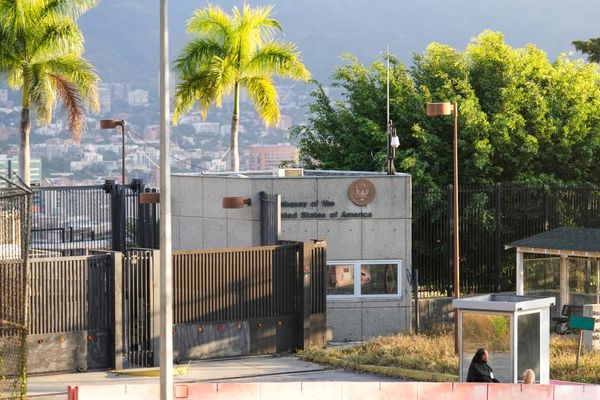
Venezuela has secured the funds to fully pay for coronavirus vaccines via the Covax system, president Nicolás Maduro said
That is it from me, Martin Belam, for today. I will be back again tomorrow morning. Nadeem Badshah will be along just now to take you through the next few hours. If you prefer your Covid news with a distinctly UK focus, then Jedidajah Otte has that over here.
Updated
Europe’s vaccination campaign, painfully slow in the first quarter, is finally starting to pick up as supplies increase, with a rolling seven-day average of injections per 100 people approaching, and sometimes surpassing, that of the UK.
Both Spain and Germany are administering more daily shots than Britain, whose seven-day vaccination rate has plunged from 0.89 per 100 people on 21 March to 0.5, according to OurWorldinData, due to temporary supply shortages.

As a whole, the 27-member EU is now administering 0.43 shots per 100 people. The UK’s cumulative total remains far higher, with 47% of the population having received at least one shot against 13% across the EU.
In Germany, the number of people receiving a first shot leaped by more than 25% within a week to 12.7 million, with a new record of 720,000 on Thursday helping the country report a rolling seven-day average of 0.51 per 100 people. Health minister Jens Spahn said the country could soon be administering 3.5m doses a week.
Spain’s record 450,000 doses administered on Thursday has helped boost its average to 0.55, while France, which managed 510,000 doses on Friday and whose rolling seven-day average is now 0.43, hit its first vaccination target of giving a first dose to 10m people by 15 April more than a week early.
The vaccination campaign on the continent has so far struggled mainly because of a shortage of vaccines, but is expecting a total of 370m doses from five different manufacturers between now and June.
European commission sources have said that to avoid future shortfalls, the bloc will soon launch a tender tender for up to 1.8bn more mRNA vaccine doses of the type produced by Pfizer/BioNTech and Moderna, with fixed monthly delivery schedules.
Updated
Greek high schools reopen after five months of closure
Greece’s high schools reopened today after a five-month closure to curb coronavirus infections. Precautions in place include virus tests for students and teachers twice per week, the education minister said.
High school classes had been held online since 7 November. Monday’s reopening saw some schools hold classes outdoors. Agence France-Presse note that primary and secondary schools, which had briefly reopened, remain closed across the country.
Every Monday and Thursday, high school students and teachers will have to be screened for Covid-19 with self-tests available free in pharmacies. Students and teachers must also wear masks, recess will be staggered to limit crowds and canteens will be closed.

“These self-tests will be a valuable tool,” Education Minister Niki Kerameus told ERT television. A positive self-test will result in a 48-hour quarantine and another screening in a clinic. A second positive test will lead to 14 days of quarantine.
As of Sunday evening, 236 students and 172 teachers had tested positive with the self-tests while not showing symptoms, Star television reported.

With the country still in the grip of the pandemic, the reopening has worried some health experts. Greece has reported more than 293,000 infections and over 8,800 deaths since the start of the pandemic. On Sunday, 1,718 new cases were reported, and hospitals in Athens and Thessaloniki remain overcrowded.
Denmark’s Health Minister has declared today “the big vaccine day,” with 100,000 people to be vaccinated in one day as officials test the system ahead of a June rollout, where four times as many people as that will be vaccinated each day.
The shots will be given in 68 inoculation centers across the country of nearly 6 million. The number will be lower Tuesday.
Minister Magnus Heunicke said Danes will “set a new record,” and urged people to arrive on time and have high spirits.

The bulk of the vaccination will be in Copenhagen and surroundings, where one-third of the population lives. At the Oeksnehallen exhibition center in downtown Copenhagen where makeshift vaccination booths have been installed inside the building that once housed cattle to be slaughtered, the plan is to inoculate 6,000 people.
“There will be no breaks and it will run continuously with people taking turns,” head of the Oeksnehallen vaccination center Lone Munk Andersen told broadcaster TV2. “There should not be a single booth empty.”

Associated Press report that so far 868,461 people, or nearly 15% of the population, have received the first shot and 445,566 people, or nearly 8%, have had both.
Soeren Riis Paludan, a professor of virology with the Aarhus University in Denmark’s second largest city told Danish broadcaster DR that when Danes get vaccinated “the basis for shutting down society will soon disappear.”
Updated
If you are after UK-based Covid news, then my colleague Jedidajah Otte has recently fired up that live blog for today. You can find it over here.
I’ll be with you here still for global coronavirus developments.
Vaccination level in Germany reaches 15% of the population
Germany is finding itself stuck in a tight spot. The country’s vaccination roll-out has finally swung into gear: over the course of the last seven days Germany administered jabs at a higher rate even than the UK, and by Monday morning it has given at least one dose to 15% of the population.
But intensive care units are filling up at an alarming rate with increasingly younger patients, and hospital workers complain of exhaustion.
A lag of reported new cases over the Easter break made it difficult to establish an accurate picture of the dynamic behind the country’s third wave, but latest figures from Germany’s disease control agency leave little room for doubt that infection rates are climbing steeply. The Robert Koch Institute reported 13,245 new Covid-19 cases on Monday, a 58% week-on-week rise.
Angela Merkel has made it clear that she wants to use a strict lockdown to squash the country’s third wave until immunisation rates are starting to show an effect. A change to the pandemic law, which Merkel’s government hopes to push through parliament by Friday, would allow her to enforce a uniform “emergency brake” mechanism with curfews and school closures across the country.
But with national elections in September on the horizon political consensus is hard to come by, and some parties, including the liberal FDP, are already flagging their resistance against the bill.
Japan expands vaccination programme to people aged over 64
Japan has expanded its vaccination programme to people aged over 64, amid concern that the country is entering a fourth wave of coronavirus infections.
Japan, which has fared better than many countries in terms of infections and deaths, has been slow to administer jabs. Less than 1% of its population have been inoculated since the rollout began in mid-February, with doses so far reserved for frontline medical workers.
The government has said it plans to secure enough shots of the Pfizer vaccine – it has yet to approve those manufactured by AstraZeneca and Moderna – for about 36 million older people by the end of June.
With just over 100 days to go until the start of the Tokyo 2020 Olympics, some areas of Japan are battling new outbreaks, weeks after the government fully lifted a state of emergency.
Osaka – now Japan’s Covid-19 hotspot – Tokyo, Kyoto and other cities are now subject to new “elevated” measures that fall just short of a full state of emergency.
Tokyo’s governor, Yuriko Koike, can mandate shorter opening hours for bars and restaurants, punish violators and compensate those who comply. The measures will remain in place until 11 May.
Koike has also asked residents to avoid nonessential trips and to continue social distancing. “We are still unarmed as we fight against the resurgence of the infections,” she said, referring to the low number of vaccinations. “Please follow the guidelines.”
Critics have said that the government is hoping to avoid declaring a third state of emergency during the countdown to the postponed Olympics, which are due to open on 23 July.
Japan has still to administer vaccinations to most of its 4.8 million medical workers. About 1.1 million – equivalent to 0.87% of the population – had received at least one dose as of last Friday, according to the health ministry.
Jabs for older residents are proceeding at a similarly slow pace, and large sections of the general population are expected to remain unprotected by the time the Games open.
The Kyodo news agency reported that vaccine deliveries to all 47 of Japan’s prefectures started last week, but added that most were to initially receive just two boxes each - with each box containing enough vaccine to administer two doses to 500 people.
One of the first people to be given the vaccine on Monday was 100-year-old Kesaku Takamizawa, who lives in the central prefecture of Nagano. “All the worry that I was carrying around inside my head has gone,” he told Kyodo.
Updated
There will naturally be a huge focus on changes to lockdown rules in England today, but worth noting that these aren’t the only changes to rules in the UK.
Wales is also enjoying renewed freedoms, with non-essential retail reopened and border restrictions eased to permit travel again with the rest of the UK and Ireland.
Remaining school pupils are returning to face-to-face teaching in Wales and Northern Ireland, in moves being echoed in Scotland as some pupils return from their Easter breaks.
David Hughes and Sam Blewett note for PA Media that the “stay at home” order in Northern Ireland has also ended, as the number of people permitted to meet outdoors increased from six to 10.
Updated
The Czech Republic reported its lowest daily tally of new Covid-19 cases since September today, the same day a six-month state of emergency expired and many pupils return to the classroom.
The central European country was badly hit by the latest wave of the Covid-19 pandemic, but the Czech government appears to have managed to slow the spread of infections by imposing its toughest lockdown yet.

Students in grades 1-5 were set to return to school on Monday, and restrictions on movement eased with people allowed once more to travel outside their home districts. Czech students have faced the longest school closures in the European Union.

The government has kept non-essential shops, restaurants and sport and entertainment centres shut almost continuously since October, except for a brief reopening in December that was quickly reversed amid another surge in cases. Jason Hovet reports for Reuters that the state is looking to take a slower approach to relaxing measures this time.
The country of 10.7 million has reported a total 1.58 million Covid-19 cases since the pandemic started in March 2020 and deaths have neared 28,000, the highest per-capita rate in the world, according to Our World in Data.
Updated
As mentioned earlier, former British prime minister Gordon Brown has written for us this morning, saying that the G7 must push for global vaccination. He says:
As things stand, affluent countries accounting for 18% of the world’s population have bought 4.6bn doses – 60% of confirmed orders. About 780m vaccines have been administered to date, but less than 1% of the population of sub-Saharan Africa have been injected. Immunising the west but only a fraction of the developing world is already fuelling allegations of “vaccine apartheid”, and will leave Covid-19 spreading, mutating and threatening the lives and livelihoods of us all for years to come.
Vaccine diplomacy, whereby nations selectively donate vaccines to friendly allies, is little more than “pinprick” diplomacy, because only the favoured few will be Covid-free. So to reach the greatest number of people in the shortest time across the widest geography, the G7 must lead a herculean mobilisation to bring together the proven skills of global pharmaceutical and logistic companies, national militaries, and local health workers.
Home to the major vaccine developers, the G7 countries are in the best position to agree to transfer vaccine technology to low-income countries. The temporary waiver of patents proposed by the People’s Vaccine Alliance will help Africa create its own manufacturing facilities and end months of vaccine nationalism.
The bigger barrier ahead will not be the shortage of vaccines, however, but the shortage of money to pay for them. We need to spend now to save lives, and we need to spend tomorrow to carry on vaccinating each year until the disease no longer claims lives. And this will require at least $30bn (£22bn) a year, a bill no one so far seems willing to fully underwrite.
The traditional international crisis response – the G7 passing round the begging bowl – will not yield the funds on the scale needed. The global equivalent of a charity fundraiser is no substitute for countries agreeing an equitable sharing of the burden. Lives should not be at the mercy of uncertain and often erratic patterns of giving. And so it is imperative we move on from this history of unpredictable funding and the predictable loss of life.
We cannot afford to not act. The funds needed are a fraction of the trillions Covid is costing us. They are less than 2% of Biden’s $1.9tn American Rescue Plan Act. Indeed, it would benefit the US or Europe to underwrite the first $30bn – not as an act of charity, but as self-insurance to protect national interests.
Read more here: Gordon Brown – The G7 must push for global vaccination. Here’s how it could do it
Bangladesh authorities on Monday ordered an eight-day closure of all offices and international and domestic transport, as coronavirus cases hit a new high. The measures, which will virtually seal off the country, will start Wednesday, said a government statement.
Agence France-Presse report that the south Asian nation of 160 million people has recorded 684,756 cases and 9,739 deaths, but the number of daily cases has increased sevenfold in a month. Hospitals in cities across the country say they are being overwhelmed by the new cases, and daily deaths have more than doubled.
“All government, semi-government, autonomous and private office and financial institutions will be closed,” said a cabinet statement.
International and domestic flights will be halted along with maritime, rail and bus services, the order added. All stores - except those supplying food - will be shut, but authorities will allow factories to remain open if companies can organise their own transport.
The cabinet said the closure would end at midnight on 21 April.
“There is no alternative now to this in order to curb the Covid-19 surge,” Farhad Hossain, junior minister for public administration, said ahead of the clampdown announcement.
Bangladesh opposition leader Khaleda Zia, 74, tested positive for the coronavirus Sunday despite being under house detention. The two-time former prime minister has been serving a 10-year jail term for corruption but has been allowed to stay under surveillance at her Dhaka home since last year.
Updated
There has been a somewhat more cautious tone from Sir David King, former chief scientific adviser to the government, who raised concerns about the example of a third wave of infections in Chile, where a significant proportion of the population has been vaccinated.
Asked about the easing of lockdown restrictions in England, PA Media reports he told Sky News: “From the point of view of the population itself, we’re all dying to get out of lockdown. From the point of view of the epidemic, I think it’s all a little bit more worrying.”
He added: “Chile is a country where the rate of vaccination amongst the population was third highest in the world – they were ahead of us in terms of the number of people who have had the vaccine – and they’re suddenly now into a third wave.
“They now have 7,600 cases a day and the total number of people in Chile now who have Covid-19 is over a million .
“So what has happened in Chile is very, very surprising – a high percentage of people have been vaccinated, but here’s a variant of the disease coming through the country.”
He also told Sky News he supported a proposed traffic light system for foreign travel, adding: “So if we’re talking about travelling directly to a country with a very low rate of the disease, and if the proper precautions are taken in that you’re fully tested or fully vaccinated, then I think it is quite feasible to allow people to travel overseas.
Ministers say that from 17 May at the earliest international travel for leisure may be able to resume, and that countries would be placed in a traffic light system, with green, amber and red lists that would set out the rules for things such as testing and quarantining for those returning to England:
Green: passengers will not need to quarantine on return (unless they receive a positive result) but must take a pre-departure test as well as a PCR test on arrival back in the UK.
Amber: travellers will need to quarantine for 10 days, as well as taking a pre-departure test and two PCR tests (on day two and day eight) with the option of paying for a private Covid-19 test on day five (the test to release scheme) to end self-isolation early.
Red: arrivals will be subject to restrictions currently in place for red list countries, which include a 10-day stay in a managed quarantine hotel, as well as pre-departure testing and and two PCR tests.
The government says it is too early to predict which countries will be on which list over the summer. It has promised to set out “by early May” which countries will fall into which category, as well as confirming whether international travel can definitely resume from 17 May.
Which list a country is put on will depend on a number of factors including the percentage of the population that has been vaccinated, infection rates and the prevalence of “variants of concern”.
The plans have already been criticised by some in the travel industry, who said they risked creating a period when only the wealthy could afford to travel.
“But I think it should be on a very restricted basis. I think we know that the South African variant, for example, has come into this country. There’s a significant take-up of it here. And the Brazilian variant – I don’t believe we can keep it out of the country.”
Updated
Another voice from business talking about England’s steps to reopen the economy from lockdown today is Julian Metcalfe, CEO of Itsu restaurants.
PA Media reports he told the BBC’s Today programme that returning to retail was “scary” but there was no reason the industry could not come back with “strength and positivity”.
“We take it incredibly seriously and we’re now in a good position to offer a safe environment. Of course, everyone is a bit nervous, it’s scary. There’s a lot to be grateful for, the vaccination programme in our country is little short of remarkable.
Asked if he expected as many customers as before the pandemic, he said: “I hope more as we get our confidence back. There’s no reason we can’t come back with real strength and positivity. We have to rebuild our confidence and our energies, now more than ever before.”
Metcalfe said he did not think the government roadmap to ease restrictions should be sped up or changed. “It’s slow but it’s purposeful and that’s what everyone desperately needs, and what we need is clarity,” he told Today.
“I don’t think they should change it now, I think we should stick to it. We all have a role to play but I don’t think they should suddenly change the rules for the hundredth time.
“Human beings love being together, but we’ll be OK, we’ll thrive as long as we do our jobs beautifully.”
Updated
France begins vaccinating the over-55s today after meeting its target of 10m vaccines delivered by the middle of April a week early. As of Saturday, 10.75 million people in France had received their first dose and 3.68m their second. The tracking site CovidTracker/VaccineTracker suggests France is administering vaccines almost up to the limit of doses it has received.
From today, French pharmacies are authorised to sell new home Covid tests. They will cost €6 for the moment, dropping to €5.20 from 15 May, and are supposed to be sold to those with Covid symptoms on whom they are more reliable and less likely to throw up a false negative.
Health workers and those looking after the elderly can get them for free. Doubts are being expressed about the usefulness of the “auto-tests”, but they are expected to be popular with the public as they involve a less invasive method of obtaining a sample from the nose than the usual PCR tests.
In the event of someone having a positive test, they will be expected to take a PCR test to identify any coronavirus variants. The health ministry has warned there may be a shortage of self-tests in pharmacies for the moment as most of the first delivery is being saved for the reopening of schools after the two-week half-term holidays at the beginning of May.
The French health minister, Olivier Véran, told the country’s main Sunday newspaper, Le Journal du Dimanche, that he was not worried about reports of public hesitancy over the AstraZeneca vaccine in France, pointing out that on Friday 157,000 people in France had received an AZ jab. The latest opinion polls show 70% of French people are planning to be vaccinated, up from just 40% in polls in January.
Monday also sees the first deliveries to France of the one-dose Johnson & Johnson vaccine with 200,000 doses, arriving one week earlier than planned. These will be distributed to pharmacies and GPs to administer.
Véran also announced an extension of the gap between the first and second doses of Pfizer and Moderna vaccines, from three to six weeks, while the gap between AZ doses remains at 12 weeks.
Updated
One thing that might dampen enthusiasm for reopening in England today – the good old British weather. Kevin Rawlinson reports:
The lifting of lockdown restrictions to allow people in England to use pub beer gardens and dine in the outdoor areas of restaurants is being met by snowfall, as a spring cold snap hits.
The inclement weather will come as a blow to thousands of businesses that were hoping to welcome back customers on Monday after months of restrictions.
Met office forecasters said southern England and much of Wales could expect outbreaks of rain, sleet and some snow on Monday, although this was predicted to clear through the morning, leaving sunny intervals and scattered showers.
Elsewhere in the UK, people were told to expect sunny periods and isolated wintry showers. The Met Office said temperatures were not expected to rise beyond single figures celsius.
A number of pubs with 24-hour licences opened as soon as they were allowed. The Kentish Belle,in south-east London opened at one minute past midnight on Monday until 3am. In Newcastle, the Switch bar and the Bank did the same despite temperatures dropping below freezing.
Boris Johnson said people should enjoy the new freedoms but remain wary of the risks. In a message hailing the latest stage of lockdown lifting, the prime minister said: “Today is a major step forward in our roadmap to freedom as venues such as shops, hairdressers, nail salons, outdoor attractions, and pubs and restaurants open once again,” he said.
“I’m sure it will be a huge relief for those business owners who have been closed for so long, and for everyone else it’s a chance to get back to doing some of the things we love and have missed.”
Read more of Kevin Rawlinson’s report here: Spring cold snap hits as England relaxes Covid lockdown restrictions
Chief executive of British Retail Consortium: shops 'excited and desperate' to welcome customers back
Helen Dickinson, chief executive of the British Retail Consortium, said it was a “big day” for reopening businesses, and that many were “excited and desperate” to welcome customers back.
“It’s a big day for the country and it’s a big day for all of these businesses reopening their doors today,” PA Media reports she told Sky News. “They are very excited and desperate to welcome their customers back with the focus on safety.”
Dickinson said retailers were used to preparing to reopen their doors, having experienced the process during previous lockdowns, but added that customers also had a “part to play”.
“Because they’ve been through this process before … they would have been ready the last week or the week before, and are just keen and enthusiastic to welcome us back,” she said.
“Members of the public have a part to play in following the signage, the guidance that we get given queueing if we need to … and all of the safety features that are in place. We have a role too.”
Updated
India now accounts for one in every six daily infections worldwide. A full opening of India’s economy after last year’s crippling lockdown, mass religious festivals and political rallies in states holding elections have worsened a second wave of infections, experts say.
In the northern city of Haridwar, nearly a million devotees thronged the banks of the Ganges, a river many Hindus consider holy, to join in the months-long ‘Kumbh Mela’ or pitcher festival, risking a surge in infections.

“The crowd here is surging … the police are continuously appealing to people to maintain social distancing,” police official Sanjay Gunjyal told Reuters at the site.
Few wore masks as they jostled for a dip in the waters on a day considered auspicious in the Hindu calendar.
Authorities have made virus tests mandatory for those entering the area, where officials said they were battling to hold back crowds.

Elections are also due in four big states this month, with Prime Minister Narendra Modi set to travel to the eastern state of West Bengal to address rallies that will draw thousands.
“With 1.2 million active cases, and the daily number reaching 200,000, it’s bizarre to have poll rallies and a full Kumbh Mela,” political commentator Shekhar Gupta said in a Twitter post. “This will take the virus deeper into villages and small towns. This is the calamity we dodged with a crippling lockdown in the first wave. Now we’re inviting it back.”
A death toll of 904 overnight was the highest since 18 October, taking the total figure to 170,179, data showed.
Updated
One place where vaccinations are definitely being made mandatory: if you work as border staff in New Zealand. Helen Livingstone reports for us:
Border workers have until the end of April to be vaccinated before being moved to lower risk roles, the prime minister, Jacinda Ardern, has said after a third worker from Auckland’s Grand Millenium managed isolation facility tested positive for Covid-19.
“We want everyone to be vaccinated on our frontline,” she told TVNZ’s Breakfast on Monday.
“From Monday through until the end of April, that becomes the final window where if people are not vaccinated in that period of time then they are redeployed, they are moved on. And that was always the point we had to get to.”
“We believe we have a health and safety obligation to people who are at the frontline in managed isolation,” she said.
Read more of Helen Livingstone’s report here: Ardern tells New Zealand border staff – get Covid vaccine now or be redeployed
US colleges hoping for a return to normalcy are weighing how far they should go in urging students to get the Covid-19 vaccine, including whether they should – or legally can – require it.
Universities including Rutgers, Brown, Cornell and Northeastern recently told students they must get vaccinated before returning to campus in the autumn. They hope to achieve herd immunity on campus, which they say would allow them to loosen spacing restrictions in classrooms and dorms.
But some colleges are leaving the decision to students, and others believe they can’t legally require vaccinations. At Virginia Tech, officials determined that they can’t because the US Food and Drug Administration has only allowed the emergency use of the vaccines and hasn’t given them its full approval.
Collin Binkley reports for Associated Press that the biggest clashes could come in states taking a stance against vaccination requirements.
In Florida, Republican governor Ron DeSantis this month banned all businesses from requiring customers to show proof of vaccination. The order raises questions about Nova Southeastern University’s plan to require students and staff to get vaccinated. The college’s president said he’s still confident in the plan, but he also promised to “respect the laws of our state and all federal directives”.
The governor of Texas, the country’s second-largest state, issued a similar order.
Many schools have launched vaccination blitzes to get students immunised before they leave for the summer. At some schools, the added requirement is meant to encourage holdouts and to build confidence that students and faculty will be safe on campus.
“It takes away any ambiguity about whether individuals should be vaccinated,” said Kenneth Henderson, the chancellor of Northeastern University in Boston. “It also provides a level of confidence for the entire community that we are taking all appropriate measures.”
Northeastern and other colleges requiring shots believe they’re on solid legal ground. It’s not unusual for colleges to require students to be vaccinated for other types of diseases, and a California court last year upheld a flu shot requirement at the University of California system.
But legal scholars say the Covid-19 vaccines’ emergency use status moves the issue to a legal gray area that’s likely to be challenged in court, and some colleges may take a more cautious approach to avoid litigation.
There’s a parallel debate about whether to require vaccination for faculty and staff, an issue that employers across the nation are grappling with. At the University of Notre Dame, one of the latest schools to require student vaccinations, shots are still optional for workers. Northeastern is considering whether to extend its mandate to employees.
Updated
Both the Summer Olympics and the Euro 2020 football tournament were postponed from last year to this, and question marks still remain over how both will manage to be held this summer.
Uefa’s plan to host Euro 2020 in 12 different cities across the continent made a lot more sense in an era before widespread international travel restrictions. Football’s European governing body has been pressuring the 12 host nations for the tournament to guarantee that fans will be able to attend. With Europe in the grip of a Covid wave, those promise have not yet been forthcoming.
Reuters report that Italy’s health minister has told newspaper la Repubblica in an interview published today that it is “premature” to decide whether Rome will still host the opening match of Euro 2020, but that Italy will make all efforts to keep the game.
Italy’s football federation had been hopeful of being able to have supporters in Rome’s Olympic Stadium, but on Wednesday, minutes of a government panel meeting noted it was not possible to confirm that at this stage.
Updated
Venezuela has secured the funds to fully pay for coronavirus vaccines via the Covax system, president Nicolás Maduro said on Sunday, a day after the country announced it had paid more than half the amount due.
Maduro’s government has for months said US sanctions block it from paying the $120m needed to obtain Covid-19 vaccines, but on Saturday said it had transferred $64m to the Switzerland-based GAVI Vaccine Alliance.
“We have already secured the rest to make 100% of the (payment) to the Covax system,” Maduro said in a televised speech. He said the government had been able to access funds that had been “kidnapped” by the US. “At the right moment, we will reveal where the money came from,” he said, without elaborating.
Reuters report that the opposition said Saturday’s announcement was evidence that sanctions do not prevent Maduro’s government from paying for vaccines.
Coronavirus cases have spiked in Venezuela in recent weeks, though numbers remain low compared to other countries. On Sunday, the government reported a total of 173,786 cases and 1,759 deaths. Venezuela has received 750,000 doses of vaccines supplied by countries such as Russia and China, which officials say have primarily been supplied to health workers.
Updated
Germany passes 3m coronavirus cases
That mention of the situation in northern Europe by the deputy assistant commissioner of London’s Metropolitan police is a good reminder that while there will be lots of upbeat headlines in England today, the situation remains desperately serious in countries not experiencing a respite in the number of Covid cases.
One of those is Germany, where AFP report that the number of Covid-19 infections there has crossed the 3 million mark for the first time, according to figures published today by the Robert Koch Institute disease control centre.
The total number of infections now stands at 3,011,513, with 78,452 deaths, the institute said. However the incidence rate over the past week, closely followed by authorities, was 136.4 per 100,000 inhabitants – below the level for tightening Covid-19 restrictions.
Germany remains gripped by rising infection rates, despite cultural venues, restaurants and leisure facilities having been closed for months. Health authorities warned Friday that hospitals could become overwhelmed without tougher national measures.
Chancellor Angela Merkel has said she intends to try and bring in new laws in order to make it easier to impose nationwide restrictions at the federal government level.
Updated
There are a lot of people urging caution today as some areas of public life in England are able to reopen. In London, PA report that the Metropolitan Police have said the force will be “stepping up” patrols in high footfall areas from Monday.
Jane Connors, the Met’s Deputy Assistant Commissioner, said: “The Met is ready to welcome back people to the streets of London. We will be stepping up our patrols to busy high footfall areas, to look out for everyone’s safety and to disrupt any criminal activity.”
The Metropolitan police have recently faced criticism for the heavy-handed policing of a vigil for Sarah Everard, which has contrasted with the approach taken to mourners gathering for Prince Philip. Connors has said there will potentially be action today against those ignoring the Covid restrictions that remain in place.
“Of course, where we need to take action against those who dangerously flout the rules we will do. While the case rate has declined in London, we have seen the concerning position in northern Europe. It is important that we all stick to the rules so further lockdowns, or restrictions, are avoided.”
Good morning from London, it’s Martin Belam here. Here’s a quick recap of what changes in England today:
Non-essential retail, hair and nail salons, and public buildings such as libraries and commercial art galleries can reopen. Most outdoor venues can open, including pubs and restaurants, but only for outdoor tables and beer gardens. Customers will have to be seated but there will be no need to have a meal with alcohol.
Also reopening are settings such as zoos and theme parks. However, social contact rules will still apply here, so no indoor mixing between households and limits on outdoor mixing. Indoor leisure facilities such as gyms and pools can also open, but again people can only go alone or with their own household. Reopening of holiday lets with no shared facilities is also allowed, but only for one household. Funerals can have up to 30 attendees – including Saturday’s funeral for Prince Philip – while weddings, receptions and wakes can have 15.
And if you’re lucky enough to be down in south Devon with some time on your hands over the next few days, our travel team have just published a quick guide to 10 of the best pubs in the area:
Updated
That’s it from me, Helen Sullivan, for today.
Happy lockdown easing day to our readers in England. I hope you made as good use of your time at home as this girl:
How did she manage to make the cats to sit on the chairs like that LOOOL https://t.co/bivxyAVeC3
— SamaEl (@Sxma__El) April 10, 2021
Preventing poor countries suffering from vaccine “apartheid” will require the G7 group of rich nations to commit $30bn (£22bn) a year to a global immunisation drive, Gordon Brown has said.
The former Labour prime minister said the UK should use June’s G7 summit in Cornwall to rekindle the moral purpose of the Make Poverty History campaign of 2005, paying for its share of the new fund by reversing the government’s “misguided” cut to the foreign aid budget.
Brown, who has written for the Guardian outlining his plan for a $30bn-a-year mass vaccination programme, said he was alarmed that vaccination in Africa had barely begun and warned that this would have repercussions for rich nations:
Australia scraps Covid vaccination deadline
Australian Prime Minister Scott Morrison says there are too many uncertainties to set a new target for vaccinating Australians against Covid-19, as the government moves to shore up confidence in the trouble-plagued rollout.
The prime minister said while he hoped all Australians could have a first dose of vaccination by the end of the year, Morrison said on Sunday there was no new timetable to replace the previous October target.
It is the latest retreat on the government’s vaccine rollout strategy which has been beset by delays, confusion and supply challenges since Australia first locked in agreements with manufacturers last year and declared the country “at the front of the queue”.
“The government has also not set, nor has any plans to set any new targets for completing first doses,” Morrison said on Facebook on Sunday afternoon:
India sees record case rise, overtaking Brazil total
India reported a record 168,912 Covid-19 infections overnight, data from the health ministry showed on Monday, overtaking Brazil to become the second-most affected country globally by the coronavirus.
Reuters: India’s overall tally reached 13.53 million, surpassing Brazil’s 13.45 million cases, according to data compiled by Reuters. The United States led the global tally with 31.2 million cases.
Deaths in India stood at 904, taking the total to 170,179, data showed.
Warning as English pub gardens reopen
People should enjoy new freedoms but remain wary of the risks, Boris Johnson has said, as beer gardens, alfresco restaurants, shops and salons prepared to reopen across England on Monday for the first time in almost four months.
The prime minister hailed the reopening – a major and “irreversible” step in the roadmap of easing restrictions – as “a chance to get back to doing some of the things we love and have missed”.
It came as just seven coronavirus deaths were reported in the UK within 28 days of a positive test, the lowest number since mid-September. There were also 1,730 people who tested positive, while 221 were admitted to hospital, where there are 2,862 Covid patients overall. The number of vaccine doses distributed is nearing 40m, including more than 7m second doses. More than 400,000 second doses were given in the UK for the fourth consecutive day on Saturday, along with 111,109 first doses:
Summary
Hello and welcome to today’s live coverage of the coronavirus pandemic with me, Helen Sullivan.
England is waking up to eased Covid restrictions, Boris Johnson saying people should enjoy their new freedoms but remain wary of the risks.
Beer gardens, alfresco restaurants, shops and salons will reopen today for first time in almost four months.
Meanwhile India reported a record 168,912 Covid-19 infections overnight, data from the health ministry showed on Monday, overtaking Brazil to become the second-most affected country globally by the coronavirus.
Here are the other key recent developments:
- France will make vaccinations with the AstraZeneca and Johnson & Johnson jabs available to all citizens over the age of 55 on Monday.
- The Czech Republic’s state of emergency and the associated ban for people to move outside their home districts will end at midnight from Sunday to Monday, alongside the scrapping of a night curfew and a partial reopening of schools, Czech Radio reports.
- Italy reported 331 coronavirus-related deaths on Sunday, compared with 344 the day before, the health ministry said, while the daily tally of new infections fell to 15,746 from 17,567 the day before.
- The UK has distributed a further 586,339 Covid-19 vaccines, according to daily data published on Sunday. The UK has now given 32.12 million people a first dose of the vaccine and 7.47 million a second dose, putting it on track to start reopening its economy.
- The Dutch government on Sunday dashed hopes of an early easing of lockdown, saying a night-time curfew and other restrictions would remain until at least 28 April as daily infections rose to a two-week high.
- About 80% of Sicilians are refusing to be inoculated against Covid-19 with the AstraZeneca vaccine, Sicily’s governor said on Sunday.
-
China’s top disease control official has admitted that the efficacy of the country’s domestically produced vaccines is low as it emerged the authorities are considering mixing them to try to offer greater protection against coronavirus.
- Mexico’s government reported 1,793 new confirmed cases of the coronavirus and 126 more fatalities, according to new data from the health ministry, bringing the total to 2,280,213 infections and 209,338 deaths.