We’ve launched a new blog at the link below:
Hi, Helen Sullivan joining you now. I’ll be taking you through the latest news from around the world for the next few hours.
Please do get in touch with questions, comments, news and tips on Twitter @helenrsullivan or via email: helen.sullivan@theguardian.com.
Updated
President Trump’s campaign invites for rallies now includes a coronavirus disclaimer, CNN notes.
A warning is now included when you sign up for Trump rally tickets: "By attending the Rally, you & any guests voluntarily assume all risks related to exposure to COVID-19 & agree not to hold Donald J. Trump for President, Inc.; BOK Center; ASM Global; or any of affiliates..." pic.twitter.com/qvbS0UYDQC
— Kaitlan Collins (@kaitlancollins) June 11, 2020
Organisers of the Coachella music festival said that the event would no longer take place this year because of the coronavirus pandemic but announced new dates for April 2021.
The event in California and its sister event Stagecoach for country music were rescheduled earlier this year from April until October.
But officials in Riverside County on Wednesday cancelled the October event because of continuing concerns over Covid-19.
“We have every intention of returning in 2021. As of now, Coachella weekend one will take place April 9-11, 2021 and weekend two will be April 16-18, 2021. Stagecoach is set for April 23-25, 2021,” organisers Goldenvoice said in a statement on Thursday.
It said details of the 2021 lineup would be announced at a later date and that tickets sold for 2020 would be honored in 2021.
The 2020 lineup was to have included Frank Ocean, Rage Against the Machine, and Travis Scott.
The Trump administration does not have to issue an emergency rule requiring employers to protect workers from the coronavirus, a federal appeals court ruled.
The unanimous ruling by a three-judge panel of the U.S. Court of Appeals for the District of Columbia Circuit declared that the Labor Department’s workplace safety arm reasonably determined that an emergency rule “is not necessary at this time.”
A top labour union sued the Occupational Health and Safety Administration last month seeking to compel it to issue an emergency temporary standard on the coronavirus.
The AFL-CIO said in filing the suit that tens of thousands of workers have been infected on the job through exposure to infected patients, co-workers and unscreened members of the public. As the economy reopens and people return to work, person-to-person contact will increase and an already “shocking number of infections and deaths among workers will rise,” the union said.
In its two-page ruling, the appeals court said OSHA is authorized to issue an emergency temporary standard, or ETS, if it determines that employees are exposed to grave danger from a new hazard in the workplace, and that an emergency rule is needed to protect them from that danger.
The decision not to issue an ETS “is entitled to considerable deference,’’ the court said.
“In light of the unprecedented nature of the COVID-19 pandemic, as well as the regulatory tools that the OSHA has at its disposal to ensure that employers are maintaining hazard-free work environments, OSHA reasonably determined that an ETS is not necessary at this time,’’ the ruling said.
The ruling was signed by Judges Karen LeCraft Henderson, Robert Wilkins and Neomi Rao. Henderson and Rao were appointed by Republican presidents and Wilkins by a Democrat.
The Labor Department said in a statement Thursday that officials were pleased at the ruling, which backed its contention that existing rules and regulations are protecting Americas workers and that an emergency temporary standard is not needed.
“OSHA will continue to enforce the law and offer guidance to employers and employees to keep Americas workplaces safe, said the statement, issued by Loren Sweatt, a top Labor Department official who oversees OSHA, and Kate OScannlain, the department’s top lawyer.
OSHA’s performance came under fire at a contentious House hearing last month, in which Democrats accused the agency of being largely invisible during the pandemic.
Instead of an emergency standard, OSHA has relied on voluntary guidance that recommends companies erect physical barriers, enforce social distancing and install more hand-sanitizing stations, among other steps.
But the guidance is not mandatory, and Covid-19 cases have spiked at meatpacking plants, prisons, nursing homes and other workplaces deemed essential during the pandemic.
AFL-CIO President Richard Trumka said he was disappointed that three federal judges “did not deem the lives of Americas workers worthy of holding an argument or issuing a full opinion.”
“The post-it length response to the union’s lawsuit acknowledges the unprecedented” nature of the coronavirus pandemic, “but repeats the false claim by Big Business that the Occupational Safety and Health Administration already has done what is needed to protect workers,’’ Trumka said in a statement.
More than two million Americans have been infected with Covid-19, and more than 110,000 have died, according a count compiled by Johns Hopkins University.

Updated
Twitter said it removed more than 170,000 accounts tied to a Beijing-backed influence operation that deceptively spread messages favorable to the Chinese government, including about coronavirus.
The company suspended a core network of 23,750 highly active accounts, as well as a larger network of about 150,000 “amplifier” accounts used to boost the core accounts’ content.
Twitter, along with researchers who analyzed the accounts, said the network was largely an echo chamber of fake accounts without much further traction.
The company also removed two smaller state-backed operations which it attributed to Russia and Turkey, both focused on domestic audiences.
Twitter said the Chinese network had links to an earlier state-backed operation dismantled last year by Twitter, Facebook and Google’s YouTube that had been pushing misleading narratives about political dynamics in Hong Kong.
The new operation likewise focused heavily on Hong Kong, but also promoted messages about the coronavirus pandemic, exiled Chinese billionaire Guo Wengui and Taiwan, the researchers said.
Renee DiResta, at the Stanford Internet Observatory, said the network’s coronavirus activity ramped up in late January, as the outbreak spread beyond China, and spiked in March.
“Accounts praised China’s response to the virus, while also using the pandemic to antagonise the United States and Hong Kong activists”, she said.
Open-source researchers at Graphika and Bellingcat had earlier flagged the re-emergence of the so-called “Spamouflage Dragon” network, after it went dormant following the companies’ takedowns last summer.
The US State Department said in May it had found a network of inauthentic Twitter accounts with “highly probable” linkages to China disseminating false coronavirus claims.
Twitter pushed back on the assertions at the time, saying the 5,000 accounts the agency identified included legitimate non-governmental organizations and journalists.
A Twitter spokeswoman on Thursday said the network it removed was not related to what the State Department had identified.
Oscar-winning Mexican directors Guillermo del Toro and Alejandro González Iñárritu joined actress Salma Hayek to set up a fund to help support movie industry workers out of work due to the pandemic.
The Mexican Academy of Cinema Arts and Sciences announced the fund Thursday.
González Iñárritu spoke via a video call.
“This was an act of solidarity with our colleagues in this industry, without asking anybody else besides ourselves”, Iñárritu said.
The fund has raised about $440,000 so far, and more donations are expected. Each beneficiary will get a one-time payment of about $885.
The money will go first to technical workers like set, costume, sound and visual employees left without work after most productions stopped filming amid the pandemic.
First in line will be those who are suffering health problems or who are sole breadwinners.
La Corriente del Golfo, a company founded by Gael García Bernal and Diego Luna, also contributed to the fund, as did many other Mexican and international production companies.
The Academy estimates that about 30,000 movie production workers have lost their incomes as a result of the industry shut-down.
The government and industry leaders have not announced any date for resuming production.
Saudi Arabia is to resume sports activities behind closed doors from June 21, according to state media.
It includes returning to training. Playing matches will start after August 4th with decisions left to each sport’s union.
Updated

The Duke of Cambridge has warned that society faces mental health “repercussions” from Covid-19 as the FA Cup Final in England was renamed after his campaign supporting football fans.
Prince William believes the coronavirus outbreak, which has resulted in tens of thousands of deaths and left many people isolated by the lockdown, will cause psychological problems in the future.
His comments were followed by the Football Association’s (FA) announcement this year’s final would be renamed from the Emirates to the Heads Up FA Cup Final, after the duke’s Heads Up initiative which aims to raise awareness of mental health and encourage football supporters to speak about their problems or support a fellow fan.
In a video call to Arsenal football club head coach Mikel Arteta and some of his staff and players, William said: “I’m really pleased that you guys are all coming back to football soon.
“And, as you can see behind me, I’ve got the FA Cup, it’s going to be named the Heads Up FA Cup - which is great news. So we’re going to really use the final as a moment to promote good, positive mental health for everyone.”
Arteta, who contracted Covid-19 in March, said of players’ mental health during coronavirus: “You have to create a safe environment for them to be able to talk to you directly without feeling judged, or (worrying) whether that’s going to have consequences for them, whether they’re going to play or not, or my feelings towards them.
“This is what I’ve been trying to do over the last 12 weeks, by trying to talk individually so they can raise those feelings, their issues, and we can build the club culture that I want, which is based on respect.”

Updated
Air Canada’s chief executive officer, Calin Rovinescu, has urged the Canadian government to relax travel restrictions as they have been hurting the company’s sales, Bloomberg News reported.
Rovinescu called the government’s curbs on travelers “disproportionate” as the COVID-19 pandemic was easing in many parts of the country.
“Enable us to do some reasonable amounts of business,” he said, according to the report, while speaking on a webcast with publishing and event production company Aviation Week.
Rovinescu’s remarks were in the context of a letter sent to prime minister, Justin Trudeau, from the Canadian travel and tourism industry, calling for a national plan to cut back pandemic travel restrictions, Air Canada said.
Canada and the United States are set to extend a ban on non-essential travel to late July as both countries seek to control the spread of the new coronavirus, Reuters reported on Tuesday.
Airlines, including Air Canada, have been among the worst hit as coronavirus-led travel bans resulted in thousands of flight cancellations, forcing carriers to cut jobs and costs as revenue dried up.
Updated
Australia’s prime minister Scott Morrison will discuss relaxing Covid-19 measures.
Scott Morrison and premiers to discuss easing Covid-19 restrictions and opening borders, with @danielhurstbne #auspol https://t.co/BnXP8qYbW5
— Katharine Murphy (@murpharoo) June 11, 2020
Brazil passes 800,000 coronavirus cases, reports more than 40,000 deaths
Brazil reported a total of 802,828 confirmed cases of coronavirus on Thursday, with 30,412 new infections in the last 24 hours in the world’s second worst outbreak after the United States.
With another 1,239 fatalities, the death toll in Brazil has reached 40,919, the health ministry said, the world’s third highest after the United States and the UK.
Of the total cases of Covid-19, 345,595 have recovered, the ministry said.
There are calls for a Republican lawmaker to resign after he questioned on the Senate floor if the “coloured population” is contracting coronavirus at disproportionate rates because they do not wash their hands as well as other groups.
The American Civil Liberties Union called for GOP Sen. Steve Huffman to step down from office following his remarks that were made during a hearing for a resolution to declare racism a public health crisis.
Huffman, who is also a Dayton-area emergency room physician, caused controversy after he questioned Angela Dawson, executive director of the Ohio Commission of Minority Health, on Tuesday over why the COVID-19 rates for black Ohioans were higher than other populations.
“Could it just be that African Americans or the coloured population do not wash their hands as well as other groups? Or wear masks? Or do not socially distance themselves?” Huffman asked during Senate testimony.
“Could that just be the explanation of why theres a higher incidence?
Dawson, who is black, responded: “That is not the opinion of leading medical experts in this country.”
Dawson was among a number of people testifying in support for the resolution that would establish a variety of resources to address racism in the state.
Shibani Chettri, an epidemiology PhD student and researcher at Ohio State University, also testified Tuesday as a proponent for the resolution and said witnessing Huffman’s comments was egregious.
“This really brings attention to how we need to do a better job of addressing pervasive racism in health care if a sitting senator and medical professional can ask these sort of patronizing and racist questions”, Chettri said.
In a statement, Huffman said he regretted how his question was perceived.
“I asked a question in an unintentionally awkward way that was perceived as hurtful and was exactly the opposite of what I meant,” the senator said.
“I was trying to focus on why Covid-19 affects people of color at a higher rate since we really do not know all the reasons.”
Friday’s UK edition of The Guardian.
GUARDIAN: Tensions rise over race as more statues are targeted #TomorrowsPapersToday pic.twitter.com/dMT42IvxUU
— Neil Henderson (@hendopolis) June 11, 2020
The UK has scrapped plans for full border checks with the EU on January 1st amid pressures caused by the pandemic, according to Friday’s edition of the Financial Times.
It reports that Cabinet Office minister, Michael Gove, has accepted that businesses cannot cope with problems caused by the outbreak and deal with post-Brexit disruption at the border and is considering a temporary light-touch system at ports.
FT UK: Post Brexit border controls to be limited after government U turn #TomorrowsPapersToday pic.twitter.com/x5ZE2AOqeG
— Neil Henderson (@hendopolis) June 11, 2020
Updated
There was no “patient zero” in the UK’s Covid-19 epidemic, according to research showing that the infection was introduced on at least 1,300 occasions.
The findings, from the Covid-19 Genomics UK consortium, have prompted further criticism that opportunities to suppress the spread of infection in February and March were missed.
The study by the consortium – which was set up to sequence the virus’s genetic code – shows that introduction of the virus into the UK peaked in mid-March at a time when infection rates were surging in European countries, but before the government clamped down on non-essential travel. Had travel restrictions and quarantine requirements been introduced a week earlier, overall case numbers in the UK may have been far lower, critics say.
Read the full story here
British Airways is selling some of its multi-million-pound art collection to raise cash to help it through the pandemic.
The collection includes pieces by Damien Hirst, Bridget Riley and Peter Doig with one work believed to have been valued at more than £1 million.
It is understood at least 10 pieces have been identified for sale by the airline.
Madeleine McCann’s grandmother has died of suspected coronavirus, just weeks before police announced a major breakthrough in the investigation into her missing granddaughter.
Eileen McCann, 80, passed away last month. Madeleine’s parents Kate and Gerry attended her socially distanced funeral in St Conval’s, East Renfrewshire in Scotland, near to where she lived, according to reports.
The family’s spokesman Clarence Mitchell said: “The family will definitely not be commenting on a private family matter.”
Updated
The total number of Covid-19 cases worldwide has reached 7,440,350, according to Johns Hopkins University.
The US has the highest number of cases with 2,013,940 followed by Brazil with 772,416.


A summary of today's global developments.
-
The global death toll from coronavirus is creeping towards 419,000. The figure stands at 418,392, according to Johns Hopkins University which is based in the US. The US is the country with the highest death toll which stands at 113,467.
- Brazilian officials have announced an agreement with China’s Sinovac Biotech to produce its coronavirus vaccine in Sao Paulo, where tests involving 9,000 volunteers are to begin next month.
- France’s coronavirus death toll rose by 27 on Thursday, versus an average daily increase of 50 over the last 15 days, to 29,346, the fifth-highest total in the world. On Wednesday, 23 Covid-19 deaths were reported.
- Only one of the six commissioners on Scott Morrison’s Covid-19 commission has volunteered to release their conflicts of interest, prompting calls for greater transparency from the publicly funded body. The Australian government has refused to release the conflict-of-interest declarations for members of its National Covid-19 Coordination Commission (NCCC), a prominent advisory body shaping non-health aspects of the Covid-19 strategy.
- Following criticism over officers not wearing face masks including from lawyers, protesters and the mayor, the New York Police Department have issued a bizarre response, claiming: “We can put our energy to better use”.
- Almost half of asymptomatic coronavirus carriers detected in Bahrain were found to pose a risk of spreading the virus to others, according to research by the country’s coronavirus taskforce.
- Deaths from Covid-19 in Italy climbed by 53 on Thursday against 71 the day before, Reuters reports, citing the country’s civil protection agency, pushing the total to death toll from the outbreak to 34,167.
- European Union officials and experts have said that Europe could face a surge of coronavirus infections in coming weeks as a result of the mass anti-racism protests that have spread across the continent.
Updated
Global equity markets fell sharply on Thursday in their worst sell-off since markets crashed in March, while safe-haven assets rose after the US Federal Reserve’s sobering outlook cast doubt on hopes for a V-shaped recovery from the coronavirus pandemic.
A broad rout slammed Wall Street, a 10-day winning streak in Asia came to a halt and major European bourses fell about 4%, ending a recent rally that had recouped much of the market’s deep losses and even drove the Nasdaq to record highs this week.
US Treasury and euro zone government bonds rallied after the Fed signaled it plans years of extraordinary support to counter the economic fallout from a still spreading pandemic.
US gold futures settled more than 1% higher and the dollar, yen and Swiss franc all benefited from safe-haven flows as Wall Street slumped.
The latest unemployment numbers from the Labor Department show 1.5 million more people applied for jobless benefits last week, bringing the total number of Americans who lost their jobs since mid-March to 44.2 million.
It comes as the number of Covid-19 cases in the US reached 2,012,767, according to Johns Hopkins University.
Sweden insists opening schools did not create virus outbreaks
Sweden’s decision to leave schools open for under-16s during the pandemic did not lead to any major outbreaks of Covid 19, according to Anna Ekstrom, the country’s education minister.
She said research by the Swedish Public Health Agency showed that Swedes working in education had not been more likely to be diagnosed with coronavirus than those in occupations.
Schools for older pupils and universities have been given the go-ahead to reopen from 15 June but for summer schools and courses only.
From Saturday, Swedes without any Covid-19 symptoms can travel within the country. On Sunday, elite sports can resume although no fans will be allowed to attend.

Updated
Surgeons in Chicago have given a new set of lungs to a young woman with severe lung damage from coronavirus.
Northwestern Medicine on Thursday announced the procedure, which took place last Friday.
Only a few other COVID-19 survivors, in China and Europe, have received lung transplants.
The unnamed Chicago patient is in her twenties and was on a ventilator and heart-lung machine for almost two months before her operation at Northwestern Memorial Hospital.
The 10-hour procedure was challenging because the virus had left her lungs full of holes and almost fused to the chest wall, said Dr. Ankit Bharat, who performed the operation.
She remains on a ventilator while her body heals but is well enough to visit with family via phone video and doctors say her chances for a normal life are good.
“We are anticipating that she will have a full recovery”, said Dr. Rade Tomic, medical director of the hospital’s lung transplant program.
The patient had recently moved to Chicago from North Carolina to be with her boyfriend.
Following widespread criticism over officers not wearing face masks including from lawyers, protesters and the mayor, the New York Police Department have issued a bizarre response, claiming: “We can put our energy to better use.”
The statement, sent out in response to questions over why the majority of officers do not appear to be wearing masks, referenced the weather, long days and uniforms, but makes no reference to coronavirus or public health in the middle of a pandemic.
“Perhaps it was the heat. Perhaps it was the 15-hour tours, wearing bullet resistant vests in the sun. Perhaps it was the helmets,” Sergeant Jessica McRorie, a spokesperson for the deputy commissioner for public information, said.
“With everything New York city has been through in the past two weeks and everything we are working towards together, we can put our energy to a better use.”
It comes after legal experts warned of “abysmal”conditions for protesters who they said were being unnecessarily arrested and detained for as long as 48 hours without access to masks, food and water.
The Legal Aid Society told the Guardian that police officers “rarely” wear masks and are endangering protesters’ health and safety.
On Sunday, the New York mayor, Bill de Blasio, called on NYPD officers to wear masks, accusing them of “flouting the rules”.

Updated
Brazil to produce Chinese vaccine: officials
Brazilian officials have announced an agreement with China’s Sinovac Biotech to produce its coronavirus vaccine in Sao Paulo, where tests involving 9,000 volunteers are to begin next month.
Brazil has the world’s second-highest coronavirus caseload after the United States, with more than 770,000 confirmed infections and nearly 40,000 deaths.
Sao Paulo governor, Joao Doria, told a news conference that the Butantan Institute, Brazil’s leading research center, had reached a technology transfer agreement with Sinovac Biotech.
“The studies show that the vaccine could be distributed by June 2021,” if tests prove conclusive, Doria said.
“This agreement would allow us to produce at large scale and immunize millions of Brazilians.”
Sinovac Biotech, one of four Chinese laboratories authorised to conduct clinical vaccine trials, said a month ago that it was prepared to produce 100 million doses of the vaccine under the commercial name Coronavac.
In Sao Paulo, 9,000 volunteers will be injected with doses of that vaccine beginning in mid-July, in the third and final phase of testing.
Last week, Sao Paulo State University announced that a vaccine being developed by the University of Oxford will be tested among 2,000 Brazilian volunteers beginning in mid-June.
Doria used the unveiling of the Sinovac Biotech deal, which he described as “historic,” to criticise President Jair Bolsonaro.
“We have had to overcome Brazil’s disagreements with China, with other countries and with organizations like the WHO,” he said, referring to criticism of China by several of Bolsonaro’s cabinet ministers.
In March, one of the president’s sons accused the Chinese “dictatorship” of hiding what it knew about the coronavirus, prompting Beijing to demand an apology.
Bolsonaro in recent days has also threatened to withdraw Brazil from the World Health Organization - as the United States did last month - accusing it of “ideological bias.”
Alluding to the controversy, Doria said, “The politicization of disease has never saved a life, to the contrary.”
Since the onset of the pandemic, Bolsonaro has clashed with state governors over stay-at-home measures that they have adopted to prevent the spread of the virus.
He has continued to press for a resumption of economic activities despite infections continuing to rise.
Updated
Toronto will make masks on public transport mandatory by 2nd July when the city’s transport agency approves the measure.
John Tory, the city’s mayor, said the mandate would help prevent the spread of Covid-19 as more people use the transport system as businesses reopen.
Transport officials will also distribute one million masks to residents, particularly those in low-income areas.
Updated
Egypt will open up its main seaside resorts for international flights and foreign tourists from 1 July, the cabinet said.
The country suspended regular international flights in March and shut down restaurants, hotels and cafes.
Apart from the resorts, other international flights will remain suspended until further notice.
Hotels were allowed to reopen for domestic tourists last month at reduced capacity if they met health protocols.
The areas opening up are southern Sinai, where the resorts of Sharm el-Sheikh and Dahab are located, Red Sea province, home to the Hurghada and Marsa Alam resorts, and Marsa Matrouh on the Mediterranean, the cabinet statement said.
The pandemic has shut down Egypt’s tourist sector, which the government says accounts for 5% of GDP.
Egypt also announced the relaxation of some restrictions during the next two weeks, including reducing the night curfew by an hour. Shop hours will be extended by an hour.
The country has reported 38,284 coronavirus cases as of Wednesday, including 1,342 deaths. New daily cases have stayed above 1,000 over the past two weeks.
Egypt is also considering reopening mosques in the least affected provinces starting from 1 July and will hold end-of-year exams for pupils in the final year of high school as scheduled later this month, state information minister, Osama Heikal, told a televised briefing.
Public beaches and parks will remain shut until the end of June, he added.
Updated
Chile has exceeded 154,000 confirmed cases of coronavirus and 2,600 deaths, one hundred days after the outbreak began and with the health service straining under increased admission numbers.
“It has been a very hard 100 days,” health minister, Jaime Mañalich, told reporters.
“June is going to be the toughest month in the fight against the disease.”
Health authorities reported 154,092 cases and 2,648 deaths so far.
Chile reported its first case of coronavirus on 3 March, brought by citizens returning from trips to Asia and Europe.
By mid-March the government had declared a state of catastrophe for three months, closed its borders, suspended school classes and introduced rolling quarantines for the worst-hit areas.
In mid-April, President Sebastian Pinera referenced a “new normal” and a plan to return Chileans to work and schools.
Updated
Three-and-a-half weeks from the Dominican Republic’s presidential election, leading candidate Luis Abinader said he and his wife had tested positive for coronavirus.
The country is one of the worst-affected by the coronavirus pandemic in the Caribbean and Latin America, with 1 out of every 500 people infected, and remains in a state of emergency.
Presidential and legislative elections are set to go ahead on 5 July, after being postponed from the original date of 16 May due to the outbreak.
Some 7.5 million Dominicans are expected to cast their ballot at home and abroad.
According to a poll by the company Mark Penn/Stagwell published at the end of May, Abinader is leading on 39%, two points above the ruling party candidate Gonzalo Castillo.
If neither candidate obtains an absolute majority in the first round, they will face a run-off on 26 July.
Abinader’s opponents were among those to publicly wish him a quick recovery.
“We ask God for his quick recovery and good health,” President Danilo Medina wrote on Twitter.
“You have all our support and solidarity.”

Updated
France reports further 27 deaths
France’s coronavirus death toll rose by 27 on Thursday, versus an average daily increase of 50 over the last 15 days, to 29,346, the fifth-highest total in the world.
On Wednesday, 23 Covid-19 deaths were reported.
Joe Biden has released a plan on how to reopen the US economy in a way that is “as effective and safe as possible” amid the coronavirus pandemic.
The plan calls for guaranteeing coronavirus testing and personal protective equipment for anyone called back to work, as well as paid leave for anyone who gets sick.
Biden also proposed creating a national contact tracing workforce and establishing best practices for schools and childcare facilities to reopen.
“A stronger, more effective reopening requires doing the work to keep workers safe, to restore consumer confidence, to support small businesses, to ensure seniors can participate, and to provide parents with the help they need to get back to work,” the Biden campaign said in a press release about the plan.
The presumptive Democratic presidential nominee criticized Trump last week for celebrating the unemployment rate slightly dropping to 13.3%, emphasizing that 20 million Americans were still out of work.
“Trump has abdicated any effective federal leadership, leaving state, tribal, and local officials to do their best without help from Washington,” the Biden campaign said. “With cases of Covid-19 still rising rapidly in parts of the country, Trump has effectively ceased to mobilize any national public health response.”

Updated
A report containing measures to protect ethnic minority groups in the UK from coronavirus has been drawn up for government but has yet to be published, the BBC reported.
Public Health England (PHE) published a review last week that said the virus kills people from ethnic minorities at disproportionately high rates, which was criticised by MPs for not including recommendations to protect these communities.
A senior academic said that a second report, containing safeguarding proposals, also existed. PHE said this report will now be published next week.
Raj Bhopal, an emeritus professor of public health, from the Usher Institute, at Edinburgh University, said the document was an “open secret” and had “every hallmark of a [government] report ready to go to the press”.
He told the BBC: “The public has expressed a great deal of disappointment as well as the people who were part of this consultation, asking, ‘Where have our voices gone?’
“Public trust saves lives. If you consult the public, you must publish the results.
“Otherwise, you’ve wasted their time, you’ve wasted your own time, you’ve wasted taxpayers money, and you’ve lost trust.”
Updated
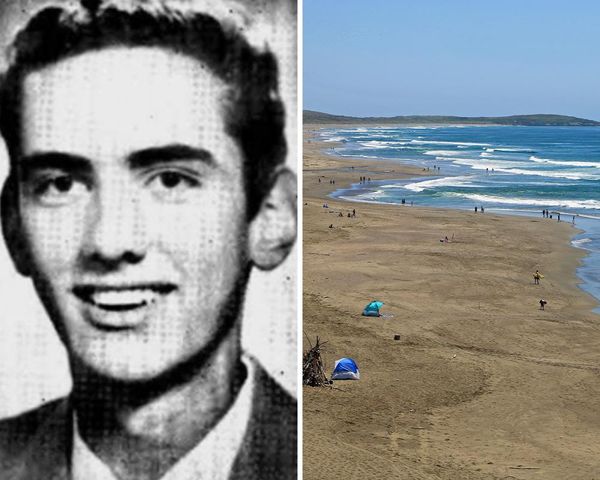
Brazilians dug 100 graves and stuck black crosses in the sand of Rio’s Copacabana beach on Thursday, in a tribute to the nearly 40,000 people who have died from Covid-19 in the country so far, Reuters reports.
The graves were dug overnight on the beach opposite the ritzy Copacabana Hotel in a protest mounted by non-governmental organisation Rio de Paz, which has been critical of the government’s response to the surging coronavirus pandemic.
Brazil has become a hotspot of the coronavirus pandemic, with 39,680 deaths and over 770,000 confirmed cases as of Wednesday, the world’s worst outbreak after the US.

The president, Jair Bolsonaro, has downplayed the gravity of the pandemic and pushed local governments to lift quarantine measures, sending contradictory signals to Brazilians on whether to use masks and practise social distancing.
“The president has not realised that this is one of the most dramatic crises in Brazil’s history,” said organiser Antonio Carlos Costa, who criticised Bolsonaro for not showing solidarity with the suffering.
“Families are mourning thousands of dead, and there is unemployment and hunger,” he said.
Not everyone agreed with the protest. An angry man pulled out crosses, shouting against the symbolic tribute. Another man, who said his 25-year-old son died of Covid-19, went around replacing them.
“It’s such a tragedy,” said passer-by Marcia Lucia Dias. “It’s frightening to see the crosses. But this is really happening. Our authorities contradict themselves and we don’t know what to do.”
Updated
Carbon dioxide emissions have rebounded around the world as lockdown conditions have eased, raising fears that the level of greenhouse gases in the atmosphere could surge higher than ever after the coronavirus pandemic unless governments take swift action, writes Fiona Harvey, the Guardian’s environment correspondent.
Emissions fell by a quarter when the lockdowns were at their peak, and by early April global daily carbon dioxide emissions were still down by 17% compared with the average figure for 2019, research published last month in the journal Nature Climate Change found.
Today, daily carbon emissions are still down on 2019 levels, but by only 5% on average globally, according to an updated study. The sharp rebound was the result of the easing of lockdown measures, which has seen millions of people around the world return to work and pre-lockdown habits.
“Things have happened very fast,” said Corinne Le Quéré, a professor of climate change at the University of East Anglia, and lead author of the studies. “Very few countries still have stringent confinement. We expected emissions to come back, but that they have done so rapidly is the biggest surprise.”
Emissions for the year to date, from 1 January to 11 June, are 8.6% lower than in the same period for 2019, and emissions for the whole of this year are likely to be between 4% and 7% lower than for the whole of last year. That is not enough to make a significant contribution to the cuts in emissions needed to fulfil the Paris agreement on climate change, which will require structural changes to transport systems and how energy is generated.
Thousands of people lost their lives “prematurely” because care homes in England lacked the protective equipment and financial resources to cope with the coronavirus outbreak, according to council care bosses, writes Patrick Butler, the Guardian’s social affairs editor.
In a highly critical report, social care directors say decisions to rapidly discharge many vulnerable patients from NHS hospitals to care homes without first testing them for Covid-19 had “tragic consequences” for residents and staff.
In many places, vulnerable people were discharged into care facilities where there was a shortage of personal protective equipment (PPE) or where it was impossible to isolate them safely, sometimes when they could have returned home, the report says.
“Ultimately, thousands have lost their lives prematurely in social care and were not sufficiently considered as part of wider health and community systems. And normality has not yet returned,” James Bullion, the president of the Association of Directors of Adult Social Services (Adass), said in a foreword to the report.
He added: “It is clear that adult social care was rendered ill-equipped and under-resourced to deal with the Covid-19 pandemic by the failure of successive governments of all political colours to recognise and understand how essential social care is.”
Cases are rising in nearly half of US states, according to an analysis by the Associated Press, even as lockdowns begin to be rolled back across the country.
In Arizona, hospitals have been told to prepare for the worst; Texas has more hospitalised Covid-19 patients than at any time before; and the governor of North Carolina said recent jumps caused him to rethink plans to reopen schools or businesses.
AP analysed data compiled by The Covid Tracking Project, a volunteer organisation that collects coronavirus testing data in the US. It found that in 21 states as of Monday, the rolling seven-day average of new cases per capita was higher than the average seven days earlier.
Among those states with rising cases were Arizona, Florida, Oklahoma and Texas - all states where the US president, Donald Trump, this week said he was planning to hold rallies that may draw thousands of people.
Jay Butler, who oversees coronavirus response work at the US Centers for Disease Control and Prevention, said: “It is a disaster that spreads. It’s not like there’s an entire continental seismic shift and everyone feels the shaking all at once.”
Updated
Bahrain says 44% of asymptomatic cases are infectious
Almost half of asymptomatic coronavirus carriers detected in Bahrain were found to pose a risk of spreading the virus to others, according to research by the country’s coronavirus taskforce.
The research, which has not been peer-reviewed, could help to shed light on what has become a hot topic this week, after the World Health Organization’s technical lead on Covid-19, Maria van Kherkove, suggested asymptomatic transmission was “very rare”.
Kherkove later backtracked saying that there had been a misunderstanding over her comments.
Bahrain’s data, shared with the Guardian on Thursday, is based on 367,764 tests, and is claimed to be the first based on real cases rather than models. It suggests that 44% of cases were still infectious despite not showing any symptoms.
Asymptomatic cases were considered infectious if contact tracing of the original patient found other cases who had not been in contact with any other known cases.
The finding comes after the WHO director general, Tedros Adhanom Ghebreyesus, called for more research on the extent to which the coronavirus could be spread by people who don’t show symptoms.
“Since early February, we have said that asymptomatic people can transmit Covid-19, but that we need more research to establish the extent of asymptomatic transmission,” Tedros said on Tuesday.
Bahrain, which is fifth in the world for testing rates, has recorded 16,667 cases. So far 11,487 patients have recovered, and 34 have died.
Updated
Deaths from Covid-19 in Italy climbed by 53 on Thursday against 71 the day before, Reuters reports, citing the country’s civil protection agency, pushing the total to death toll from the outbreak to 34,167.
Italy, which back in February became one of the first countries hit by a major coronavirus outbreak, has the fourth highest death toll in the world, after the US, Britain and Brazil.
According to the latest update, the daily tally of new cases rose by 379, compared to 202 on Wednesday. Italy has so far confirmed 236,142 cases of coronavirus, the seventh highest global tally behind those of the US, Russia, Brazil, Spain, Britain and India.
People registered as currently carrying the illness fell to 30,637 from 31,710 the day before.

Authorities also reported that a national smartphone app to trace coronavirus infections has been downloaded 2.2m times in the 10 days.
The government, like those of other European countries hit by the virus, is touting the software as a vital tool to help avoid a second wave of infections. Germany launches its own version next week.
Unlike some contact-tracing apps planned by European governments, the Italian app does not rely on a centralised database.
“We want a summer in which tourism is as safe as possible. This app can help us resume activities after the lockdown,” Paola Pisano, the technological innovation and digitalisation minister, told Reuters.
Updated
European Union officials and experts have said that Europe could face a surge of coronavirus infections in coming weeks as a result of the mass antiracism protests that have spread across the continent.
Hundreds of thousands of people have crowded together in cities over the past week to protest against systemic racism and police violence against black people, in a renewed movement sparked by the killing of George Floyd by police in the US.
“If you advise everybody to keep one and half meter from each other, and everybody just stands next to each other, holding each other, then I don’t have a good feeling about that,” Jozef Kesecioglu, who chairs the European Society of Intensive Care Medicine, was quoted as saying by the Canadian-owned news agency Reuters. Asked whether there could be a surge of infections in the coming two weeks, he said: “Yes, but hopefully I’m wrong.”

Most countries in the 27-nation bloc have passed the peak of the Covid-19 outbreak and are gradually reopening business and borders, as infections decreased in recent days. Before the protests, scientists expected a second wave only after the summer. But mass gatherings might impact this positive trend.
“As for any infectious respiratory disease, mass events could be a major route of transmission,” Martin Seychell, a health official at the EU commission told Reuters when asked about the possibility of an earlier second wave caused by demonstrations.
The virus was still circulating, although at lower rates than some weeks ago, he said.
Updated

The European Commission is seeking a mandate from member states to buy promising Covid-19 vaccine candidates in advance from pharmaceutical firms, as long as they are not produced solely in the US, Reuters reports.
All vaccines in clinical trial this year are in principle eligible for advance purchases, but not those which are produced exclusively in the US, because Washington has signalled it will not allow sales abroad before its own needs are met, the EU officials told a news conference.
The EU executive wants to pay for up to six potential vaccines in deals where the makers would commit to providing doses when and if they become available.
It will ask EU health ministers at a video conference meeting on Friday to back the plan, which has been swiftly devised as the bloc fears it may not have access to enough shots should a vaccine be developed.
“Sourcing from producers that would only have production capacity in the United States would not really be an option for us,” one commission official said, adding this would not guarantee that the shots are available for the EU population.
“We pay up front a significant part of the investment needed in exchange for a commitment from the pharmaceutical manufacturer to give us a vaccine when is available,” the official told a news conference.
The purchase agreements would be financed with an EU emergency fund, which currently has a budget of 2.4bn euros ($2.7bn), officials said, confirming Reuters’ earlier reports.
Updated
One month after France ended its strict eight-week lockdown, there has been no spike in coronavirus cases as life returns towards normality, writes Kim Willsher, the Guardian’s Paris correspondent.
The number of new Covid-19 cases continued to drop even as most of France reopened for business – while maintaining distancing and protection measures – with the number of additional deaths down to its lowest figure since March.
France’s health authorities say there are now only 933 patients in intensive care with the virus across the country, having fallen from a peak of 7,148 in April, and the number of new admissions to emergency units is now at 20 in the last 24 hours. This figure has not been above 50 in the last three weeks.
An estimated total of 29,319 people have died of the coronavirus in France in hospitals and care homes since the pandemic began – an increase of 23 deaths in hospital in the last day. Of this total, more than a third of deaths occurred in care homes, but the government has stopped updating the figures because of the difficulty of accurately establishing a cause of death.
Almost 72,000 people diagnosed with Covid-19 have recovered and been discharged from hospital.
Updated
New cases of coronavirus have spiked in the Balkans, leading officials in Bosnia, North Macedonia and Albania to appeal to citizens to respect public health advice and Serbia’s president to postpone campaign rallies, the Associated Press reports.
Epidemiologists across the region, where many restrictions were lifted last month, have said that new clusters are appearing after events such as celebrations, family gatherings or funerals. In Serbia, clusters have also appeared on university campuses in bigger cities.
Serbia reported 71 new confirmed cases of infections on Thursday, compared to 18 new cases on 1 June. Similar numbers have been recorded in the past several days after a previous drop. In neighbouring Bosnia, nearly 60 new cases were reported.
Authorities in Albania reported 44 new cases, the highest daily number so far and the third consecutive day with an increase. The country has been in a relaxed mode for more than two weeks.
North Macedonia recorded 174 new cases and seven deaths on Wednesday, its highest number of Covid-19 deaths in more than a month.
Across the region, mass gatherings had gradually been allowed, with people not keeping physical distance or wearing masks, although authorities advised using the protections in public. Some 20,000 fans packed a stadium on Wednesday during a football match between Belgrade’s bitter rival teams, Red Star and Partizan.
On Thursday, Serbia’s president, Aleksandar Vučić, said his Progressive party will not hold rallies ahead of Serbia’s 21 June parliamentary election to avoid further spread of the virus, according to a report by the state broadcaster RTS.
Branislav Tiodorovic, an epidemiologist from Serbia’s state crisis team, told RTS on Thursday:
The virus is still here. We are on the line between an uncertain and a favourable situation.
This is something we had expected, but we must all get serious again and implement protection measures.
Updated
A US woman who survived Covid-19 has received a double lung transplant, making her the first in the country known to have a received a transplant after her lungs were badly damaged by the disease, reports Kenya Evelyn for the Guardian US.
“She’s awake, she’s smiling, she FaceTimed with her family,” Dr Ankit Bharat, chief of thoracic surgery and surgical director of the lung transplant program at Northwestern Medicine, told the New York Times.
Bharat said the woman, who is in her 20s, had no serious underlying medical conditions. She has a long way to go, but is recovering.
The 10-hour surgery took several hours longer than expected because inflammation left the patient’s lungs “completely plastered to tissue around them, the heart, the chest wall and diaphragm”.
Hospital authorities said the young woman is still on a ventilator. Although the transplanted lungs are healthy, the virus has left the patient’s chest muscles too weak for independent breathing.
Bharat said the transplant was her only chance for survival. However, the medical team emphasised that even though the operation could save some desperately ill coronavirus patients, the transplant option “is not for every Covid patient”.
Updated
Kazakhstan has locked down several towns and villages and tightened restrictions in one of its provinces following a rise in new Covid-19 cases, a month after ending its nationwide state of emergency.
In the central Karaganda region, retailers and public transit will work shorter hours and private cars will be banned from moving at night from 13 June, Reuters reported, citing a government statement.
Several towns and villages would be locked down again and 70% of public sector employees in the province will work from home, it said, adding that many local residents and businesses were disregarding social distancing rules.
Earlier this month, the central Asian nation tightened restrictions, although to a lesser extent, in two other provinces that had also reported high rates of new cases.
Kazakhstan, a former Soviet republic of 19 million people bordering China and Russia, has confirmed 13,558 Covid-19 cases, after an additional 239 were reported on Thursday, with 67 deaths.
It has also separately reported 2,529 asymptomatic cases.
Updated
Rohingya leaders have urged Bangladesh to lift an internet ban imposed on one million refugees in the city of Cox’s Bazar, warning that rumours and panic over Covid-19 is deterring people from getting tested, write Rebecca Ratcliffe and Rizwan Ahmed.
Limits on communication are exacerbating already dire conditions for the Rohingya refugees from Myanmar, who live in cramped bamboo huts, with as many as eight family members to a room, and are dependent on communal taps and toilets. In some areas, basics such as soap are lacking.

Aid agencies in the city in south-east Bangladesh, 20 miles from the border with Myanmar, have warned repeatedly that the virus could thrive in the camps and that medical facilities would be unable to cope. As of 10 June, 35 refugees have tested positive for Covid-19, according to the World Health Organization, while three have died. In total, 30 are in quarantine, though it is feared that there are more undetected cases.
The outbreak has coincided with flu season, adding to confusion over symptoms, but community members say that people are avoiding going to clinics because they are worried about being moved to isolation facilities.
Last week, two people fled quarantine because they believed they would be sent to centres far from their families, according to reports.
Updated
Finland will be opening borders to tourists from neighbouring Baltic and Nordic countries, excluding Sweden, from 15 June, writes Antonia Wilson, for the Guardian’s travel desk. In a similar move to Denmark and Norway, Sweden has been excluded from Finland’s list based on current rates of infection.
Finnish borders are due to open to tourists from Norway, Denmark, Iceland, Estonia, Latvia and Lithuania from 15 June. Tourists from other EU countries may be permitted after 14 July (the Finnish government is expected to review restrictions again in two weeks’ time).
For the latest updates to coronavirus-related travel restrictions, click through below.
Updated
In Russia, President Vladimir Putin’s spokesman, Dmitry Peskov, has been asked if there is anything “strange” about the country’s official coronavirus death figures.
He gave a fairly straightforward answer: “No.”
Peskov earlier said the low mortality rate was due to a highly efficient Russian healthcare system, rather than statistical manipulation as some experts in Russia and abroad have suggested.
Last month Russian officials defended the country against claims that its unusually low mortality rate from Covid-19 was suspicious, saying its method of ascribing cause of death is “exceptionally precise”.
Reports that Moscow will report 57% more deaths for the month of May than in the three previous years, meanwhile, indicated the city’s coronavirus death toll for the month may be at least double the official tally, casting further doubt on the accuracy of Russia’s Covid-19 death figure.
The Russian capital reportedly had 5,799 “excess deaths” for the month of May but has recorded only 2,750 deaths primarily due to coronavirus. The data is in line with other major cities, including St Petersburg, where total mortality rates have shown thousands of deaths not reflected in official coronavirus tallies.
Russia has so far reported more than 500,000 cases, the world’s third-largest number, and 6,532 deaths - a tally that is significantly lower than in many other countries with serious outbreaks.
The World Health Organization said this week that Russia’s low death rate was “difficult to understand”.
Last month, Moscow’s authorities more than doubled the official death toll from Covid-19 in the Russian capital for April.
They said the new tally included even the most “controversial, debatable” cases.
Updated
Scotland’s first minister, Nicola Sturgeon, has said the latest scientific estimates are that the R rate, the rate at which Covid-19 infections are spreading in the community, has fallen in Scotland to between 0.6 to 0.8, confirming a steep decline in the number of people in hospital and deaths.
Sturgeon told the daily coronavirus briefing that “under that estimate we expect that the virus will continue to decline”. She cautioned that there was still a risk of a resurgence in infections, but added: “We should continue to celebrate the progress.”
As a result, she announced that workers would be allowed now to return to construction sites, while observing social distancing, but added that “we still have some way to go” before seeing building at full capacity.
In her daily summary, she announced five further deaths of those with confirmed Covid-19, with 909 people in hospital, 78 fewer than on Wednesday. Many of the key numbers have fallen in Scotland to the levels of mid- to late-March, leading Sturgeon to confirm the lockdown may be eased in Scotland more quickly.
The R number in Scotland had been between 0.7 and 0.9, and the number of infected people in Scotland last week is judged to have been 4,500.
There are more details in this Scottish government report (pdf).
Updated
UK death toll rises by 151 to 41,279
The UK’s Department of Health and Social Care (DHSC) said 41,279 people had died in hospitals, care homes and the wider community after testing positive for coronavirus in the UK as of 5pm on Wednesday. That is a rise of 151 from 41,128 the day before.
The government’s figures do not include all deaths involving Covid-19 across the UK, which is thought to have passed 52,000.
The DHSC also said in the 24-hour period up to 9am on Thursday, 197,007 tests were carried out or dispatched, with 1,266 positive results.
Overall, a total of 6,240,801 tests have been carried out and 291,409 cases have been confirmed positive.
The figure for the number of people tested has been “temporarily paused to ensure consistent reporting” across all methods of testing.
As of 9am 11 June, there have been 6,240,801 tests, with 197,007 tests on 10 June.
— Department of Health and Social Care (@DHSCgovuk) June 11, 2020
291,409 people have tested positive.
As of 5pm on 10 June, of those tested positive for coronavirus, across all settings, 41,279 have sadly died.
More info:
▶️ https://t.co/xXnL3FU15k pic.twitter.com/Cj7lhQIk8N
You can follow all our UK coronavirus news over on our live blog
Another 1.5 million people in the US filed for unemployment benefits last week even as states continued to relax their coronavirus quarantine measures, writes Dominic Rushe and Amanda Holpuch in New York.
In just 12 weeks, more than 44m claims have been made for benefits as people lost their jobs. Rehiring appears to have started. Last week the labor department said the unemployment rate had dipped in May to 13.3% from 14.7% in April – although officials said difficulty collecting data meant the figure was probably 3% higher.
Yesterday Jerome Powell, the chair of the Federal Reserve, said the central bank expected unemployment to dip to 9.3% by the year end, it was 3.5% in February. Powell warned that while the trend was positive, it would be “difficult for many people to find work” for “an extended period”.
Last week was the second week in a row that unemployment claims were below 2m, a sign that layoffs are slowing from the peak of 6.6m in April. However, the numbers remain historically high. In the last recession, the highest number of weekly unemployment claims peaked at 665,000 in March 2009, and the previous all-time mark was 695,000 in October 1982.
“The downward trend is obviously good news, but in the context of an economy that is reopening it is extremely high, especially when viewed against previous recessions,” James Knightley, the chief international economist at ING, wrote in a note to investors.
Updated
10 countries account for nearly 75% of new cases - WHO
Nearly three-quarters of new cases of coronavirus are coming from 10 countries, mostly concentrated in the Americas and south Asia, the director general of the World Health Organization has said.
Speaking at the UN health agency’s member state briefing on Thursday, Tedros Adhanom Ghebreyesus said that the global situation was deteriorating, even as Europe appeared to be over the worst of the outbreak.
The biggest threat was complacency, he warned, as he called on countries to continue with “active surveillance” to ensure there was no rebound in infections in those countries past the peak of transmission.
Tedros said:
More than 7 million cases of Covid-19 have now been reported, and more than 408,000 deaths.
Although the situation in Europe is improving, at the global level, it is getting worse. More than 100,000 new cases have been reported each day for the most part of the past two weeks.
Almost 75% of recent cases come from 10 countries, mostly in the Americas and south Asia. Many countries in the African region are also experiencing an increase, although so far, in most, the caseload is still relatively small. We also see increasing numbers of cases in parts of eastern Europe and central Asia.
At the same time, we are encouraged that some countries around the world are seeing positive signs. The biggest threat now is complacency. Studies show that most people are still susceptible to infection. Countries must continue with active surveillance to ensure the virus does not rebound, especially as mass gatherings of all kinds are starting to resume.
Without proper safeguards and monitoring, a resurgence is a real threat.
Updated
Reuters has more from the coronavirus briefing earlier today by the World Health Organization’s regional office from Africa.
According to the Canadian-owned news agency, Matshidiso Moeti, WHO’s Africa regional director, said that the Covid-19 pandemic is accelerating in Africa, spreading to the hinterland from capital cities where it arrived with travellers.
Ten countries are driving Africa’s epidemic, accounting for 75% of the roughly 207,600 cases recorded on the continent, with 5,000 deaths reported, according to Moeti. There was no indication that severe cases and deaths were being missed, nor had the virus caused significant infections in refugee camps across the continent, she said.
“Even though these cases in Africa account for less than 3% of the global total, it’s clear that the pandemic is accelerating,” Moeti told the briefing, according to Reuters. “We believe that large numbers of severe cases and deaths are not being missed in Africa.”
Africa’s population was relatively youthful and many countries had already established “point of entry” screening measures against Ebola fever – two factors which may have so far limited the spread of Covid-19, she said.
But lockdowns and market closures intended to contain coronavirus contagion had taken a heavy toll on marginalised communities and low-income families, Moeti said.
In South Africa, the region’s worst-affected country, high numbers of daily cases and deaths were being reported in Western Cape and Eastern Cape, she said, adding: “Specifically in the Western Cape where we are seeing a majority of cases and deaths, the trend seem to be similar to what was happening in Europe and in the US.”
A major challenge on the continent remained the availability of test kits, Moeti said.
“Until such time as we have access to an effective vaccine, I’m afraid we’ll probably have to live with a steady increase in the region, with some hotspots having to be managed in a number of countries, as is happening now in South Africa, Algeria, Cameroon for example, which require very strong public health measures, social distancing measures to take place.”
Updated
The number of confirmed cases of coronavirus in Iran has passed 180,000, according to new data released on Thursday, as the country’s president, Hassan Rouhani, called on Iranians to stick to public health advice aimed at curbing its spread.
“If everyone follows the health instructions exactly, then all jobs can be reopened,” Rouhani said in remarks broadcast on state television, according to the French news agency AFP.
“We are progressing slowly and step by step (because we don’t want) our people to think that the coronavirus era has passed. This would pose a major health problem for us.”

Sima Sadat Lari, the health ministry spokeswoman, who recently took over the grim task of giving Iran’s daily coronavirus updates, said 2,238 more people had tested positive in the past 24 hours, pushing the total to 180,156. She said 78 new deaths brought the overall toll to 8,584.
Iran reported its first Covid-19 cases on 19 February - two deaths in the Shiite holy city of Qom. Since then, the government has struggled to contain what became the Middle East’s deadliest coronavirus outbreak.
Since April, however, it has gradually lifted health protocols in order to reopen its sanctions-hit economy. That has coincided with a fresh surge in cases, which the government denies amounts to a second wave, saying they are due to increased testing.
Updated
India reported nearly 10,000 new coronavirus cases on Thursday, with health services in the worst-hit cities of Mumbai, New Delhi and Chennai swamped by the rising infections, according to the Associated Press.
India’s tally has reached 286,579 confirmed cases, the fifth-highest in the world, with 8,102 deaths, including 357 in the last 24 hours.
However, the government has moved ahead with the reopening of restaurants, shopping malls and places of worship in most of India after lockdown of more than two months. Subways, hotels and schools remain closed.
The actual infection numbers are thought to be higher because of limited testing.

French news agency AFP visited the Max Smart Super Speciality hospital in New Delhi, one of India’s top private hospitals, where every bed was reportedly occupied by coronavirus patients, and fear was building that worse was to come.
“We don’t know when this is going to peak,” Dr Deven Juneja told AFP during a pause from his rounds. “All of us are hoping for the best, but we are mentally and physically prepared for the worst.”
Juneja said the surge had started to be felt over the past few days, with an increase in the number of people seeking medical help.
“That has definitely increased the load on us. We want to get our patients well as soon as possible and try to create more beds for our patients,” he said.
Updated
Beijing has confirmed a new coronavirus infection, the first confirmed Covid-19 case in the capital in nearly two months, reports Reuters, citing Chinese official and communist party-backed media.
The patient, a 52-year-old man, checked into a clinic on Wednesday due to a fever, according to the official party newspaper People’s Daily. The patient said he has not left Beijing or been in contact with anyone who travelled from overseas in the last two weeks, the report said.

Earlier, Chinese health authorities had reported a small spike in imported cases to 11. There were no new deaths or cases of local transmission in Thursday’s report, according to the Associated Press.
Chinese officials say just 62 people remain in treatment for Covid-19, while 130 are under observation and isolation for showing signs of the illness or testing positive for the virus without showing any symptoms.
China has reported a total of 4,634 deaths from Covid-19 — a figure that hasn’t changed in weeks — among 83,057 cases recorded since the virus was first detected in the central industrial city of Wuhan late last year.
Updated
Hundreds of children in Indonesia are believed to have died from Covid-19, despite experts around the world saying the coronavirus poses little danger to the young, Reuters reports.
“Covid-19 proves that we have to fight against malnutrition,” Achmad Yurianto, a senior health ministry official, told Reuters.
He said Indonesian children were caught in a “devil’s circle”, a cycle of malnutrition and anaemia that increased their vulnerability to the coronavirus. He compared malnourished children to weak structures that “crumble after an earthquake”.
Since Indonesia announced its first coronavirus case in March it has recorded 2,000 deaths, the highest in east Asia outside China. A total of 715 people under 18 have contracted the coronavirus, while 28 have died, according to a health ministry document dated 22 May and reviewed by Reuters.

It also recorded more than 380 deaths among 7,152 children classified as “patients under monitoring”, meaning people with severe coronavirus symptoms for which there is no other explanation but whose tests have not confirmed the infection.
Even the official figure for children who have died of the coronavirus, at 28 as of 22 May, would give Indonesia a high rate of child death, at 2.1% of its total. Different countries use different age brackets in statistics but deaths for those under 24 in the United States are a little over 0.1% of its fatalities.
Indonesia, a developing country of 270 million, suffers from a “triple burden of malnutrition,” which includes stunting, and anaemia among mothers, and obesity, according to the United Nations Children’s Fund. Nearly one in three Indonesian children under five is stunted, it says.
“The nutrition status impacts children’s immunity,” said Dr Nastiti Kaswandani, a paediatric pulmonologist in the capital, Jakarta.
“That’s important in mitigating Covid infections.”
Updated

Human Rights Watch has called on the United Arab Emirates to urgently address an outbreak of the coronavirus in at least three prisons, the Associated Press reports.
The human rights group say relatives of prisoners at a jail near Abu Dhabi, as well as another in Dubai, have said that prisoners have been denied adequate medical care and been kept in overcrowded and unsanitary conditions.
It accused the authorities of not providing information to inmates or their families about the outbreaks of the coronavirus inside the detention centres.
According to the NGO, relatives of prisoners say prison authorities transferred those exhibiting symptoms to unknown locations without testing or medical care for weeks; that prisoners with HIV have been denied access to the hospital that is in charge of their care since mid-March; and that authorities did not increase supplies of soap or hand sanitiser and did not distribute gloves or masks to detainees.
Michael Page, the Middle East deputy director at Human Rights Watch, said:
Crowded, unsanitary prison conditions and widespread denial of adequate medical care are nothing new in the UAE’s notorious detention facilities, but the ongoing pandemic is an additional serious threat to prisoners’ well-being.
The best way for UAE authorities to allay concerns of prisoners’ family members is to allow inspection by independent, international monitors.
HRW said it wrote to the UAE’s Interior Ministry on 7 June and has received no response. It noted that in April, Emirati authorities released over 4,000 detainees, but not political detainees held for peaceful dissent.
Updated
Beijing has criticised a US study suggesting that the virus that causes Covid-19 may have been circulating in China since last August, calling it proof of a disinformation campaign, Reuters reports.
The paper by researchers at Boston University and Harvard – which has not been peer-reviewed – analysed photos of car parks at Wuhan hospitals and search trends on Baidu, a Chinese search engine.
The team led by Elaine Nsoesie at Boston University said they found “a steep increase in volume starting in August 2019” at Wuhan hospital parking lots, “culminating with a peak in December 2019.”
While they admitted they could not definitively confirm that the data was linked to the virus, the said it supported conclusions reached by other research suggesting that the virus began circulating earlier than the first reported cases at the end of 2019.
On Thursday, China’s foreign ministry criticised the paper as “full of holes” and “crudely manufactured.” Hua Chunying, the ministry’s spokeswoman, said the study was evidence of coordinated efforts in the US to “deliberately create and disseminate disinformation against China”.
“Some US politicians and media acted like they found buried treasure and wantonly spread [the study], treating it like new proof that China concealed the epidemic,” Hua told reporters at a regular briefing.
Updated
Africa will have a “steady increase” in Covid-19 cases until a vaccine is developed, the director general of the World Health Organization’s regional office for the continent said on Thursday.
Matshidiso Moeti, the UN health agency’s Africa regional director, spoke as the latest collated figures for the continent, which has so far avoided the kind of mass outbreak seen in the rest of the world, showed about 6,500 more cases were reported since Wednesday.
So far Africa’s 54 countries have reported a total of 207,617 confirmed cases of coronavirus, with 95,173 recoveries and 5,642 deaths, the WHO African region’s coronavirus dashboard showed. About 1.3 billion people live on the continent.
There had been fears that Africa would be hit hard by the coronavirus pandemic, but so far it is the least affected region, accounting for only about 5% of global cases. Despite that, Moeti said on Thursday that strong public health measures were needed in current “hotspots” in South Africa, Algeria and Cameroon.
Moeti told a Geneva briefing:
Until such time as we have access to an effective vaccine, I’m afraid we’ll probably have to live with a steady increase in the region, with some hotspots having to be managed in a number of countries, as is happening now in South Africa, Algeria, Cameroon for example, which require very strong public health measures, social distancing measures to take place.
Over 207,000 confirmed #COVID19 cases on the African continent - with more than 94,000 recoveries & 5,600 deaths. View country figures & more with the WHO African Region COVID-19 Dashboard: https://t.co/V0fkK8dYTg pic.twitter.com/WZZuo2XIaf
— WHO African Region (@WHOAFRO) June 11, 2020
Updated
In Germany, the number of active Covid-19 cases has gone up to 5,460 – the first rise in total cases in two months, writes Philip Oltermann, the Guardian’s Berlin bureau chief.
On Thursday, health authorities recorded 555 new confirmed infections and 400 new patients who had recovered from the disease, bringing the total number of Covid-19 cases to be recorded in Germany so far to 185,416. 8,755 people have died of the virus in Germany so far, a day-on-day rise of 26.
However, the change in dynamic has received relatively little attention in the country as several of the 16 Länder, or federal states, took further steps towards relaxing social distancing restrictions. In the eastern state of Thuringia, social distancing measures will be scrapped altogether from this Saturday, though the wearing of masks in shops and on public transport remains mandatory.
The R number was estimated to be at 0.86 by the government’s disease control agency, the Robert Koch Institute.
Updated
This is Damien Gayle replacing Josh Halliday now at the helm of the live blog. I’ll be bringing you the latest updates and headlines from the global coronavirus outbreak for the next eight hours.
If you want to get in touch with any comments, or tips or suggestions for coverage, then please drop me a line, either via email to damien.gayle@theguardian.com, or via Twitter direct message to @damiengayle.
Hundreds of children among victims in Indonesia - reports
Hundreds of Indonesian children have died from coronavirus, Reuters reports, giving the south-east Asian country one of the world’s highest child mortality rates from a disease that experts say poses little danger to the young.
The Reuters news agency quotes Achmad Yurianto, a senior health ministry official, as saying that Indonesian children were caught in a “devil’s circle” of malnutrition and anaemia making them particularly vulnerable to Covid-19.
The country’s official figures suggest that 28 of the 2,000 people to die from Covid-19 up to 22 May were under 18, equating 2.1% of its total – still a high rate compared to other countries.
However, Reuters reports that Indonesia has also recorded more than 380 deaths among 7,152 children classified as “patients under monitoring”, meaning people with severe coronavirus symptoms for which there is no other explanation but whose tests have not confirmed the infection. So the true death toll among children is much higher than the official figure of 28 given on the 22 May.
Yurianto told the news agency: “Covid-19 proves that we have to fight against malnutrition,” comparing malnourished children to weak structures that “crumble after an earthquake”.
Updated
Coronavirus 'accelerating' across Africa amid shortage of test kits, says WHO
The coronavirus pandemic is “accelerating” in Africa with more than 200,000 confirmed cases across the continent and 5,600 deaths, the region’s World Health Organisation director Dr Matshidiso Moeti has said.
Moeti said the virus was spreading from capital cities where it arrived with travellers and that 10 countries were bearing the brunt of Africa’s epidemic, accounting for 75% of confirmed cases and infections. South Africa accounts for a quarter of cases.
“We believe that large numbers of severe cases and deaths are not being missed in Africa,” she said. “One of the biggest challenges in Africa continues be availability of supplies, particularly test kits.”
Over 207,000 confirmed #COVID19 cases on the African continent - with more than 94,000 recoveries & 5,600 deaths. View country figures & more with the WHO African Region COVID-19 Dashboard: https://t.co/V0fkK8dYTg pic.twitter.com/WZZuo2XIaf
— WHO African Region (@WHOAFRO) June 11, 2020
The World Health Organization is about to deliver an update on the coronavirus pandemic in Europe. You can watch a livestream of the broadcast on the video above.
We’ll post a summary of the briefing when it has finished.
Updated
The number of new coronavirus cases in Indonesia show no signs of falling, with 979 infections and 41 deaths reported in the past 24 hours.
The Jakarta government has said it is confident the spread of the virus has slowed despite the number of infections reaching a record high of more than 1,200 earlier this week.
Restrictions in Indonesia’s capital were partly relaxed on Monday after two months of lockdown as as the world’s fourth most populous nation gradually reopens its economy. Jakarta, home to 11 million people, had been under large-scale social restrictions since 10 April.
Afghanistan’s health ministry has recorded 748 new Covid-19 infections to coronavirus, taking the total to 22,980. The number of deaths in the country has risen by 21, to 426 fatalities.
There have been 3,326 recoveries. The health ministry has so far tested 52,546 suspected patients, with about 44% of them positive.
Most new cases (311) and deaths (eight) have been reported in the capital, Kabul, the country’s worst-affected area in both number of confirmed transmissions and deaths with 9,140 cases and 92 deaths.
Mohammad Yaghoub Heidari, the governor of Kabul warned earlier this week of “a catastrophe” in the capital. He said the actual number of infections in Kabul may be much higher than official figures show, even possibly “a million”.
Ahmad Jawad Osmani, the acting health minister, also told the public on Wednesday to “learn how to live with coronavirus, because it won’t disappear in a matter of months or weeks”.
Updated
The UK government’s former chief scientific advisor, Sir David King, has said the UK could have prevented as many as 30,000 deaths if the country had gone into lockdown a week earlier.
King, a fierce critic of the UK government’s handling of the pandemic, said he believed there could have been “no more than 10,000 deaths” at this point had the country entered lockdown earlier.
BREAKING: Former Chief Scientific Adviser @Sir_David_King says if we had gone into lockdown a week earlier we could have had less than 10,000 deaths in total. pic.twitter.com/rnXkoIzddD
— Good Morning Britain (@GMB) June 11, 2020
Official figures show the UK death toll from people who tested positive for the virus already stands at 41,128.
On Wednesday, Prof Neil Ferguson, one of the leading scientists who was advising the UK government, said the number of fatalities could have been halved if more draconian restrictions were imposed a week earlier.
Updated
Russia's coronavirus tally passes 500,000
Russia has reported 8,779 new cases of Covid-19, bringing its nationwide infection tally to 502,436.
Officials said 174 people had died in the past 24 hours, pushing the official national death toll to 6,532.
Russia has the third-highest number of infections in the world, according to John Hopkins University data, behind the US and Brazil. Its daily number of cases, at nearly 9,000, has remained roughly level for the past two weeks.
Updated
Australia and China have exchanged another salvo over the coronavirus pandemic.
Scott Morrison, Australia’s prime minister, told a radio station on Thursday he would not be intimidated or coerced into dampening his criticism of China after Beijing said its students should reconsider choosing to study in the country.
“We are an open-trading nation, mate, but I’m never going to trade our values in response to coercion from wherever it comes,” Morrison told radio station 2GB on Thursday.

In response, China’s foreign ministry spokeswoman Hua Chunying said its warning to students were based on facts and called on Australia to take measures to safeguard Chinese citizens’ safety, Reuters reports.
China has in recent weeks banned Australian beef imports and imposed tariffs on Australian barley.
The warning for students followed a similar warning last week from Beijing for Chinese tourists to avoid Australia. In both cases, officials in Beijing said the warnings were due to racist attacks against Asians during the pandemic.
“That’s rubbish. It’s a ridiculous assertion and it’s rejected. That’s not a statement that’s been made by the Chinese leadership,” Morrison said in a separate interview on 3AW.
Updated
London stocks opened lower on Thursday as fears of a second wave of Covid-19 infections in the US and a gloomy outlook by the Federal Reserve trumped optimism around a global economic revival, Reuters reports.
The FTSE 100 index slipped 2.7%, with oil & gas stocks leading declines with a 4.1% tumble. Most cyclical stocks traded lower at the opening bell, while defensive healthcare stocks inched higher.
The British mid-cap index fell 2.8%.
My colleagues on the Guardian’s business liveblog have more on this morning’s stock movements.
Updated
The European Union (EU) must reach a deal on a proposed €750bn economic recovery plan to cope with the impact of the coronavirus crisis by July, a French government minister has said.
Amélie de Montchalin, a junior European affairs minister, told France’s BFM Business radio on Thursday: “There is no other solution than having a deal by July. If we do not have a stimulus plan, we will have a problem.”
The European commission, the EU’s executive branch, proposed in May that members raise €750bn on behalf of all members to finance their recovery from the economic catastrophe caused by coronavirus.
The plan, which requires approval from the leaders of 27 countries and their parliaments, would be the first time the EU has raised large amounts of debt in capital markets and would, in some ways, make Brussels more closely resemble a central government than ever before. It is, as the commission president, Ursula von der Leyen, said last month, “Europe’s moment”.
Updated
With several countries, including the UK, now past the first spike of coronavirus infections, the question turns to what happens next.
Prof Devi Sridhar, a chair on global public health at the University of Edinburgh, writes in today’s Guardian that there are a number of competing theories about how best to prevent a second peak.
Her own view is that governments must “aggressively contain the virus through testing, tracing and isolating carriers, and by encouraging good hygiene, such as hand-washing and environmental disinfection, supported by physical distancing where it’s needed”.
She adds:
The goal is to drive down numbers of cases to a low level so that transmission is limited to discrete, containable outbreaks with the ultimate goal of elimination.
Sridhar writes that governments should think of Covid-19 as a series of small fires that must be quickly extinguished before they turn into an uncontrollable blaze. She writes:
If coronavirus is our generations’s polio, we might look towards the approach taken by governments in the Pacific. New Zealand has eliminated coronavirus, and Australia is inching closer to this goal. With border checks in place, people living in these countries can return to normal life. Sports matches are taking place in New Zealand, schools have reopened, weddings are being booked and people can safely see relatives.
The successes of New Zealand and Australia might force other countries to rethink their own strategies, and the feasibility of eliminating the virus within their borders. Instead of living with a constant threat of Covid-19, people might start asking their own governments – why not try to get rid of it altogether?
Updated
India has lifted an export ban on hydroxychloroquine, the anti-malarial drug touted by Donald Trump as a potential “game changer” in the fight against Covid-19.
The country’s chemicals minister, Sadananda Gowda, tweeted the announcement late on Wednesday.
Department of Pharmaceuticals has approved the lifting of ban on Export of Hydroxychloroquine API as well as formulations. Manufacturers except SEZ/EOU Units have to supply 20% production in the domestic market. DGFT has been asked to issue formal notification in this regard.
— Sadananda Gowda (@DVSadanandGowda) June 10, 2020
India is one of the biggest exporters of medicines in the world. But it stopped shipping hydroxychloroquine and its formulations in March as the pandemic disrupted supply chains. It eased some of its restrictions the following month when it exported about 50m tablets to the US, Reuters reported.
Gowda said companies would still have to supply 20% of their production of the drug to the domestic market.
Several countries have permitted emergency use of hydroxychloroquine for Covid-19 patients in hospitals. However, evidence of its efficacy is highly contested.
The biggest trial of the drug yet, by scientists at Oxford University, concluded last week that the drug does not work and should not be given to any more Covid-19 patients around the world.
Hello from me, Josh Halliday, reporting from Manchester, England. I’ll be with you for the next few hours.
A quick peek suggests we’ve got readers currently in Indonesia, the Philippines, Vietnam, Finland, South Africa, India, Germany, Mexico, Canada, Australia, New Zealand, the US and Britain, among many others! That’s incredible. Thank you for choosing the Guardian.
As ever, feel free to get in touch on:
Twitter: @JoshHalliday (DMs open)
Email: josh.halliday@theguardian.com
That’s it from me, Helen Sullivan, for today. Thanks for following along. My colleague Josh Halliday will take it from here.
Updated
Mayors in some of England’s biggest cities are warning that local authorities are at risk of going bust with potentially devastating consequences for communities unless the government takes immediate action.
As the impact of the Covid-19 crisis hits local authorities, the mayors of London, Greater Manchester, Sheffield and Liverpool have issued a joint call to highlight the seriousness of the issue and urge Boris Johnson to respond.
“Unless the government acts immediately to support local and regional government in England there is a very serious risk that the economic recovery from Covid-19 will be choked off by a new era of austerity – something the prime minister promised wouldn’t happen,” the mayor of London, Sadiq Khan, said.
The situation is so serious that some local councils may be under threat of going bust, the mayors warned. The mayor of Greater Manchester, Andy Burnham, said support is needed in the north of England now to stop the “2020s being as bad as the 1980s”.
Thailand reports zero new cases for first time in almost 3 weeks
Thailand on Thursday reported no new coronavirus infections or deaths, maintaining the total of 3,125 confirmed cases and 58 fatalities.
It was the first time in nearly three weeks that no cases were reported and the 17th day without a local transmission. All recent cases have been found in quarantine among Thais returning from abroad.
There are 2,987 patients who have recovered, said Panprapa Yongtrakul, a spokeswoman for the government’s Covid-19 Administration Centre.

Updated
Coachella cancelled
The Coachella and Stagecoach music festivals have been canceled this year due to coronavirus concerns, AP reports.
Dr Cameron Kaiser, Riverside County’s public health officer, signed an order Wednesday canceling the popular festivals outside Palm Springs. Health officials are concerned about a possible surge in coronavirus cases in the fall.

Coachella, a massive music and arts festival, and Stagecoach, a country music event, are typically held in April but were previously postponed until October.
Now, “given the projected circumstances and potential, I would not be comfortable moving forward,” Kaiser said.
Travis Scott, Calvin Harris and Frank Ocean were set to headline Coachella. The Stagecoach lineup included Lil Nas X, Carrie Underwood and Billy Ray Cyrus. Both festivals are held in Indio.
Updated
Summary
Here are the most important developments from the last few hours:
- Confirmed US cases passed 2 million. The number of confirmed coronavirus infections in the US, which is by far the worst-affected country worldwide, passed 2 million on Thursday, according to Johns Hopkins University data, which lists 2,000,464 cases.The country has recorded 112,908 deaths.Brazil, with the next highest number of cases, has 772,416 confirmed infections.
-
US deaths could reach 200,000 in September. Ashish Jha, the head of Harvard’s Global Health Institute, told CNN in an interview on Wednesday that without drastic action, the number of US deaths would march on.
- Trump to hold rally in Oklahoma, first since coronavirus pandemic began. Donald Trump will hold a rally in Tulsa, Oklahoma, next Friday – his first since since states began shutting down in response to the coronavirus pandemic. The 19 June rally will likely rattle some public health experts, as coronavirus infections rise in about a dozen states.
- Latin America pandemic deaths passed 70,000, according to a Reuters count, as Mexico hit a daily record for confirmed infections. Brazil, with the largest economy in the region, remains Latin America’s most affected country as total fatalities are just shy of 40,000, the world’s third highest death toll after the United States and Britain.
- Cuba to test all international visitors for coronavirus. Cuba will test all visitors for coronavirus when it reopens to international tourism, which will be limited at first to the beach resorts at the keys of the Caribbean’s largest island, Prime Minister Manuel Marrero Cruz said on Wednesday.
-
Mexico City will embark on a large-scale testing effort as the centrepiece of its plan to reopen its economy, its mayor Claudia Sheinbaum has said. The plan sees it diverge from the federal governments strategy, which has shunned widespread testing as a waste of resources. The goal will be performing some 100,000 tests per month by July and trying to detect and isolate new infections as quickly as possible, Sheinbaum said. On Wednesday, Mexico confirmed 4,883 coronavirus cases in new daily record.
- The Italian prime minister, Giuseppe Conte, is to be questioned as part of an investigation driven into alleged errors made by authorities. Prosecutors in Bergamo, the Lombardy province worst hit by the virus, will also question the health minister and the interior minister.
- Prince Joachim of Belgium has been fined €10,400 by authorities in Spain after going to a party in Cordoba, where he caught Covid-19. Joachim flew from Brussels to Madrid, then travelled to Cordoba to attend a party with 27 other guests on 26 May, at a time when gatherings were restricted to a maximum of 15 participants.
Cuba to test all international visitors for coronavirus
Cuba will test all visitors for coronavirus when it reopens to international tourism, which will be limited at first to the beach resorts at the keys of the Caribbean’s largest island, the prime minister, Manuel Marrero Cruz, said on Wednesday.
Unveiling cautious plans for lifting Cuba’s partial lockdown, Marrero Cruz said specialists would conduct epidemiological monitoring at hotels, where occupation would be limited. Excursions would be restricted to the keys, Reuters reports.

Visitors would not be able to visit Havana, the centre of Cuba’s outbreak, at first.
In his presentation to the council of ministers, reported by state-run media, Marrero Cruz did not give a timeframe for the reopening to tourism, one of the cash-strapped country’s top sources of hard currency.
The prime minister said Cuba would open first to domestic tourism and further details would be announced soon.
Updated
Thousands of Palestinians stranded around the world by the coronavirus are still seeking a way home, months after countries closed their borders and grounded flights in the face of the pandemic, AFP reports.
The Palestinian Authority says 6,000 people want to come home, but the logistics are incredibly complicated. West Bank residents usually travel via Jordan, an easier route than getting the Israeli permit needed to pass through Tel Aviv airport.
But the frontier with Jordan remains closed and the PA has no say in when it will open, as Israel controls the border.
Israel’s military branch responsible for civilian affairs in the Palestinian territories, COGAT, did not immediately respond to a request to comment on whether it is involved in facilitating returns.
Among Palestinians trying to get to Gaza, the coastal enclave ruled by Islamist group Hamas, about 1,500 stuck in Egypt were allowed to return through the Rafah border crossing last month.
Smaller numbers have entered the enclave through Israel, but Palestinians further afield are still stranded.
Updated
The number of confirmed coronavirus cases in Germany increased by 555 to 185,416, data from the Robert Koch Institute (RKI) for infectious diseases showed on Thursday.
The reported death toll rose by 26 to 8,755, the tally showed.
Reuters reports that a potential coronavirus vaccine developed in China has shown promising results in animals.
The vaccine, developed by Chinese researchers, showed promise in trials in monkeys, triggering antibodies and raising no safety issues, researchers said, and a human trial with more than 1,000 participants is under way.
The vaccine candidate, called BBIBP-CorV, induced high-level neutralising antibodies that can block the virus from infecting cells in monkeys, rats, guinea pigs and rabbits, researchers said in a paper published in online by the medical journal Cell on Saturday.
Updated
The true figure of infection in the US is almost certainly “multiples more” than the 2m confirmed cases, says Irwin Redlener, the director of the National Center for Disaster Preparedness at Columbia University, but is obscured by the lack of testing.
Problems in developing and rolling out an effective test out dogged the initial US response to the pandemic and although testing has now ramped up, only around 6% of the population has received one.
People with Covid-19 most likely experience either no noticeable symptoms or only minor symptoms such as a dry cough and mild fever.
“We are very much seeing only the proverbial tip of the iceberg,” says Redlener. “We are hampered by the lack of sufficient testing, especially as businesses are reopening across all 50 states.”
Updated
As the country passed 2 million cases, US president Donald Trump has today tweeted about his resort, Trump Doral, Miami – which is reopening, Trumps’ son Eric announced. Trump, in his tweet, said “And the Trump family didn’t ask the Federal government for money to carry this and many other very expensive to carry properties”:
...And the Trump family didn’t ask the Federal government for money to carry this and many other very expensive to carry properties! https://t.co/IakI8RiWfj
— Donald J. Trump (@realDonaldTrump) June 11, 2020
He has also tweeted about the Durham probe, an investigation led by John Durham, the US attorney Barr selected to examine the early days of the Russia investigation – launched in response to the FBI’s counterintelligence investigation into ties between the Trump campaign and Russia.
Trump also attacked the Seattle mayor, and again tweeted the words Law & Order.
Updated
Here is our full story on the US passing 2 million cases:
For Americans, coronavirus went from being a mysterious affliction that occurred in far-off lands to 1m confirmed cases on US soil within 14 weeks. Now, just six weeks later, the US has broken through the grim milestone of 2m positive tests for Covid-19, according to the Johns Hopkins University tracker.
The anguish of life lost, of a severely wounded economy and wrenching political turmoil have taken a harrowing toll upon a fatigued American public. But further, perhaps far greater pain is yet to come, pandemic experts have warned, even as authorities wave people back into reopened shops and offices and the US president’s political rhetoric on an epochal crisis dwindles away to near silence.
“Everyone has just looked at the first 100 yards of this marathon,” said Michael Osterholm, the director of the Center for Infectious Disease Research and Policy at the University of Minnesota.
Confirmed US cases pass 2 million
The number of confirmed coronavirus infections in the US, which is by far the worst-affected country worldwide, passed 2 million on Thursday, according to Johns Hopkins University data, which lists 2,000,464 cases.
The country has recorded 112,908 deaths.
Brazil, with the next highest number of cases, has 772,416 confirmed infections.
Many will be watching the daily case numbers from the US anxiously for the next few weeks, as the effects of relaxed restrictions – and Memorial Day weekend, which saw large crowds in parts of the country – as well as the recent protests are expected to be seen. It is still possibly too early to determine whether the protests have lead to a spike, despite many protesters wearing masks and practising other social distancing measures.
Nine California counties have reported a spike in new coronavirus cases or hospitalisations. New diagnoses in the heavily populated Los Angeles area are going up in part because testing is more widely available. But officials say infections and hospitalisations in most other parts of the state are being driven by factors tied directly to the loosening of restrictions or overt flouting of public health rules.
Updated
More on markets, from Reuters:
In a challenge to the US stock market’s recent optimism, the Fed predicted the US economy would shrink 6.5% in 2020 and unemployment would still be at 9.3% at year’s end.
Data out earlier had also shown core US consumer prices fell for a third straight month in May, the longest stretch of declines on record.
As a result, the Fed chair, Jerome Powell, said he was “not even thinking about thinking about raising rates”. Instead, he emphasised recovery would be a long road and that policy would have to be proactive with rates near zero out to 2022.
“While Powell did not commit to any new action at this time, his focus on downside risk and uncertainty reinforces the message that they will take further action, probably by September,” was the take of economists at JPMorgan.
“Outcome or calendar based guidance looks likely and Powell left the door open for moving to some form of interest rate caps.”
Updated
Asian shares eased on Thursday while bonds rallied after a downbeat economic outlook from the US Federal Reserve stoked speculation it would have to add to already historic levels of stimulus to safeguard recovery, Reuters reports.
Still, stock losses were modest given the scale of their recent rise. MSCI’s broadest index of Asia-Pacific shares outside Japan dipped 0.3%, a natural pause after 10 straight sessions of gains.
Japan’s Nikkei slipped 1.1% as the yen firmed, while Chinese blue chips were off 0.4%. E-Mini futures for the S&P 500 fell 0.4%.
The Dow had ended Wednesday down 1.04%, while the S&P 500 lost 0.53%. Bucking the trend, the Nasdaq Composite added 0.67% to a fresh record helped by gains in Microsoft and Apple.
Nigeria’s women’s affairs minister, Pauline Tallen, has called on law enforcement to expedite rape cases, which spiked in the country during lockdown.
Her call followed protests earlier this week over sexual violence in West Africa’s most populous nation, and a series of high-profile rapes.
Tallen said rapes had reached an “alarming rate” three times the typical level as women and children were locked down with their abusers. Every state in Nigeria was affected, she said.
“We are calling for legal intervention,” she said. “From details that we have, there are hundred of cases that are within our courts that have not been addressed and out of each one case, be sure that there are 10 that have not been reported.”
Earlier this week, Nigeria’s most senior policeman ordered the immediate deployment of additional investigators to specialist gender violence desks.
Tallen raised the issue at Wednesday’s cabinet meeting and said that President Muhammadu Buhari supported urgent action.
“Government will take decisive action at the highest level to protect women and children in this country,” she said.
Updated
US deaths could reach 200,000 in September, says Harvard expert
The United States may see 200,000 deaths because of the coronavirus at some point in September, a leading expert said.
Ashish Jha, the head of Harvard’s Global Health Institute, told CNN in an interview on Wednesday that without drastic action, the number of US deaths would march on.

“Even if we don’t have increasing cases, even if we keep things flat, it’s reasonable to expect that we’re going to hit 200,000 deaths sometime during the month of September,” Jha said. “And that’s just through September. The pandemic won’t be over in September.”
Jha added: “I’m really worried about where we’re going to be in the weeks and months ahead.”
Total US coronavirus-related deaths totalled 112,895 on Wednesday, the worst in the world.
US airlines carried 3 million passengers in April, a staggering 96% decline from April 2019 amid the coronavirus pandemic and flight restrictions, the Transportation Department said on Wednesday.
The department said US airlines carried about 2.8 million domestic passengers and 132,000 international passengers. International passengers fell 99% over April 2019 as the U.S. imposed flight restrictions on many international visitors.

Total US airline passengers were the lowest since 1974 when the government began collecting monthly data. By comparison, there were 76.1 million total U.S. airline passengers in April 2019. The previous low recorded was 14.6 million passengers in February 1975.
Passenger traffic has recently risen from April lows and fell only 85% in the week ending June 7, while total flights are down 72%.
Airlines for America, an industry trade group, said demand for future air travel remains down 82% and revenue for future flights is down 92%.
The Australian federal government’s $200m purchase of Covid-19 testing kits from Andrew Forrest’s Minderoo Foundation caught the Australian diagnostics industry by surprise, lacked transparency and came after a detailed audit showed there was “more than enough technology already in the field”, the sector’s peak body has claimed.
The mining magnate and philanthropist announced in April that he had secured 10m Covid-19 PCR tests for Australia from the Chinese manufacturer Beijing Genomics Institute (BGI) at a cost of $200m, which would be refunded by the federal government.
Latin America pandemic deaths pass 70,000
Latin America’s coronavirus crisis reached a grim new milestone on Wednesday with total deaths exceeding 70,000, according to a Reuters count, as Mexico hit a daily record for confirmed infections.
Brazil, with the largest economy in the region, remains Latin America’s most affected country as total fatalities are just shy of 40,000, the world’s third highest death toll after the US and Britain.

In the region’s second biggest country, Mexico, a new daily record of 4,883 confirmed cases was reported by the health ministry, along with 708 additional fatalities.
The daily totals bring Mexico’s overall official count to 129,184 infections and 15,357 deaths.
The World Health Organization has determined that Latin America is the new hotspot for the pandemic, which began around the beginning of the year in China and quickly spread to Europe and beyond.
Governments across the globe acknowledge that the real number of infected people is significantly higher than the official counts.
Latin American fatalities attributed to the highly-contagious Covid-19 respiratory illness caused by the virus stand at 70,972, while total infections are at 1.45 million.
The outbreak has also spread rapidly in Peru, Chile and Columbia.
Updated
Trump to hold rally in Oklahoma, first since coronavirus pandemic began
Donald Trump will hold a rally in Tulsa, Oklahoma, next Friday – his first since since states began shutting down in response to the coronavirus pandemic, which has claimed more than 110,000 lives in the US.
The 19 June rally will likely rattle some public health experts, as coronavirus infections rise in about a dozen states. On Wednesday, the US approached nearly 2 million confirmed cases.
Trump’s signature rallies often draw tens of thousands of people but have been on hiatus since 2 March because of the coronavirus. The president’s campaign has been eager to resume them as it tries to move past the pandemic, even as cases continue to rise in some parts of the country.
A Trump campaign spokesperson tweeted a movie trailer-style video earlier Wednesday that advertised: “This month we’re back.”
There is nothing like a @realDonaldTrump rally! pic.twitter.com/ZQRDnQoxAp
— Erin Perrine (@ErinMPerrine) June 10, 2020
Mexico confirms 4,883 coronavirus cases in new daily record
Mexico’s health ministry reported a record 4,883 new confirmed coronavirus infections along with 708 additional fatalities on Wednesday, bringing the total in the country to 129,184 cases and 15,357 deaths.
The government has said the real number of infected people is significantly higher than the official count.
This is very British and Australian and South African (do you eat Marmite in your country?) news, but here in Sydney it must be said:
would like to extend heartfelt thanks to @G_J_Russell for this headline and also to Vegemite for being more delicious than Marmite:
— Helen Sullivan (@helenrsullivan) June 11, 2020
*Yeast of our worries: Marmite supplies hit by Covid-19 beer brewing slowdown*https://t.co/i9wnSlQcdp
Yeast of our worries: Marmite supplies hit by Covid-19 beer brewing slowdown
Marmite can only produce small jars due to the coronavirus pandemic, a company tweet has suggested.
The spread, made with yeast extract, is now only being produced in a 250g size jar as a result of brewers’ yeast being more difficult to get hold of, a message sent on the company’s official account said on Wednesday.
When asked by a customer why larger 400g squeezy jars were hard to get hold of at the moment, the firm replied: “Due to brewers yeast being in short supply (one of the main ingredients in Marmite) Supplies of Marmite have been affected.
“As a temporary measure we have stopped production of all sizes apart from our 250g size jar which is available in most major retailers.”
Mexico City to test 100,000 per month
The Mexico City mayor, Claudia Sheinbaum, said on Wednesday the capital will embark on a large-scale Covid-19 testing effort as the centerpiece of its plan to reopen its economy, diverging from the federal government’s strategy, which has shunned widespread testing as a waste of resources, AP reports.
The goal will be performing about 100,000 tests per month by July and with those results trying to detect and isolate new infections as quickly as possible, Sheinbaum said in a news conference. It will be paired with an intensive information campaign.

The sprawling city of 9 million with an equal number or more in the suburbs has confirmed more than 32,000 infections and more than 3,200 deaths, both considered to be undercounts because of limited testing.
The city continues to recommend people stay at home if possible, but street traffic has increased considerably in recent weeks as some sectors of the economy were allowed to resume operations.
Sheinbaum promised much more detailed information to track potential infections and their contacts. She also said that oxygen meters to provide peoples oxygen levels would be distributed to at-risk populations and pharmacies.
Updated
US cases near 2 million
Johns Hopkins has just added new cases to its tally for the US, with 1,999,313 currently confirmed.
While Reuters and some other outlets have reported that cases have already passed 2 million, throughout the pandemic, the Guardian has chosen to rely on Johns Hopkins data, which is based on official figures.
There have been 112,833 confirmed deaths in the US, which has the highest cases and deaths worldwide.
Brazil, which is the next worst-affected in terms of cases, has 772,416.

Many will be watching the daily case numbers from the US anxiously for the next few weeks, as the effects of relaxed restrictions – and Memorial Day weekend, which saw large crowds in parts of the country – as well as the recent protests are expected. It is still possibly too early to determine whether the protests have led to a spike, despite many protesters wearing masks and practising other social distancing measures.
Already, nine California counties have reported a spike in new coronavirus cases or hospitalisations. New diagnoses in the heavily populated Los Angeles area are going up in part because testing is more widely available. But officials say infections and hospitalisations in most other parts of the state are being driven by factors tied directly to the loosening of restrictions or overt flouting of public health rules.
Read more about those spikes in our story yesterday:
Updated
Summary
Hello and welcome today’s live coverage of the coronavirus pandemic.
I’m Helen Sullivan and I’ll be bringing you the latest news from around the world for the next few hours. Please do get in touch with questions, comments, tips and news on Twitter @helenrsullivan or via email: helen.sullivan@theguardian.com.
As US cases near the 2 million mark, with 1,997,636 currently confirmed, according to Johns Hopkins University data, vice-president Mike Pence has claimed there has been no sign yet of an increase in cases from two weeks of protests across the country. He told the Fox Business Network: “At this point, we don’t see an increase in new cases now, nearly two weeks on from when the first protests took effect. Many people at protests were wearing masks and engaging in some social distancing.”
Dr Anthony Fauci, the top infectious disease expert on the White House task force Pence chairs, has expressed concern about the protests taking place during the pandemic. And nine California counties have reported a spike in new coronavirus cases or hospitalizations. New diagnoses are up partly due to more available testing, but loosening of restrictions and flouting of public health rules are also factors.
Here are the other key developments from the last few hours:
- Mexico City will embark on a large-scale testing effort as the centrepiece of its plan to reopen its economy, its mayor, Claudia Sheinbaum, has said. The plan sees it diverge from the federal government’s strategy, which has shunned widespread testing as a waste of resources. The goal will be performing about 100,000 tests per month by July and trying to detect and isolate new infections as quickly as possible, Sheinbaum said. The Associated Press reported that it would be paired with an intensive information campaign.
- France saw a below-average increase in deaths. The death toll has risen by only 23 – well below the average daily increase of 53 seen over the last two weeks – to 29,319. That is the fifth-highest nominal total in the world.
- Hollywood productions will be allowed to resume from Friday, local authorities said. While work could resume, cinemas must remain closed, California state officials said.
- São Paulo, Brazil’s most populous state, has reported a record number of deaths for the second day running – even as its metropolis allowed shops to reopen. The centre of the Brazilian epidemic has recorded 340 new deaths in the last 24 hours, raising the state’s confirmed death toll to 9,862, a fourth of the country’s total fatalities, the governor’s office said.
- The Italian prime minister, Giuseppe Conte, is to be questioned as part of an investigation driven into alleged errors made by authorities. Prosecutors in Bergamo, the Lombardy province worst-hit by the virus, will also question the health minister and the interior minister.
- A US pharmaceutical company claimed a drug specifically designed to treat Covid-19 could be authorised for use as early as September. The chief scientist at Eli Lilly and Co told Reuters the feat could be achieved if all goes well with either of two antibody therapies it is testing.
-
Prince Joachim of Belgium has been fined €10,400 by authorities in Spain after going to a party in Cordóba, where he caught Covid-19. Joachim flew from Brussels to Madrid, then travelled to Cordóba to attend a party with 27 other guests on 26 May, at a time when gatherings were restricted to a maximum of 15 participants.
- France is likely to suffer 800,000 job losses in coming months, the finance minister has warned, as the economy reels from the effects of lockdown. Bruno Le Maire told a finance committee in parliament: “Our evaluation is that 800,000 jobs will be lost in the coming months, or 2.8% of total employment.”
- Moscow will report 57% more deaths for the month of May than in the three previous years, a leading Russian radio station has reported, indicating that the city’s coronavirus death toll for the month may be at least two times higher than official tallies for the month.
- The global economy will contract at least 6% this year, with the unprecedented loss of income and “extraordinary uncertainty” caused by measures to contain the coronavirus outbreak, the Organisation for Economic Cooperation and Development has said.
- Airlines are set to lose $84bn (£65.9bn) as a result of the coronavirus pandemic, the International Air Transport Association (IATA) has forecast. With most of the world’s airliners currently parked, IATA said revenue would likely halve, falling from $419bn from $838bn last year.
- China was accused of running disinformation campaigns inside the European Union, as the bloc set out a plan to tackle a “huge wave” of false facts about the coronavirus. The European commission said Russia and China were running “targeted influence operations and disinformation campaigns. in the EU, its neighbourhood, and globally”
Updated